
BuddhistCatholicContemplativeEvangelicalGeneral ChristianHinduJewishLatter-day SaintMuslimNew VisionsProgressive Christian
Beliefs
- Buddhist
- Catholic
- Contemplative
- Evangelical
- General Christian
- Hindu
- Jewish
- Latter-day Saint
- More Voices
- Muslim
- New Visions
- Pagan
- Progressive Christian
Topics
- Religion News
- Food and Religion
- Sports and Religion
- Religious Art
- Religious Music and Entertainment
- Religious Events
- History and Religion
- Style and Religion
- Politics and Religion
- Women in Religion
- Recreation Outdoors and Religion
- Business Finance and Religion
- Careers Workplace and Religion
- Education and Religion
- Family Parenting and Religion
- Health Fitness and Religion
- Home and Religion
- Relationships and Religion
- Technology and Religion
- Travel and Religion
Columnists
- Buddhist Columnists
- Business Finance and Religion Columnists
- Careers Workplace and Religion Columnists
- Catholic Columnists
- Contemplative Columnists
- Education and Religion Columnists
- Evangelists Columnists
- Family Parenting and Religion Columnists
- General Christian Columnists
- Health Fitness and Religion Columnists
- Hindu Columnists
- History and Religion Columnists
- Home and Religion Columnists
- Jewish Columnists
- More Voices Columnists
- Latter Day Columnists
- Muslim Columnists
- New Visions Columnists
- Nonreligious Columnists
- Pagan Columnists
- Politics and Religion Columnists
- Progressive Columnists
- Recreation Outdoors and Religion Columnists
- Relationships and Religion Columnists
- Religion News Columnists
- Religious Art Columnists
- Religious Events Columnists
- Religious Music and Entertainment Columnists
- Sports and Religion Columnists
- Style and Religion Columnists
- Technology and Religion Columnists
- Travel and Religion Columnists
- Women in Religion Columnists
Resource Library
- 2026 Calendar
- Library of World Religions
- The 100 Most Holy Places on Earth
- Patheos Answers
- Podcasts
- Videos
- Faith Leaders Database
- Anglican Episcopalian
- Bahai
- Baptist
- Buddhism
- Christianity
- Confucianism
- Eastern Orthodoxy
- Hinduism
- Holiness and Pentecostal
- ISKCON
- Islam
- Judaism
- Lutheran
- Methodist
- The Church of Jesus Christ of Latter-day Saints
- New Age
- Paganism
- Presbytarian and Reformed
- Protestantism
- Religion Behind the Scenes
- Roman Catholic
- Scientology
- Shia Islam
- Sikhism
- Sufism
- Sunni Islam
- Taoism
- Zen
- See all religions
Research Tools
 Ad-Free & Subscriber Log-In Subscription Support
Ad-Free & Subscriber Log-In Subscription Support
Follow Patheos 

- Trending:
- Forgiveness
- |
- Marriage
- |
- Consciousness
- |
- Death Penalty
- |
- Election
- |
- Halloween
 Through Catholic Lenses
- Home
- Catholic
- Religion News
- Pew: Americans Abandon Genetic Privacy by a 3:2 Margin
Pew: Americans Abandon Genetic Privacy by a 3:2 Margin
Last updated on: February 6, 2020 at 11:45 am by Fr. Matthew P. Schneider, LC
Pew: Americans Abandon Genetic Privacy by a 3:2 Margin 2020-02-06T11:45:13-05:00 Fr. Matthew P. Schneider, LC
Patheos Explore the world's faith through different perspectives on religion and spirituality! Patheos has the views of the prevalent religions and spiritualities of the world.
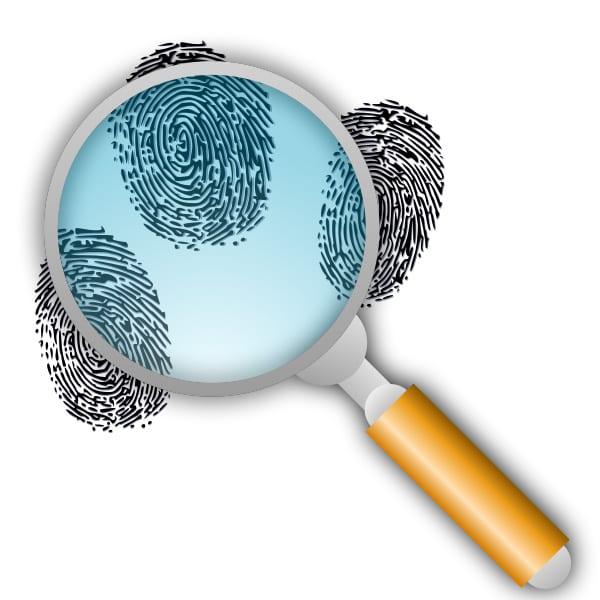
FIngerprints (CC0 via FreeSVG)
Genetic privacy is one of the key moral issues in the public sphere over the coming decades. Who can collect my DNA, how is it stored and how is it used, including its use for relative identification? A recent Pew study found many more Americans are willing to give up privacy in this regard than those concerned about it.
Let’s examine the Pew study and some issues with using genetic databases of the general population. It is fine to use DNA of suspects for this crime or prior criminals but here we are talking about libraries of almost the whole population.
The Pew Study
Pew reported the following study:
Roughly half of Americans (48%) say it is acceptable for DNA testing companies to share customers’ genetic data with law enforcement agencies to help solve crimes, according to a Pew Research Center survey of U.S. adults conducted June 3-17, 2019. Fewer – a third – say this is unacceptable, while 18% are unsure.
48% vs. 33% is about 3:2 as I indicated in the title. A lot of the rest of the article breaks it down by demographics, which I won’t focus on. But they also note some issues most would not be aware of:
These findings come at a time when the use of at-home DNA testing kits has raised concerns about whether consumers understand and are comfortable with the use of their data by police. The Department of Justice recently announced guidelines allowing federal investigators to use data gathered by commercial DNA testing websites in criminal investigations.
The ACLU Fights This
As much as I disagree with the ACLU on a lot, I think they get some things right here. Pew cites a Washington Post piece by an ACLU staff lawyer:
Testing DNA holds immense promise: It can help us identify and ultimately treat health risks, teach us about our origins and even reunite families. But those benefits are only possible because our DNA holds deeply sensitive information about us — and about our relatives. In submitting our DNA for testing, we give away data that exposes not only our own physical- and mental-health characteristics but also those of our parents, our grandparents and, as in DeAngelo’s [the man charged as the Golden State Killer] case, our third cousins — not to mention relatives who haven’t been born yet. […]
We should be able to access the benefits of technological advances without giving up our rights.
For starters, private companies have an important role to play in safeguarding sensitive information. 23andMe already has a commendable policy explaining that its results cannot be considered “proof in a legal context” because the company lacks “the means to reliably connect any particular DNA sample or account to an individual.” The company also bars law enforcement from submitting samples from incarcerated people or those charged with a crime for testing. […]
All of these [consumer gentic testing] companies should make clear that the genetic material they collect from users is not available to serve as legal proof and that law enforcement cannot use their services to test prisoners and arrested individuals or to conduct investigations. Otherwise, the public may have to choose between accessing the benefits of genetic science and maintaining its privacy rights.
A Catholic Moral Perspective
I’ve written on Genetics and privacy a few times before. Here are some key lines.
Genetic Privacy
Back last March, I wrote about genetic privacy:
Various privacy concerns arise from doing DNA testing.
First, we can worry that they may store your DNA forever. DNA testing companies promise some privacy: you can sign the form so they destroy your samples after the tests… However, all that data from the report is still in their database, associated with your name. What if they get hacked?
Beyond that, we need to start thinking about who they share data with. We know DNA companies have shared data with the FBI and with pharmaceutical giant GlaxoSmithKline.
However, the biggest worry I’d have is third parties who might be able to make decisions about you based on your DNA. Imagine if your health or life insurer realized you had a predisposition to diabetes. Would that mean your premiums would increase dramatically despite having no signs of the condition? Fortunately, “Most life insurers are restricted by state laws from using genetic information in the underwriting process, which protects genetic results as a form of private property.”
Last June, I noted how these companies don’t even fall under general health privacy laws in the USA.
As these companies are consumer not medical, they are not regulated by HIPAA or other medical health privacy laws. This creates a danger of misuse. We do have a right not to have our DNA sequence posted to the public. On the other hand, moral issues [are significantly less serious] doing tests for genetic predispositions with your doctor if kept private. These companies have all your genetic information on their computers and it is not clear what degree of data protection they have. When people can hack credit card lists, I’m wondering if they can hack this too.
DNA and Personal Identity
In August, I wrote about criminal cases using a system like this. I noted that our DNA is one of the most intimate things about ourselves so deserves some privacy.
We don’t talk about the privacy of a pro athlete’s performance on the field because that is fully public. However, we all realize that they still have privacy over their bankcard PIN, and the way they decorate their house. Privacy is about what is intimate to the person. Garret Keizer bases privacy on “a creaturely resistance to being used against one’s will.” We don’t want what is intimate to be used in ways we don’t approve. Privacy is protecting ourselves from such intrusion.
When we think of intimacy, we obviously have many different levels from the totally public to the totally intimate. A person might share with the world that they sell new cars for a living; they might share with friends and coworkers that their numbers are down; but they might only share with their insecurities about this drop with their spouse; and the deepest level of concern for this is something they carry inside themselves… Along with our psychology, our DNA is something that is unique and un-shareable. However, unlike psychology we now have an objective measuring stick. I might know that my dad and grandpa had skin cancer so I’m at high risk for this condition, but my DNA would tell me more precisely my level of risk.
Evidently, if our DNA is one of our most intimate aspects, it should have a large degree of privacy to avoid being used against our will. However, with these family tree databases, when a person decides to share this intimacy with the world, they also share a bit of what’s intimate to their extended family.
Conclusion
Hopefully, we think through how we use networks of DNA for criminal investigation. As the lawyer for the ACLU notes, “People may not be so troubled by such an intrusion when it comes to a serial killer, but imagine the implications of using this technique for shoplifters or trespassers.” We need to think about this. We also need to think about when we require the police to get a warrant, and about how police or others with such access could abuse information. Other than minor traffic things like speeding tickets, I’ve never done anything criminal; yet, I am still concerned about police or the government having access to my DNA as it would be so easy to misuse that information.
Note: My community relies on donations and writing these blogs pays almost nothing. You can support me monthly on Patreon or one-time via Acceptiva.
Previous Post

January 25, 2020
12 Amazing March for Life 2020 Signs & 7 Nice Baby Yoda MFL Signs
Next Post

February 7, 2020 How to Change the Super Bowl Halftime Show
Browse Our Archives
Select a Category Autism Bioethics Book Review Business and Economics Catholic Social Teaching Culture Diocesan Life Disability Discipleship Euthanasia Family Life Genetics Global Politics History Immigration Inspiration Interview Liturgy Moral Theology My Life News Analysis Original Articles Prayer Privacy Pro-Life Science Sexual orientation or identity Social Media Sports Technology Theology Uncategorized US Politics Vatican
Select a Month March 2022 February 2022 January 2022 December 2021 November 2021 October 2021 September 2021 August 2021 July 2021 June 2021 April 2021 March 2021 February 2021 January 2021 December 2020 November 2020 October 2020 September 2020 August 2020 July 2020 June 2020 May 2020 April 2020 March 2020 February 2020 January 2020 December 2019 November 2019 October 2019 September 2019 August 2019 July 2019 June 2019 May 2019 April 2019 March 2019 February 2019 January 2019 December 2018 November 2018 October 2018 September 2018 August 2018 July 2018 June 2018 May 2018
Follow Us!
TAKE THE
Religious Wisdom Quiz
What city is home to the Vatican?
Select your answer to see how you score.
Jerusalem Florence Rome Bethlehem
Support this
Column


Related posts from Through Catholic Lenses

Greg Locke, Autism Is not Demonic

The Church Cannot Change Teaching on Homosexuality (Hollerich...
Aquinas: Some Sins Worse Than Sexual Sins
Ohio Dioceses Dealing with Closing Parishes
TRENDING AT PATHEOS Catholic

Rejecting Doom: Christian Hope And Human Action
Christianity is a religion of hope. We are to have hope and...

It’s What Comes From Within Which Matters
One of the most difficult things for us to understand is why...

Why I Choose the Eucharist Over the Sermon
Choose the Eucharist, Not the Sermon What are we supposed to get...

5 Design Elements Found in Spiritually Rooted Homes
Putting Spirituality Into Home Decor Our homes are more than our living...

Credo: A Story of God Told with the...
About 10 years ago, I began to imagine a personal "Credo" that...

The Anatomy of Divine Revelation in Catholic Thought
The claim that God has made Himself known to human beings is...
view all Catholic blogs
Ad-Free & Subscriber Log-In Subscription Support
- About Us
- 2026 Calendar
- Videos
- Podcasts
- Library of World Religions
- Faith In Media Tracker
- Advertise With Us
- Write for Us
- Privacy Policy
- Terms of Service
- Do Not Sell My Data
- Contact Us
- Radiant Digital
- Manage Newsletter Subscriptions
- Unsubscribe From Notifications
- Sitemap
Copyright 2008-2026, Patheos. All rights reserved.
Subscription Support Ad-Free & Subscriber Log-In
Follow Patheos