
BuddhistCatholicContemplativeEvangelicalGeneral ChristianHinduJewishLatter-day SaintMuslimNew VisionsProgressive Christian
Beliefs
- Buddhist
- Catholic
- Contemplative
- Evangelical
- General Christian
- Hindu
- Jewish
- Latter-day Saint
- More Voices
- Muslim
- New Visions
- Pagan
- Progressive Christian
Topics
- Religion News
- Food and Religion
- Sports and Religion
- Religious Art
- Religious Music and Entertainment
- Religious Events
- History and Religion
- Style and Religion
- Politics and Religion
- Women in Religion
- Recreation Outdoors and Religion
- Business Finance and Religion
- Careers Workplace and Religion
- Education and Religion
- Family Parenting and Religion
- Health Fitness and Religion
- Home and Religion
- Relationships and Religion
- Technology and Religion
- Travel and Religion
Columnists
- Buddhist Columnists
- Business Finance and Religion Columnists
- Careers Workplace and Religion Columnists
- Catholic Columnists
- Contemplative Columnists
- Education and Religion Columnists
- Evangelists Columnists
- Family Parenting and Religion Columnists
- General Christian Columnists
- Health Fitness and Religion Columnists
- Hindu Columnists
- History and Religion Columnists
- Home and Religion Columnists
- Jewish Columnists
- More Voices Columnists
- Latter Day Columnists
- Muslim Columnists
- New Visions Columnists
- Nonreligious Columnists
- Pagan Columnists
- Politics and Religion Columnists
- Progressive Columnists
- Recreation Outdoors and Religion Columnists
- Relationships and Religion Columnists
- Religion News Columnists
- Religious Art Columnists
- Religious Events Columnists
- Religious Music and Entertainment Columnists
- Sports and Religion Columnists
- Style and Religion Columnists
- Technology and Religion Columnists
- Travel and Religion Columnists
- Women in Religion Columnists
Resource Library
- 2026 Calendar
- Library of World Religions
- The 100 Most Holy Places on Earth
- Patheos Answers
- Podcasts
- Videos
- Faith Leaders Database
- Anglican Episcopalian
- Bahai
- Baptist
- Buddhism
- Christianity
- Confucianism
- Eastern Orthodoxy
- Hinduism
- Holiness and Pentecostal
- ISKCON
- Islam
- Judaism
- Lutheran
- Methodist
- The Church of Jesus Christ of Latter-day Saints
- New Age
- Paganism
- Presbytarian and Reformed
- Protestantism
- Religion Behind the Scenes
- Roman Catholic
- Scientology
- Shia Islam
- Sikhism
- Sufism
- Sunni Islam
- Taoism
- Zen
- See all religions
Research Tools
 Ad-Free & Subscriber Log-In Subscription Support
Ad-Free & Subscriber Log-In Subscription Support
Follow Patheos 

- Trending:
- Forgiveness
- |
- Marriage
- |
- Consciousness
- |
- Death Penalty
- |
- Election
- |
- Halloween
 Through Catholic Lenses
- Home
- Catholic
- Religion News
- Facial Recognition: How Much Privacy is Just?
Facial Recognition: How Much Privacy is Just?
Last updated on: January 22, 2020 at 9:26 am by Fr. Matthew P. Schneider, LC
Facial Recognition: How Much Privacy is Just? 2020-01-22T09:26:15-05:00 Fr. Matthew P. Schneider, LC
Patheos Explore the world's faith through different perspectives on religion and spirituality! Patheos has the views of the prevalent religions and spiritualities of the world.
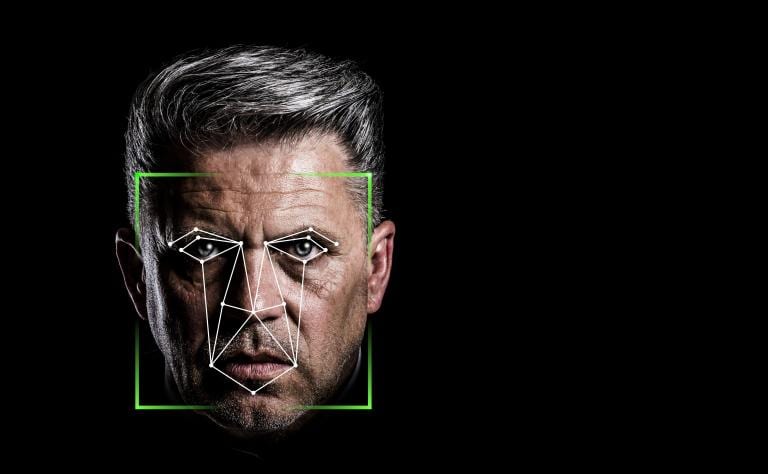
Facial Recognition Concept (CC0 pxfuel)
Facial recognition is widely becoming available. The question of how this should be used comes up immediately. China and the EU are going opposite directions with it: China fully embracing it while the EU holds off while it is studied. The USA and other developed nations are somewhere in the middle. We need to help set the moral principles for using this technology. I want to point out the directions of China and the EU, then examine these moral principles.
China Goes Full Steam on Facial Recognition
In 2018, China started giving police facial-recognition glasses. Reuters reported then:
At a highway check point on the outskirts of Beijing, local police are this week testing out a new security tool: smart glasses that can pick up facial features and car registration plates, and match them in real-time with a database of suspects.
The AI-powered glasses, made by LLVision, scan the faces of vehicle occupants and the plates, flagging with a red box and warning sign to the wearer when any match up with a centralized “blacklist”.
Now they are expanding facial recognition to the pharmacy. The BBC reported last week:
The Chinese government has begun rolling out facial recognition in pharmacies in Shanghai for people buying certain drugs.
Individuals buying controlled medicines, such as those containing psychotropic substances, will be asked to verify their identity by scanning their face.
This seems like it probably goes too far invading privacy. It seems 1984-esque.
The EU Temporarily Limits Facial Recognition
Right now the EU is putting very severe restrictions on using while they consider the issue. The same BBC article reported it.
The European Commission has revealed it is considering a ban on the use of facial recognition in public areas for up to five years.
Regulators want time to work out how to prevent the technology being abused.
The technology allows faces captured on CCTV to be checked in real time against watch lists, often compiled by police.
Exceptions to the ban could be made for security projects as well as research and development. […]
During the ban, which would last between three and five years, “a sound methodology for assessing the impacts of this technology and possible risk management measures could be identified and developed”.
I think that given the issues related to this technology with invading privacy, giving time to consider things is probably the best option. Hopefully, we Catholics can be part of the discussion in what is a just use of this technology.
I think other developed countries might be good following the EU’s lead here. Not that it can absolutely never be used but this is a better-safe-than-sorry measure while we consider how to use the technology ethically.
Moral Considerations with Facial Recognition
There are multiple issues with Facil recognition. The two biggest may be innocent until proven guilty and privacy.
Innocent Until Proven Guilty
In 2018, the ACLU ran a test of members of congress against a police database using facial recognition software and 28 came up as positive matches for criminals. Beyond the corrupt politician jokes, this is a problem because it can mean someone loses their right to innocence until proven otherwise.
We may not recognize this as such a Catholic issue but it was a cardinal who first articulated it 700 years ago. A CUA Law article from 2003 discusses it:
Rather than a sturdy Anglo-Saxon, a cardinal of the Roman church, a Frenchman, a canonist, Johannes Monachus was the first European jurist to recognize the inexorable logic of God’s judgment of Adam: God could not condemn Adam without a trial because even God must presume that Adam was innocent until proven guilty. Other canonists played with the idea of defendants’ rights. They coined a proverb that God must even give the devil his day in court. […] So – the answer to our question, who first uttered the principle, Innocent until proven guilty – a perfect question for the legal edition of Trivial Pursuit-is the French canonist Johannes Monachus. [His gloss through other law books] was a primary vehicle for transmitting the principle to later generations of jurists.
Now obviously, further developments in this technology might avoid this as we could discover ways to measure faces better like we now do fingerprints. However, this points out the caution in using it until it is that reliable.
Privacy
We have a certain right to privacy in our own affairs. Even as a religious where I have given this up, I need not report every movement to my superiors. Just before writing this I went for a jog, nobody other than I know where I jogged and it is my right to keep it that way unless there was serious cause otherwise such as if I was a witness to a crime during my jog. I wrote about this earlier and will repeat part of that article:
In cities, there is already the sense that once you leave your house, every area you are in probably has a security camera recording somewhere. In some parts of cities, police have cameras on almost every corner. However, once these cameras are connected and with facial recognition technology, none of us would be able to go for a cup of coffee with a friend without that becoming part of the public record. If you are caught on camera publicly intoxicated, even if a friend drives you home, you might get a ticket in the mail.
A year ago, Sen. Durbin asked Mark Zuckerburg a few questions about privacy. One was: “Would you be comfortable sharing with us the name of the hotel you stayed in last night?” Obviously, even Zuckerburg was not comfortable sharing this. We all want a certain amount of privacy over what we do, but with wide use of facial recognition, this seems no longer possible. […]
If we aren’t careful about how we use facial recognition, this technology could create a certain dystopia. Imagine if when we do a eucharistic procession through downtown, all of that is logged in a government computer forever. That might scare some people away, and most of us probably don’t want that on a government computer for 30 years.
Maybe in the future, we can find limited use of facial recognition software by governments, but we need a ban now to make sure we get it right. Once we have a database of everyone’s face and your every step through downtown for a decade is stored on a computer it will be in large part too late.
Conclusion
We need to speak up on issues like this. Otherwise, inertia will set privacy regulations around facial recognition. Right now the tendency in the USA is just to answer to who has more and better-paid lobbyists. Unfortunately, with this some of the biggest companies in the world like Google, Apple and Amazon stand to make a ton of money off this technology. Most people leave “OK Google’ or “Hey Siri” active even though for these to work, your phone must be recording at all times. I want my privacy over having to hold the home button 3 seconds in order to search. The software used by the ACLU was made by Amazon. We as individuals and as experts in morality must speak up.
Note: Please support me on Patreon so I can write more like this.
EDIT: right after I posted this, I saw a relevant story about how much China is using facial recognition software. They were shaming people for wearing pajamas in public after security cameras with facial recognition software picked them up.
Previous Post

January 17, 2020
Discernment Continues in the Seminary
Next Post
January 23, 2020 Fingerprint Scan & Facial Recognition to Enter a Church in China
Browse Our Archives
Select a Category Autism Bioethics Book Review Business and Economics Catholic Social Teaching Culture Diocesan Life Disability Discipleship Euthanasia Family Life Genetics Global Politics History Immigration Inspiration Interview Liturgy Moral Theology My Life News Analysis Original Articles Prayer Privacy Pro-Life Science Sexual orientation or identity Social Media Sports Technology Theology Uncategorized US Politics Vatican
Select a Month March 2022 February 2022 January 2022 December 2021 November 2021 October 2021 September 2021 August 2021 July 2021 June 2021 April 2021 March 2021 February 2021 January 2021 December 2020 November 2020 October 2020 September 2020 August 2020 July 2020 June 2020 May 2020 April 2020 March 2020 February 2020 January 2020 December 2019 November 2019 October 2019 September 2019 August 2019 July 2019 June 2019 May 2019 April 2019 March 2019 February 2019 January 2019 December 2018 November 2018 October 2018 September 2018 August 2018 July 2018 June 2018 May 2018
Follow Us!
TAKE THE
Religious Wisdom Quiz
Who was the only disciple who was not martyred?
Select your answer to see how you score.
James John Thomas Peter
Support this
Column


Related posts from Through Catholic Lenses

Russia Was Consecrated in 1984 to the Immaculate...

Greg Locke, Autism Is not Demonic

The Church Cannot Change Teaching on Homosexuality (Hollerich...
21 of the Most Dynamic Signs at March...
TRENDING AT PATHEOS Catholic

Rejecting Doom: Christian Hope And Human Action
Christianity is a religion of hope. We are to have hope and...

It’s What Comes From Within Which Matters
One of the most difficult things for us to understand is why...

Why I Choose the Eucharist Over the Sermon
Choose the Eucharist, Not the Sermon What are we supposed to get...

5 Design Elements Found in Spiritually Rooted Homes
Putting Spirituality Into Home Decor Our homes are more than our living...

Credo: A Story of God Told with the...
About 10 years ago, I began to imagine a personal "Credo" that...

The Anatomy of Divine Revelation in Catholic Thought
The claim that God has made Himself known to human beings is...
view all Catholic blogs
Ad-Free & Subscriber Log-In Subscription Support
- About Us
- 2026 Calendar
- Videos
- Podcasts
- Library of World Religions
- Faith In Media Tracker
- Advertise With Us
- Write for Us
- Privacy Policy
- Terms of Service
- Do Not Sell My Data
- Contact Us
- Radiant Digital
- Manage Newsletter Subscriptions
- Unsubscribe From Notifications
- Sitemap
Copyright 2008-2026, Patheos. All rights reserved.
Subscription Support Ad-Free & Subscriber Log-In
Follow Patheos