
BuddhistCatholicContemplativeEvangelicalGeneral ChristianHinduJewishLatter-day SaintMuslimNew VisionsProgressive Christian
Beliefs
- Buddhist
- Catholic
- Contemplative
- Evangelical
- General Christian
- Hindu
- Jewish
- Latter-day Saint
- More Voices
- Muslim
- New Visions
- Pagan
- Progressive Christian
Topics
- Religion News
- Food and Religion
- Sports and Religion
- Religious Art
- Religious Music and Entertainment
- Religious Events
- History and Religion
- Style and Religion
- Politics and Religion
- Women in Religion
- Recreation Outdoors and Religion
- Business Finance and Religion
- Careers Workplace and Religion
- Education and Religion
- Family Parenting and Religion
- Health Fitness and Religion
- Home and Religion
- Relationships and Religion
- Technology and Religion
- Travel and Religion
Columnists
- Buddhist Columnists
- Business Finance and Religion Columnists
- Careers Workplace and Religion Columnists
- Catholic Columnists
- Contemplative Columnists
- Education and Religion Columnists
- Evangelists Columnists
- Family Parenting and Religion Columnists
- General Christian Columnists
- Health Fitness and Religion Columnists
- Hindu Columnists
- History and Religion Columnists
- Home and Religion Columnists
- Jewish Columnists
- More Voices Columnists
- Latter Day Columnists
- Muslim Columnists
- New Visions Columnists
- Nonreligious Columnists
- Pagan Columnists
- Politics and Religion Columnists
- Progressive Columnists
- Recreation Outdoors and Religion Columnists
- Relationships and Religion Columnists
- Religion News Columnists
- Religious Art Columnists
- Religious Events Columnists
- Religious Music and Entertainment Columnists
- Sports and Religion Columnists
- Style and Religion Columnists
- Technology and Religion Columnists
- Travel and Religion Columnists
- Women in Religion Columnists
Resource Library
- 2026 Calendar
- Library of World Religions
- The 100 Most Holy Places on Earth
- Patheos Answers
- Podcasts
- Videos
- Faith Leaders Database
- Anglican Episcopalian
- Bahai
- Baptist
- Buddhism
- Christianity
- Confucianism
- Eastern Orthodoxy
- Hinduism
- Holiness and Pentecostal
- ISKCON
- Islam
- Judaism
- Lutheran
- Methodist
- The Church of Jesus Christ of Latter-day Saints
- New Age
- Paganism
- Presbytarian and Reformed
- Protestantism
- Religion Behind the Scenes
- Roman Catholic
- Scientology
- Shia Islam
- Sikhism
- Sufism
- Sunni Islam
- Taoism
- Zen
- See all religions
Research Tools
 Ad-Free & Subscriber Log-In Subscription Support
Ad-Free & Subscriber Log-In Subscription Support
Follow Patheos 

- Trending:
- Forgiveness
- |
- Marriage
- |
- Consciousness
- |
- Death Penalty
- |
- Election
- |
- Halloween
 Through Catholic Lenses
- Home
- Catholic
- Religion News
- Privacy and Facial Recognition Software: Moral Analysis
Privacy and Facial Recognition Software: Moral Analysis
Last updated on: September 24, 2019 at 9:44 am by Fr. Matthew P. Schneider, LC
Privacy and Facial Recognition Software: Moral Analysis 2019-09-24T09:44:02-04:00 Fr. Matthew P. Schneider, LC
Patheos Explore the world's faith through different perspectives on religion and spirituality! Patheos has the views of the prevalent religions and spiritualities of the world.
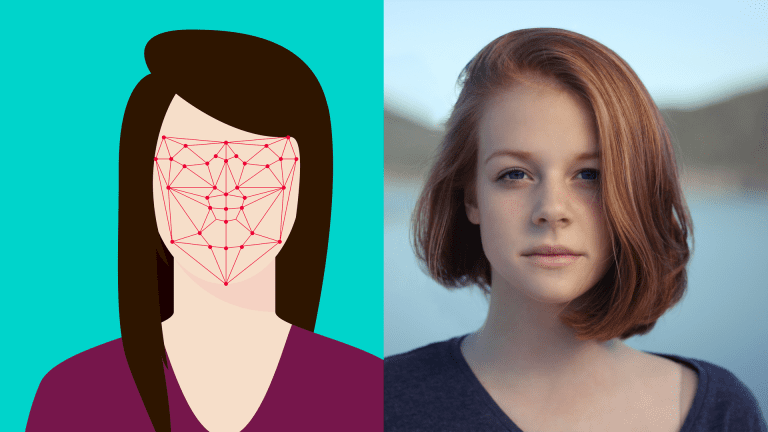
Facial recognition (2 images: both CC0 pixabay)
I’m currently writing a doctoral thesis in moral theology on the topic of privacy. A question arose in the Democratic primaries around whether police should be allowed to use facial recognition software.
Vox wrote an interesting piece on this software, focusing on how this software can have embedded biases. I am more concerned about privacy and thus concerned about its use by both private companies or the government.
The Current Debate over Facial Recognition Software
Vox reported on this:
In August, Sen. Bernie Sanders became the first presidential candidate to call for a total ban on the use of facial recognition software for policing. As part of his broader criminal justice reform plan, he also called for a moratorium on the use of algorithmic risk assessment tools that aim to predict which criminals will reoffend. […]
Some find this state of affairs disappointing, especially given that the public pushback against facial recognition is gaining momentum. The California Senate passed a bill this week placing a three-year moratorium on the use of facial recognition in police body cameras. State legislatures in New York, Michigan, and Massachusetts are also considering bills to rein in the technology. Bipartisan legislation is expected to be forthcoming in Congress.
“Facial recognition poses a unique threat to human liberty and basic rights — any candidate who wants to be taken seriously on criminal justice issues should be calling for an outright ban, or at the very least a moratorium on current use of this tech…” said Evan Greer, deputy director of the digital rights nonprofit Fight for the Future. […]
Sanders says he won’t allow the criminal justice system to go on using algorithmic tools for predicting recidivism until they pass an audit, because “we must ensure these tools do not have any implicit biases that lead to unjust or excessive sentences.” […]
Woodrow Hartzog and Evan Selinger, a law professor and a philosophy professor, respectively, argued last year that facial recognition tech is inherently damaging to our social fabric. “The mere existence of facial recognition systems, which are often invisible, harms civil liberties, because people will act differently if they suspect they’re being surveilled,” they wrote. The worry is that there’ll be a chilling effect on freedom of speech, assembly, and religion.
The authors also note that our faces are something we can’t change (at least not without surgery), that they’re central to our identity, and that they’re all too easily captured from a distance (unlike fingerprints or iris scans). If we don’t ban facial recognition before it becomes more entrenched, they argue, “people won’t know what it’s like to be in public without being automatically identified, profiled, and potentially exploited.” […]
This is not a far-off hypothetical but a current reality: China is already using facial recognition to track Uighur Muslims based on their appearance, in a system the New York Times has dubbed “automated racism.” That system makes it easier for China to round up Uighurs and detain them in internment camps.
I have just grabbed a few lines if you want to read the whole, rather lengthy, piece.
Moral Analysis of Privacy & Facial Recognition
I think Bernie Sanders is onto something here. I think this technology is fraught with ethical issues regarding privacy and the right to one’s good name.
It may prevent some crime or catch some criminals. A man decides against shoplifting as he knows he will be caught as the store security camera will match his face against a universal database. Or, a criminal on the run get’s caught as he walked by a corner where a police camera uses facial recognition. These are undoubtedly good things. However, are they worth the cost?
In cities, there is already the sense that once you leave your house, every area you are in probably has a security camera recording somewhere. In some parts of cities, police have cameras on almost every corner. However, once these cameras are connected and with facial recognition technology, none of us would be able to go for a cup of coffee with a friend without that becoming part of the public record. If you are caught on camera publicly intoxicated, even if a friend drives you home, you might get a ticket in the mail.
A year ago, Sen. Durbin asked Mark Zuckerburg a few questions about privacy. One was: “Would you be comfortable sharing with us the name of the hotel you stayed in last night?” Obviously, even Zuckerburg was not comfortable sharing this. We all want a certain amount of privacy over what we do, but with wide use of facial recognition, this seems no longer possible.
We all understand the problem with the social credit score the Chinese government is using. The Vox article even noted how it includes institutional racism against an ethnic minority group in the country. But even beyond that, restricting trains to those who are on the government’s “good list” seems oppressive. I don’t think anything like that is likely by western governments anytime soon, but if we aren’t careful about how we use facial recognition, this technology could create a certain dystopia. Imagine if when we do a eucharistic procession through downtown, all of that is logged in a government computer forever. That might scare some people away, and most of us probably don’t want that on a government computer for 30 years.
Maybe in the future, we can find limited use of facial recognition software by governments, but we need a ban now to make sure we get it right. Once we have a database of everyone’s face and your every step through downtown for a decade is stored on a computer it will be in large part too late.
Note: If you want more on privacy from a Catholic perspective, please support me on Patreon.
Previous Post

September 20, 2019
Deep Autistic Prayer: A Personal Prayer Beyond Words
Next Post

September 26, 2019 Euthanasia Where My Great Aunt Was a Sister-Nurse
Browse Our Archives
Select a Category Autism Bioethics Book Review Business and Economics Catholic Social Teaching Culture Diocesan Life Disability Discipleship Euthanasia Family Life Genetics Global Politics History Immigration Inspiration Interview Liturgy Moral Theology My Life News Analysis Original Articles Prayer Privacy Pro-Life Science Sexual orientation or identity Social Media Sports Technology Theology Uncategorized US Politics Vatican
Select a Month March 2022 February 2022 January 2022 December 2021 November 2021 October 2021 September 2021 August 2021 July 2021 June 2021 April 2021 March 2021 February 2021 January 2021 December 2020 November 2020 October 2020 September 2020 August 2020 July 2020 June 2020 May 2020 April 2020 March 2020 February 2020 January 2020 December 2019 November 2019 October 2019 September 2019 August 2019 July 2019 June 2019 May 2019 April 2019 March 2019 February 2019 January 2019 December 2018 November 2018 October 2018 September 2018 August 2018 July 2018 June 2018 May 2018
Follow Us!
TAKE THE
Religious Wisdom Quiz
According to Hebrews 11, what is the correct chronological order of these faith heroes?
Select your answer to see how you score.
Enoch, Abel, Abraham, Noah Abel, Enoch, Noah, Abraham Abraham, Noah, Enoch, Abel Noah, Abraham, Abel, Enoch
Support this
Column


Related posts from Through Catholic Lenses

Greg Locke, Autism Is not Demonic

The Church Cannot Change Teaching on Homosexuality (Hollerich...

Distinguishing Between Religious and Conscience Exceptions.
TRENDING AT PATHEOS Catholic

Rejecting Doom: Christian Hope And Human Action
Christianity is a religion of hope. We are to have hope and...

It’s What Comes From Within Which Matters
One of the most difficult things for us to understand is why...

Why I Choose the Eucharist Over the Sermon
Choose the Eucharist, Not the Sermon What are we supposed to get...

5 Design Elements Found in Spiritually Rooted Homes
Putting Spirituality Into Home Decor Our homes are more than our living...

Credo: A Story of God Told with the...
About 10 years ago, I began to imagine a personal "Credo" that...

The Anatomy of Divine Revelation in Catholic Thought
The claim that God has made Himself known to human beings is...
view all Catholic blogs
Ad-Free & Subscriber Log-In Subscription Support
- About Us
- 2026 Calendar
- Videos
- Podcasts
- Library of World Religions
- Faith In Media Tracker
- Advertise With Us
- Write for Us
- Privacy Policy
- Terms of Service
- Do Not Sell My Data
- Contact Us
- Radiant Digital
- Manage Newsletter Subscriptions
- Unsubscribe From Notifications
- Sitemap
Copyright 2008-2026, Patheos. All rights reserved.
Subscription Support Ad-Free & Subscriber Log-In
Follow Patheos