
BuddhistCatholicContemplativeEvangelicalGeneral ChristianHinduJewishLatter-day SaintMuslimNew VisionsProgressive Christian
Beliefs
- Buddhist
- Catholic
- Contemplative
- Evangelical
- General Christian
- Hindu
- Jewish
- Latter-day Saint
- More Voices
- Muslim
- New Visions
- Pagan
- Progressive Christian
Topics
- Religion News
- Food and Religion
- Sports and Religion
- Religious Art
- Religious Music and Entertainment
- Religious Events
- History and Religion
- Style and Religion
- Politics and Religion
- Women in Religion
- Recreation Outdoors and Religion
- Business Finance and Religion
- Careers Workplace and Religion
- Education and Religion
- Family Parenting and Religion
- Health Fitness and Religion
- Home and Religion
- Relationships and Religion
- Technology and Religion
- Travel and Religion
Columnists
- Buddhist Columnists
- Business Finance and Religion Columnists
- Careers Workplace and Religion Columnists
- Catholic Columnists
- Contemplative Columnists
- Education and Religion Columnists
- Evangelists Columnists
- Family Parenting and Religion Columnists
- General Christian Columnists
- Health Fitness and Religion Columnists
- Hindu Columnists
- History and Religion Columnists
- Home and Religion Columnists
- Jewish Columnists
- More Voices Columnists
- Latter Day Columnists
- Muslim Columnists
- New Visions Columnists
- Nonreligious Columnists
- Pagan Columnists
- Politics and Religion Columnists
- Progressive Columnists
- Recreation Outdoors and Religion Columnists
- Relationships and Religion Columnists
- Religion News Columnists
- Religious Art Columnists
- Religious Events Columnists
- Religious Music and Entertainment Columnists
- Sports and Religion Columnists
- Style and Religion Columnists
- Technology and Religion Columnists
- Travel and Religion Columnists
- Women in Religion Columnists
Resource Library
- 2026 Calendar
- Library of World Religions
- The 100 Most Holy Places on Earth
- Patheos Answers
- Podcasts
- Videos
- Faith Leaders Database
- Anglican Episcopalian
- Bahai
- Baptist
- Buddhism
- Christianity
- Confucianism
- Eastern Orthodoxy
- Hinduism
- Holiness and Pentecostal
- ISKCON
- Islam
- Judaism
- Lutheran
- Methodist
- The Church of Jesus Christ of Latter-day Saints
- New Age
- Paganism
- Presbytarian and Reformed
- Protestantism
- Religion Behind the Scenes
- Roman Catholic
- Scientology
- Shia Islam
- Sikhism
- Sufism
- Sunni Islam
- Taoism
- Zen
- See all religions
Research Tools
 Ad-Free & Subscriber Log-In Subscription Support
Ad-Free & Subscriber Log-In Subscription Support
Follow Patheos 

- Trending:
- Forgiveness
- |
- Marriage
- |
- Consciousness
- |
- Death Penalty
- |
- Election
- |
- Halloween
 Through Catholic Lenses
- Home
- Catholic
- Religion News
- Autistics Should Be Welcome in Church (Re: Evensong at Cambridge)
Autistics Should Be Welcome in Church (Re: Evensong at Cambridge)
Last updated on: June 19, 2019 at 11:16 am by Fr. Matthew P. Schneider, LC
Autistics Should Be Welcome in Church (Re: Evensong at Cambridge) 2019-06-19T11:16:03-04:00 Fr. Matthew P. Schneider, LC
Patheos Explore the world's faith through different perspectives on religion and spirituality! Patheos has the views of the prevalent religions and spiritualities of the world.
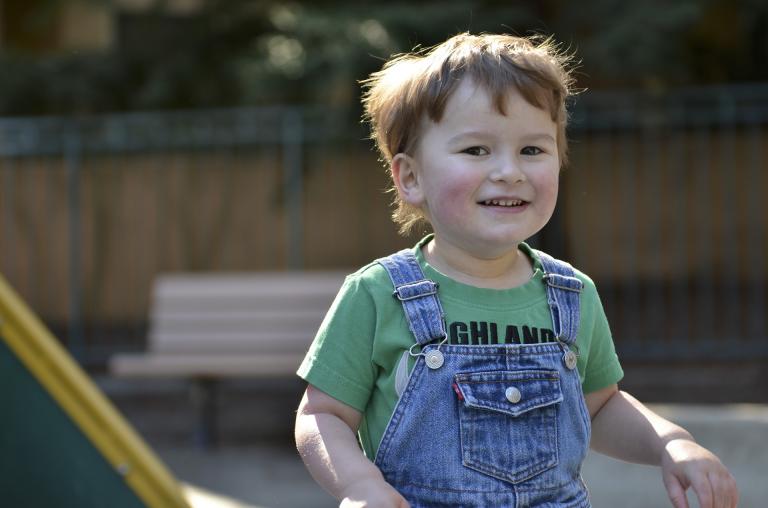
Happy Autistic Child (stock – Pixabay CC0)
Last Sunday, Dr. Paul Rimmer took his autistic son to Evensong at King’s College at Cambridge. They were asked to leave when his son made noise. Let me cover his letter and the apology then talk about autistic inclusion.
Dr. Rimmer’s Letter
The main point Dr. Rimmer makes is that Evensong, although a choral – not congregational – action is liturgical. Thus, it should be open to all trying their best to participate. However, he felt it was treated as a secular concert. Here are some excerpts.
Dear Reverend Dr Stephen Cherry,[…]
I chose to attend Evensong on Trinity Sunday, also Father’s Day, with my two sons, one of whom is autistic. Tristan is nine years old, and is a clever and joyful child, who loves church buildings, services, and choral music. He is also non-verbal, and expresses his excitement by calling out and laughing. His expressions are often loud and uncontainable. It is part of who he is, so there is no realistic way for him to be quiet. Many autistic people are like Tristan in this way. Right before the Kyrie, one of the ushers informed me that you had instructed him to remove us. Tristan’s expressions were apparently interfering with the enjoyment of some of the other visitors, which was very inconsiderate on our part, because tourists come from all over the world to hear the Evensong. The usher seemed embarrassed but insistent as he asked us to leave, though I’m not sure if it was because of my son’s vocalisations, or because of the nature of the directive you had given him.
As a Christian, I believe that worship is primarily intended to glorify God, and may have misinterpreted your Evensong as an actual worship service, at which my son’s expressions must surely be pleasing to God, the experience of other worshipers being secondary. Our removal makes more sense if Kings College’s Evensong were simply a concert held in a building that used to be a chapel. Then my son’s expressions would frustrate the purpose of the event, which is primarily performative; lessening the satisfaction of certain tourists around the world who attend, but not those kinds of people you deem to be too distracting. If this is so, I apologize.
You can read the whole letter on Dr. Rimmer’s Facebook.
The Apology
Dr. Stephen Cherry quickly issued an apology.
Dear Paul Rimmer,
I was devastated to read the letter that you posted on Facebook this morning. Every week we welcome thousands of people to services in King’s Chapel and we do our best to meet all their various needs and expectations. Sometimes we fail and I realise that we especially failed you and Tristan on Sunday afternoon. I apologise for that most sincerely.
Since hearing of your experience I have looked into what happened and now more fully appreciate that that there is more that we can do to support and help the staff who are responsible for the welcome that we give those who come to share our services with us. This is one of the reasons that I have written to you asking if you might be prepared to meet with me. I’m sure that your insights and connections could help us do better in the future. I should perhaps say for the record that I did not, in fact, give any instruction to the effect that your son should be asked to leave the Chapel on Sunday.
You can read the rest on his blog.
Including Autistics in the Liturgy
Liturgy cannot be reduced to a performance. When I celebrate the Mass, I’m usually up on an elevated platform saying preset words and the choir has usually practiced the songs. However, that is the essence of the liturgy. That is only a small portion of what is happening. The essence of the liturgy is the community together is praising God. I wrote about this meaning of liturgy a while back for Homiletic & Pastoral Review (footnotes in the link).
Josef Pieper develops the idea of leisure in his book Leisure: The Basis of Culture. He distinguishes leisure from the everyday, “Leisure is not the attitude of mind of those who actively intervene, but of those who are open to everything; not of those who grab and hold, but those who leave the reigns loose.” Leisure is not just a non-activity or relaxation, but something where we can let go, and be caught up in the crowd, the emotion, the sacred, God, etc. Such letting go is not without a goal but, “In leisure… the truly human values are saved from and preserved because leisure is the means whereby the sphere of the ‘specifically human’ can […] be left behind […] as in an ecstasy.” Thus, leisure is the height of human activity where man reaches his highest level, and what is most human comes from what is above the merely human. Leisure does not exist on its own, but: “Culture depends for its very existence of leisure, and leisure, in its turn, is not possible unless it has a durable and consequently living link with cultus, with divine worship.” So our worship of the divine is ultimate leisure.
The Church says, “The Eucharistic sacrifice […] is the fount and apex of the whole Christian life.” The Catechism quotes this phrase in a way to also apply it to the reserved Eucharist in the tabernacle, which is true because Jesus is sacramentally present there. Nonetheless, the original text says “Eucharistic sacrifice,” which is a specifically liturgical act. Plus, the context indicates that the Christian life here is understood as a succession of acts, and the Eucharistic Sacrifice is a specifically pivotal act of the Christian life. Thus, the liturgy of the Eucharist—including the homily—is the high point in Christian life.
Between the Church’s description of the liturgy, and Pieper’s definition of leisure, a convergence emerges. In fact, Pieper himself alludes to this: “In so far as the cultus is a sacrament, it is celebrated in visible signs.” In other words, leisure is the worship we offer God, and sacrament, or liturgy, is the visible sign bringing this worship about, and resulting from this worship. Liturgy and leisure as worship are inseparable. True worship, as the Church teaches, requires liturgy, while liturgy is worship made visible.
This sense of liturgy is essential. When we have Mass or other liturgical actions it is not a private prayer or performance, but communal worship.
Practical Ideas for Including Autistics
Obviously, different autistics are going to have different struggles. Rebecca O’Brien noted on Twitter, “My 44-year-old aspie husband would have been disturbed by the child’s outbursts.” I totally understand that perspective. I think we need to find a way to include all autistics, and others with disabilities: both who might cause noise or disturbance and those who would be affected particularly strongly by such noises. The goal is always to have the whole community able to worship Jesus as much as possible together.
I know for those who have sensory issues, some parishes have assigned Masses with a cry room dedicated to them. Dioceses also often have Masses lower in sensory experiences like a Mass for the deaf, an Extraordinary Form Low Mass or most Sunday morning Masses starting before 8:30 am.
For people who create extra noise or disturbances at Mass, I think there are two sides. If you are the person or their family, I think we should try to avoid such disturbances to the degree that is possible without avoiding the liturgy. By this, I refer to preparing ourselves beforehand and choosing Masses with fewer issues in this regard, other things being equal. However, that is not always possible and sometimes some liturgical events like Evensong are not offered at multiple times, so the only options are going or not going. On the other hand, the rest of us should never hold anyone back from participating in the liturgy. “Participating” is key here as we can remove those intentionally disrupting the liturgy. We should accept such people as we would accept a baby or toddler at Mass who might make slight outbursts. They are obviously not identical but they are similar in that neither is a willed disturbance to the liturgical flow. There a quite a few things (crawling up to the altar, crying, talking) my toddler nephews and niece get a pass on at Mass that I wouldn’t give their parents a pass on.
Hopefully, this event can be a reminder of the value of the liturgy as it pertains to all Christians, neurotypical or neurodivergent.
Note: Please support me on Patreon (monthly) or Acceptiva (one-time) so I can write more articles like this.
Previous Post
June 15, 2019
The Confusing Changing Results from DNA Ancestry Tests
Next Post

June 20, 2019 Defending Pope Francis as a "Conservative"
Browse Our Archives
Select a Category Autism Bioethics Book Review Business and Economics Catholic Social Teaching Culture Diocesan Life Disability Discipleship Euthanasia Family Life Genetics Global Politics History Immigration Inspiration Interview Liturgy Moral Theology My Life News Analysis Original Articles Prayer Privacy Pro-Life Science Sexual orientation or identity Social Media Sports Technology Theology Uncategorized US Politics Vatican
Select a Month March 2022 February 2022 January 2022 December 2021 November 2021 October 2021 September 2021 August 2021 July 2021 June 2021 April 2021 March 2021 February 2021 January 2021 December 2020 November 2020 October 2020 September 2020 August 2020 July 2020 June 2020 May 2020 April 2020 March 2020 February 2020 January 2020 December 2019 November 2019 October 2019 September 2019 August 2019 July 2019 June 2019 May 2019 April 2019 March 2019 February 2019 January 2019 December 2018 November 2018 October 2018 September 2018 August 2018 July 2018 June 2018 May 2018
Follow Us!
TAKE THE
Religious Wisdom Quiz
What was the name of the Roman governor who sentenced Jesus to death?
Select your answer to see how you score.
Tiberius Herod Antipas Caesar Augustus Pontius Pilate
Support this
Column


Related posts from Through Catholic Lenses

Why Such a Focus on Extraordinary Form in...

Sensory-Friendly Mass Directory Now Available

Greg Locke, Autism Is not Demonic

The Church Cannot Change Teaching on Homosexuality (Hollerich...
TRENDING AT PATHEOS Catholic

Rejecting Doom: Christian Hope And Human Action
Christianity is a religion of hope. We are to have hope and...

It’s What Comes From Within Which Matters
One of the most difficult things for us to understand is why...

Why I Choose the Eucharist Over the Sermon
Choose the Eucharist, Not the Sermon What are we supposed to get...

5 Design Elements Found in Spiritually Rooted Homes
Putting Spirituality Into Home Decor Our homes are more than our living...

Credo: A Story of God Told with the...
About 10 years ago, I began to imagine a personal "Credo" that...

The Anatomy of Divine Revelation in Catholic Thought
The claim that God has made Himself known to human beings is...
view all Catholic blogs
Ad-Free & Subscriber Log-In Subscription Support
- About Us
- 2026 Calendar
- Videos
- Podcasts
- Library of World Religions
- Faith In Media Tracker
- Advertise With Us
- Write for Us
- Privacy Policy
- Terms of Service
- Do Not Sell My Data
- Contact Us
- Radiant Digital
- Manage Newsletter Subscriptions
- Unsubscribe From Notifications
- Sitemap
Copyright 2008-2026, Patheos. All rights reserved.
Subscription Support Ad-Free & Subscriber Log-In
Follow Patheos