
BuddhistCatholicContemplativeEvangelicalGeneral ChristianHinduJewishLatter-day SaintMuslimNew VisionsProgressive Christian
Beliefs
- Buddhist
- Catholic
- Contemplative
- Evangelical
- General Christian
- Hindu
- Jewish
- Latter-day Saint
- More Voices
- Muslim
- New Visions
- Pagan
- Progressive Christian
Topics
- Religion News
- Food and Religion
- Sports and Religion
- Religious Art
- Religious Music and Entertainment
- Religious Events
- History and Religion
- Style and Religion
- Politics and Religion
- Women in Religion
- Recreation Outdoors and Religion
- Business Finance and Religion
- Careers Workplace and Religion
- Education and Religion
- Family Parenting and Religion
- Health Fitness and Religion
- Home and Religion
- Relationships and Religion
- Technology and Religion
- Travel and Religion
Columnists
- Buddhist Columnists
- Business Finance and Religion Columnists
- Careers Workplace and Religion Columnists
- Catholic Columnists
- Contemplative Columnists
- Education and Religion Columnists
- Evangelists Columnists
- Family Parenting and Religion Columnists
- General Christian Columnists
- Health Fitness and Religion Columnists
- Hindu Columnists
- History and Religion Columnists
- Home and Religion Columnists
- Jewish Columnists
- More Voices Columnists
- Latter Day Columnists
- Muslim Columnists
- New Visions Columnists
- Nonreligious Columnists
- Pagan Columnists
- Politics and Religion Columnists
- Progressive Columnists
- Recreation Outdoors and Religion Columnists
- Relationships and Religion Columnists
- Religion News Columnists
- Religious Art Columnists
- Religious Events Columnists
- Religious Music and Entertainment Columnists
- Sports and Religion Columnists
- Style and Religion Columnists
- Technology and Religion Columnists
- Travel and Religion Columnists
- Women in Religion Columnists
Resource Library
- 2026 Calendar
- Library of World Religions
- The 100 Most Holy Places on Earth
- Patheos Answers
- Podcasts
- Videos
- Faith Leaders Database
- Anglican Episcopalian
- Bahai
- Baptist
- Buddhism
- Christianity
- Confucianism
- Eastern Orthodoxy
- Hinduism
- Holiness and Pentecostal
- ISKCON
- Islam
- Judaism
- Lutheran
- Methodist
- The Church of Jesus Christ of Latter-day Saints
- New Age
- Paganism
- Presbytarian and Reformed
- Protestantism
- Religion Behind the Scenes
- Roman Catholic
- Scientology
- Shia Islam
- Sikhism
- Sufism
- Sunni Islam
- Taoism
- Zen
- See all religions
Research Tools
 Ad-Free & Subscriber Log-In Subscription Support
Ad-Free & Subscriber Log-In Subscription Support
Follow Patheos 

- Trending:
- Forgiveness
- |
- Marriage
- |
- Consciousness
- |
- Death Penalty
- |
- Election
- |
- Halloween
 Through Catholic Lenses
- Home
- Catholic
- Religion News
- Designer Babies Are Here: Let’s Not Kid Ourselves
Designer Babies Are Here: Let’s Not Kid Ourselves
Last updated on: December 13, 2018 at 8:02 pm by Fr. Matthew P. Schneider, LC
Designer Babies Are Here: Let’s Not Kid Ourselves 2018-12-13T20:02:08-05:00 Fr. Matthew P. Schneider, LC
Patheos Explore the world's faith through different perspectives on religion and spirituality! Patheos has the views of the prevalent religions and spiritualities of the world.
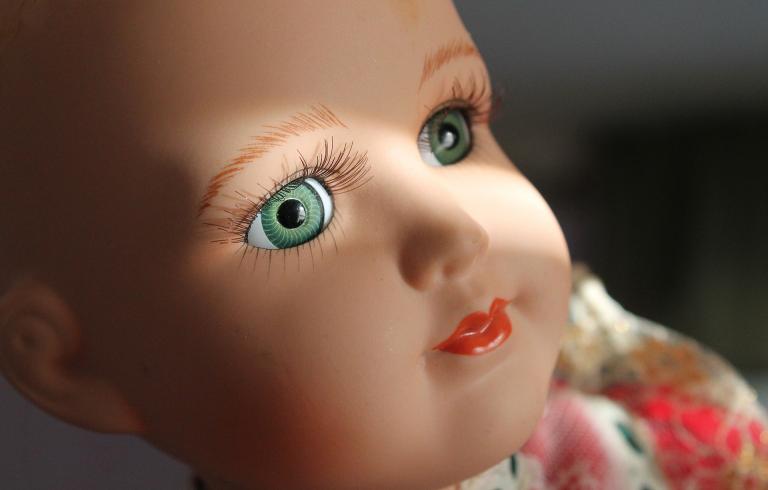
A porcelain doll (CC0 via pixabay)
This week, A Cecile JW Janssens, a professor of Epidemiology at Emory University, tried to argue that designer babies aren’t here and aren’t coming. Her article was published in The Conversation. I want to go over her article including her main arguments – environment and gene interactions – followed by the reality of genetic investigation and current abortion rates for testable “imperfections.” I conclude with a cautionary warning.
The First Designer Baby
Janssens begins with the first designer baby chosen to be a donor for his sister.
Adam Nash is considered to be the first designer baby, born in 2000 using in vitro fertilizaton with pre-implantation genetic diagnosis, a technique used to choose desired characteristics. The media covered the story with empathy for the parents’ motives but not without reminding the reader that “eye color, athletic ability, beauty, intelligence, height, stopping a propensity towards obesity, guaranteeing freedom from certain mental and physical illnesses, all of these could in the future be available to parents deciding to have a designer baby.”
Her argument will be to point out that these are not likely and we should stop fear-mongering. I believe she is wrong. We should not fear-monger but concerns about designer babies are far more real than she argues.
The History of the Designer Baby Fear
Janssens points out that the basic argument hasn’t changed since IVF was first created in 1978. She list various events, then concludes:
The designer baby doom scenarios have not evolved with the technology. It’s been the same story for decades. It’s the same “desirable” traits and the same assumption that parents want to select these traits if technology allowed.
Obviously, nobody is arguing that one gene switch makes you go from an IQ of 75 to 125. However, in this complex of interconnected genes, certain patterns can be found. As I quoted in an earlier article on November 21st.
The firm Genomic Prediction says it has developed genetic screening tests that can assess complex traits, such as the risk of some diseases and low intelligence, in IVF embryos. The tests haven’t been used yet, but the firm began talks last month with several IVF clinics to provide them to customers.
For intelligence, Genomic Prediction says that it will only offer the option of screening out embryos deemed likely to have “mental disability”. However, the same approach could in future be used to identify embryos with genes that make them more likely to have a high IQ. “I think people are going to demand that. If we don’t do it, some other company will,” says the firm’s co-founder Stephen Hsu.
Janssens argues that the environment and other factors play an important role in determining traits like this. However, most experts put the heritability of IQ at 60-80%. That is a pretty significant.
Mutations Vs. Variations
Janssens points to a distinction between two types of DNA differences.
Although there are exceptions, DNA generally differs between people in two ways: There are DNA mutations and DNA variations.
Mutations cause rare diseases like Huntington’s disease and cystic fibrosis, which are caused by a single gene. Mutations in the BRCA genes substantially increase the risk of breast and ovarian cancer. Selecting embryos that do not have these mutations removes the entire or main cause of disease – women who don’t have BRCA mutations can still develop breast cancer through other causes, like all women.
Variations are changes in the genetic code that are more common than mutations and associated with common traits and diseases. DNA variants increase the likelihood that you may have a trait or develop a disease but do not determine or cause it. Association means that in several large study populations, a DNA variant was more frequent among people with the trait than those without, often only slightly more frequent.
She wants to argue that we will screen – and should screen – against mutations but leave variations untouched. This is valuable but insufficient. If that was the case, how could she explain what Stephen Hsu of Genomic Prediction above who will offer to remove embryos with variations not conducive to high intelligence? She will critique Hsu but doesn’t offer proof he’s wrong.
DNA interactions
Later on, Janssens goes on to explain:
Most DNA mutations do nothing else other than cause the disease, but DNA variations may play a role in many diseases and traits. Take variations in the MC1R “red hair” gene, which not only increases the chance that your child will have red hair, but also increases their risk of skin cancer. Or variations in the OCA2 and HERC2 “eye color” genes that are also associated with the risk of various cancers, Parkinson’s and Alzheimer’s disease. To be sure, these are statistical associations, reported in the scientific literature, some may be confirmed; others may not. But the message is clear: Editing DNA variations for “desirable” traits may have adverse consequences, including many that scientists don’t know about yet.
Janssens seems to take these facts of interaction or conditions caused by multiple genes as proof that tests can’t be done with high probability to detect IVF babies with certain undesirable modifications and then either eliminate these babies or edit the genome to make designer babies.
Growing Understanding of Gene Interaction
She argues, “There will be opportunists who will try to offer these traits, even if totally premature and unsupported by science,” and that Hsu of Genomic Predictions is one of these. She doesn’t directly argue Hsu is wrong but elsewhere notes: “Traits and diseases that result from multiple genes and lifestyle factors cannot be predicted using just DNA, and cannot be designed. Not now. And very unlikely ever.” In this line, she cites an article questioning the predictive ability of current over-the-counter DNA testing. To argue from current low-cost commercial tests to “very unlikely ever” seems a stretch.
We know that many conditions are highly genetic. Many of these are from the interactions of many variations, not a single mutation. For example, schizophrenia, Graves’ disease, COPD, stuttering ADHD, bipolar, obesity, and epilepsy are over 2/3 genetic but most likely simply an interaction of multiple variations.
Now with genomic testing prices lowering dramatically, huge studies are being done on such conditions to find the gene combinations that cause them. For example, this study collected the DNA from over 50,000 people with Autism (ASD) and their families for a total of 130,000 people’s DNA. With such a large data pool and powerful computers to look for patterns, it is inevitable that some kind of better understanding of interactions and gene combinations for autism will be discovered. (The advance of science is good but the possible use to decide ofr abortion is troubling.)
Down’s Syndrome Testing Shows Us a Grim Future
Down’s Syndrome is one of the first conditions where a genetic test before birth was available. Currently, in the UK, 90% of those diagnosed prenatally, are aborted. George Will noted, “In Iceland, upward of 85 percent of pregnant women opt for the prenatal testing, which has produced a Down syndrome elimination rate approaching 100 percent.” And the LeJeuene foundation pointed out, “All but four of the babies diagnosed with Down syndrome in Denmark last year were aborted.”
Tests for other conditions which are not 100% genetic will inevitably be less reliable, but what percent would abort if told, “There is an 80% chance your child will become schizophrenic” or “There is a 70% your child will stutter”? Obviously, the percents and conditions would give varied outcomes. If someone decides to keep a kid who has such a prenatal diagnosis, how will society treat someone who chose against having a designer baby?
Tests are Perfect But Babies Will Be Aborted
Eugenic abortions for Down’s Syndrome are a reality and they will be coming for other conditions. In June I wrote about Pope Francis condemning these eugenic abortions. (It is well worth reading as it has the testimony fo a mother of a Down Syndrome child and some catechetical information along with the Pope.)
Janssens is right about some aspects of genetic babies at least for the foreseeable future. We are unlikely to have children’s genes selected or edited for more minor things like eye color or height. However, the probability that some conditions will be largely “screened” (i.e. aborted) out of existence is real. However, many of these conditions have special gifts where many literary greats are schizophrenic or bipolar, and many inventors are autistic. (Even these examples underplay how these conditions can create challenges but also offer unique gifts.) We as a society need to do more to include such people as the social model of disability teaches us.
Terminating a pregnancy might be recommended if the probable intelligence is below a certain threshold, even though we know it could still vary by about 15 points from that prediction. We won’t have perfect designer babies that have exactly the desired traits. Instead, we will be able to remove the traits that we consider undesirable That is eugenics! If society goes down that path some of the beauty of human variety will disappear.
Please help me make more content like this by becoming a patron on Patreon.

Next Post

December 18, 2018 2 Anonymous Priests: Silence Regarding Priestly Misconduct Is a Problem
Browse Our Archives
Select a Category Autism Bioethics Book Review Business and Economics Catholic Social Teaching Culture Diocesan Life Disability Discipleship Euthanasia Family Life Genetics Global Politics History Immigration Inspiration Interview Liturgy Moral Theology My Life News Analysis Original Articles Prayer Privacy Pro-Life Science Sexual orientation or identity Social Media Sports Technology Theology Uncategorized US Politics Vatican
Select a Month March 2022 February 2022 January 2022 December 2021 November 2021 October 2021 September 2021 August 2021 July 2021 June 2021 April 2021 March 2021 February 2021 January 2021 December 2020 November 2020 October 2020 September 2020 August 2020 July 2020 June 2020 May 2020 April 2020 March 2020 February 2020 January 2020 December 2019 November 2019 October 2019 September 2019 August 2019 July 2019 June 2019 May 2019 April 2019 March 2019 February 2019 January 2019 December 2018 November 2018 October 2018 September 2018 August 2018 July 2018 June 2018 May 2018
Follow Us!
TAKE THE
Religious Wisdom Quiz
In 1 Peter, what did the prophets search intently and with great care about?
Select your answer to see how you score.
The salvation of Israel The day of the Lord The sufferings of the Messiah and the glories that would follow The end times
Support this
Column


Related posts from Through Catholic Lenses

Greg Locke, Autism Is not Demonic

The Church Cannot Change Teaching on Homosexuality (Hollerich...
21 of the Most Dynamic Signs at March...
Aquinas: Some Sins Worse Than Sexual Sins
TRENDING AT PATHEOS Catholic

Rejecting Doom: Christian Hope And Human Action
Christianity is a religion of hope. We are to have hope and...

It’s What Comes From Within Which Matters
One of the most difficult things for us to understand is why...

Why I Choose the Eucharist Over the Sermon
Choose the Eucharist, Not the Sermon What are we supposed to get...

5 Design Elements Found in Spiritually Rooted Homes
Putting Spirituality Into Home Decor Our homes are more than our living...

Credo: A Story of God Told with the...
About 10 years ago, I began to imagine a personal "Credo" that...

The Anatomy of Divine Revelation in Catholic Thought
The claim that God has made Himself known to human beings is...
view all Catholic blogs
Ad-Free & Subscriber Log-In Subscription Support
- About Us
- 2026 Calendar
- Videos
- Podcasts
- Library of World Religions
- Faith In Media Tracker
- Advertise With Us
- Write for Us
- Privacy Policy
- Terms of Service
- Do Not Sell My Data
- Contact Us
- Radiant Digital
- Manage Newsletter Subscriptions
- Unsubscribe From Notifications
- Sitemap
Copyright 2008-2026, Patheos. All rights reserved.
Subscription Support Ad-Free & Subscriber Log-In
Follow Patheos