
BuddhistCatholicContemplativeEvangelicalGeneral ChristianHinduJewishLatter-day SaintMuslimNew VisionsProgressive Christian
Beliefs
- Buddhist
- Catholic
- Contemplative
- Evangelical
- General Christian
- Hindu
- Jewish
- Latter-day Saint
- More Voices
- Muslim
- New Visions
- Pagan
- Progressive Christian
Topics
- Religion News
- Food and Religion
- Sports and Religion
- Religious Art
- Religious Music and Entertainment
- Religious Events
- History and Religion
- Style and Religion
- Politics and Religion
- Women in Religion
- Recreation Outdoors and Religion
- Business Finance and Religion
- Careers Workplace and Religion
- Education and Religion
- Family Parenting and Religion
- Health Fitness and Religion
- Home and Religion
- Relationships and Religion
- Technology and Religion
- Travel and Religion
Columnists
- Buddhist Columnists
- Business Finance and Religion Columnists
- Careers Workplace and Religion Columnists
- Catholic Columnists
- Contemplative Columnists
- Education and Religion Columnists
- Evangelists Columnists
- Family Parenting and Religion Columnists
- General Christian Columnists
- Health Fitness and Religion Columnists
- Hindu Columnists
- History and Religion Columnists
- Home and Religion Columnists
- Jewish Columnists
- More Voices Columnists
- Latter Day Columnists
- Muslim Columnists
- New Visions Columnists
- Nonreligious Columnists
- Pagan Columnists
- Politics and Religion Columnists
- Progressive Columnists
- Recreation Outdoors and Religion Columnists
- Relationships and Religion Columnists
- Religion News Columnists
- Religious Art Columnists
- Religious Events Columnists
- Religious Music and Entertainment Columnists
- Sports and Religion Columnists
- Style and Religion Columnists
- Technology and Religion Columnists
- Travel and Religion Columnists
- Women in Religion Columnists
Resource Library
- 2026 Calendar
- Library of World Religions
- The 100 Most Holy Places on Earth
- Patheos Answers
- Podcasts
- Videos
- Faith Leaders Database
- Anglican Episcopalian
- Bahai
- Baptist
- Buddhism
- Christianity
- Confucianism
- Eastern Orthodoxy
- Hinduism
- Holiness and Pentecostal
- ISKCON
- Islam
- Judaism
- Lutheran
- Methodist
- The Church of Jesus Christ of Latter-day Saints
- New Age
- Paganism
- Presbytarian and Reformed
- Protestantism
- Religion Behind the Scenes
- Roman Catholic
- Scientology
- Shia Islam
- Sikhism
- Sufism
- Sunni Islam
- Taoism
- Zen
- See all religions
Research Tools
 Ad-Free & Subscriber Log-In Subscription Support
Ad-Free & Subscriber Log-In Subscription Support
Follow Patheos 

- Trending:
- Forgiveness
- |
- Marriage
- |
- Consciousness
- |
- Death Penalty
- |
- Election
- |
- Halloween
 Through Catholic Lenses
- Home
- Catholic
- Religion News
- Burning Questions about Catholicism: Theology Q&A on CuriousCat
Burning Questions about Catholicism: Theology Q&A on CuriousCat
Last updated on: December 28, 2018 at 11:36 am by Fr. Matthew P. Schneider, LC
Burning Questions about Catholicism: Theology Q&A on CuriousCat 2018-12-28T11:36:52-05:00 Fr. Matthew P. Schneider, LC
Patheos Explore the world's faith through different perspectives on religion and spirituality! Patheos has the views of the prevalent religions and spiritualities of the world.
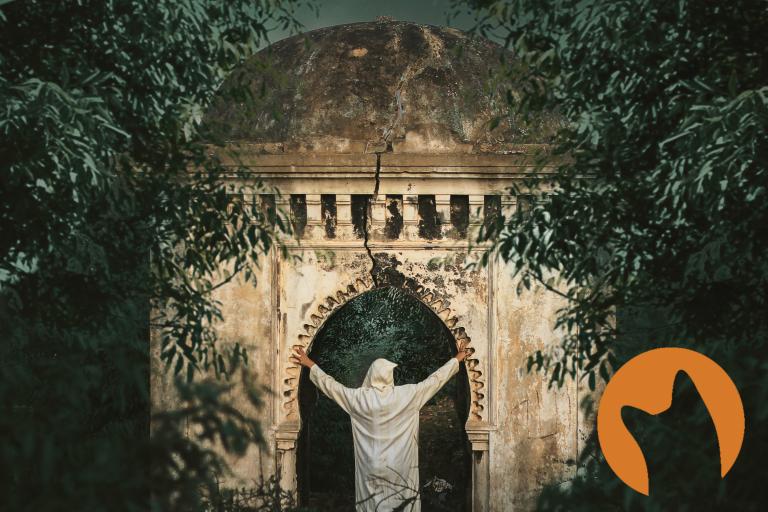
(Photo: CC0 Aziz Acharki on Unsplash; logo: fair use)
People have asked me a bunch of theological questions online. I collected the best on my CuriousCat recently and am posting them here as a Q&A. This is the third in a series: the other two have been on prayer but this is theology. Hopefully, you enjoy these theological questions on laicization or defrocking, free will, fate, the death penalty, papal infallibility, Hell and Isalm.
I hear talk about “laicization” or “defrocking” of priests. Practically, what does this look like? Is priesthood an indelible mark or can one actually take away a priest’s ability to celebrate sacraments?
Laicization or defrocking of priests means that they are removed from the clerical state and lose the permission to celebrate the sacraments (unless someone asks for confession on their deathbed).
This does not affect that they are priests and could still validly – although completely illicitly and contrary to morals – celebrate the sacraments.
Sometimes priests ask for this when they don’t want to act as priests and sometimes it is forced upon them when they have done something seriously wrong as a priest.
Does fate exist? If so, do we have free will?
God foresees all that is to happen but he doesn’t cause it. Just because God knows what we’ll choose, doesn’t mean he causes it. The best analogy I’ve heard is that time is like a parade going on in a valley: all of us are part of are spectators right there who can only see a small bit but God is up on the mountaintop & can see the whole parade at once. This isn’t a perfect analogy but I hope it helps.

I’ve read your recent posts on the death penalty. In an online discussion that I’ve had, several people insist that the church’s ordinary magisterium has always taught infallibly that the death penalty is acceptable. Is this accurate?
There is a distinction between affirming someone or some organization has a power and affirming it can be morally exercised. The recent change in the catechism did not say states didn’t have the power, only in present circumstances, there was no moral time it could be exercised.
I explain this more in this article: see the section “Permission to a Power.” http://www.patheos.com/blogs/throughcatholiclenses/2018/08/capital-punishment-francis-the-tradition-are-both-right/
From whence does the Bishop of Rome derive his special charisms (e.g., infallibility when speaking ex-cathedra)? He didn’t get them by receiving a sacrament since he had already been ordained a bishop and received the charisms associated with that the sacrament of holy orders. The Papal election isn’t a sacrament, any more than the appointment of a cardinal is. So how did he get his special charisms?
The early Church recognized that the bishops were successors of the apostles. Like the apostles had one who had a certain priority in the group – Peter – the place he was a bishop – Rome – got enshrined permanently as the one holding that certain priority over the successors of the apostles as a group.
According to Islam, God has, since the establishment of the final faith, promised to no longer incur his wrath onto humanity till the final day of judgment. I was wondering if this was the belief in Christianity also? Will God, who has established the true way of salvation, abstain from bringing his wrath down onto humanity till the day we come before Him? If so, how does that mesh with age-old ideas of diseases, natural disasters, etc. being ‘God’s wrath’ for sinful societies?
We Christians believe that God will not destroy the earth until the final day of the second coming when we will get a new heaven and a new earth. That is the promise to Noah.
However, that God will not express his wrath on humanity might imply that nobody will suffer in Hell until the end of time. We know Hell is real, people suffer there, and at least some people go there. If someone is in Hell they will be suffering God’s wrath before the end of time but the main force of God’s wrath is held back until the end of time. Hopefully, this clarification helps.
If you enjoyed that, check out my other two Q&A articles or ask me more on CuriousCat.
Next Post
December 28, 2018 The Pope Didn't Deny the Immaculate Conception
Browse Our Archives
Select a Category Autism Bioethics Book Review Business and Economics Catholic Social Teaching Culture Diocesan Life Disability Discipleship Euthanasia Family Life Genetics Global Politics History Immigration Inspiration Interview Liturgy Moral Theology My Life News Analysis Original Articles Prayer Privacy Pro-Life Science Sexual orientation or identity Social Media Sports Technology Theology Uncategorized US Politics Vatican
Select a Month March 2022 February 2022 January 2022 December 2021 November 2021 October 2021 September 2021 August 2021 July 2021 June 2021 April 2021 March 2021 February 2021 January 2021 December 2020 November 2020 October 2020 September 2020 August 2020 July 2020 June 2020 May 2020 April 2020 March 2020 February 2020 January 2020 December 2019 November 2019 October 2019 September 2019 August 2019 July 2019 June 2019 May 2019 April 2019 March 2019 February 2019 January 2019 December 2018 November 2018 October 2018 September 2018 August 2018 July 2018 June 2018 May 2018
Follow Us!
TAKE THE
Religious Wisdom Quiz
Which city did David conquer and make his capital?
Select your answer to see how you score.
Bethel Hebron Gibeon Jerusalem
Support this
Column


Related posts from Through Catholic Lenses

Why Such a Focus on Extraordinary Form in...

The Church Cannot Change Teaching on Homosexuality (Hollerich...
Catholic Media: Fides Quarens Rem Publicam

21 of the Most Dynamic Signs at March...
TRENDING AT PATHEOS Catholic

Rejecting Doom: Christian Hope And Human Action
Christianity is a religion of hope. We are to have hope and...

It’s What Comes From Within Which Matters
One of the most difficult things for us to understand is why...

Why I Choose the Eucharist Over the Sermon
Choose the Eucharist, Not the Sermon What are we supposed to get...

5 Design Elements Found in Spiritually Rooted Homes
Putting Spirituality Into Home Decor Our homes are more than our living...

Credo: A Story of God Told with the...
About 10 years ago, I began to imagine a personal "Credo" that...

The Anatomy of Divine Revelation in Catholic Thought
The claim that God has made Himself known to human beings is...
view all Catholic blogs
Ad-Free & Subscriber Log-In Subscription Support
- About Us
- 2026 Calendar
- Videos
- Podcasts
- Library of World Religions
- Faith In Media Tracker
- Advertise With Us
- Write for Us
- Privacy Policy
- Terms of Service
- Do Not Sell My Data
- Contact Us
- Radiant Digital
- Manage Newsletter Subscriptions
- Unsubscribe From Notifications
- Sitemap
Copyright 2008-2026, Patheos. All rights reserved.
Subscription Support Ad-Free & Subscriber Log-In
Follow Patheos