
BuddhistCatholicContemplativeEvangelicalGeneral ChristianHinduJewishLatter-day SaintMuslimNew VisionsProgressive Christian
Beliefs
- Buddhist
- Catholic
- Contemplative
- Evangelical
- General Christian
- Hindu
- Jewish
- Latter-day Saint
- More Voices
- Muslim
- New Visions
- Pagan
- Progressive Christian
Topics
- Religion News
- Food and Religion
- Sports and Religion
- Religious Art
- Religious Music and Entertainment
- Religious Events
- History and Religion
- Style and Religion
- Politics and Religion
- Women in Religion
- Recreation Outdoors and Religion
- Business Finance and Religion
- Careers Workplace and Religion
- Education and Religion
- Family Parenting and Religion
- Health Fitness and Religion
- Home and Religion
- Relationships and Religion
- Technology and Religion
- Travel and Religion
Columnists
- Buddhist Columnists
- Business Finance and Religion Columnists
- Careers Workplace and Religion Columnists
- Catholic Columnists
- Contemplative Columnists
- Education and Religion Columnists
- Evangelists Columnists
- Family Parenting and Religion Columnists
- General Christian Columnists
- Health Fitness and Religion Columnists
- Hindu Columnists
- History and Religion Columnists
- Home and Religion Columnists
- Jewish Columnists
- More Voices Columnists
- Latter Day Columnists
- Muslim Columnists
- New Visions Columnists
- Nonreligious Columnists
- Pagan Columnists
- Politics and Religion Columnists
- Progressive Columnists
- Recreation Outdoors and Religion Columnists
- Relationships and Religion Columnists
- Religion News Columnists
- Religious Art Columnists
- Religious Events Columnists
- Religious Music and Entertainment Columnists
- Sports and Religion Columnists
- Style and Religion Columnists
- Technology and Religion Columnists
- Travel and Religion Columnists
- Women in Religion Columnists
Resource Library
- 2026 Calendar
- Library of World Religions
- The 100 Most Holy Places on Earth
- Patheos Answers
- Podcasts
- Videos
- Faith Leaders Database
- Anglican Episcopalian
- Bahai
- Baptist
- Buddhism
- Christianity
- Confucianism
- Eastern Orthodoxy
- Hinduism
- Holiness and Pentecostal
- ISKCON
- Islam
- Judaism
- Lutheran
- Methodist
- The Church of Jesus Christ of Latter-day Saints
- New Age
- Paganism
- Presbytarian and Reformed
- Protestantism
- Religion Behind the Scenes
- Roman Catholic
- Scientology
- Shia Islam
- Sikhism
- Sufism
- Sunni Islam
- Taoism
- Zen
- See all religions
Research Tools
 Ad-Free & Subscriber Log-In Subscription Support
Follow Patheos 

- Trending:
- Advent
- |
- Forgiveness
- |
- Thanksgiving
- |
- Election
- |
- Seasonal Holidays
- |
- Marriage
 Through Catholic Lenses
- Home
- Catholic
- Religion News
- Capital Punishment: Francis & the Tradition Before Him Are Both Right
Capital Punishment: Francis & the Tradition Before Him Are Both Right
Last updated on: August 6, 2018 at 9:32 pm by Fr. Matthew P. Schneider, LC
Capital Punishment: Francis & the Tradition Before Him Are Both Right 2018-08-06T21:32:40-04:00 Fr. Matthew P. Schneider, LC
Patheos Explore the world's faith through different perspectives on religion and spirituality! Patheos has the views of the prevalent religions and spiritualities of the world.
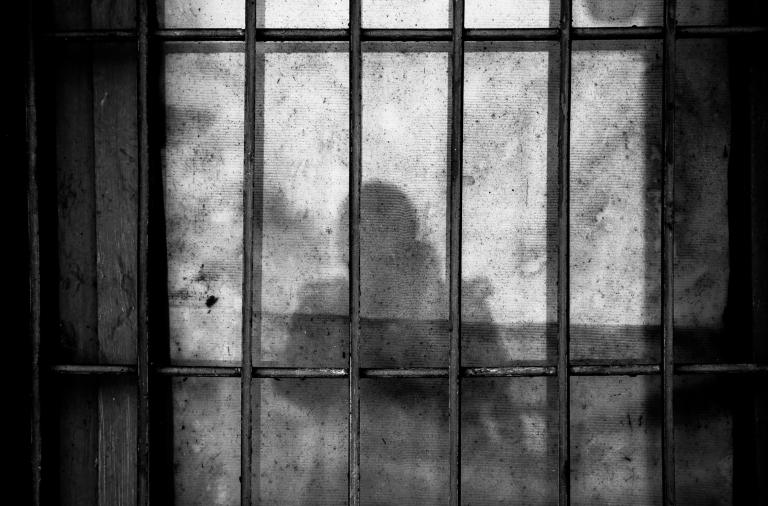
Photo: Ye Jinghan on Unsplash
In the past two days, Capital Punishment has been a hot topic. Some claim previous Church teaching was wrong while others saying Pope Francis is a heretic. Neither of these positions holds water. Instead, both have their place to play and work in harmony using a hermeneutic of continuity. As Fr Thomas Petri, OP, noted, “I think Pope Francis’ change further absolutizes the pastoral conclusion made by John Paul II.” Fr Jay Scott Newman seems to agree in principle: “Do not be dismayed or misled by the headlines which scream that Pope Francis has fundamentally changed a doctrine of the Catholic Church. He has not done that, and such a thing is an impossibility.”
At issue is the change of Catechism 2267 to indicate capital punishment is INADMISSIBLE (that’s a key word). I will include the textual differences at the end, but first, let’s talk some principles.
Principles Re: Capital Punishment
Permission to a Power
The Church has never said that capital punishment is a good. However, she has affirmed the state has the power to inflict it to protect society. The clearest example of this was when Pope Innocent III required some heretics seeking reconciliation with the Church to accept the proposition: “The secular power can, without mortal sin, exercise judgment of blood, provided that it punishes with justice, not out of hatred, with prudence, not precipitation.”
In affirming they have such power, it says nothing about when they should or should not exercise it. Affirming a power exists does not imply that this power should be used. For example, one could affirm that a priest has the power to ordain another priest while simultaneously affirming that a priest should NEVER exercise that power. (There is an actual theological question about priests ordaining other priests. Boniface IX gave an abbot – who was a priest not a bishop – permission to ordain priests in the Bull Sacrae religionis in 1400. However, no serious theologian argues priests should ordain.)
The ordinary magisterium has repeated that a government has the power to issue a death sentence. However, no individual infallible document or consistent tradition of the ordinary magisterium has stated we need to affirm not only a power exists but that cases will always exist where it is needed, or that states should always maintain it.
Yesterday’s decree did not deny that states have the power. It only said it was inadmissible, or illicit to use that power. We assume that the Church keeps affirming things unless she says otherwise. The fact this clarification explicitly avoided this question leaves us assuming the authors continue to affirm previous teaching.
Development
What is left is a prudential judgment of whether a state should practice capital punishment. Prudential judgments are always based on contingent facts, which people can disagree on. However, the Church has the power to issue a general prudential judgment when situations call for it. For example, while historically there have been confessionally Catholic states, the prudential judgment in recent decades is not to have such states. Also, usury is the unjust charging of interest which still exists when interest rates are obscenely high, but which prudentially has been determined to not apply to all interest as it did centuries ago.
Development of Prisons
A large part of jail or capital punishment has consistently been protecting society from criminals. Current high-security jails are sufficient to protect society from such criminals. The letter accompanying yesterday’s catechism change says:
The teaching of the Encyclical Letter Evangelium vitæ of John Paul II is of great importance. The Holy Father enumerated among the signs of hope for a new culture of life “a growing public opposition to the death penalty, even when such a penalty is seen as a kind of ‘legitimate defense’ on the part of society. Modern society in fact has the means of effectively suppressing crime by rendering criminals harmless without definitively denying them the chance to reform.”
A Deeper Understanding of Human Dignity
Doctrine has also developed without ever contradicting the past. As we have further understood human dignity, we have seen a preference for less violent forms of punishment: jail time rather than lashes or death. yesterday’s letter accompanying the change quotes John Paul II and Benedict XVI.
John Paul II affirmed: “Not even a murderer loses his personal dignity, and God himself pledges to guarantee this.” […]
Benedict XVI recalled “the attention of society’s leaders to the need to make every effort to eliminate the death penalty.” He later wished a group of the faithful that “your deliberations will encourage the political and legislative initiatives being promoted in a growing number of countries to eliminate the death penalty and to continue the substantive progress made in conforming penal law both to the human dignity of prisoners and the effective maintenance of public order.”
The Infallibility of the Catechism
The Catechism is not infallible. It summarizes doctrine for Catholics. Inevitably, it will include some well-founded prudential judgments which are not infallibly defined dogmas. (The simple fact is that not every point of Catholic teaching has an infallible dogma.) Whether there is a licit use of capital punishment is one of these. The Catechism of Trent emphasizes that it is sometimes a necessary tool for handing out justice. The 1992 Catechism (Correction: the 1997 revision of this number) emphasizes that it is only admissible in rare cases. And this revision points out it is now inadmissible. None of these statements are infallible and none directly contradict because the three were given in response to different societal realities.
Tough Cases
Tough cases exist. Imagine a drug lord who can consistently buy off prison guards in his home country. This is a legitimate challenge. John Paul II seemed to allow rare cases like this.
When the Church made clear that contraception was immoral, it challenged Catholics to creativity. Methods of fertility awareness were discovered and blossomed as a moral way to space births. Now it asks for an end to the death penalty which sometimes might require similar creativity. (I’m paraphrasing a great Facebook post by a friend but I forgot which friend.)
It is clear that highly developed countries have prisons that protect society from criminals without killing them. Maybe we could develop a prisoner transfer treaty allowing rich countries to help some poor ones by holding criminals. I don’t think this would be common, but it would be an option. This could be part of what such countries already give in foreign aid. Something like this might be the creativity needed to accomplish this.
The Change to CCC 2267
As a user wisely pointed out on Twitter, “Embedded in the previous catechism was the suggestion that the death penalty was phasing out as a moral option. This decision just formalizes that that phase-out has occurred.” Let’s examine the two versions.
The Previous Version
Assuming that the guilty party’s identity and responsibility have been fully determined, the traditional teaching of the Church does not exclude recourse to the death penalty, if this is the only possible way of effectively defending human lives against the unjust aggressor.
If, however, non-lethal means are sufficient to defend and protect people’s safety from the aggressor, authority will limit itself to such means, as these are more in keeping with the concrete conditions of the common good and are more in conformity to the dignity of the human person.
Today, in fact, as a consequence of the possibilities which the state has for effectively preventing crime, by rendering one who has committed an offense incapable of doing harm – without definitely taking away from him the possibility of redeeming himself – the cases in which the execution of the offender is an absolute necessity “are very rare, if not practically non-existent.”
The New Version
Recourse to the death penalty on the part of legitimate authority, following a fair trial, was long considered an appropriate response to the gravity of certain crimes and an acceptable, albeit extreme, means of safeguarding the common good.
Today, however, there is an increasing awareness that the dignity of the person is not lost even after the commission of very serious crimes. In addition, a new understanding has emerged of the significance of penal sanctions imposed by the state. Lastly, more effective systems of detention have been developed, which ensure the due protection of citizens but, at the same time, do not definitively deprive the guilty of the possibility of redemption.
Consequently, the Church teaches, in the light of the Gospel, that “the death penalty is inadmissible because it is an attack on the inviolability and dignity of the person”, and she works with determination for its abolition worldwide.
You will note that the previous version said such cases “are very rare, if not practically non-existent.” There is a small step from that to inadmissible in the new version.
Conclusion
Both the tradition and Pope Francis are consistent regarding capital punishment. They both admit that the state has the power to execute criminals. They both agree that capital punishment is not a good in itself. However, they vary whether states should exercise that power based on concrete situations.
Updates:
- I wrote a second article on the change in the catechism regarding the death penalty.
- Someone translated this to French.
Previous Post

August 1, 2018
How to Evangelize on Social Media (Evangelizing Social Media, part 4)
Next Post

August 6, 2018 The Death Penalty Is Wrong But Not Intrinsically Evil or Infallible
Browse Our Archives
Select a Category Autism Bioethics Book Review Business and Economics Catholic Social Teaching Culture Diocesan Life Disability Discipleship Euthanasia Family Life Genetics Global Politics History Immigration Inspiration Interview Liturgy Moral Theology My Life News Analysis Original Articles Prayer Privacy Pro-Life Science Sexual orientation or identity Social Media Sports Technology Theology Uncategorized US Politics Vatican
Select a Month March 2022 February 2022 January 2022 December 2021 November 2021 October 2021 September 2021 August 2021 July 2021 June 2021 April 2021 March 2021 February 2021 January 2021 December 2020 November 2020 October 2020 September 2020 August 2020 July 2020 June 2020 May 2020 April 2020 March 2020 February 2020 January 2020 December 2019 November 2019 October 2019 September 2019 August 2019 July 2019 June 2019 May 2019 April 2019 March 2019 February 2019 January 2019 December 2018 November 2018 October 2018 September 2018 August 2018 July 2018 June 2018 May 2018
Follow Us!
TAKE THE
Religious Wisdom Quiz
What is the "Great Commission" Jesus gave his followers?
Select your answer to see how you score.
Build a temple Gather riches Stay hidden Go and make disciples
Support this
Column


Related posts from Through Catholic Lenses
Russia Was Consecrated in 1984 to the Immaculate...

Greg Locke, Autism Is not Demonic
The Church Cannot Change Teaching on Homosexuality (Hollerich...
Catholic Media: Fides Quarens Rem Publicam
TRENDING AT PATHEOS Catholic

How Discretion Guides Us Away From Extremes
Prudence is an important virtue for all of us. While we should...

Bad Survey Questions Distort Eucharistic Theology
It seems to be the newest thing: someone conducts a bad survey...

If Baptism Washes Away Sin, Why Do Catholics...
The seven sacraments stand as the foundation of Catholic ecclesial life. The...

The Power of Setting a Good Example
Remember last August when the Chicago White Sox hosted a "Pope Hat...

A Catholic Critique of Biblical Unitarianism
If the statistics are to be believed, Unitarianism is rising worldwide. Although...

How Grandma Tourism Helps Grandparents Live Their Vocation
Grandma, The New Travel Influencer What started as a nostalgia-inspired social media...
view all Catholic blogs
Ad-Free & Subscriber Log-In Subscription Support
- About Us
- 2026 Calendar
- Videos
- Podcasts
- Library of World Religions
- Faith In Media Tracker
- Advertise With Us
- Write for Us
- Privacy Policy
- Terms of Service
- Do Not Sell My Data
- Contact Us
- Radiant Digital
- Manage Newsletter Subscriptions
- Unsubscribe From Notifications
- Sitemap
Copyright 2008-2026, Patheos, part of the Radiant Digital network of media brands. All rights reserved.
Subscription Support Ad-Free & Subscriber Log-In
Follow Patheos