
BuddhistCatholicContemplativeEvangelicalGeneral ChristianHinduJewishLatter-day SaintMuslimNew VisionsProgressive Christian
Beliefs
- Buddhist
- Catholic
- Contemplative
- Evangelical
- General Christian
- Hindu
- Jewish
- Latter-day Saint
- More Voices
- Muslim
- New Visions
- Pagan
- Progressive Christian
Topics
- Religion News
- Food and Religion
- Sports and Religion
- Religious Art
- Religious Music and Entertainment
- Religious Events
- History and Religion
- Style and Religion
- Politics and Religion
- Women in Religion
- Recreation Outdoors and Religion
- Business Finance and Religion
- Careers Workplace and Religion
- Education and Religion
- Family Parenting and Religion
- Health Fitness and Religion
- Home and Religion
- Relationships and Religion
- Technology and Religion
- Travel and Religion
Columnists
- Buddhist Columnists
- Business Finance and Religion Columnists
- Careers Workplace and Religion Columnists
- Catholic Columnists
- Contemplative Columnists
- Education and Religion Columnists
- Evangelists Columnists
- Family Parenting and Religion Columnists
- General Christian Columnists
- Health Fitness and Religion Columnists
- Hindu Columnists
- History and Religion Columnists
- Home and Religion Columnists
- Jewish Columnists
- More Voices Columnists
- Latter Day Columnists
- Muslim Columnists
- New Visions Columnists
- Nonreligious Columnists
- Pagan Columnists
- Politics and Religion Columnists
- Progressive Columnists
- Recreation Outdoors and Religion Columnists
- Relationships and Religion Columnists
- Religion News Columnists
- Religious Art Columnists
- Religious Events Columnists
- Religious Music and Entertainment Columnists
- Sports and Religion Columnists
- Style and Religion Columnists
- Technology and Religion Columnists
- Travel and Religion Columnists
- Women in Religion Columnists
Resource Library
- 2026 Calendar
- Library of World Religions
- The 100 Most Holy Places on Earth
- Patheos Answers
- Podcasts
- Videos
- Faith Leaders Database
- Anglican Episcopalian
- Bahai
- Baptist
- Buddhism
- Christianity
- Confucianism
- Eastern Orthodoxy
- Hinduism
- Holiness and Pentecostal
- ISKCON
- Islam
- Judaism
- Lutheran
- Methodist
- The Church of Jesus Christ of Latter-day Saints
- New Age
- Paganism
- Presbytarian and Reformed
- Protestantism
- Religion Behind the Scenes
- Roman Catholic
- Scientology
- Shia Islam
- Sikhism
- Sufism
- Sunni Islam
- Taoism
- Zen
- See all religions
Research Tools
 Ad-Free & Subscriber Log-In Subscription Support
Ad-Free & Subscriber Log-In Subscription Support
Follow Patheos 

- Trending:
- Forgiveness
- |
- Marriage
- |
- Consciousness
- |
- Death Penalty
- |
- Election
- |
- Halloween
 Through Catholic Lenses
- Home
- Catholic
- Religion News
- Face Recognition and “Innocent Until Proven Guilty”
Face Recognition and “Innocent Until Proven Guilty”
Last updated on: July 29, 2018 at 2:19 pm by Fr. Matthew P. Schneider, LC
Face Recognition and “Innocent Until Proven Guilty” 2018-07-29T14:19:33-04:00 Fr. Matthew P. Schneider, LC
Patheos Explore the world's faith through different perspectives on religion and spirituality! Patheos has the views of the prevalent religions and spiritualities of the world.
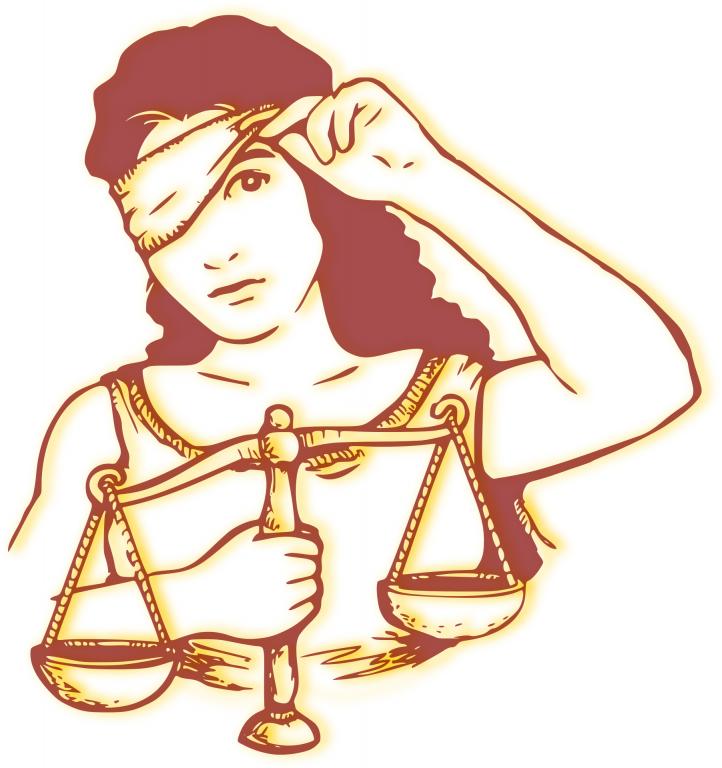 The ACLU recently ran congresspersons’ faces against a database of 25,000 mugshots using Amazon’s facial recognition software and discovered some matches.
In a test the ACLU recently conducted of the facial recognition tool, called “Rekognition,” the software incorrectly matched 28 members of Congress, identifying them as other people who have been arrested for a crime.
The members of Congress who were falsely matched with the mugshot database we used in the test include Republicans and Democrats, men and women, and legislators of all ages, from all across the country.
Now, I know someone is thinking of a joke about politicians’ criminal activity. That isn’t the point!
The Loss of Innocent Until Proven Guilty
The danger is that such computer face recognition in the hands of law enforcement makes people guilty until proven innocent. The same report points to some of these concerns:
If law enforcement is using Amazon Rekognition, it’s not hard to imagine a police officer getting a “match” indicating that a person has a previous concealed-weapon arrest, biasing the officer before an encounter even begins. Or an individual getting a knock on the door from law enforcement, and being questioned or having their home searched, based on a false identification.
An identification — whether accurate or not — could cost people their freedom or even their lives. […]
Matching people against arrest photos is not a hypothetical exercise. Amazon is aggressively marketing its face surveillance technology to police, boasting that its service can identify up to 100 faces in a single image, track people in real time through surveillance cameras, and scan footage from body cameras. A sheriff’s department in Oregon has already started using Amazon Rekognition to compare people’s faces against a mugshot database, without any public debate.
You can read the full report on the ACLU site.
For a more comical example, do you think I’m a Premier League footballer (professional British soccer player)? Well, Here’s a comparison of myself with Peter Crouch, a British footballer.
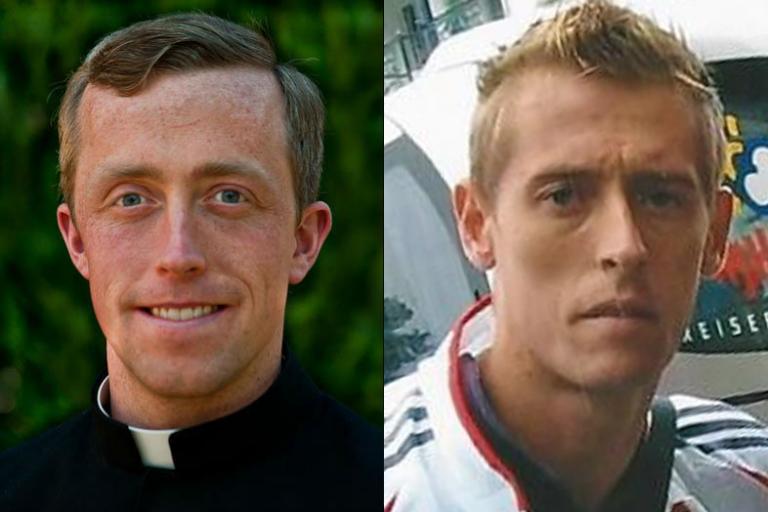
Now obviously, there are similarities. He looks like the brother I never had (I have 3 sisters). But I can assure you I don’t live a second life as a soccer star.
Now image the same, but some police officer’s body cam catches my face and matches it to a criminal. That police officer and the criminal justice will tend to assume I’m guilty until proven otherwise. Without a specific training regarding false positives, the presumption will be “guilty” if there is a match.
Catholic Social Teaching: Innocent Until Proven Guilty
I’m not always a fan of the ACLU with some of their other campaigns but I see a common cause here with defending “innocent until proven guilty.” We see this in the Church’s condemnation of gossip. If we can’t speak ill of others, all the more we shouldn’t imprison them for unproven accusations. The Church supports a robust system to ensure people are guilty before they are condemned. Trial methods to determine guilt or innocence vary by country but all must in some way believe in the innocent until proven guilty. It is unjust for a state to punish someone for a crime unless it is quite sure the person is guilty. (In the USA, we use “beyond reasonable doubt” to express this may not be universal.)
The Church has similar rules regarding canon law. Canon law allows the bishop to punish someone public acts. However, people always maintain their right to defend themselves in canonical court. Canon also defines crimes narrowly, so questionable acts will not be seen as crimes.
US law also maintains this as a principle. Thus theology, canon law, and US law all agree in maintaining this principle.
Innocent Until Proven Guilty Originated with a Cardinal
We might think of Innocent until proven guilty as part of American law alone. However, a CUA Law article from 2003 takes us back to a Cardinal 700 years ago.
Rather than a sturdy Anglo-Saxon, a cardinal of the Roman church, a Frenchman, a canonist, Johannes Monachus was the first European jurist to recognize the inexorable logic of God’s judgment of Adam: God could not condemn Adam without a trial because even God must presume that Adam was innocent until proven guilty. Other canonists played with the idea of defendants’ rights. They coined a proverb that God must even give the devil his day in court. […]So – the answer to our question, who first uttered the principle, Innocent until proven guilty – a perfect question for the legal edition of Trivial Pursuit-is the French canonist Johannes Monachus. [His gloss through other law books] was a primary vehicle for transmitting the principle to later generations of jurists.
I hope that paragraph, although academic, was readable. Johannes died in 1313, long before guilty before proven innocent later gained traction in the USA. In fact, almost every law currently in force dates from after this date.
A related part of Monachus work is also important. He taught of the universality of natural law, even for the Pope, who was exempt from positive law. He pointed out that some positive law is just an expression of natural law and thus binding on the Pope. I think innocent until proven guilty fits in that category.
Conclusion
There are serious concerns that facial recognition will switch the presumption of innocence. I understand those concerns and strongly think we need to manage them through how we approach such issues. This isn’t to say there is no use for such technology. If a computer can go through a database of 20,000 previous arrests in 10 seconds when an officer encounters a suspect to point out possible matches the police officer can then consider, then that saves a lot of work manually looking of matches. However, we can’t bow before such technology and presume it always right. False positives abound in such systems. Both natural, Church and US law teach us of the importance of guilty until proven innocent.

Next Post
July 30, 2018 Powerful Bishop's Letter on McCarrick Situation: Calls It "Grave Sin"
Browse Our Archives
Select a Category Autism Bioethics Book Review Business and Economics Catholic Social Teaching Culture Diocesan Life Disability Discipleship Euthanasia Family Life Genetics Global Politics History Immigration Inspiration Interview Liturgy Moral Theology My Life News Analysis Original Articles Prayer Privacy Pro-Life Science Sexual orientation or identity Social Media Sports Technology Theology Uncategorized US Politics Vatican
Select a Month March 2022 February 2022 January 2022 December 2021 November 2021 October 2021 September 2021 August 2021 July 2021 June 2021 April 2021 March 2021 February 2021 January 2021 December 2020 November 2020 October 2020 September 2020 August 2020 July 2020 June 2020 May 2020 April 2020 March 2020 February 2020 January 2020 December 2019 November 2019 October 2019 September 2019 August 2019 July 2019 June 2019 May 2019 April 2019 March 2019 February 2019 January 2019 December 2018 November 2018 October 2018 September 2018 August 2018 July 2018 June 2018 May 2018
Follow Us!
TAKE THE
Religious Wisdom Quiz
According to Titus, what did God do when his kindness and love appeared?
Select your answer to see how you score.
He destroyed his enemies He established his church He sent his Son He saved us through the washing of rebirth and renewal by the Holy Spirit
Support this
Column


Related posts from Through Catholic Lenses

Sensory-Friendly Mass Directory Now Available

Greg Locke, Autism Is not Demonic

The Church Cannot Change Teaching on Homosexuality (Hollerich...
Catholic Media: Fides Quarens Rem Publicam
TRENDING AT PATHEOS Catholic

Rejecting Doom: Christian Hope And Human Action
Christianity is a religion of hope. We are to have hope and...

It’s What Comes From Within Which Matters
One of the most difficult things for us to understand is why...

Why I Choose the Eucharist Over the Sermon
Choose the Eucharist, Not the Sermon What are we supposed to get...

5 Design Elements Found in Spiritually Rooted Homes
Putting Spirituality Into Home Decor Our homes are more than our living...

Credo: A Story of God Told with the...
About 10 years ago, I began to imagine a personal "Credo" that...

The Anatomy of Divine Revelation in Catholic Thought
The claim that God has made Himself known to human beings is...
view all Catholic blogs
Ad-Free & Subscriber Log-In Subscription Support
- About Us
- 2026 Calendar
- Videos
- Podcasts
- Library of World Religions
- Faith In Media Tracker
- Advertise With Us
- Write for Us
- Privacy Policy
- Terms of Service
- Do Not Sell My Data
- Contact Us
- Radiant Digital
- Manage Newsletter Subscriptions
- Unsubscribe From Notifications
- Sitemap
Copyright 2008-2026, Patheos. All rights reserved.
Subscription Support Ad-Free & Subscriber Log-In
Follow Patheos