
BuddhistCatholicContemplativeEvangelicalGeneral ChristianHinduJewishLatter-day SaintMuslimNew VisionsProgressive Christian
Beliefs
- Buddhist
- Catholic
- Contemplative
- Evangelical
- General Christian
- Hindu
- Jewish
- Latter-day Saint
- More Voices
- Muslim
- New Visions
- Pagan
- Progressive Christian
Topics
- Religion News
- Food and Religion
- Sports and Religion
- Religious Art
- Religious Music and Entertainment
- Religious Events
- History and Religion
- Style and Religion
- Politics and Religion
- Women in Religion
- Recreation Outdoors and Religion
- Business Finance and Religion
- Careers Workplace and Religion
- Education and Religion
- Family Parenting and Religion
- Health Fitness and Religion
- Home and Religion
- Relationships and Religion
- Technology and Religion
- Travel and Religion
Columnists
- Buddhist Columnists
- Business Finance and Religion Columnists
- Careers Workplace and Religion Columnists
- Catholic Columnists
- Contemplative Columnists
- Education and Religion Columnists
- Evangelists Columnists
- Family Parenting and Religion Columnists
- General Christian Columnists
- Health Fitness and Religion Columnists
- Hindu Columnists
- History and Religion Columnists
- Home and Religion Columnists
- Jewish Columnists
- More Voices Columnists
- Latter Day Columnists
- Muslim Columnists
- New Visions Columnists
- Nonreligious Columnists
- Pagan Columnists
- Politics and Religion Columnists
- Progressive Columnists
- Recreation Outdoors and Religion Columnists
- Relationships and Religion Columnists
- Religion News Columnists
- Religious Art Columnists
- Religious Events Columnists
- Religious Music and Entertainment Columnists
- Sports and Religion Columnists
- Style and Religion Columnists
- Technology and Religion Columnists
- Travel and Religion Columnists
- Women in Religion Columnists
Resource Library
- 2026 Calendar
- Library of World Religions
- The 100 Most Holy Places on Earth
- Patheos Answers
- Podcasts
- Videos
- Faith Leaders Database
- Anglican Episcopalian
- Bahai
- Baptist
- Buddhism
- Christianity
- Confucianism
- Eastern Orthodoxy
- Hinduism
- Holiness and Pentecostal
- ISKCON
- Islam
- Judaism
- Lutheran
- Methodist
- The Church of Jesus Christ of Latter-day Saints
- New Age
- Paganism
- Presbytarian and Reformed
- Protestantism
- Religion Behind the Scenes
- Roman Catholic
- Scientology
- Shia Islam
- Sikhism
- Sufism
- Sunni Islam
- Taoism
- Zen
- See all religions
Research Tools
 Ad-Free & Subscriber Log-In Subscription Support
Ad-Free & Subscriber Log-In Subscription Support
Follow Patheos 

- Trending:
- Forgiveness
- |
- Marriage
- |
- Consciousness
- |
- Death Penalty
- |
- Election
- |
- Halloween
 Through Broken Roses
- Home
- Catholic
- Interview: Shaka Senghor author of Writing my Wrongs
Interview: Shaka Senghor author of Writing my Wrongs
Last updated on: April 4, 2016 at 11:19 am by Leticia Adams
Interview: Shaka Senghor author of Writing my Wrongs 2016-04-04T11:19:20-05:00 Leticia Adams
Patheos Explore the world's faith through different perspectives on religion and spirituality! Patheos has the views of the prevalent religions and spiritualities of the world.
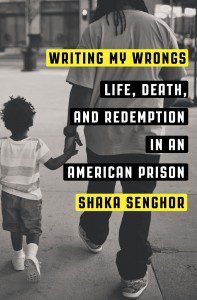
I am so happy to be able to share with you my interview with Shaka Senghor. I am inspired by his story and I hope that you are too. Even if you think that he is wrong, or that criminals should not have a voice in the way the criminal system works, please just read his answers to my questions.
The one thing that I have always loved about Catholicism is that everything we do, teach and preach is based on the dignity of the human person who is made in the Image and Likeness of God. While Shaka is not Catholic (I don’t think, I haven’t actually asked so maybe I should) if you read his answers to my questions it is undeniable that he understands the dignity of the human person.
In your book you talk about how nobody saw you as a child when you were dealing drugs, or when you got shot or any of those things. How can people see broken children in the people around them doing bad things?
Tap into their childhood self. Remember the little boy or girl that they once were and the painful moments that helped shape who they are today. It’s not easy to do initially but I believe that’s where compassion is born, being able to see yourself in someone else’s story. If we start from our common ground as human beings, a new world of possibilities opens up—you no longer see them as the “other” but a part of the human family with human frailties that we all possess.
When I was prison, I was challenged to do this very thing. The more I began reflecting on my life and evolving as a man, I began to develop more empathy for the men I was incarcerated with. My transformation helped me begin to see that these men were hurt little boys acting out, and I started thinking, if I could see the little boy in every man I encountered then I’d be be able to engage him from a very humane perspective instead of responding in anger and creating unnecessary conflict.
Do you think that there is room for people such as yourself and police or correctional officers to come together to try and find common ground in rehabilitating people who commit crimes? Or is it a lost cause and the entire system needs to be done differently?
There is definitely room for collaboration. First and foremost, our humanity is our common ground. But beyond that, we don’t have a choice—it’s been proven that the system doesn’t work and whether you’re tough on crime or embrace a more compassionate approach to addressing our country’s social ills, we cannot continue with business as usual. Men and women who have come from that environment are the best resources for those invested in changing the system. We know what’s working and what’s not. And one thing we all agree on is that prisons do not rehabilitate.
What are your thoughts on private prisons?
Prisons are a business, whether government controlled or private. But when you have private prisons, there’s even more incentive to warehouse rather than rehabilitate so that you create demand for your service. The bottom line is, with private prisons, it’s profit over people so decisions are often based on a business model and not a social services model where the best interests of the men and women incarcerated in these prisons are a priority. I hope to one day see these prisons done away with.
How can people who live in the safety of the suburbs (that would be where I live now, so no shade to people in the suburbs) help children and parents in the hood? I admit that I’m conflicted on this because people say it isn’t safe there, but really, if you are a drug addict you will risk it, which seems to me like we should risk it to help also.
I think people in the suburbs have to get out of the missionary mindset that makes them think they can come in and rescue the ‘hood. If they (we) can see that we are all a part of the human family despite where we live we will be able to work in harmony. When we operate from a space of human compassion, we will see a lot of the barriers that divide us disappearing.
What would you say to children who grew up with a crack addicted parent as someone who saw the damage that drug can do to people of all walks of life?
I would tell them that their parent’s choices do not define who they are. Do not own your parent’s addiction or baggage.
Did you ever get an apology from your mom? And if not, how did you forgive her anyway?
My mother and I have had some very emotional conversations. I shared how I felt growing up and she shared what it was like for her as a parent. I learned about some of the abuse she experienced as a child and it made me soften my heart to her and get past the things she’d said and done to me as a child.
What advice would you give to a young man who wants to be the father to his kids but hasn’t dealt with his own pain?
You can’t be the best you, and by extension the best father, without addressing that pain. It’s not easy but as a man and father, we must be an example of what manhood can be for our children, especially our boys. I know it’s hard for men to express their emotions because we aren’t given permission to be afraid or sad. We’re not given permission to say, “I’m hurting.” So that turns into anger. It turns into a “me against the world” mentality and that’s not a healthy space to raise children in. Fortunately, we can create that space for young boys and men to really express their emotions in a healthy way but we first have to address our own pain.
How do you keep going when doors get shut in your face?
I’m fortunate in a lot of ways. For one, I was highly literate when I was released from prison so that gave me an advantage getting out. In terms of staying focused, I had a skillset I knew was marketable. I knew I was a good writer. I never second guessed my ability to use the power of the pen through the course of my life. But despite that, there were battles—being denied and rejected because I have a felony. That’s demoralizing, and it definitely is a real character checker. Are you really built for this? Are you really wired to succeed against all odds? There were countless times I felt the temptation to go back to my former life, but the prospect of enduring that level of pain and hurt and darkness just wasn’t favorable. Before I left prison, I had made a commitment to myself to never give up. I refused to go back to the streets so with every time I got knocked down, I got back up, brushed myself off and kept working toward my goals.
What inspires you?
I am inspired by human resiliency, compassion and fortitude. My work is inspired by the men I left behind and the children I see in front of me all the time. I am inspired to be the best me by my wonderful son Sekou. He is my light and makes me want to leave a legacy he can be proud of when he grows up. I also want to ensure he inherits a better world then the world I inherited.
Do you think it is possible and maybe even necessary, to validate someone who is behind bars as a human being without condoning their crime?
Definitely. No matter what we’ve done, we are all still human. Some of us have more emotional scars than others but the beauty and power of our humanity is the ability to remake ourselves, to heal what has been broken. I have never condoned what I did; I just wanted a second chance at being fully human.
Like I said, I am Catholic and this year Pope Francis has declared a Year of Mercy, what does Mercy mean to you? And how can Catholics show it towards those incarcerated in a real and practical way?
I think the root of mercy is compassion and empathy. To me it is extending the grace of forgiveness to others by placing ourselves in their shoes and thinking about what we would want someone to do for us.
Previous Post

April 3, 2016
Divine Mercy Indeed
Next Post

April 11, 2016 I need to Know how to Love Jackwagons
Browse Our Archives
Select a Category #PopeInUS 7 quick takes Abortion Bad Days Book Review Books Caitlyn Jenner Catholicsim Conversion Crosses Death Dignity of the Human Person Easter Ethics Evil Fall Family Fear Freedom Gay Marriage God Holy Week Homosexuality Jesus Laughter Lessons Love Marriage Mass Motherhood My Life New Evangelzation new year Parenting Peace Planned Parenthood Politics Pope Francis Pregnancy Race Rap Music Relationships Saints Sins Suffering Tempation The Catholic Church The Past Things about me Trust Truth Uncategorized Women's rights Writing
Select a Month December 2018 October 2018 September 2018 August 2018 July 2018 June 2018 May 2018 April 2018 March 2018 February 2018 January 2018 December 2017 November 2017 October 2017 September 2017 August 2017 July 2017 April 2017 March 2017 February 2017 December 2016 November 2016 October 2016 September 2016 August 2016 July 2016 June 2016 May 2016 April 2016 March 2016 February 2016 January 2016 December 2015 November 2015 October 2015 September 2015 August 2015 July 2015 June 2015 May 2015 April 2015 March 2015 February 2015 January 2015 December 2014 November 2014 October 2014 September 2014 August 2014 July 2014 June 2014 May 2014 April 2014 March 2014 February 2014 January 2014 December 2013 November 2013 October 2013 September 2013 August 2013 July 2013 May 2013 March 2013 February 2013 January 2013 December 2012 October 2012 August 2012 July 2012 June 2012 May 2012 April 2012 March 2012 February 2012 January 2012 December 2011 November 2011 October 2011 August 2011 July 2011 May 2011
Follow Us!
TAKE THE
Religious Wisdom Quiz
Who parted the Red Sea for the Israelites?
Select your answer to see how you score.
Aaron God Moses Jacob
Related posts from Through Broken Roses
First Day of Advent: Suffering Sucks

TRENDING AT PATHEOS Catholic

The Parable Of The Sower And The Word...
One of Christ’s most famous parables is that of the sower who...

Rejecting Doom: Christian Hope And Human Action
Christianity is a religion of hope. We are to have hope and...

Why I Choose the Eucharist Over the Sermon
Choose the Eucharist, Not the Sermon What are we supposed to get...

5 Design Elements Found in Spiritually Rooted Homes
Putting Spirituality Into Home Decor Our homes are more than our living...

Credo: A Story of God Told with the...
About 10 years ago, I began to imagine a personal "Credo" that...

The Anatomy of Divine Revelation in Catholic Thought
The claim that God has made Himself known to human beings is...
view all Catholic blogs
Ad-Free & Subscriber Log-In Subscription Support
- About Us
- 2026 Calendar
- Videos
- Podcasts
- Library of World Religions
- Faith In Media Tracker
- Advertise With Us
- Write for Us
- Privacy Policy
- Terms of Service
- Do Not Sell My Data
- Contact Us
- Radiant Digital
- Manage Newsletter Subscriptions
- Unsubscribe From Notifications
- Sitemap
Copyright 2008-2026, Patheos. All rights reserved.
Subscription Support Ad-Free & Subscriber Log-In
Follow Patheos