
BuddhistCatholicContemplativeEvangelicalGeneral ChristianHinduJewishLatter-day SaintMuslimNew VisionsProgressive Christian
Beliefs
- Buddhist
- Catholic
- Contemplative
- Evangelical
- General Christian
- Hindu
- Jewish
- Latter-day Saint
- More Voices
- Muslim
- New Visions
- Pagan
- Progressive Christian
Topics
- Religion News
- Food and Religion
- Sports and Religion
- Religious Art
- Religious Music and Entertainment
- Religious Events
- History and Religion
- Style and Religion
- Politics and Religion
- Women in Religion
- Recreation Outdoors and Religion
- Business Finance and Religion
- Careers Workplace and Religion
- Education and Religion
- Family Parenting and Religion
- Health Fitness and Religion
- Home and Religion
- Relationships and Religion
- Technology and Religion
- Travel and Religion
Columnists
- Buddhist Columnists
- Business Finance and Religion Columnists
- Careers Workplace and Religion Columnists
- Catholic Columnists
- Contemplative Columnists
- Education and Religion Columnists
- Evangelists Columnists
- Family Parenting and Religion Columnists
- General Christian Columnists
- Health Fitness and Religion Columnists
- Hindu Columnists
- History and Religion Columnists
- Home and Religion Columnists
- Jewish Columnists
- More Voices Columnists
- Latter Day Columnists
- Muslim Columnists
- New Visions Columnists
- Nonreligious Columnists
- Pagan Columnists
- Politics and Religion Columnists
- Progressive Columnists
- Recreation Outdoors and Religion Columnists
- Relationships and Religion Columnists
- Religion News Columnists
- Religious Art Columnists
- Religious Events Columnists
- Religious Music and Entertainment Columnists
- Sports and Religion Columnists
- Style and Religion Columnists
- Technology and Religion Columnists
- Travel and Religion Columnists
- Women in Religion Columnists
Resource Library
- 2026 Calendar
- Library of World Religions
- The 100 Most Holy Places on Earth
- Patheos Answers
- Podcasts
- Videos
- Faith Leaders Database
- Anglican Episcopalian
- Bahai
- Baptist
- Buddhism
- Christianity
- Confucianism
- Eastern Orthodoxy
- Hinduism
- Holiness and Pentecostal
- ISKCON
- Islam
- Judaism
- Lutheran
- Methodist
- The Church of Jesus Christ of Latter-day Saints
- New Age
- Paganism
- Presbytarian and Reformed
- Protestantism
- Religion Behind the Scenes
- Roman Catholic
- Scientology
- Shia Islam
- Sikhism
- Sufism
- Sunni Islam
- Taoism
- Zen
- See all religions
Research Tools
 Ad-Free & Subscriber Log-In Subscription Support
Ad-Free & Subscriber Log-In Subscription Support
Follow Patheos 

- Trending:
- Forgiveness
- |
- Marriage
- |
- Consciousness
- |
- Death Penalty
- |
- Election
- |
- Halloween
 Thoughts of a Modern Celtic Wanderer
- Home
- Progressive Christian
- The Carmina Gadelica Series: Smooring Blessing
The Carmina Gadelica Series: Smooring Blessing
Last updated on: January 26, 2023 at 1:44 am by John D Gee
The Carmina Gadelica Series: Smooring Blessing 2023-01-26T01:44:04-06:00 John D Gee
Patheos Explore the world's faith through different perspectives on religion and spirituality! Patheos has the views of the prevalent religions and spiritualities of the world.
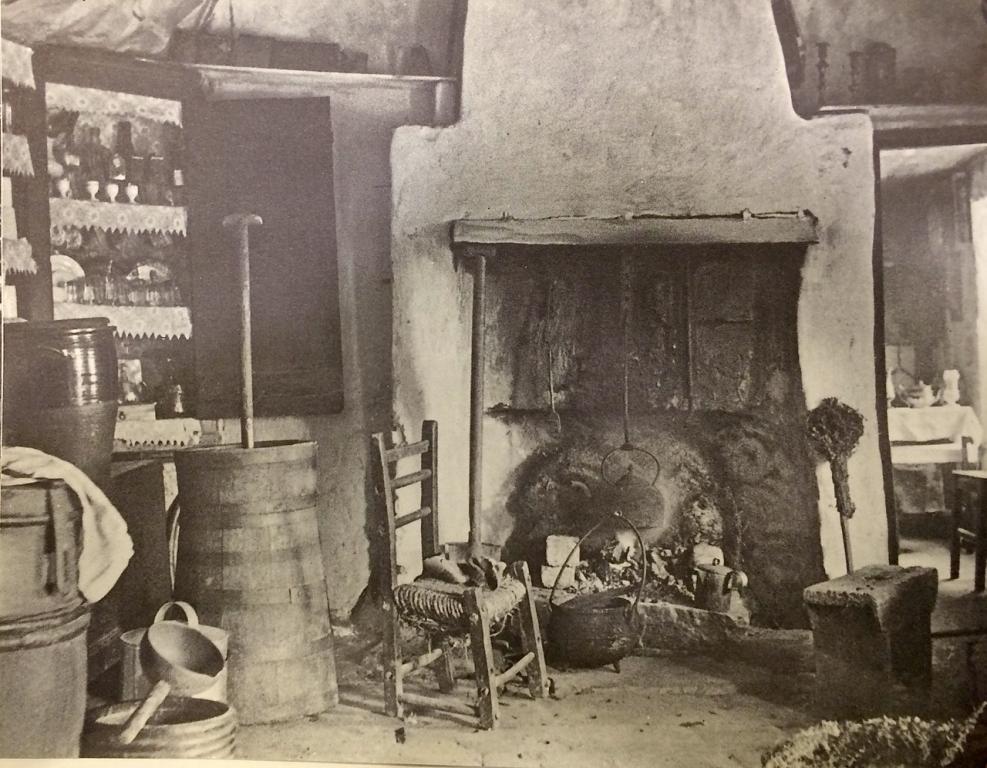 One of the most fascinating aspects of Celtic Christianity is that nothing is too big or too small for God to indwell. Everything that we do, encounter or experience is a moment in time where God is present. To the Irish and Scottish of the first millennium this was an honored fact of life. This meant that everything a person does is an act of worship. From menial labor tasks to the ruling of a nation, all action was viewed as an opportunity to worship and interact with God. This was the case with even the smooring of a fire.
Importance of the Hearth Fire
In Scotland and Ireland “Each household would have a hearth fire over which all the household food would be prepared, and around which the most important aspects of family life would happen. The hearth fire would traditionally have been kept alight all year long in both Scotland and Ireland, with the exception of Bealltainn eve when it was extinguished and then relit from a flame brought from a communal bonfire to ensure health and prosperity upon the household in the coming year.1 It was a matter of pride and superstition not to let the flame die out even in the height of summer, and many households could boast that their hearth had remained alight for several generations – even centuries. If the fire did die out, it was said “the soul goes out of the people of the house.”
Smooring, a Scottish Gaelic word usually translated as ‘smothering,’ but perhaps more accurately ‘subduing’ – was a process by which the fire was dampened down so it would not need tending, and therefore could be left safely alight during the night. In Ireland, it was said that the Good Folk would be displeased if they arrived at a house during the night to find that there was no fire for them.
When a person smoored the fire they would say the following:
Smooring Blessing
I AM smooring the fire
As the Son of Mary would smoor;
Blest be the house, blest be the fire,
Blest be the people all.
Who are those down on the floor?
John and Peter and Paul.
On whom is the vigil to-night?
On the fair gentle Mary and on her Son.
The mouth of God said,
The angel of God spake,
An angel in the door of the house,
To guard and to keep us all
Till comes daylight to-morrow.
Oh! may the angels of the Holy One of God
Environ me all this night,
Oh! may the angels of the Anointed One of God
Encompass me from harm and from evil,
Oh! encompass me from harm this night.
No task to Menial for God
This blessing reminds us that no task is too small to be carried out in honor of the Universal God. It also shows us that al work should be treated as God’s work. In the western church we try really hard to put our religion in a box, keeping it separate from our day to day. The issue with that is that we serve truly infinite God. And since God is infinite, God cannot be constrained. Because the Celts understood this about God, they included communication with God in everything they did. Even chores were not off limits as an opportunity to speak with God and work for God.
How Do We See God?
The question really is how do we see God? Do we see God as God is, truly infinite and truly everywhere? Or do we view God as a Jack in the Box, winding God u and letting the deity out of the box when we say? My answer to this would be, if you have a God that can be boxed in by what you want, is that a God worth worshipping?
Previous Post

April 11, 2021
Deed
Next Post
April 14, 2021 A Celtic Approach to Church and Community
Browse Our Archives
Select a Category Carmina Gadelica Celtic Spirituality Current Events Uncategorized
Select a Month August 2022 July 2022 May 2022 April 2022 March 2022 February 2022 January 2022 December 2021 November 2021 October 2021 September 2021 August 2021 July 2021 June 2021 May 2021 April 2021 March 2021 February 2021 January 2021
Follow Us!
TAKE THE
Religious Wisdom Quiz
What Christian celebration commemorates the resurrection of Jesus Christ?
Select your answer to see how you score.
Christmas Lent Easter Epiphany
Related posts from Thoughts of a Modern Celtic Wanderer

Celtic Beltane: Finding Jesus in all Cultures
Thoughts of a Modern Celtic Wanderer
The Carmina Gadelica Series: Come I, This Day
Thoughts of a Modern Celtic Wanderer
From Fear to Joy: The Three Comings of...
Thoughts of a Modern Celtic Wanderer

The Carmina Gadelica Series: Sleep Prayer
Thoughts of a Modern Celtic Wanderer
TRENDING AT PATHEOS Progressive Christian

Why Christians Have a Sacred Duty to Vote:...
The Bible offers strong support for the sacred duty to vote. Here...

What Being a Modern-Day Apostle Means to Me
In my last column, I discussed the ins and outs of modern-day...

Did Ancient China Once Worship the God of...
Across human history, a common thread weaves through the origins of the...

Love Your Neighbor – Including Earth-Kin: Lev. 19,...
God’s command to love your neighbor means acting in an ethical and...

Lead a Church Study of “Jesus and Lao...
Guest writer Jack Thomas (The Irreverent Reverend) reflects on leading his church...

Principles for Understanding the Apostolic Ministry Today
Whenever people discover that my formal ministry title is "apostle," as in...
view all Progressive Christian blogs
Ad-Free & Subscriber Log-In Subscription Support
- About Us
- 2026 Calendar
- Videos
- Podcasts
- Library of World Religions
- Faith In Media Tracker
- Advertise With Us
- Write for Us
- Privacy Policy
- Terms of Service
- Do Not Sell My Data
- Contact Us
- Radiant Digital
- Manage Newsletter Subscriptions
- Unsubscribe From Notifications
- Sitemap
Copyright 2008-2026, Patheos. All rights reserved.
Subscription Support Ad-Free & Subscriber Log-In
Follow Patheos