
BuddhistCatholicContemplativeEvangelicalGeneral ChristianHinduJewishLatter-day SaintMuslimNew VisionsProgressive Christian
Beliefs
- Buddhist
- Catholic
- Contemplative
- Evangelical
- General Christian
- Hindu
- Jewish
- Latter-day Saint
- More Voices
- Muslim
- New Visions
- Pagan
- Progressive Christian
Topics
- Religion News
- Food and Religion
- Sports and Religion
- Religious Art
- Religious Music and Entertainment
- Religious Events
- History and Religion
- Style and Religion
- Politics and Religion
- Women in Religion
- Recreation Outdoors and Religion
- Business Finance and Religion
- Careers Workplace and Religion
- Education and Religion
- Family Parenting and Religion
- Health Fitness and Religion
- Home and Religion
- Relationships and Religion
- Technology and Religion
- Travel and Religion
Columnists
- Buddhist Columnists
- Business Finance and Religion Columnists
- Careers Workplace and Religion Columnists
- Catholic Columnists
- Contemplative Columnists
- Education and Religion Columnists
- Evangelists Columnists
- Family Parenting and Religion Columnists
- General Christian Columnists
- Health Fitness and Religion Columnists
- Hindu Columnists
- History and Religion Columnists
- Home and Religion Columnists
- Jewish Columnists
- More Voices Columnists
- Latter Day Columnists
- Muslim Columnists
- New Visions Columnists
- Nonreligious Columnists
- Pagan Columnists
- Politics and Religion Columnists
- Progressive Columnists
- Recreation Outdoors and Religion Columnists
- Relationships and Religion Columnists
- Religion News Columnists
- Religious Art Columnists
- Religious Events Columnists
- Religious Music and Entertainment Columnists
- Sports and Religion Columnists
- Style and Religion Columnists
- Technology and Religion Columnists
- Travel and Religion Columnists
- Women in Religion Columnists
Resource Library
- 2026 Calendar
- Library of World Religions
- The 100 Most Holy Places on Earth
- Patheos Answers
- Podcasts
- Videos
- Faith Leaders Database
- Anglican Episcopalian
- Bahai
- Baptist
- Buddhism
- Christianity
- Confucianism
- Eastern Orthodoxy
- Hinduism
- Holiness and Pentecostal
- ISKCON
- Islam
- Judaism
- Lutheran
- Methodist
- The Church of Jesus Christ of Latter-day Saints
- New Age
- Paganism
- Presbytarian and Reformed
- Protestantism
- Religion Behind the Scenes
- Roman Catholic
- Scientology
- Shia Islam
- Sikhism
- Sufism
- Sunni Islam
- Taoism
- Zen
- See all religions
Research Tools
 Ad-Free & Subscriber Log-In Subscription Support
Ad-Free & Subscriber Log-In Subscription Support
Follow Patheos 

- Trending:
- Forgiveness
- |
- Marriage
- |
- Consciousness
- |
- Death Penalty
- |
- Election
- |
- Halloween
 Thoughts of a Modern Celtic Wanderer
- Home
- Progressive Christian
- Saint Cuthbert- Lessons on Embracing Destiny
Saint Cuthbert- Lessons on Embracing Destiny
Last updated on: April 2, 2021 at 3:53 am by John D Gee
Saint Cuthbert- Lessons on Embracing Destiny 2021-04-01T18:13:19-05:00 John D Gee
Patheos Explore the world's faith through different perspectives on religion and spirituality! Patheos has the views of the prevalent religions and spiritualities of the world.
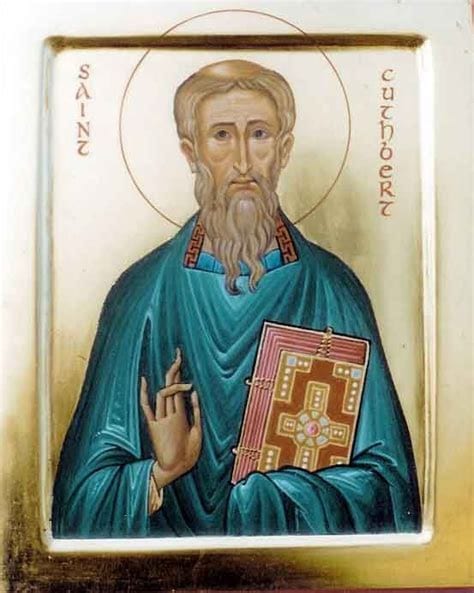 Destiny is an interesting thing. What makes it interesting is the way in which we pursue this destiny. In many ways, although I believe we are destined, God has given us agency and input into how that destiny is realized. I do believe destiny is something struggled with. Destiny is wrestled with as Jacob did with the Angel. Saint Cuthbert was no different and from an early age he knew he was destined. But what was he destined for? To see what one is destined for is to live life and experience the struggle with destiny. Cuthbert is one such character in Scottish church history.
Background
Cuthbert was born, likely into a noble family, in Dunbar, then in Anglo-Saxon Northumbria, and now in East Lothian, Scotland, in the mid-630s. He was born about ten years after the conversion of King Edwin of Northumbria to Christianity in 627. Very slowly his conversion was followed by that of the rest of his people. The politics of the kingdom were violent, and there were later episodes of pagan rule, while spreading understanding of Christianity through the kingdom was a task that lasted throughout Cuthbert’s lifetime. Cuthbert grew up in a world of accepted violence.
From the Mouth of Babes
Cuthbert was known as an athletic youth. Oral history tells of this strong youth playing near the river Tweed when a three year old stated to him “Why do you make such a fool of yourself? Do you not realize your own nature calls you to serve God? It is said from then on Cuthbert began to exercise his mind in theology as much as his body in athletics. Cuthbert grew in spirit and body One night many years later as he was tending his sheep at night, Cuthbert is said to have seen a host of angels carrying a soul to heaven. It is also said that on that night, Saint Aiden had died and Cuthbert had seen him escorted to heaven. Cuthbert had vision.
Embracing Destiny
It was this teenager who became a man and by 664 at the age of 30 was charged with the responsibility of helping monks in Lindisfarne come to terms with the hard reality that many Celtic ways were being superseded by the church in Rome. He is known as a responsible and sage manager and soul friend. Being kind to those struggling with faith. Cuthbert was a man of honor and humility.
Back into the Fray
He had attempted to live the life of a hermit after his time at Lindisfarne but in 684 he was begged by the clergy and the king to become Bishop. And for two years he went around helping establish churches and nurturing the young in the faith in Scotland. Cuthbert was a servant. Knowing his health was failing, in 686, Cuthbert returned to the Farne Islands.Even in his dying breaths, he continued to instruct the monks until he finally died in their arms. Cuthbert was loyal to the call of discipleship to the end.
5 Lessons from Cuthbert
The most fascinating thing about Cuthbert was that he knew he was destined. When we think of destiny we think of the child who pulls a sword from the stone and rules a nation with happily ever after. The reality about destiny is that it is messy, littered on both sides with mistakes and regrets. In the real world destiny is the urge to do something, even when it looks like it might kill you. As we seek our destiny in the journey with Christ, Celtic believers should remember the basic lessons of St. Cuthbert. These are:
- Regardless of the world you grow up in, you do not have to be a product of it. You are not destined to simply be like everyone else.
- We should be strengthening our spirit and our body. It is really not possible to separate the two worlds. If either is denied its exercise it can lead to unhealthy relationships or situations. Being health conscious should include being conscious of our spiritual health.
- We should serve to the maximum extent possible. There should be no half stepping with God.
- Even at our own peril, sometimes we must still serve. Being faithful to the gospel means to seriously put your life at risk. Doing the right thing could mean your life. Like Cuthbert, we should do it anyway.
- We should be loyal to our call in Jesus. We should never shy away from the hurting world because advocating and helping is difficult. Those are the times destiny is realized, in the midst of pain.
The Challenge of Cuthbert
Cuthbert reaches from history through his example and challenges us to make the hard decisions. He challenges us to be comfortable with getting in the dirt for our destiny. The Christian will not find their destiny in the throne but in the mud. Are you ready to do the difficult muddy work of service? I pray we are always preparing for our destiny in the mud!
Previous Post

April 2, 2021
What's So Good About Good Friday?
Next Post
April 7, 2021 The Carmina Gadelica Series: The Fishing Blessing
Browse Our Archives
Select a Category Carmina Gadelica Celtic Spirituality Current Events Uncategorized
Select a Month August 2022 July 2022 May 2022 April 2022 March 2022 February 2022 January 2022 December 2021 November 2021 October 2021 September 2021 August 2021 July 2021 June 2021 May 2021 April 2021 March 2021 February 2021 January 2021
Follow Us!
TAKE THE
Religious Wisdom Quiz
How many plagues did God inflict upon Egypt?
Select your answer to see how you score.
21 14 10 7
Related posts from Thoughts of a Modern Celtic Wanderer
Mystery and Mysticism; Important Parts of a Faith...
Thoughts of a Modern Celtic Wanderer
Celtic Beltane: Finding Jesus in all Cultures
Thoughts of a Modern Celtic Wanderer
Understanding Good Friday in Context
Thoughts of a Modern Celtic Wanderer
From Fear to Joy: The Three Comings of...
Thoughts of a Modern Celtic Wanderer
TRENDING AT PATHEOS Progressive Christian

Why Christians Have a Sacred Duty to Vote:...
The Bible offers strong support for the sacred duty to vote. Here...

What Being a Modern-Day Apostle Means to Me
In my last column, I discussed the ins and outs of modern-day...

Did Ancient China Once Worship the God of...
Across human history, a common thread weaves through the origins of the...

Love Your Neighbor – Including Earth-Kin: Lev. 19,...
God’s command to love your neighbor means acting in an ethical and...

Lead a Church Study of “Jesus and Lao...
Guest writer Jack Thomas (The Irreverent Reverend) reflects on leading his church...

Principles for Understanding the Apostolic Ministry Today
Whenever people discover that my formal ministry title is "apostle," as in...
view all Progressive Christian blogs
Ad-Free & Subscriber Log-In Subscription Support
- About Us
- 2026 Calendar
- Videos
- Podcasts
- Library of World Religions
- Faith In Media Tracker
- Advertise With Us
- Write for Us
- Privacy Policy
- Terms of Service
- Do Not Sell My Data
- Contact Us
- Radiant Digital
- Manage Newsletter Subscriptions
- Unsubscribe From Notifications
- Sitemap
Copyright 2008-2026, Patheos. All rights reserved.
Subscription Support Ad-Free & Subscriber Log-In
Follow Patheos