
BuddhistCatholicContemplativeEvangelicalGeneral ChristianHinduJewishLatter-day SaintMuslimNew VisionsProgressive Christian
Beliefs
- Buddhist
- Catholic
- Contemplative
- Evangelical
- General Christian
- Hindu
- Jewish
- Latter-day Saint
- More Voices
- Muslim
- New Visions
- Pagan
- Progressive Christian
Topics
- Religion News
- Food and Religion
- Sports and Religion
- Religious Art
- Religious Music and Entertainment
- Religious Events
- History and Religion
- Style and Religion
- Politics and Religion
- Women in Religion
- Recreation Outdoors and Religion
- Business Finance and Religion
- Careers Workplace and Religion
- Education and Religion
- Family Parenting and Religion
- Health Fitness and Religion
- Home and Religion
- Relationships and Religion
- Technology and Religion
- Travel and Religion
Columnists
- Buddhist Columnists
- Business Finance and Religion Columnists
- Careers Workplace and Religion Columnists
- Catholic Columnists
- Contemplative Columnists
- Education and Religion Columnists
- Evangelists Columnists
- Family Parenting and Religion Columnists
- General Christian Columnists
- Health Fitness and Religion Columnists
- Hindu Columnists
- History and Religion Columnists
- Home and Religion Columnists
- Jewish Columnists
- More Voices Columnists
- Latter Day Columnists
- Muslim Columnists
- New Visions Columnists
- Nonreligious Columnists
- Pagan Columnists
- Politics and Religion Columnists
- Progressive Columnists
- Recreation Outdoors and Religion Columnists
- Relationships and Religion Columnists
- Religion News Columnists
- Religious Art Columnists
- Religious Events Columnists
- Religious Music and Entertainment Columnists
- Sports and Religion Columnists
- Style and Religion Columnists
- Technology and Religion Columnists
- Travel and Religion Columnists
- Women in Religion Columnists
Resource Library
- 2026 Calendar
- Library of World Religions
- The 100 Most Holy Places on Earth
- Patheos Answers
- Podcasts
- Videos
- Faith Leaders Database
- Anglican Episcopalian
- Bahai
- Baptist
- Buddhism
- Christianity
- Confucianism
- Eastern Orthodoxy
- Hinduism
- Holiness and Pentecostal
- ISKCON
- Islam
- Judaism
- Lutheran
- Methodist
- The Church of Jesus Christ of Latter-day Saints
- New Age
- Paganism
- Presbytarian and Reformed
- Protestantism
- Religion Behind the Scenes
- Roman Catholic
- Scientology
- Shia Islam
- Sikhism
- Sufism
- Sunni Islam
- Taoism
- Zen
- See all religions
Research Tools
 Ad-Free & Subscriber Log-In Subscription Support
Ad-Free & Subscriber Log-In Subscription Support
Follow Patheos 

- Trending:
- Forgiveness
- |
- Marriage
- |
- Consciousness
- |
- Death Penalty
- |
- Election
- |
- Halloween

- Home
- About The Thoughtful Pastor
- Archives
- Read my Book
- Ask the Pastor
- Mystery Worship Series
- FREE NEWSLETTER
- Home
- Progressive Christian
- The Forces BEHIND Political And Religious Discord: Who Profits?
The Forces BEHIND Political And Religious Discord: Who Profits?
Last updated on: November 11, 2019 at 4:48 am by Christy Thomas
The Forces BEHIND Political And Religious Discord: Who Profits? 2019-11-11T04:48:03-05:00 Christy Thomas
Patheos Explore the world's faith through different perspectives on religion and spirituality! Patheos has the views of the prevalent religions and spiritualities of the world.
So who profits in a split of some sort? The Evangelicals. The UMC is ripe for the pickings because of the fragile nature of our connection and the massive underlying financial assets.
First, the Cypriot situation
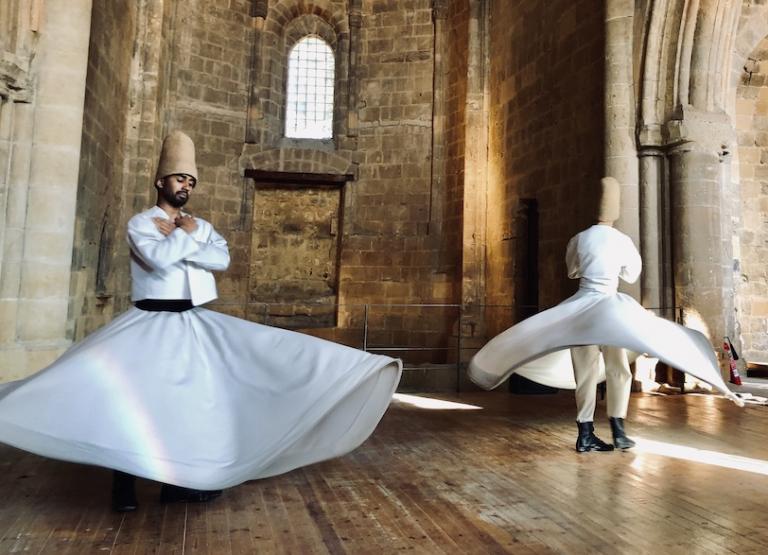
Recently, as part of a cruise to the Middle East, we landed on the island of Cyprus for a brief one-day stop. Being one who likes to plan things out well in advance, I tend to pick the tours we will take at any given stop about four or five months before the actual cruise takes place. This also means I tend to forget why I pick any particular tour.
However, the tour description included seeing a dance by the famed Whirling Dervishes, and that was reason enough for my choice. What I didn’t realize was that the day would take us firmly into the political mess that has cruelly divided this beautiful island since 1974.
As with all nations in this part of the world with its thousands of years of histories, Cyprus has experienced its share of invasions and conquerors, the latest being Greece, Great Britain, and Turkey. But in 1960, it finally became an independent nation with a parliamentary system of government.
At the time of independence, the population was primarily Greek, Greek Orthodox as their religious identity, with a fair number of those from Turkey, Islam as their religious identity. Greeks and Turks grew up together, each fluent in the language of the other. Even so, there were always tensions, with the minority Turkish population struggling with what they saw as inadequate representation on the highest levels [NOTE: this is a radical over-simplification of a complicated situation], and it didn’t take long before a UN intervention became necessary.
The Greeks carried off a coup d’etat in 1964. Turkish forces invaded Cyprus in 1974. The Turks took over 38% of the island, the northeastern portion, near Turkey. About 200,000 Greek Cypriots fled to the southern part, and 60,000 southern Turkish Cypriots were forced to leave their homes and relocate to the now Turkish-controlled portion.
Cyprus and UMC parallel strong
Today, they remain nearly hopelessly divided. A UN patrolled, walled, no-man’s-land cleaves the island. Until recently, almost no movement was allowed between the north and the south, but now, nine checkpoints have been set up to let people move more freely back and forth but with careful identity checks on both sides.
The UN recognizes the Greek government as the official one. The European Union accepted it as a member. With EU membership, the southerners enjoy a significant financial advantage over the far more impoverished Turkish part.
The northern portion declared itself the Turkish Republic of Northern Cyprus, but only the nation of Turkey sees it as a legitimate nation. Anyone carrying a passport from the Turkish Republic section can travel ONLY to Turkey. Period. No other country accepts that passport.
 During our tour, we were privileged to meet with two journalists, one a Greek Cypriot and the other a Turkish Cypriot. The two, obviously good friends carrying a great deal of mutual respect for one another, explained the situation from their points of view. But no longer, sadly, do each speak the other’s language: their common language now is English.
The sum: generally, the people would like to reunite, possibly under a compromise government that would alternate power between the Greeks and the Turks. In other words, many in the big middle seem to think, “Let’s stop this and all be Cypriots. End this useless infighting and come up with a workable situation so we can all do better.”
However, the people with the most power, i.e., the Greeks, vigorously decline to relinquish any control to a minority view.
Furthermore, forces on the fringes, both north and south, find compromise solutions untenable. Complicating the issue almost beyond hope, it is apparent that a fair number of outside forces, particularly those with a vested military interest in this strategically placed island, see many benefits in keeping the division going.
Does anyone here see the parallels to The United Methodist Church and our issues? And why we may not ever be able to sort them out, even though the big middle of the church says, “Let’s stop this and just be the church”?
Cypriot population is less than two million. We have twelve million United Methodists. Cyprus is a small country, an easy drive from one end to another. The UM’s are scattered all over the world. Cypriots have two languages, and one common language. UM’s, while at this point conducting much business in English, must also have all official documents translated into French, Portuguese and Swahili, plus all official global meetings must have simultaneous translations for those other languages and sometimes more.
Who profits from UMC dissolution or splinter?
But more importantly, and this is what struck me when in conversation with the journalists, is this: what outside forces gain to benefit by keeping us divided and contentious?
In other words, who benefits if we break up? If we splinter into multiple smaller denominations? If we end up dissolving?
As with almost every conflict known in human history, fundamentally, the issues come down to money and power. And that, for me, is what makes the UMC situation so much more tragic than this tough Cypriot situation.
Their situation is clearly political. Ours is supposed to be spiritual. We are supposed to be a group of people who follow Jesus, who, in our sanctification processes, have learned that power and money are the two most corrupting forces around and that those seeking either have no place in church leadership. Ever.
Yes, I am an idealist, but if there is one place to pursue ideals, surely, surely it is the church that claims to be the visible representative of Christ in the world.
The big middle, who contributed the most, get hurt the most
So, let’s talk about money.
The overall denominational giving base is declining with the aging of the average financially comfortable UM. Nonetheless, the UMC, as a whole, sits on a several billion-dollar asset base of various properties and entities. These assets include all church properties, all UM-owned buildings, universities, seminaries, and hospitals.
If we dissolve, splinter, divide, etc., those assets also have to be allocated. Now, keep in mind that The United Methodist Church itself is not a legal entity that holds overall ownership over anything. Ownership instead is held by various agencies, annual conferences, and jurisdictional conferences.
So if we decide to dissolve to restructure and/or vote on an “amicable separation” (yeah, right), how are those properties and the billions of dollars of assets they represent to be divided?
Should they be allocated by number of members? Well, that means that the rapidly growing but essentially impoverished African/Filipino churches and their bishops will suddenly find themselves VERY RICH, as they have the numbers to get the lion’s share of the assets.
Now, they have contributed almost nothing toward them, not because they are bad people or freeloading but simply because they cannot yet build a healthy financial base. But those who have assiduously courted this particular population segment, i.e., the far-right-wing groups, Good News, etc., including the separatist movement called the WCA (i.e, Wesleyan Covenant Association), will also have their hands on all most of those assets.
The far left of the church, i.e., east and west coast churches and other reconciling congregations scattered around the US, don’t appear to benefit much from a distribution of assets as their numbers are considerably smaller.
The big middle, those whose funds have created most of those assets, appear to lose the most in a dissolution or the redistribution necessary for this so-called “amicable separation.”
The UMC is ripe for the pickings
Anyone who has ever read my work knows two things about me.
First, I came from the world of far-right evangelicalism. My roots dig deep in that world. I know it very, very well. I reveled in the certainties, in being able to say, “But the Bible says . . . ” and expect my pronouncements to end the argument.
Second, my move to the left, to a far more inclusive understanding of the Christian message, emerged from an intense study of the Bible after I had learned to read both Hebrew and Greek fluently. Those skills, combined with a background in Anthropology (Rice University, 1971) shoved all my previously held certainties out of my brain, replacing them with the humility of awe and a continually growing awareness of just how little I do know about the nature of God and of grace, despite the years of study and investigation.
So who profits in a split of some sort? The Evangelicals. The UMC is ripe for the pickings because of the fragile nature of our connection and the massive underlying financial assets. In addition, our governance with its reliance on Robert’s Rule of Order for discussion and the distinctly unchristian nature of majority votes means that skilled political operatives, working in a well-funded manner behind the scenes, can hijack the less politically sophisticated who, clearly naively, think there is space for everyone here.
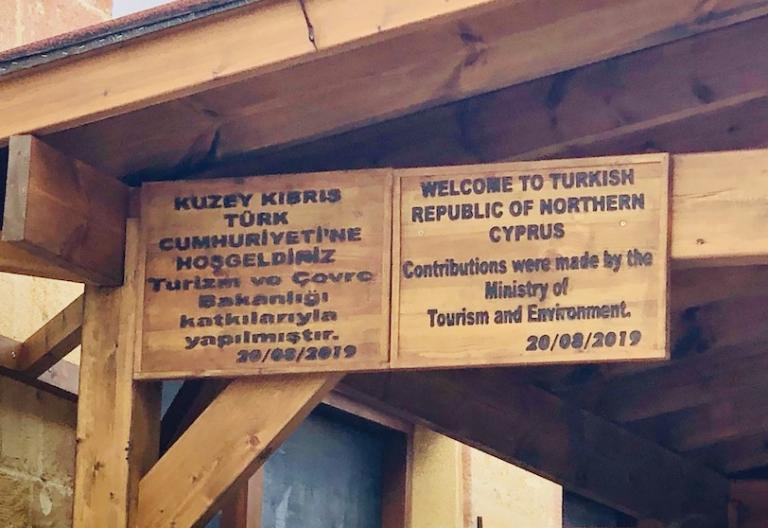 High walls and tight certainties win
In other words, we are seeing the UM equivalent of the Turkish invasion of Cyprus. Behind high walls, now being constructed, the group of “we represent the only correct way to think” believers will find their safety in their certainties.
In their case, as opposed to the Turkish separatists, they’ll have the financial resources, but their spiritual and mental resources will become depleted in the smallness of their echo-chamber of “right-think.”
Yet I keep asking, “Can this listing ship be righted? Have we tilted so far in our lack of cohesion and perpetual infighting that we will indeed perish in the depths, swallowed by whatever leviathan lurks underneath?” Because what is getting ready to happen hurts every single person connected with the UMC.
I will write more about this later, but these last few weeks of travel, with my immersion into ancient history and the world of never-stable nations and institutions, leave me fairly pessimistic. There will always be those who are convinced of the rightness of their certainties, of their special calling by whatever god who agrees with them, who are sure that those who don’t agree should be in some way eliminated or expelled or conquered.
Easier, but not Christian
Those convinced of their rightness and secure in their tight boundaries tend to attract those who also need certainties and high walls to function.
I know. Do not forget that I was one of them.
That kind of belief-sameness, especially when described as a divine mandate, energizes the insiders to conquer others, to expand territories, to spend whatever funds and resources necessary to gain more power, to convert, by force when necessary, those who protest or who are damaged by the conquerors. They are convinced they hurt others in the name of God and all that is holy. Think: Holy Roman Crusades, leaving much devastation in their wake.
That’s human nature. But the church, seriously, the church, is supposed to operate differently. The church is the place where we are to practice being Jesus-followers, to learn to love our enemies, to be prepared to lay down our lives for the other, to be the safe haven for the formerly despised and spat upon. That is the core of our function.
So, when we let the desire for power and the often-unacknowledged hope for more financial resources, assume top priority, no matter what the cost to others, we become those whose lips say the right words but whose souls have been corrupted.
Truly, it is difficult to be a Jesus-follower. Everything in us screams against living that way, intentionally taking the last position, offering the first to those whom we think didn’t earn it, don’t deserve it. Much easier to muscle our way to the front, to claim prominence and, again, divine mandate for our positions. Easier, but most definitely not Christian.
Photo credits: (c) Christy Thomas, all rights reserved.
Previous Post
October 29, 2019
The Anti-Christ Paradox: Human Nature Demands One
Next Post

November 26, 2019 Do NOT Impeach Donald Trump Or God's Wrath Will Fall
Browse Our Archives
Select a Category " obedience abortion accommodation accountability administration adolescence Advent advice an ordinary death anxiety apology apportionments Ash Wednesday ask thoughtfulpastor baptism betrayal Bible bondage calling certainty change character charity children Christianity Christmas church church as garden clergy clergy credentials closure comfort compassion competition compromise Confirmation conservation conservative conspiracy theories consumer conversion coronavirua corruption courage covenant cultural context death Deconstruction discipleship discord divorce doctrine doing good drugs dysfunctional Easter Easter; Resurrection education election entertainment envy escape evaluation evil exclusive church exercise faith faithfulness family fasting fear feast featured film review finances first world problem food forgiveness fundamentalist garden gay marriage General Conference generosity giving thanks GLBT glory good government grace guilt habit happy harmony hateful acts healing health health care heaven hell hello/goodbye heresy hidden agenda holiness homelessness homosexuality humility hymn hypocrisy Imago Dei In training inclusive church indulgence injustice innocents insurance intolerance itinerancy joy Justice kindness Kingdom of Heave kingdom of heaven language laughter laundry lawsuit leadership Lent LGBTQ liberal life Little Things Matter longform meandering thoughts memories mercy metaphor metrics miracle misfortunes morality Mormon Muslim mystery worship natural disasters New Category Name nutrients older adults oppression pain Paleo paperwork partnered pastor peace pension pharmaceutical placebo politics poverty prayer privilege public schools questions quiet racism rain reason reconciliation religion repentance requirements rescue respect rest resurrection retirement Sabbath sacrament sacred salvation same-sex marriage sanctuary schism schooling science SCOTUS secrecy separation of church and state sexism sexuality short cuts silence sin sleep soil spiritual journey stillness suffering surgery sustainable church teacher technology thank you theology therapy thinking tolerance TOS trust truth Uncategorized welcome Why Easter? wisdom women worship
Select a Month October 2026 September 2026 August 2026 July 2026 June 2026 May 2026 April 2026 March 2026 February 2026 December 2025 October 2025 September 2025 July 2025 June 2025 March 2025 February 2025 December 2024 November 2024 August 2024 July 2024 June 2024 April 2024 March 2024 January 2024 December 2023 August 2023 July 2023 June 2023 May 2023 March 2023 February 2023 January 2023 December 2022 October 2022 September 2022 July 2022 March 2022 February 2022 January 2022 October 2021 July 2021 June 2021 April 2021 March 2021 February 2021 January 2021 December 2020 November 2020 October 2020 September 2020 August 2020 July 2020 June 2020 May 2020 April 2020 March 2020 January 2020 November 2019 October 2019 September 2019 August 2019 May 2019 April 2019 March 2019 February 2019 January 2019 December 2018 November 2018 October 2018 September 2018 August 2018 July 2018 June 2018 May 2018 April 2018 March 2018 February 2018 January 2018 December 2017 November 2017 October 2017 September 2017 August 2017 July 2017 June 2017 May 2017 April 2017 March 2017 February 2017 January 2017 December 2016 November 2016 October 2016 September 2016 August 2016 July 2016 June 2016 May 2016 April 2016 March 2016 February 2016 January 2016 December 2015 November 2015 October 2015 September 2015 August 2015 July 2015 June 2015 May 2015 April 2015 March 2015 February 2015 January 2015 December 2014 November 2014 October 2014 September 2014 August 2014 July 2014 June 2014 May 2014 April 2014 March 2014 February 2014 January 2014 December 2013 November 2013 October 2013 September 2013 August 2013 July 2013 June 2013 May 2013 April 2013 March 2013 February 2013 January 2013 December 2012 November 2012 October 2012 September 2012 August 2012 July 2012 June 2012 May 2012 April 2012 March 2012 February 2012 January 2012 December 2011 November 2011 October 2011 September 2011 August 2011 July 2011 June 2011 May 2011 April 2011 March 2011 February 2011 January 2011 December 2010 November 2010 October 2010 September 2010 August 2010 July 2010 June 2010 May 2010 April 2010 March 2010 February 2010 January 2010 December 2009 November 2009 October 2009 September 2009 August 2009 July 2009 June 2009 May 2009 April 2009 March 2009 February 2009 January 2009 December 2008 November 2008 October 2008 August 2008 July 2008 June 2008 May 2008 April 2008 March 2008 February 2008 January 2008 December 2007 November 2007 October 2007 September 2007 July 2007 March 2007
Follow Us!
TAKE THE
Religious Wisdom Quiz
True or False: Hebrews states that it is appointed for men to die once, and after this comes judgment.
Select your answer to see how you score.
TRUE FALSE
Related posts from The Thoughtful Pastor


Just Imagine: Their Heaven Becomes Your Hell
Joe Biden and Religion: Exploring His Faith

What Does The Bible Say About Politics?
TRENDING AT PATHEOS Progressive Christian

In "Irreplaceable," our book on vocation and technology, Trevor Sutton and I...

I was strolling through the top floor of the brand new Parthenon...

What Does Gêvâh Mean For Kimberley Guifoyle &...
This week, a lot of the news is focused on Kimberly Guilfoyle....

INNER CIRCLE: Profound Mystery (Of Christ In All...
Ephesians 5:31-32 “For this reason, a man will leave his father and...

Do Not Rejoice When Your Enemy Falls: The...
Turning an execution into a public spectacle is a disturbing expression of...

'The Chosen' S6 Trailer: The Passion Gets Very...
Not many watching 'The Chosen' worry about spoilers, but just because they...
view all Progressive Christian blogs
Ad-Free & Subscriber Log-In Subscription Support
- About Us
- 2026 Calendar
- Videos
- Podcasts
- Library of World Religions
- Faith In Media Tracker
- Advertise With Us
- Write for Us
- Privacy Policy
- Terms of Service
- Do Not Sell My Data
- Contact Us
- Radiant Digital
- Manage Newsletter Subscriptions
- Unsubscribe From Notifications
- Sitemap
Copyright 2008-2026, Patheos. All rights reserved.
Subscription Support Ad-Free & Subscriber Log-In
Follow Patheos