
BuddhistCatholicContemplativeEvangelicalGeneral ChristianHinduJewishLatter-day SaintMuslimNew VisionsProgressive Christian
Beliefs
- Buddhist
- Catholic
- Contemplative
- Evangelical
- General Christian
- Hindu
- Jewish
- Latter-day Saint
- More Voices
- Muslim
- New Visions
- Pagan
- Progressive Christian
Topics
- Religion News
- Food and Religion
- Sports and Religion
- Religious Art
- Religious Music and Entertainment
- Religious Events
- History and Religion
- Style and Religion
- Politics and Religion
- Women in Religion
- Recreation Outdoors and Religion
- Business Finance and Religion
- Careers Workplace and Religion
- Education and Religion
- Family Parenting and Religion
- Health Fitness and Religion
- Home and Religion
- Relationships and Religion
- Technology and Religion
- Travel and Religion
Columnists
- Buddhist Columnists
- Business Finance and Religion Columnists
- Careers Workplace and Religion Columnists
- Catholic Columnists
- Contemplative Columnists
- Education and Religion Columnists
- Evangelists Columnists
- Family Parenting and Religion Columnists
- General Christian Columnists
- Health Fitness and Religion Columnists
- Hindu Columnists
- History and Religion Columnists
- Home and Religion Columnists
- Jewish Columnists
- More Voices Columnists
- Latter Day Columnists
- Muslim Columnists
- New Visions Columnists
- Nonreligious Columnists
- Pagan Columnists
- Politics and Religion Columnists
- Progressive Columnists
- Recreation Outdoors and Religion Columnists
- Relationships and Religion Columnists
- Religion News Columnists
- Religious Art Columnists
- Religious Events Columnists
- Religious Music and Entertainment Columnists
- Sports and Religion Columnists
- Style and Religion Columnists
- Technology and Religion Columnists
- Travel and Religion Columnists
- Women in Religion Columnists
Resource Library
- 2026 Calendar
- Library of World Religions
- The 100 Most Holy Places on Earth
- Patheos Answers
- Podcasts
- Videos
- Faith Leaders Database
- Anglican Episcopalian
- Bahai
- Baptist
- Buddhism
- Christianity
- Confucianism
- Eastern Orthodoxy
- Hinduism
- Holiness and Pentecostal
- ISKCON
- Islam
- Judaism
- Lutheran
- Methodist
- The Church of Jesus Christ of Latter-day Saints
- New Age
- Paganism
- Presbytarian and Reformed
- Protestantism
- Religion Behind the Scenes
- Roman Catholic
- Scientology
- Shia Islam
- Sikhism
- Sufism
- Sunni Islam
- Taoism
- Zen
- See all religions
Research Tools
 Ad-Free & Subscriber Log-In Subscription Support
Ad-Free & Subscriber Log-In Subscription Support
Follow Patheos 

- Trending:
- Forgiveness
- |
- Marriage
- |
- Consciousness
- |
- Death Penalty
- |
- Election
- |
- Halloween

- Home
- About The Thoughtful Pastor
- Archives
- Read my Book
- Ask the Pastor
- Mystery Worship Series
- FREE NEWSLETTER
- Home
- Progressive Christian
- Do You WANT To Be Well? Think Hard About Your Answer
Do You WANT To Be Well? Think Hard About Your Answer
Last updated on: January 29, 2019 at 3:12 pm by Christy Thomas
Do You WANT To Be Well? Think Hard About Your Answer 2019-01-29T15:12:57-05:00 Christy Thomas
Patheos Explore the world's faith through different perspectives on religion and spirituality! Patheos has the views of the prevalent religions and spiritualities of the world.
Do I want to be well? It’s a harder decision than most of us realize. It’s easier to be sick, to be able to blame the sickness for not being able to do this or that. It’s also far easier to blame others on not being well because they didn’t show up with exactly what we needed at the exact time we needed them.
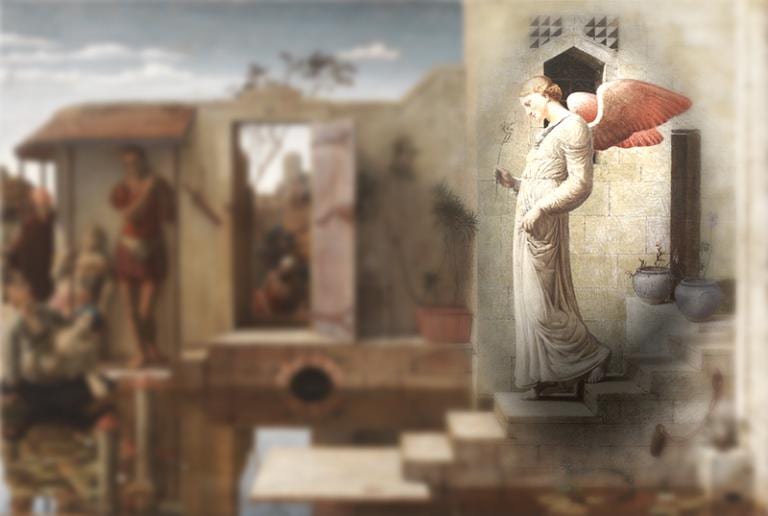
Several years ago, I was in Jerusalem and ended up at the Sheep Gate there, seeing the empty pool of Bethesda. The John 5 story popped up in my mind.
Soon another Feast came around and Jesus was back in Jerusalem. Near the Sheep Gate in Jerusalem there was a pool, in Hebrew called Bethesda, with five alcoves.
Hundreds of sick people – blind, crippled, paralyzed – were in these alcoves. One man had been an invalid there for thirty-eight years.
When Jesus saw him stretched out by the pool and knew how long he had been there, he said, “Do you want to get well?”
The sick man said, “Sir, when the water is stirred, I don’t have anybody to put me in the pool. By the time I get there, somebody else is already in.”
Jesus said, “Get up, take your bedroll, start walking.”
The man was healed on the spot. He picked up his bedroll and walked off. (The Message Translation)
Think about this man. He’s lived 38 years—probably his entire life–in sickness. He’s never been a productive member of his society. In an economy where everyone either contributes or dies, where wellness and fertility are clear signs of God’s blessing, his disability made him an outcast, one of the cursed and unloved.
He survived, somehow managing to stay alive by the hope that maybe he would be healed. BUT, he’s at the mercy of someone else to find that healing.
If that other, in his case an angel, doesn’t show up at precisely the right moment when an aide, another “other” is near him to get him the water first–and can you imagine the wild rush when the waters stirred?–he remains that outcast beggar, always dependent on the charity of others.
Do you want to be well?
One otherwise ordinary day, Jesus strolls up, picks him out of the crowd and asks, “Do you want to be well?”
Think about the drama of the moment. We don’t know if those around heard this question–city gates tended to be noisy places with animals braying and carts swaying and multiple conversations all at once. If bystanders did catch Jesus’ words, they’d probably laugh derisively at the question.
But assume for a moment that, because of the other noise and distractions, this became a private moment in a public square. Visualize one man, lying on a tattered, dirty mat, hand out, hoping for a few coins so he could feed himself yet one more day. Observe another man, healthy and vibrant, squatting alongside; his eyes fixed on the eyes of the prone one.
“Do you want to be well?”
From what we read, the mat-man’s initial response carried the usual excuse of something along these lines, “I can’t be well because . . . I just can’t. I never get the help I need when I need it. It is not my fault.”
Jesus ignores that response. Instead, he says, with what might look like cruelty to an onlooker, “Pick up your mat and walk.”
The mat-man has never walked. He has never plowed a field, or taken a herd of sheep into the hills or built a hut or dug a well—all necessary skills in that time to stay alive.
He’s lived his life in total dependency on others. That’s all he knows.
Suddenly, his world re-orders itself. If he does indeed take up his mat and walk, he’ll have to learn entirely new skills, a way of living that is quite foreign to him.
A harder decision than we realize
Human reality: we prefer the devil we know to the devil we do not know.
Will this man leave behind the world he knows, one that, amazingly enough in a day of very limited life spans, had kept him alive for 38 years?
Will he take on the serious challenges of being well, of being fully responsible for himself and his survival?
Or will he stay with what he knows and respond with, “Don’t be stupid and mean. You KNOW I can’t do that.”
And yet, do I want to be well? Do you want to be well?
It’s a harder decision than most of us realize. It’s easier to be sick, to be able to blame the sickness for not being able to do this or that. It’s also far easier to blame others on not being well because they didn’t show up with exactly what we needed at the exact time we needed them.
To be well means we take total responsibility for our own health, for whatever contributions we make, or don’t make, to the broader community to which we are connected.
What would you do?
He picks up his mat.
He walks for the first time. And his life is irrevocably changed.
He can no longer cast the blame of his fate onto others.
When he picked up the mat, he picked up the responsibility.
The truth: it is hard work to be well, to own one’s soul, to be the one responsible for one’s future.
Women may suffer the most here
I speak from my own experience and challenges of getting well, i.e., taking responsibility for my present and future self. I also add to it the many other stories I’ve read and heard from others. I am increasingly convinced it would be wise to link some portion of the growing numbers of depressive diseases to religious worlds that deny women, in particular, the right to be responsible for themselves.
Because of the (presumably biblical) rule that insists males and males only have final leadership voice and authority in home and church, many women find themselves having to deny the authenticity of their inner voices, their memories, and their thoughts.
In doing so, they also deny their essential humanness of living out of mental and spiritual freedom.
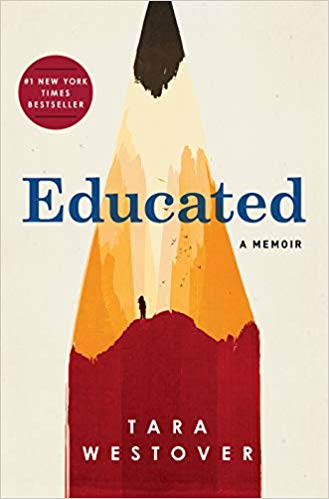 For a perfect example, I urge you to read Tara Westover’s compelling, honest and painful memoir, Educated. I confess I could not put it down after I started it.
I want to make it clear here: most of the men who take on these kinds of leadership roles that deny female voices are not evil people. They are instead living out of what has been drilled into their souls and minds.
They have no idea how damaging it is to the women in their lives, primarily because the women dare not speak it out for fear of being labeled “rebellious” or “unspiritual” or “unbiblical” in their understandings.
An enlightening moment when offering a kidney
Several years ago, I sought to donate a kidney to my brother. As part of the vetting process, I met with a psychiatrist at the UCLA medical center. His job: evaluate my mental stability to make this kind of complex decision.
The psychiatrist asked if I had ever been suicidal. I asked him if he had much experience with women living in extremely patriarchal societies. He had not, so I explained to him how I had reached a point where I either had to kill my mind and soul to remain in the world I knew, or to kill my body.
I very nearly choose the death of my body as I could not see how I could survive without my mind and soul.
As I spoke, he looked at me with a growing look of astonishment. Then he said, “Now I understand why Utah is the state with the highest number of antidepressant prescriptions written.”
According to his statistics, a significant percentage of Mormon women take an antidepressant. It’s a way they can survive a world where they have no voice.
But this is not just a Mormon problem. Many, many women, living in theological worlds where they face routine silencing in the name of “obeying God,” face the same issues.
Should the women object, the response is: “But the Bible says . . . ” And who can argue with that?
Well, I finally did. I got well but paid a huge price for it.
That’s what wellness does: it costs. It demands the hard work of refusing to blame others, of insisting I take responsibility for my decisions, of intentionally doing things that lead to wellness. It costs.
A major difference between wellness and the absence of specific illnesses
Do we want to be well? We’ll have to pick up our mats and walk.
Furthermore, none of these actions mean that my body does not face illnesses–there’s a giant difference between wellness and the absence of specific illnesses.
Wellness means I own what happens; I discern the things I do may lead to illnesses; I acknowledge that sometimes stuff just happens and bodies and minds get sick.
Wellness means I take it upon myself to do the best I can with what I have.
Like it or not, embracing wellness often means changing the entire way of life. Movement from an oppressive religious system into spiritual freedom is possibly the most life-upending decision ever.
The mat-man likely faced this when he entered for the first time a world of physical vitality and the responsibility that goes with it: it takes time to build to new patterns. We human resist changing patterns. That’s why breaking bad habits takes such great efforts.
As did the Israelites in the Exodus story, fearfully facing the survival challenges of desert-freedom, many expressed a longing to return to the safety of slavery–at least food is available there.
When we choose health, we face unending temptations to put down our mats, to let others make your decisions for us, to let fear take us down, to re-enter slavery. The more known paths, despite their destructiveness, beckon us with their safety, their surety.
Walking in the unknowns of freedom demands massive energy. We tire more easily. Again, we long for what we know.
But if we stay the course, we shall also live. We’ll the freedom to enter the mysterious, ever-unknown places found in the infinity of God’s presence and infinite grace. We will, repeatedly say a hearty “YES” to the question, “Do you want to be well?”
Photo Credit: By Robert Bateman (1836 – 1889) – Artist (British)Details of artist on Google Art Project – Public Domain, Link, Modified by Christy Thomas.
Photo Credit: Educated book cover photo: Amazon.com
Previous Post

January 21, 2019
Poor Women To Be Mandated Baby-Makers When Abortion Outlawed
Next Post

February 4, 2019 The WCA Says, "Just Turn It Off" To GLBTQI People
Browse Our Archives
Select a Category " obedience abortion accommodation accountability administration adolescence Advent advice an ordinary death anxiety apology apportionments Ash Wednesday ask thoughtfulpastor baptism betrayal Bible bondage calling certainty change character charity children Christianity Christmas church church as garden clergy clergy credentials closure comfort compassion competition compromise Confirmation conservation conservative conspiracy theories consumer conversion coronavirua corruption courage covenant cultural context death Deconstruction discipleship discord divorce doctrine doing good drugs dysfunctional Easter Easter; Resurrection education election entertainment envy escape evaluation evil exclusive church exercise faith faithfulness family fasting fear feast featured film review finances first world problem food forgiveness fundamentalist garden gay marriage General Conference generosity giving thanks GLBT glory good government grace guilt habit happy harmony hateful acts healing health health care heaven hell hello/goodbye heresy hidden agenda holiness homelessness homosexuality humility hymn hypocrisy Imago Dei In training inclusive church indulgence injustice innocents insurance intolerance itinerancy joy Justice kindness Kingdom of Heave kingdom of heaven language laughter laundry lawsuit leadership Lent LGBTQ liberal life Little Things Matter longform meandering thoughts memories mercy metaphor metrics miracle misfortunes morality Mormon Muslim mystery worship natural disasters New Category Name nutrients older adults oppression pain Paleo paperwork partnered pastor peace pension pharmaceutical placebo politics poverty prayer privilege public schools questions quiet racism rain reason reconciliation religion repentance requirements rescue respect rest resurrection retirement Sabbath sacrament sacred salvation same-sex marriage sanctuary schism schooling science SCOTUS secrecy separation of church and state sexism sexuality short cuts silence sin sleep soil spiritual journey stillness suffering surgery sustainable church teacher technology thank you theology therapy thinking tolerance TOS trust truth Uncategorized welcome Why Easter? wisdom women worship
Select a Month October 2026 September 2026 August 2026 July 2026 June 2026 May 2026 April 2026 March 2026 February 2026 December 2025 October 2025 September 2025 July 2025 June 2025 March 2025 February 2025 December 2024 November 2024 August 2024 July 2024 June 2024 April 2024 March 2024 January 2024 December 2023 August 2023 July 2023 June 2023 May 2023 March 2023 February 2023 January 2023 December 2022 October 2022 September 2022 July 2022 March 2022 February 2022 January 2022 October 2021 July 2021 June 2021 April 2021 March 2021 February 2021 January 2021 December 2020 November 2020 October 2020 September 2020 August 2020 July 2020 June 2020 May 2020 April 2020 March 2020 January 2020 November 2019 October 2019 September 2019 August 2019 May 2019 April 2019 March 2019 February 2019 January 2019 December 2018 November 2018 October 2018 September 2018 August 2018 July 2018 June 2018 May 2018 April 2018 March 2018 February 2018 January 2018 December 2017 November 2017 October 2017 September 2017 August 2017 July 2017 June 2017 May 2017 April 2017 March 2017 February 2017 January 2017 December 2016 November 2016 October 2016 September 2016 August 2016 July 2016 June 2016 May 2016 April 2016 March 2016 February 2016 January 2016 December 2015 November 2015 October 2015 September 2015 August 2015 July 2015 June 2015 May 2015 April 2015 March 2015 February 2015 January 2015 December 2014 November 2014 October 2014 September 2014 August 2014 July 2014 June 2014 May 2014 April 2014 March 2014 February 2014 January 2014 December 2013 November 2013 October 2013 September 2013 August 2013 July 2013 June 2013 May 2013 April 2013 March 2013 February 2013 January 2013 December 2012 November 2012 October 2012 September 2012 August 2012 July 2012 June 2012 May 2012 April 2012 March 2012 February 2012 January 2012 December 2011 November 2011 October 2011 September 2011 August 2011 July 2011 June 2011 May 2011 April 2011 March 2011 February 2011 January 2011 December 2010 November 2010 October 2010 September 2010 August 2010 July 2010 June 2010 May 2010 April 2010 March 2010 February 2010 January 2010 December 2009 November 2009 October 2009 September 2009 August 2009 July 2009 June 2009 May 2009 April 2009 March 2009 February 2009 January 2009 December 2008 November 2008 October 2008 August 2008 July 2008 June 2008 May 2008 April 2008 March 2008 February 2008 January 2008 December 2007 November 2007 October 2007 September 2007 July 2007 March 2007
Follow Us!
TAKE THE
Religious Wisdom Quiz
Who said, "The stone the builders rejected has become the cornerstone"?
Select your answer to see how you score.
David Jesus Paul Isaiah
Related posts from The Thoughtful Pastor

Five Thoughts About New Mercies And New Year's...
Just Imagine: Their Heaven Becomes Your Hell
Joe Biden and Religion: Exploring His Faith
TRENDING AT PATHEOS Progressive Christian

The Iron Gates and the Lion of the...
Yesterday, I didn't finish my report about, well, yesterday. So I'll...

Dolly Parton’s Last Song Wins Dove Award with...
Bluegrass band The Grascals, speaking on the red carpet at the 57th...

The Image: On the Horror of Capitalism and...
The Image Then went the Pharisees, and took counsel how they might...

We are approaching the date of our new American national holiday: October...

Letters on Living the Faith by C.S. Lewis
Most of us met C.S. Lewis as a public intellectual. Mere Christianity....

When Halloween Unmasks Married Hearts
Written by Dr. David K. Ewen from Eternal Truth Bible College Behind...
view all Progressive Christian blogs
Ad-Free & Subscriber Log-In Subscription Support
- About Us
- 2026 Calendar
- Videos
- Podcasts
- Library of World Religions
- Faith In Media Tracker
- Advertise With Us
- Write for Us
- Privacy Policy
- Terms of Service
- Do Not Sell My Data
- Contact Us
- Radiant Digital
- Manage Newsletter Subscriptions
- Unsubscribe From Notifications
- Sitemap
Copyright 2008-2026, Patheos. All rights reserved.
Subscription Support Ad-Free & Subscriber Log-In
Follow Patheos