
BuddhistCatholicContemplativeEvangelicalGeneral ChristianHinduJewishLatter-day SaintMuslimNew VisionsProgressive Christian
Beliefs
- Buddhist
- Catholic
- Contemplative
- Evangelical
- General Christian
- Hindu
- Jewish
- Latter-day Saint
- More Voices
- Muslim
- New Visions
- Pagan
- Progressive Christian
Topics
- Religion News
- Food and Religion
- Sports and Religion
- Religious Art
- Religious Music and Entertainment
- Religious Events
- History and Religion
- Style and Religion
- Politics and Religion
- Women in Religion
- Recreation Outdoors and Religion
- Business Finance and Religion
- Careers Workplace and Religion
- Education and Religion
- Family Parenting and Religion
- Health Fitness and Religion
- Home and Religion
- Relationships and Religion
- Technology and Religion
- Travel and Religion
Columnists
- Buddhist Columnists
- Business Finance and Religion Columnists
- Careers Workplace and Religion Columnists
- Catholic Columnists
- Contemplative Columnists
- Education and Religion Columnists
- Evangelists Columnists
- Family Parenting and Religion Columnists
- General Christian Columnists
- Health Fitness and Religion Columnists
- Hindu Columnists
- History and Religion Columnists
- Home and Religion Columnists
- Jewish Columnists
- More Voices Columnists
- Latter Day Columnists
- Muslim Columnists
- New Visions Columnists
- Nonreligious Columnists
- Pagan Columnists
- Politics and Religion Columnists
- Progressive Columnists
- Recreation Outdoors and Religion Columnists
- Relationships and Religion Columnists
- Religion News Columnists
- Religious Art Columnists
- Religious Events Columnists
- Religious Music and Entertainment Columnists
- Sports and Religion Columnists
- Style and Religion Columnists
- Technology and Religion Columnists
- Travel and Religion Columnists
- Women in Religion Columnists
Resource Library
- 2026 Calendar
- Library of World Religions
- The 100 Most Holy Places on Earth
- Patheos Answers
- Podcasts
- Videos
- Faith Leaders Database
- Anglican Episcopalian
- Bahai
- Baptist
- Buddhism
- Christianity
- Confucianism
- Eastern Orthodoxy
- Hinduism
- Holiness and Pentecostal
- ISKCON
- Islam
- Judaism
- Lutheran
- Methodist
- The Church of Jesus Christ of Latter-day Saints
- New Age
- Paganism
- Presbytarian and Reformed
- Protestantism
- Religion Behind the Scenes
- Roman Catholic
- Scientology
- Shia Islam
- Sikhism
- Sufism
- Sunni Islam
- Taoism
- Zen
- See all religions
Research Tools
 Ad-Free & Subscriber Log-In Subscription Support
Ad-Free & Subscriber Log-In Subscription Support
Follow Patheos 

- Trending:
- Forgiveness
- |
- Marriage
- |
- Consciousness
- |
- Death Penalty
- |
- Election
- |
- Halloween
 Numinous and Concrete
-
Archives
- Home
- Pagan
- The Fires of Liberation: #NJC ch6
The Fires of Liberation: #NJC ch6
Last updated on: October 22, 2014 at 9:04 pm by T. Thorn Coyle
The Fires of Liberation: #NJC ch6 2014-10-22T21:04:03-07:00 T. Thorn Coyle
Patheos Explore the world's faith through different perspectives on religion and spirituality! Patheos has the views of the prevalent religions and spiritualities of the world.
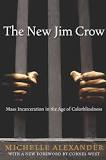 Welcome to the 6 month study group on Michelle Alexander’s The New Jim Crow: Mass Incarceration in the Age of Colorblindness. All comments are screened. Disagreement is fine. Incivility will not be tolerated. Subscribing via RSS and subscribing to comments is recommended. You may join the group at any time.
For more information please read this linked post. Discussion on the Introduction and Chapter One is here. Scroll through my blog entries for the remaining chapter readings and discussions.
“To act is to be committed and to be committed is to be in danger. In this case, the danger in the case of white Americans is the loss of their identity.” – James Baldwin
That is it. If we are all to commit to justice, to equity, and to Beloved Community, white people have to be willing to lose our identity and all of its privileges. Colorblindness is an attempt to literally whitewash society, to pretend that if we “don’t see race” that the very fact of the construction of whiteness will cease to affect our laws, our educational systems, who gets venture capital for the new startup, who gets stopped and frisked, who gets bailed out, and who ends up in prison.
Michelle Alexander wraps up this powerful book with further examination of the exact problems that spring from colorblindness in a deeply racialized, inequitable society. That is what I want to focus on as well, in this final discussion.
Quinn Norton is in the midst of writing an excellent series on the construction of whiteness. In the first installment, she says:
Contemporary whiteness in schools and neighborhoods is a collection of incompatible messages. Don’t be prejudiced against black people, we are told, who are poor and criminal…Good black and latino people are in books, and usually dead. Good people of color are almost always in the past. Bad black and latino people are right now, and could be around any corner. A good child (of any color) doesn’t act like them. This haphazard taxonomy of race isn’t about color, except white and black. To call people yellow or red would be offensive. So it is about color, sometimes. Don’t get that wrong, and don’t ask questions, it’s rude.
Don’t see race. Don’t make this about race. Don’t pull “the race card.” Never seeing that not talking about race is a form of privilege for those of us swimming in whiteness, this social construct that has nothing to do with anything…except social and economic power.
Yes, race is a construct, but so are culture and the societies we build. Humans are animals who construct things.
Norton goes on to say:
White is a political and economic category. The history of whiteness demonstrates this. Groups have been integrated into whiteness as it was politically useful for rulers to do so. The Irish didn’t used to be white, nor the Italians. Non-whites have, at various times, been allowed to buy their way into the white race, with their progeny enjoying white-skin privilege. The only people who could never be white were blacks — this has always been the defining quality of whites.
Our problem, here, seems to point quite clearly to a question that Pagans and polytheists might be able to answer: How do we acknowledge that this separation we have created is a construct, while simultaneously seeing all the ways in which differences are important?
Colorblindess has led us from the frying pan and into the fire.
We’ve read over and over in the New Jim Crow all the ways in which this causes the very problems we face today: unequal education and hiring practices, redlining of communities, stop and frisk, skewed drug laws, incarceration rates. And yet, race as we know it is a construct. And yet, various peoples have a variety of cultures, codes, artistic expressions, ways of speaking, looking, celebrating and worshiping.
We live in a unified cosmos with a multitude of expressions therein. Variety and multiplicity are not only beautiful, but necessary.
There are many stars, red giants, clusters, constellations, planets. There are more insects than we can count. There are microbes immeasurable. There are many varieties of humans. There are multiple religions and many Goddesses and Gods. What can we learn from this diversity? How can we come to truly, deeply, respect it? Why must we always be at war?
It is psychology that tells us we need to oppress others in order to maintain our status. We draw the perimeters of oppression. In the United States, these boundaries are those of economic class, educational opportunity, physical and mental ability, gender, and far too often thread throughout, race, which as Norton reminds us, is primarily seen as black and white.
Yet, we all make up this society. We are all important parts of the great whole. How do the very ways we honor our Gods and Goddesses teach us to navigate this tangled mess we have made of our society?
James Baldwin wrote a book called “The Fire Next Time” – it is a book I return to again and again, and holds the quote I began with.
The fire James Baldwin spoke of is coming.
We see sparks rising in Ferguson, Chicago, and South Florida. We hear the chants from the Millennial Activists United, the Lost Voices, and the Dream Defenders. We hear their drums in the streets.
My prayer is that these sparks be the flames of a revolution that will lead to human liberation. My prayer is that the killing will stop. The locking up will cease. My prayer is that we will see one another with eyes washed clean by the tears of anger and of sorrow.
May we see our gorgeous multiplicity, and light incense to the sacred in us all.
I close with the words of Assata Shakur, which the Millennial Activists United use as a chant to bolster this move toward liberation:
“It is our duty to fight for our freedom. It is our duty to win. We must love each other and support each other. We have nothing to lose but our chains.”
Questions for Contemplation and Discussion:
(All questions adapted from the New Jim Crow Study Guide)
1. Colorblindness
Throughout The New Jim Crow, “colorblindness” is described as the belief that not seeing race, or seeing beyond race, represents a virtuous social goal. The book argues that colorblindness is not only a shortsighted belief, but that it has been routinely used as a manipulative tool to advance drug war/mass incarceration policies. How do you respond to the book’s depiction of colorblindness? Do you see redeeming qualities in the concept of seeing beyond race? Do you agree with Alexander’s conclusion that dealing openly with race is essential to the struggle at hand, and that the goal of colorblindness should be abandoned?
2. Who’s at the Table?
History suggests that it is crucial to the success of social movements that the people on whose behalf the movement speaks and acts need to themselves have a seat at the table when movement decisions are made and the character and culture of the movement is developed. Are prisoners and former prisoners finding a seat at the table in this movement? Why or why not?
Do you think a new underground railroad could help make it possible for formerly incarcerated people to find their way to a seat at the table? And where is this table anyway? Shouldn’t prisoners and former prisoners be hosts rather than guests at the movement’s organizing table?
3. First Steps
Dr. King once urged advocates not to be afraid if they were unable to draft a clear road map for bringingabout change. He said you don’t need to see the whole staircase in order to take the first step. What do you believe are the first steps? What specific actions can we take, individually or collectively, in our schools, places of worship, communities, etc., to engage in movement building? Do we need to create new organizations and coalitions, or are the existing organizations adequate to the tasks that lie ahead?
Previous Post

October 8, 2014
Confronting Empire Takes Us All
Next Post
November 12, 2014 Challengers in Community are Necessary
Browse Our Archives
Select a Category Community Justice New Jim Crow Teaching Theologies
Select a Month January 2015 December 2014 November 2014 October 2014 September 2014 August 2014 July 2014 June 2014 May 2014 April 2014
Follow Us!
TAKE THE
Religious Wisdom Quiz
What mountain did Moses receive the Ten Commandments on?
Select your answer to see how you score.
Mount Zion Mount Sinai Mount Carmel Mount Ararat
Related posts from Numinous and Concrete


An Open Letter to White America
Confronting Empire Takes Us All
TRENDING AT PATHEOS Pagan

I was recently chatting with someone on Instagram. She asked me what...

While there are many people who share their results, the end of...

On July 23, I saw Christopher Nolan's The Odyssey which is Homer’s...

As I write this two big events have just finished up. One...

Restoring the Watershed of Divine Love
Perhaps cooperation is not something we manufacture through legislation, ideology, or moral...

Many UUs don’t pray because of bad experiences in a previous religion,...
view all Pagan blogs
Ad-Free & Subscriber Log-In Subscription Support
- About Us
- 2026 Calendar
- Videos
- Podcasts
- Library of World Religions
- Faith In Media Tracker
- Advertise With Us
- Write for Us
- Privacy Policy
- Terms of Service
- Do Not Sell My Data
- Contact Us
- Radiant Digital
- Manage Newsletter Subscriptions
- Unsubscribe From Notifications
- Sitemap
Copyright 2008-2026, Patheos. All rights reserved.
Subscription Support Ad-Free & Subscriber Log-In
Follow Patheos