
BuddhistCatholicContemplativeEvangelicalGeneral ChristianHinduJewishLatter-day SaintMuslimNew VisionsProgressive Christian
Beliefs
- Buddhist
- Catholic
- Contemplative
- Evangelical
- General Christian
- Hindu
- Jewish
- Latter-day Saint
- More Voices
- Muslim
- New Visions
- Pagan
- Progressive Christian
Topics
- Religion News
- Food and Religion
- Sports and Religion
- Religious Art
- Religious Music and Entertainment
- Religious Events
- History and Religion
- Style and Religion
- Politics and Religion
- Women in Religion
- Recreation Outdoors and Religion
- Business Finance and Religion
- Careers Workplace and Religion
- Education and Religion
- Family Parenting and Religion
- Health Fitness and Religion
- Home and Religion
- Relationships and Religion
- Technology and Religion
- Travel and Religion
Columnists
- Buddhist Columnists
- Business Finance and Religion Columnists
- Careers Workplace and Religion Columnists
- Catholic Columnists
- Contemplative Columnists
- Education and Religion Columnists
- Evangelists Columnists
- Family Parenting and Religion Columnists
- General Christian Columnists
- Health Fitness and Religion Columnists
- Hindu Columnists
- History and Religion Columnists
- Home and Religion Columnists
- Jewish Columnists
- More Voices Columnists
- Latter Day Columnists
- Muslim Columnists
- New Visions Columnists
- Nonreligious Columnists
- Pagan Columnists
- Politics and Religion Columnists
- Progressive Columnists
- Recreation Outdoors and Religion Columnists
- Relationships and Religion Columnists
- Religion News Columnists
- Religious Art Columnists
- Religious Events Columnists
- Religious Music and Entertainment Columnists
- Sports and Religion Columnists
- Style and Religion Columnists
- Technology and Religion Columnists
- Travel and Religion Columnists
- Women in Religion Columnists
Resource Library
- 2026 Calendar
- Library of World Religions
- The 100 Most Holy Places on Earth
- Patheos Answers
- Podcasts
- Videos
- Faith Leaders Database
- Anglican Episcopalian
- Bahai
- Baptist
- Buddhism
- Christianity
- Confucianism
- Eastern Orthodoxy
- Hinduism
- Holiness and Pentecostal
- ISKCON
- Islam
- Judaism
- Lutheran
- Methodist
- The Church of Jesus Christ of Latter-day Saints
- New Age
- Paganism
- Presbytarian and Reformed
- Protestantism
- Religion Behind the Scenes
- Roman Catholic
- Scientology
- Shia Islam
- Sikhism
- Sufism
- Sunni Islam
- Taoism
- Zen
- See all religions
Research Tools
 Ad-Free & Subscriber Log-In Subscription Support
Ad-Free & Subscriber Log-In Subscription Support
Follow Patheos 

- Trending:
- Forgiveness
- |
- Marriage
- |
- Consciousness
- |
- Death Penalty
- |
- Election
- |
- Halloween
 Numinous and Concrete
-
Archives
- Home
- Pagan
- Caste and Systems: #NJC Intro & Ch 1
Caste and Systems: #NJC Intro & Ch 1
Last updated on: May 29, 2014 at 9:04 am by T. Thorn Coyle
Caste and Systems: #NJC Intro & Ch 1 2014-05-29T09:04:39-07:00 T. Thorn Coyle
Patheos Explore the world's faith through different perspectives on religion and spirituality! Patheos has the views of the prevalent religions and spiritualities of the world.
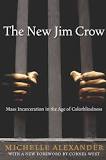 Welcome to the 6 month study group on Michelle Alexander’s The New Jim Crow: Mass Incarceration in the Age of Colorblindness. Discussion will take place in the comments. All comments will be monitored – only those clearly reading the book will have comments unscreened. Disagreement is fine. Incivility will not be tolerated. Subscribing via RSS is highly recommended. You may join the group at any time.
For more information on the study group, the reasons behind it, and resources for study, please read this linked post.
________________________________________________________________________________
On Caste
The fate of millions of people—indeed the future of the black community itself—may depend on the willingness of those who care about racial justice to re-examine their basic assumptions about the role of the criminal justice system in our society. The fact that more than half of the young black men in many large American cities are currently under the control of the criminal justice system (or saddled with criminal records) is not—as many argue—just a symptom of poverty or poor choices, but rather evidence of a new racial caste system at work. (NJC*,* p. 16).
From the New Jim Crow study guide:
In the introduction to The New Jim Crow, Michelle Alexander acknowledges her own reluctance, because of her biases and assumptions, to accept the harsh realities that her experience and research came to teach her about race, drugs, and criminal justice in the United States. Even though she was an African American woman dedicated to racial and social justice, she had failed to see— she did not want to see—the “other America” that was hidden from her in plain sight. A new “caste system” had emerged, one that shuttles children in ghettoized communities from rundown, under-funded schools to brand new, high-tech prisons. A system that locks poor people— overwhelmingly poor people of color—into a permanent, second-class status eerily reminiscent of an era we supposedly left behind.
Systems Thinking
In our discussions on mass incarceration, I will keep pointing us toward systems thinking rather than personalized or case-by-case thinking. We will need to follow the threads we are familiar with and try to see the pattern they form. To do this, we will need to, like Michelle Alexander did, examine our assumptions:
What are our assumptions about one another and about the society we live in? What are our assumptions about ourselves? One thing that may feel challenging to us in reading through this book and trying to educate ourselves on the system of racial violence that is mass incarceration in the US today is this:
What is our role in the system?
Despite our best efforts to be good people, we can easily become complicit in systems, the results of which some of our families may never see. Others of us? Our families live with it daily. We may not be hate-filled “White Supremacists” but we live in systems built from white supremacy – it infects our movies, our books, our music, our hiring practices, our school systems, and our systems of policing and imprisonment.
White supremacy is one way of thinking and being that forms a system. Seeing what underpins a system is the first step toward dealing with the system with some sense of knowledge and autonomy. As long as we can’t see the patterns at play, we cannot be in active relationship with them. We cannot invoke our will and make effective change.
Every time whiteness is a standard or the norm, white supremacy is at play. Every time a white shooter is said to be mentally ill and a brown shooter is said to be a terrorist, white supremacy is at play. Every time a white teen with marijuana is given a warning and a Black teen with marijuana is thrown in prison, white supremacy is at play.
What do we need to examine?
In this first examination of the Introduction and Chapter One of The New Jim Crow, I’d like to discuss systems thinking and share ideas on what might help us toward a deeper understanding of systems. We might also discuss what gets in the way of that: assumptions, emotional responses, lack of education…
Below are some questions from the study guide. We do not have to answer them all, but can use them as food for personal thought, and to help our conversation:
1. Initial Reaction
When you first opened The New Jim Crow, what beliefs about race, racial progress, and our criminal justice system did you hold?
2. Meaning of Caste
By describing the system of mass incarceration as a “caste” system, The New Jim Crow calls attention to the fact that millions of people labeled as “felons” or “criminals” are barred by law from mainstream society. Mass incarceration impacts not only those who are under the formal con- trol of the criminal justice system (in prison or jail, on probation or parole), but also the tens of millions who are governed by laws authorizing legal discrimi- nation against people released from prison. How do you feel about describing mass incarceration as a caste system?
3. How Close to Home?
Are you, or is anyone you know locked in the second- class status described here—unable to vote or legally discriminated against in employment, housing, edu- cation, or access to public benefits? What do you know, personally, about the struggles of those who are part of the undercaste?
4. Racial Bribes
In chapter one, the “divide and conquer” political tac- tics that helped to birth slavery, Jim Crow, and mass incarceration are explored in detail. Alexander argues that poor whites have repeatedly been offered “racial bribes.” That is, special, largely superficial privilege have been extended to poor whites in an effort to drive a wedge between them and poor blacks. Was any of the history new to you? Do you see similar “divide and conquer” dynamics at work today? If so, what are they?
5. Is Beloved Community Possible?
Do you believe that Dr. King’s vision of a beloved community can be realized in the United States? How do your feelings on this subject impact how you relate to the call to end mass incarceration and our nation’s cycle of caste?
Previous Post

May 14, 2014
God(s) Talk: Defining Terms
Next Post

June 11, 2014 Honoring the Gods: Pagan Values Month
Browse Our Archives
Select a Category Community Justice New Jim Crow Teaching Theologies
Select a Month January 2015 December 2014 November 2014 October 2014 September 2014 August 2014 July 2014 June 2014 May 2014 April 2014
Follow Us!
TAKE THE
Religious Wisdom Quiz
In 1 Peter 1, what does Peter say is more valuable than gold?
Select your answer to see how you score.
Righteousness Charity Wisdom Faith
Related posts from Numinous and Concrete


An Open Letter to White America
The Fires of Liberation: #NJC ch6
TRENDING AT PATHEOS Pagan

I was recently chatting with someone on Instagram. She asked me what...

While there are many people who share their results, the end of...

On July 23, I saw Christopher Nolan's The Odyssey which is Homer’s...

As I write this two big events have just finished up. One...

Restoring the Watershed of Divine Love
Perhaps cooperation is not something we manufacture through legislation, ideology, or moral...

Many UUs don’t pray because of bad experiences in a previous religion,...
view all Pagan blogs
Ad-Free & Subscriber Log-In Subscription Support
- About Us
- 2026 Calendar
- Videos
- Podcasts
- Library of World Religions
- Faith In Media Tracker
- Advertise With Us
- Write for Us
- Privacy Policy
- Terms of Service
- Do Not Sell My Data
- Contact Us
- Radiant Digital
- Manage Newsletter Subscriptions
- Unsubscribe From Notifications
- Sitemap
Copyright 2008-2026, Patheos. All rights reserved.
Subscription Support Ad-Free & Subscriber Log-In
Follow Patheos