
BuddhistCatholicContemplativeEvangelicalGeneral ChristianHinduJewishLatter-day SaintMuslimNew VisionsProgressive Christian
Beliefs
- Buddhist
- Catholic
- Contemplative
- Evangelical
- General Christian
- Hindu
- Jewish
- Latter-day Saint
- More Voices
- Muslim
- New Visions
- Pagan
- Progressive Christian
Topics
- Religion News
- Food and Religion
- Sports and Religion
- Religious Art
- Religious Music and Entertainment
- Religious Events
- History and Religion
- Style and Religion
- Politics and Religion
- Women in Religion
- Recreation Outdoors and Religion
- Business Finance and Religion
- Careers Workplace and Religion
- Education and Religion
- Family Parenting and Religion
- Health Fitness and Religion
- Home and Religion
- Relationships and Religion
- Technology and Religion
- Travel and Religion
Columnists
- Buddhist Columnists
- Business Finance and Religion Columnists
- Careers Workplace and Religion Columnists
- Catholic Columnists
- Contemplative Columnists
- Education and Religion Columnists
- Evangelists Columnists
- Family Parenting and Religion Columnists
- General Christian Columnists
- Health Fitness and Religion Columnists
- Hindu Columnists
- History and Religion Columnists
- Home and Religion Columnists
- Jewish Columnists
- More Voices Columnists
- Latter Day Columnists
- Muslim Columnists
- New Visions Columnists
- Nonreligious Columnists
- Pagan Columnists
- Politics and Religion Columnists
- Progressive Columnists
- Recreation Outdoors and Religion Columnists
- Relationships and Religion Columnists
- Religion News Columnists
- Religious Art Columnists
- Religious Events Columnists
- Religious Music and Entertainment Columnists
- Sports and Religion Columnists
- Style and Religion Columnists
- Technology and Religion Columnists
- Travel and Religion Columnists
- Women in Religion Columnists
Resource Library
- 2026 Calendar
- Library of World Religions
- The 100 Most Holy Places on Earth
- Patheos Answers
- Podcasts
- Videos
- Faith Leaders Database
- Anglican Episcopalian
- Bahai
- Baptist
- Buddhism
- Christianity
- Confucianism
- Eastern Orthodoxy
- Hinduism
- Holiness and Pentecostal
- ISKCON
- Islam
- Judaism
- Lutheran
- Methodist
- The Church of Jesus Christ of Latter-day Saints
- New Age
- Paganism
- Presbytarian and Reformed
- Protestantism
- Religion Behind the Scenes
- Roman Catholic
- Scientology
- Shia Islam
- Sikhism
- Sufism
- Sunni Islam
- Taoism
- Zen
- See all religions
Research Tools
 Ad-Free & Subscriber Log-In Subscription Support
Follow Patheos 

- Trending:
- Advent
- |
- Forgiveness
- |
- Thanksgiving
- |
- Election
- |
- Seasonal Holidays
- |
- Marriage
 Thin Places-Faith, Family and Disability
- Home
- Family, Parenting and Religion
- Is There Reason to be Averse to Down Syndrome?
Is There Reason to be Averse to Down Syndrome?
Last updated on: December 14, 2012 at 11:23 am by Amy Julia Becker
Is There Reason to be Averse to Down Syndrome? 2012-12-14T11:23:10-05:00 Amy Julia Becker
Patheos Explore the world's faith through different perspectives on religion and spirituality! Patheos has the views of the prevalent religions and spiritualities of the world.
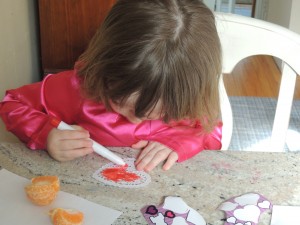
Photo courtesy of Chris Cappozziello
A few weeks ago, I asked, “Is Down syndrome Abnormal?” Although that post focused upon the reasons we might or might not want to use the term abnormal to describe Down syndrome, it led into a conversation through the comments section about whether or not there is any reason to fear having a baby with Down syndrome. I argued that most of our social aversions to Down syndrome either aren’t based in reality (life expectancy has risen dramatically in recent years, for instance, though most people don’t know this) OR are a reflection of misguided social values. But the question remains: is it ever right or reasonable to be averse to or fearful of Down syndrome?
I was going to write a post in which I list all the potential, and frightening, health complications that can accompany Down syndrome. And then I was going to write about the social construction of disability, about how we as a culture need to value people for their intrinsic self-worth, not for their abilities or IQ scores.
But then I decided we are asking the wrong question. I’ve said it before and I’ll say it again: it is virtually impossible to talk about Down syndrome in the abstract. Down syndrome occurs, always, in the context of a particular human being. Each particular human being, regardless of our chromosome count, has particular strengths and weaknesses. And so I can’t really write about aversion to Down syndrome. But I can write about whether or not it is reasonable to be averse to having a daughter like Penny, who has Down syndrome.
Penny has been to the hospital for one heart procedure, four sets of tubes, and two eye surgeries. When she uses a whiny voice, which she does nearly every day, I want to pull my hair out. She is still trying to figure out how to hug Marilee without squeezing too tight and making her scream. When I get a call or an email from school about another set of behavioral challenges, I want to cry.
Penny also reads chapter books out loud of her own volition. She asks me to pray for her to be able to make good choices in school. She works harder to understand math and learn how to tie her shoes and try to pay attention in ballet than I ever did. She climbs into Marilee’s crib in the morning and makes her little sister giggle. Her teachers, friends, and therapists shake their head with some combination of exasperation, wonder, and delight when they talk about her.
Other parents with other children with Down syndrome could give you a list of their kids’ particular problems–the reasons to be averse–and their kids’ particular wonderful traits.
Early on in Penny’s life, whenever she was out of the room, I felt swallowed up by fear. I didn’t have enough experience with my daughter to trust that what was true when she was with me–her beauty and sweetness and gentleness, my ability to care for her and love her and trust that it would all be fine–was true even when she was apart from me. The abstraction of Down syndrome overshadowed my love. But in time, love erased fear. And in time, the abstract, scary, concept of Down syndrome became the beautiful, life-giving reality of a little girl. And she is all the answer I need.
Previous Post

December 11, 2012
Advent Reading
Next Post
December 14, 2012 Where is God When Children are Murdered Down the Road?
Browse Our Archives
Select a Category Articles Books Disability Down Syndrome Faith family Perfectly Human Uncategorized
Select a Month February 2014 January 2014 December 2013 November 2013 October 2013 September 2013 August 2013 July 2013 June 2013 May 2013 April 2013 March 2013 February 2013 January 2013 December 2012 November 2012 October 2012 September 2012 August 2012 July 2012 June 2012 May 2012 April 2012 March 2012 February 2012 January 2012 December 2011 November 2011 October 2011 September 2011 August 2011 July 2011 June 2011 May 2011 April 2011 March 2011 September 2010 July 2010 June 2010 May 2010 April 2010 March 2010 February 2010 January 2010 December 2009 November 2009 October 2009 September 2009 August 2009 July 2009 June 2009 May 2009 April 2009 March 2009 February 2009 January 2009 December 2008 November 2008 October 2008 September 2008 August 2008 July 2008 June 2008
TAKE THE
Religious Wisdom Quiz
Who said, "I do not know how to speak; I am too young"?
Select your answer to see how you score.
Isaiah Samuel Moses Jeremiah
Related posts from Thin Places-Faith, Family and Disability

Thank you Patheos! (And Continuing the Conversation at...
Thin Places-Faith, Family and Disability

My Questions About the Ethics of Embryo Selection
Thin Places-Faith, Family and Disability
I Don't Love Valentine's Day, and That's Okay
Thin Places-Faith, Family and Disability

7 Thoughts on How to Survive Another Snow...
Thin Places-Faith, Family and Disability
TRENDING AT PATHEOS Family, Parenting and Religion

Ghosts, Spirits, and Wizards in Post-Puritan New England
As it is Thanksgiving, I have a seasonal post concerned with New...

Here are two Thanksgiving columns that I originally wrote for the...

Book III, Chapter 3: Christ "Classic" (Matt. 9:9-34)
Book III, Chapter 3: Christ "Classic" (Matt. 9:9-34) In honor of tomorrow's...

Jesus explicitly mentions the book of Jonah twice, but he retells the...

Peggy Sue Got Married: Coppola’s Always Been Like...
I enjoyed Megalopolis (2024). It’s a mess, but I enjoyed it. The...

My dissertation The Place of Mysticism in the Late Middle Ages concerns...
view all Family, Parenting and Religion blogs
Ad-Free & Subscriber Log-In Subscription Support
- About Us
- 2026 Calendar
- Videos
- Podcasts
- Library of World Religions
- Faith In Media Tracker
- Advertise With Us
- Write for Us
- Privacy Policy
- Terms of Service
- Do Not Sell My Data
- Contact Us
- Radiant Digital
- Manage Newsletter Subscriptions
- Unsubscribe From Notifications
- Sitemap
Copyright 2008-2026, Patheos, part of the Radiant Digital network of media brands. All rights reserved.
Subscription Support Ad-Free & Subscriber Log-In
Follow Patheos