
BuddhistCatholicContemplativeEvangelicalGeneral ChristianHinduJewishLatter-day SaintMuslimNew VisionsProgressive Christian
Beliefs
- Buddhist
- Catholic
- Contemplative
- Evangelical
- General Christian
- Hindu
- Jewish
- Latter-day Saint
- More Voices
- Muslim
- New Visions
- Pagan
- Progressive Christian
Topics
- Religion News
- Food and Religion
- Sports and Religion
- Religious Art
- Religious Music and Entertainment
- Religious Events
- History and Religion
- Style and Religion
- Politics and Religion
- Women in Religion
- Recreation Outdoors and Religion
- Business Finance and Religion
- Careers Workplace and Religion
- Education and Religion
- Family Parenting and Religion
- Health Fitness and Religion
- Home and Religion
- Relationships and Religion
- Technology and Religion
- Travel and Religion
Columnists
- Buddhist Columnists
- Business Finance and Religion Columnists
- Careers Workplace and Religion Columnists
- Catholic Columnists
- Contemplative Columnists
- Education and Religion Columnists
- Evangelists Columnists
- Family Parenting and Religion Columnists
- General Christian Columnists
- Health Fitness and Religion Columnists
- Hindu Columnists
- History and Religion Columnists
- Home and Religion Columnists
- Jewish Columnists
- More Voices Columnists
- Latter Day Columnists
- Muslim Columnists
- New Visions Columnists
- Nonreligious Columnists
- Pagan Columnists
- Politics and Religion Columnists
- Progressive Columnists
- Recreation Outdoors and Religion Columnists
- Relationships and Religion Columnists
- Religion News Columnists
- Religious Art Columnists
- Religious Events Columnists
- Religious Music and Entertainment Columnists
- Sports and Religion Columnists
- Style and Religion Columnists
- Technology and Religion Columnists
- Travel and Religion Columnists
- Women in Religion Columnists
Resource Library
- 2026 Calendar
- Library of World Religions
- The 100 Most Holy Places on Earth
- Patheos Answers
- Podcasts
- Videos
- Faith Leaders Database
- Anglican Episcopalian
- Bahai
- Baptist
- Buddhism
- Christianity
- Confucianism
- Eastern Orthodoxy
- Hinduism
- Holiness and Pentecostal
- ISKCON
- Islam
- Judaism
- Lutheran
- Methodist
- The Church of Jesus Christ of Latter-day Saints
- New Age
- Paganism
- Presbytarian and Reformed
- Protestantism
- Religion Behind the Scenes
- Roman Catholic
- Scientology
- Shia Islam
- Sikhism
- Sufism
- Sunni Islam
- Taoism
- Zen
- See all religions
Research Tools
 Ad-Free & Subscriber Log-In Subscription Support
Ad-Free & Subscriber Log-In Subscription Support
Follow Patheos 

- Trending:
- Forgiveness
- |
- Marriage
- |
- Consciousness
- |
- Death Penalty
- |
- Election
- |
- Halloween
 Thin Places-Faith, Family and Disability
- Home
- Family, Parenting and Religion
- The Difference Between Brokenness and Limitations
The Difference Between Brokenness and Limitations
Last updated on: April 26, 2012 at 9:45 am by Amy Julia Becker
The Difference Between Brokenness and Limitations 2012-04-26T09:45:46-04:00 Amy Julia Becker
Patheos Explore the world's faith through different perspectives on religion and spirituality! Patheos has the views of the prevalent religions and spiritualities of the world.
Brokenness and limitations are not the same thing.
Brokenness, whether physical, emotional, or spiritual, is not good. It comes as a result of sin in our world. As Jesus demonstrated throughout his ministry, God wants to heal broken bodies, broken minds, broken souls, and broken communities. God wants to heal our broken world.
But limitations existed before sin entered the picture, and limitations will remain. Limitations are a part of what make us human. They keep us both dependent upon God and connected to one another. Limitations provoke trust, community, and humility. God gives us limitations. Limitations are good.
Christians need to work to understand the difference between brokenness and limitations. To the degree that we do, we will on the one hand be able to understand people with disabilities in their common humanity—as ones with both not-good brokenness and good limitations, just like everyone else. And on the other hand, we will be able to name as sin the attempt to overcome all limitations.
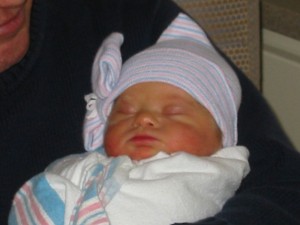
This might be one of the reasons I recoil when people make comparisons between having a child with Down syndrome and having a child in a debilitating car accident. A car crash simply increases the brokenness within a person’s body (which is not to say that God cannot work good out of such brokenness, simply that the brokenness should be acknowledged as such). Down syndrome involves brokenness, but it also involves limitations. Down syndrome is a complicated mix of beauty (often manifest in limitations, but also in particular abilities) and brokenness.
In our culture at large, we generally try to ignore our brokenness and deny our limitations (the sky’s the limit! and so forth). In the church, we often assume that limitations are the same as brokenness when they are actually quite different. Brokenness–which can result, of course, in limitations–is what God longs and intends to heal. Certainly disability can involve brokenness, although often the brokenness is more external than it is intrinsic to the disability. Notice that Jesus rarely simply heals a disability, but almost always insists that the disabled person be restored to community. Sure, it’s great that the blind man can see. But it’s even more important that he be restored to community.
Disability aside, for all of us, limitations are a part of what make us creatures, not God, and they are a part of what allow us to be in relationship with one another and with God. They will continue in some form even in heaven, and they will be received as gifts because they will enable us to–with humility and confidence–give and receive to one another and to receive what we need from the Lord.
To read more on this topic, you might check out Sharon Hodde Miller’s reflections on my talk from the Festival of Faith and Writing: On the Path to Perfection, as well as the comments there. Or an essay I wrote about suffering and disability for First Things a few years back, The Good Life.
Previous Post

April 25, 2012
Perfectly Human: A Little Extra (and Mother's day is coming up...)
Next Post
April 27, 2012 Hurry or Help?
Browse Our Archives
Select a Category Articles Books Disability Down Syndrome Faith family Perfectly Human Uncategorized
Select a Month February 2014 January 2014 December 2013 November 2013 October 2013 September 2013 August 2013 July 2013 June 2013 May 2013 April 2013 March 2013 February 2013 January 2013 December 2012 November 2012 October 2012 September 2012 August 2012 July 2012 June 2012 May 2012 April 2012 March 2012 February 2012 January 2012 December 2011 November 2011 October 2011 September 2011 August 2011 July 2011 June 2011 May 2011 April 2011 March 2011 September 2010 July 2010 June 2010 May 2010 April 2010 March 2010 February 2010 January 2010 December 2009 November 2009 October 2009 September 2009 August 2009 July 2009 June 2009 May 2009 April 2009 March 2009 February 2009 January 2009 December 2008 November 2008 October 2008 September 2008 August 2008 July 2008 June 2008
TAKE THE
Religious Wisdom Quiz
What does the Black Horse in Revelations represent?
Select your answer to see how you score.
The End Times War Death Famine
Related posts from Thin Places-Faith, Family and Disability

Thank you Patheos! (And Continuing the Conversation at...
Thin Places-Faith, Family and Disability

My Questions About the Ethics of Embryo Selection
Thin Places-Faith, Family and Disability

Politics, Down Syndrome, and What I'm Reading
Thin Places-Faith, Family and Disability
Thin Places-Faith, Family and Disability
TRENDING AT PATHEOS Family, Parenting and Religion

Pope Leo Celebrates Mass for Nurses & Docs...
I don't have any idea how he did it, but Pope Leo...

The Sermon on the Mount, Part I: Matthew...
The Sermon on the Mount, Part I (Matthew 4:12-5:12) St. Matthew moves...

What's up from Crossway: Reviewing some of their latest A few weeks...

Janie Learns the Way of the Cross: A...
Teaching children about Jesus' Passion can be challenging. Many parents and educators...

Looking For Good Catholic Writing - October 2026
He alone extends the heavens, and he walks upon the waves of...

In "Irreplaceable," our book on vocation and technology, Trevor Sutton and I...
view all Family, Parenting and Religion blogs
Ad-Free & Subscriber Log-In Subscription Support
- About Us
- 2026 Calendar
- Videos
- Podcasts
- Library of World Religions
- Faith In Media Tracker
- Advertise With Us
- Write for Us
- Privacy Policy
- Terms of Service
- Do Not Sell My Data
- Contact Us
- Radiant Digital
- Manage Newsletter Subscriptions
- Unsubscribe From Notifications
- Sitemap
Copyright 2008-2026, Patheos. All rights reserved.
Subscription Support Ad-Free & Subscriber Log-In
Follow Patheos