
BuddhistCatholicContemplativeEvangelicalGeneral ChristianHinduJewishLatter-day SaintMuslimNew VisionsProgressive Christian
Beliefs
- Buddhist
- Catholic
- Contemplative
- Evangelical
- General Christian
- Hindu
- Jewish
- Latter-day Saint
- More Voices
- Muslim
- New Visions
- Pagan
- Progressive Christian
Topics
- Religion News
- Food and Religion
- Sports and Religion
- Religious Art
- Religious Music and Entertainment
- Religious Events
- History and Religion
- Style and Religion
- Politics and Religion
- Women in Religion
- Recreation Outdoors and Religion
- Business Finance and Religion
- Careers Workplace and Religion
- Education and Religion
- Family Parenting and Religion
- Health Fitness and Religion
- Home and Religion
- Relationships and Religion
- Technology and Religion
- Travel and Religion
Columnists
- Buddhist Columnists
- Business Finance and Religion Columnists
- Careers Workplace and Religion Columnists
- Catholic Columnists
- Contemplative Columnists
- Education and Religion Columnists
- Evangelists Columnists
- Family Parenting and Religion Columnists
- General Christian Columnists
- Health Fitness and Religion Columnists
- Hindu Columnists
- History and Religion Columnists
- Home and Religion Columnists
- Jewish Columnists
- More Voices Columnists
- Latter Day Columnists
- Muslim Columnists
- New Visions Columnists
- Nonreligious Columnists
- Pagan Columnists
- Politics and Religion Columnists
- Progressive Columnists
- Recreation Outdoors and Religion Columnists
- Relationships and Religion Columnists
- Religion News Columnists
- Religious Art Columnists
- Religious Events Columnists
- Religious Music and Entertainment Columnists
- Sports and Religion Columnists
- Style and Religion Columnists
- Technology and Religion Columnists
- Travel and Religion Columnists
- Women in Religion Columnists
Resource Library
- 2026 Calendar
- Library of World Religions
- The 100 Most Holy Places on Earth
- Patheos Answers
- Podcasts
- Videos
- Faith Leaders Database
- Anglican Episcopalian
- Bahai
- Baptist
- Buddhism
- Christianity
- Confucianism
- Eastern Orthodoxy
- Hinduism
- Holiness and Pentecostal
- ISKCON
- Islam
- Judaism
- Lutheran
- Methodist
- The Church of Jesus Christ of Latter-day Saints
- New Age
- Paganism
- Presbytarian and Reformed
- Protestantism
- Religion Behind the Scenes
- Roman Catholic
- Scientology
- Shia Islam
- Sikhism
- Sufism
- Sunni Islam
- Taoism
- Zen
- See all religions
Research Tools
 Ad-Free & Subscriber Log-In Subscription Support
Ad-Free & Subscriber Log-In Subscription Support
Follow Patheos 

- Trending:
- Forgiveness
- |
- Marriage
- |
- Consciousness
- |
- Death Penalty
- |
- Election
- |
- Halloween
 Thinking in Centuries
- Home
- Catholic
- Travel and Religion
- Visiting Southern Baptists
Visiting Southern Baptists
Last updated on: August 20, 2022 at 11:42 am by J.M. Birch
Visiting Southern Baptists 2022-08-20T11:42:36-04:00 J.M. Birch
Patheos Explore the world's faith through different perspectives on religion and spirituality! Patheos has the views of the prevalent religions and spiritualities of the world.
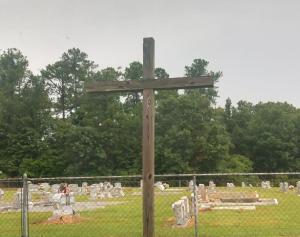 Our next ecumenical visit is one which I debated writing about for a couple of reasons. First of all, my main goal in undertaking this project was to step into new or less familiar spaces and traditions. Second, I wanted to do this with as little bias as possible. The church I visited this past Wednesday evening, however, was a member of the Southern Baptist Convention, just like the church I was baptized in and attended from childhood until college. It is also one to which I have a personal connection. It was my grandparents’ church. My mother grew up going there once or twice per Sunday, many Wednesdays, and other occasions. My grandparents and aunt are buried in the churchyard. I have only been there for funerals and reunions and one service ten years ago which I hardly remember, but I’m hardly an unbiased stranger there.
Paying a visit there was something I had intended to do since moving back to my mother’s old hometown and something I knew would be very personal for me. All the same, I knew it would be interesting and would make some strong impressions, so I decided it would be alright to take a couple of notes while I was there, and if I had anything interesting to say, to publish it, with the appropriate caveat about my own connection to the topic at hand.
One thing that must be addressed is that the service I attended was on Wednesday night and was not an approximation or abbreviation of a Sunday morning service. Because of my schedule, I was unable to swing by for their regular Sunday proceedings, though I may do so at some point in the future. The Wednesday night offerings are quite different. In the old-school Baptist parlance, they are akin to a “prayer meeting,” with elements of a Bible study.
I walked in just a few minutes late, inclement weather having slowed my daily commute back into my hometown. On entering, I was struck by a few facts:
First, the church had almost no images whatsoever. Even the stained glass windows were merely colored patterns. Beautiful in their own right, they nonetheless declined to depict anything concrete. Whether this was just a style choice or a result of the radical iconoclasm (that is, opposition to images or icons) that sometimes makes itself known among evangelicals, I can’t quite be sure. The only image in the whole church was a landscape mural painted in the baptistry.
For those unfamiliar with the Baptist tradition, a baptistry is the anabaptist answer to the baptismal font. It is a pool in which baptisms are conducted by fully immersing the subject in water. A few steps lead down into a tiled pool with a drain, which is usually empty but filled with water for baptisms which is about waist-high for the average man. In there, a white-robed preacher (one of the only times you’ll see a baptist in a robe outside of the choir), dunks a white-robed congregant backwards into the water and pronounces the famous, “I baptize you in the name of the Father, Son, and Holy Spirit.” In the Baptist tradition, the baptistry is often located front and center at the very back of the church, behind the choir loft (which is behind the pulpit, which is behind the altar). This was indeed the case here. The baptistry may be covered with a heavy curtain, but this one was fully open, and the far wall was covered with a scene of a river winding its way through grassland, hills, and mountains, calling to mind those early baptisms both by John the Baptist in the New Testament and those old time American evangelical baptisms where people gathered sometimes by the hundreds to be plunged into the river and be “buried with Christ, raised to walk a new life.” Those words, spoken to me at my own baptism, echoed in my mind when I laid eyes on that central image.
Of course, there were other symbols present. A wooden altar was engraved with “This Do I Remembrance of Me,” a reference to the instructions of Jesus at the Last Supper but also to the Baptists’ view of communion, or Lord’s Supper as it was listed in the church bulletin that happened to be left behind in my pew, as only a memorial.
Aside from that and the occasional cross, the sanctuary seemed to have been decorated for Fourth of July (in the absence of liturgical seasons, other seasonal decorations can still be found in some churches), and the decorations had not been taken down yet on August 3. There were little American flags on the window sills and even on the altar, and little banners at the back of the choir loft which read “God Bless America.” I’ll admit it left a bad taste in my mouth to see a church decorated with so many national symbols because it reminded me of the way some people conflate their patriotism with their religion – the kind of thing that makes people wear t-shirts reading “I stand for the flag and kneel for the cross” as if those were somehow of equal importance or even the same kind of thing. Love of country and reverence for its symbols creeps towards idolatry too easily at times, but I let myself not think the worst without cause in this case. It is important to allow the faithful of any tradition to define to us their own symbols and explain their own religious expressions. I would hardly like to hear the tired claims that Catholics have made the Virgin Mary into an idol of worship despite our insistence that we are not worshiping her, so it wouldn’t be fair to accuse evangelicals of worshiping America either.
When I entered, I was kindly handed a program by the woman in the pew in front of me. It had a list of people and causes being prayed for and the scriptures being read. There was an elderly gentleman standing at the front of the church at a movable lectern speaking into a microphone, naming each prayer request submitted by members of the congregation. After this, he led everyone in an extemporaneous prayer, asking only for God’s presence and guidance over those various concerns and that God’s will would be done. Everyone remained seated and silent for the prayer.
Afterwards, he moved on to the scripture readings. In each pew was a Baptist Hymnal and a King James Version Bible. Everyone took out the pew Bible as he introduced the psalms and talked about the life of the Biblical King David before reading brief excerpts from narratives of the life of David juxtaposed immediately with psalms attributed to David which seemed to reflect related themes. This kind of cross-textual reading caught me off guard in a good way. Reading the poetic reflections of the psalms onto the triumphs, challenges, and failures of one of the major figures of the Hebrew Bible gave them a fresh life and piqued the interest of listeners. Ultimately, the thesis was that David in his psalms (it was taken for granted that the psalms of David were correctly attributed to him) showed a good life of prayer, and that he brought all his feelings and concerns to God by way of these prayer-songs.
The meeting closed with an open discussion on prayer. “We should be praying all the time,” someone said. “Too many people leave prayer to the last minute or let it be a last resort,” another added.
Ultimately, another man reminded us all that we should pray for the safety of children and teachers returning to school and for those making decisions about how to make schools safer. The concern for the violence long sweeping the land was palpable, but no one dared venture into the realm of politics. We were dismissed, and people took the time to socialize. I met people who had known my grandparents and other family. Many of these people had invested their lives into that community and that church. Some of the oldest members could remember things my grandmother had done for them in their own youth. They could remember the contributions of my family to their lives and their church. Homey, simple, communal, and earnest are the defining characteristics of that prayer meeting and to my knowledge of others like it, and though I no longer belong fully to that tradition, I was glad to feel so connected to my family and neighbors and be able to appreciate their faith.
It is unfortunate that the modern life is so often disconnected from community. How might we benefit from being able to make these small connections and reconnections more often?
How might Christians of all stripes benefit from taking more time to pray for one another’s concerns and celebrate each other’s victories?
General Christian
Evangelical
Travel and Religion
Religious Events
Education and Religion
Previous Post
August 2, 2022
Visiting Anglo-Catholicism

Browse Our Archives
Select a Category Uncategorized
Select a Month October 2022 September 2022 August 2022 July 2022
TAKE THE
Religious Wisdom Quiz
How many sons did Jacob (Israel) have?
Select your answer to see how you score.
Twelve Nine Seven Ten
Related posts from Thinking in Centuries

From Nietzsche to John Lennon: Death and Resurrection...
TRENDING AT PATHEOS Catholic

Rejecting Doom: Christian Hope And Human Action
Christianity is a religion of hope. We are to have hope and...

It’s What Comes From Within Which Matters
One of the most difficult things for us to understand is why...

Why I Choose the Eucharist Over the Sermon
Choose the Eucharist, Not the Sermon What are we supposed to get...

5 Design Elements Found in Spiritually Rooted Homes
Putting Spirituality Into Home Decor Our homes are more than our living...

Credo: A Story of God Told with the...
About 10 years ago, I began to imagine a personal "Credo" that...

The Anatomy of Divine Revelation in Catholic Thought
The claim that God has made Himself known to human beings is...
view all Catholic blogs
Ad-Free & Subscriber Log-In Subscription Support
- About Us
- 2026 Calendar
- Videos
- Podcasts
- Library of World Religions
- Faith In Media Tracker
- Advertise With Us
- Write for Us
- Privacy Policy
- Terms of Service
- Do Not Sell My Data
- Contact Us
- Radiant Digital
- Manage Newsletter Subscriptions
- Unsubscribe From Notifications
- Sitemap
Copyright 2008-2026, Patheos. All rights reserved.
Subscription Support Ad-Free & Subscriber Log-In
Follow Patheos