
BuddhistCatholicContemplativeEvangelicalGeneral ChristianHinduJewishLatter-day SaintMuslimNew VisionsProgressive Christian
Beliefs
- Buddhist
- Catholic
- Contemplative
- Evangelical
- General Christian
- Hindu
- Jewish
- Latter-day Saint
- More Voices
- Muslim
- New Visions
- Pagan
- Progressive Christian
Topics
- Religion News
- Food and Religion
- Sports and Religion
- Religious Art
- Religious Music and Entertainment
- Religious Events
- History and Religion
- Style and Religion
- Politics and Religion
- Women in Religion
- Recreation Outdoors and Religion
- Business Finance and Religion
- Careers Workplace and Religion
- Education and Religion
- Family Parenting and Religion
- Health Fitness and Religion
- Home and Religion
- Relationships and Religion
- Technology and Religion
- Travel and Religion
Columnists
- Buddhist Columnists
- Business Finance and Religion Columnists
- Careers Workplace and Religion Columnists
- Catholic Columnists
- Contemplative Columnists
- Education and Religion Columnists
- Evangelists Columnists
- Family Parenting and Religion Columnists
- General Christian Columnists
- Health Fitness and Religion Columnists
- Hindu Columnists
- History and Religion Columnists
- Home and Religion Columnists
- Jewish Columnists
- More Voices Columnists
- Latter Day Columnists
- Muslim Columnists
- New Visions Columnists
- Nonreligious Columnists
- Pagan Columnists
- Politics and Religion Columnists
- Progressive Columnists
- Recreation Outdoors and Religion Columnists
- Relationships and Religion Columnists
- Religion News Columnists
- Religious Art Columnists
- Religious Events Columnists
- Religious Music and Entertainment Columnists
- Sports and Religion Columnists
- Style and Religion Columnists
- Technology and Religion Columnists
- Travel and Religion Columnists
- Women in Religion Columnists
Resource Library
- 2026 Calendar
- Library of World Religions
- The 100 Most Holy Places on Earth
- Patheos Answers
- Podcasts
- Videos
- Faith Leaders Database
- Anglican Episcopalian
- Bahai
- Baptist
- Buddhism
- Christianity
- Confucianism
- Eastern Orthodoxy
- Hinduism
- Holiness and Pentecostal
- ISKCON
- Islam
- Judaism
- Lutheran
- Methodist
- The Church of Jesus Christ of Latter-day Saints
- New Age
- Paganism
- Presbytarian and Reformed
- Protestantism
- Religion Behind the Scenes
- Roman Catholic
- Scientology
- Shia Islam
- Sikhism
- Sufism
- Sunni Islam
- Taoism
- Zen
- See all religions
Research Tools
 Ad-Free & Subscriber Log-In Subscription Support
Ad-Free & Subscriber Log-In Subscription Support
Follow Patheos 

- Trending:
- Forgiveness
- |
- Marriage
- |
- Consciousness
- |
- Death Penalty
- |
- Election
- |
- Halloween

- Home
- Pagan
- Minds Do Change And That’s Magic
Minds Do Change And That’s Magic
Last updated on: July 28, 2019 at 12:35 pm by Tom Swiss
Minds Do Change And That’s Magic 2019-07-28T12:35:54-04:00 Tom Swiss
Patheos Explore the world's faith through different perspectives on religion and spirituality! Patheos has the views of the prevalent religions and spiritualities of the world.
I recently found myself in yet another Facebook discussion about why vigilante attacks on people with bad politics — “punch a Nazi” — is both an ethical and a tactical failure, discrediting leftism and playing directly into the hands of Trumpists and law-and-order Republicans.
I’ve previously discussed how this behavior provides a perverse incentive to brand others as “Nazis”, is problematically similar to the idea of “glorious struggle” that powers fascism, and gives the right ammunition to use against us. It reminds me of the admonition from the Principia Discordia: “A person belonging to one or more Order [of Discordia] is just as likely to carry a flag of the counter-establishment as the flag of the establishment – just as long as it is a flag.” I will refer you to my past posts “Fighting Evil Doesn’t Make You Good” and “Nazis Are Bad. Now What?” for those general arguments on the topic.
But this discussion brought up two interesting points. When I pointed out that violence does not change anyone’s mind, one of my interlocutors wrote “There is no way what whatsoever to change a person’s mind. I don’t need to change their minds, just their behavior,” and went on to point to North Korea as an example of how fear can control people’s behavior.
This was curious for two reasons. First, this person claimed to be an anarchist; someone with such a self-identification citing North Korea as an example of the sort of coercion they wish to apply to others, is emblematic of the confusion of the moment. If you are seeking to coerce the speech (however ignorant and vile) of others by force and fear you are ipso facto an authoritarian, not an anarchist. As the Dead Kennedys told us, “When you ape the cops, it ain’t anarchy.”
Second, like me this person recently returned from the Starwood Festival, a magical event hosted by the Association for Consciousness Exploration and dedicated to the proposition that consciousness can be changed. The motto “Change!” next to a picture of a brain is frequently found in festival artwork, and ACE cofounder Jeff Rosenbaum explained, “Everything is explored by altering it…The way you study consciousness is by changing your consciousness.”
(And a salute in passing here to recently deceased Starwoodian Paul Krassner, the man who named and help found the Yippies, who interviewed Rosenbaum for a story and got that quote.)
I personally did my best to work some magic during that week at Wisteria and change some minds, and I think I succeeded at least a little bit.
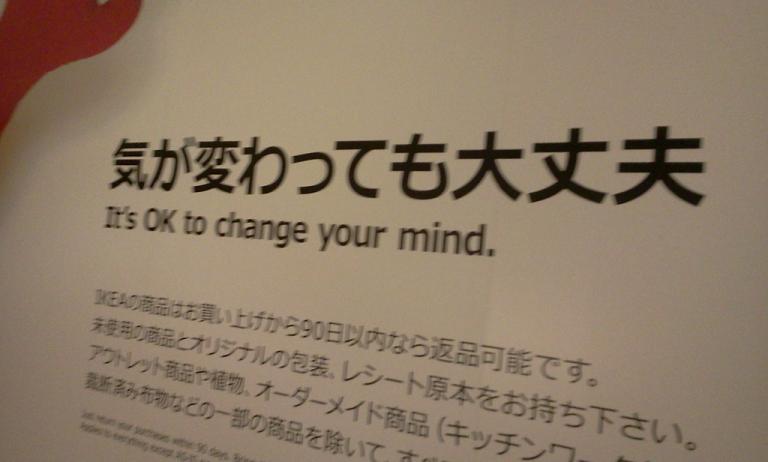
Photo by kenji mori, CC BY 2.0
“Well, sure,” you might object, “it’s one thing to do some mind-change on the sort of people who show up for something like Starwood. But the polluted and broken minds of racists and bigots cannot be changed.”
Daryl Davis would disagree. This African-American blues musician has convinced over 200 members of the Ku Klux Klan to hang up their robes. He did not do this by punching them, but by talking to them.
(I pause here to insert a cautionary note of clarification: none of this is meant to speak against legitimate self-defense. This is about dealing with unarmed non-combatants infected by bad ideas. To riff off of a Firefly quote well-known to fandom, if an armed Klansman ever tries to kill you, you try to kill them right back.)
Davis talked about how he was able to accomplish these remarkable conversions:
The best thing you do is you study up on the subject as much as you can. I went in armed, not with a weapon, but with knowledge. I knew as much about the Klan, if not more than many of the Klan people that I interviewed. When they see that you know about their organization, their belief system, they respect you. Whether they like you or not, they respect the fact that you’ve done your homework. Just like any good salesman, you want a return visit and they recognized that I’d done my homework, which allowed me to come back again.
That began to chip away at their ideology because when two enemies are talking, they’re not fighting. It’s when the talking ceases that the ground becomes fertile for violence. If you spend five minutes with your worst enemy — it doesn’t have to be about race, it could be about anything…you will find that you both have something in common. As you build upon those commonalities, you’re forming a relationship and as you build about that relationship, you’re forming a friendship. That’s what would happen. I didn’t convert anybody. They saw the light and converted themselves.
“But that’s the Klan, not Nazis!” you may object. “Neo-Nazis are orders of magnitude worse!”
That, of course, is a debatable proposition. But Pete Simi, a Chapman University sociologist who has extensively researched Neo-Nazis, says that even violent racist radicals and extremists can be rehabilitated — and that violent confrontations by anti-racists may make that harder.
The problem, Simi notes, is that “[w]e haven’t wanted to acknowledge that we have a problem with violent right-wing extremism”, and so have devoted almost no resources to rehabilitation. And effective rehabilitation can be resource intensive, involving partnerships with social workers, educators, and health care providers to handle the range of problems that led these people into extremism in the first place. He says such people may need education or employment training, or “maybe they have some housing needs, maybe they have some unmet mental health needs,” which may include past trauma or substance abuse.
But this approach is still far more effective and less expensive than throwing these people into our so-called “criminal justice” system.
Indeed it’s remarkable that some of the folks yelling “punch a Nazi!” the loudest are the same folks calling for criminal justice reform, who would be the outraged at the system for mistreating an inmate who had committed, say, an armed robbery. Or even child sex trafficking — I think one of the Twitter commenters I saw talking about how even Jeffrey Epstein doesn’t deserve the hellhole conditions of our jail and prison system that drove him to a suicide attempt, has also cheered potentially lethal assaults on people based on their bigoted fascist speech.
Well, looking for any sort of principled consistency in American politics has always been like Diogenes with his lamp looking for an honest man.
But before we get too lost in the weeds of politics, let’s return to the topic of magic.
Magic has been defined by Dion Fortune as the art of changing consciousness at will; thus to work magic is to accept the hypothesis than minds can change.
“But that’s about changing one’s own consciousness! No one can change another’s mind!” you may object. But as I’ve discussed before, we have an entire multi-billion-dollar industry devoted to the proposition that black magic can change peoples minds, via such simple mantras as “Have a Coke and a smile.”
Magicians seek to alter the consciousness, change the minds, of other people all the time. Be it a love spell or healing work or prosperity magic to attract more customers to our business, changing minds is our game.

Public domain image via MaxPixel
Minds do change. That is a fundamental principle of magic — and it should inform our politics as well.
So if you’re looking for a more productive way to fight race hate than assaulting people, let me suggest contributing to a group such as Life After Hate, a group founded by former extremists and dedicated to helping people change, to helping them leave violent right-wing groups and, in their words, “inspiring all people to a place of compassion and forgiveness — for themselves and each other.”
Sending them a few dollars is a lot more likely to actually help than posting another “punch Nazis!!1!” meme on your social media accounts.
In fact, if you send them money and then comment below on this post — I’ll take your word for what you send — I will match contributions up to a total of $150. Attention angry Facebook commenters who have been threatening to punch me for taking a stand against vigilante violence: here’s chance to hit me in the wallet. Come at me, give till I hurt.
Postscript: This was mostly written on Saturday night at the famed Club Charles bar in Baltimore. As I walked to my car after closing time I ran into a friend from my local art scene, who asked what I’d been doing. In the ensuing conversation he brought up a key term: deradicalization.
This is a word usually applied to radical Islamists, but we ought to recognize that it applies to radical racists as well. I suspect that few leftist advocates of Nazi-punching would support Islamist-punching as a way of addressing the very real and dangerous problems of jihadism, but would recognize that people fall into radical Islamism for a combination of political and socioeconomic factors, and can be deradicalized though a combination of policy changes and individual support. We ought to recognize racist extremism and Neo-Nazism as a beast of the same character.
Ethics, Virtue, and Right Living
Previous Post

July 19, 2019
Space Is For Robots (For Now)
Next Post

August 4, 2019 Imposition of order = Escalation of Disorder
Browse Our Archives
Select a Category 2017 52 Makeup 2020 52 Makeup Always Roaming With A Hungry Heart Art Because I Could Not Stop For Death Caught On Video COVID-19 Culture Discordianism Ethics, Virtue, and Right Living History Magic(k), Ritual, and Mysticism My Blogging Life and Times Philosophy Podcast Poetry Random Wednesdays Religion & Politics Seasonal Musings Techno-Pagan Theology Uncategorized Warrior Path Zen
Select a Month October 2026 September 2026 August 2026 March 2026 February 2026 January 2026 December 2025 March 2025 January 2025 December 2024 November 2024 September 2024 August 2024 June 2024 May 2024 April 2024 March 2024 February 2024 December 2023 September 2023 August 2023 July 2023 June 2023 May 2023 March 2023 February 2023 January 2023 December 2022 October 2022 September 2022 June 2022 April 2022 February 2022 January 2022 December 2021 November 2021 October 2021 September 2021 August 2021 July 2021 May 2021 April 2021 March 2021 February 2021 January 2021 December 2020 November 2020 October 2020 September 2020 August 2020 June 2020 May 2020 April 2020 March 2020 February 2020 January 2020 December 2019 November 2019 October 2019 September 2019 August 2019 July 2019 June 2019 May 2019 April 2019 March 2019 February 2019 January 2019 December 2018 November 2018 October 2018 September 2018 August 2018 July 2018 June 2018 May 2018 April 2018 March 2018 January 2018 December 2017 November 2017 October 2017 September 2017 August 2017 July 2017 June 2017 May 2017 April 2017 March 2017 February 2017 January 2017 December 2016 November 2016 October 2016 September 2016 August 2016 July 2016 June 2016 May 2016 April 2016 March 2016 February 2016 January 2016 December 2015 November 2015 October 2015 September 2015 August 2015 July 2015 June 2015
Follow Us!
TAKE THE
Religious Wisdom Quiz
Who taught, "Love your enemies and pray for those who persecute you"?
Select your answer to see how you score.
James Paul Jesus John
Related posts from The Zen Pagan

Chess Grifters, Chinese Rooms, and AI


Comfort The Dying; We're All Dying

Fixing the Mailbox: A Holiday Omen
TRENDING AT PATHEOS Pagan

Emotion in Early Christianity by Andrew Crislip
Andrew Crislip’s Emotion in Early Christianity examines an often overlooked dimension of...

16 Spiritual Touchstones for a More Grounded Life
After decades of spiritual study, here are 16 principles I try...

Catholic Evangelization: Sharing Your Faith Every Day
Welcome back to the Graceful Awakening mini-series called, “From Faith to Mission.” ...

The Pillar of the Boatmen: the Ancient Monument...
The Pillar of the Boatmen is a Romano-Gaulish sculpture that dates from...

In one sense walking into Westminster Abbey is like walking down the...

'Super Scam Me' Exposes AI Jon Bon Jovi...
Leslie Pickett believed she was in a relationship with Jon Bon Jovi....
view all Pagan blogs
Ad-Free & Subscriber Log-In Subscription Support
- About Us
- 2026 Calendar
- Videos
- Podcasts
- Library of World Religions
- Faith In Media Tracker
- Advertise With Us
- Write for Us
- Privacy Policy
- Terms of Service
- Do Not Sell My Data
- Contact Us
- Radiant Digital
- Manage Newsletter Subscriptions
- Unsubscribe From Notifications
- Sitemap
Copyright 2008-2026, Patheos. All rights reserved.
Subscription Support Ad-Free & Subscriber Log-In
Follow Patheos