
BuddhistCatholicContemplativeEvangelicalGeneral ChristianHinduJewishLatter-day SaintMuslimNew VisionsProgressive Christian
Beliefs
- Buddhist
- Catholic
- Contemplative
- Evangelical
- General Christian
- Hindu
- Jewish
- Latter-day Saint
- More Voices
- Muslim
- New Visions
- Pagan
- Progressive Christian
Topics
- Religion News
- Food and Religion
- Sports and Religion
- Religious Art
- Religious Music and Entertainment
- Religious Events
- History and Religion
- Style and Religion
- Politics and Religion
- Women in Religion
- Recreation Outdoors and Religion
- Business Finance and Religion
- Careers Workplace and Religion
- Education and Religion
- Family Parenting and Religion
- Health Fitness and Religion
- Home and Religion
- Relationships and Religion
- Technology and Religion
- Travel and Religion
Columnists
- Buddhist Columnists
- Business Finance and Religion Columnists
- Careers Workplace and Religion Columnists
- Catholic Columnists
- Contemplative Columnists
- Education and Religion Columnists
- Evangelists Columnists
- Family Parenting and Religion Columnists
- General Christian Columnists
- Health Fitness and Religion Columnists
- Hindu Columnists
- History and Religion Columnists
- Home and Religion Columnists
- Jewish Columnists
- More Voices Columnists
- Latter Day Columnists
- Muslim Columnists
- New Visions Columnists
- Nonreligious Columnists
- Pagan Columnists
- Politics and Religion Columnists
- Progressive Columnists
- Recreation Outdoors and Religion Columnists
- Relationships and Religion Columnists
- Religion News Columnists
- Religious Art Columnists
- Religious Events Columnists
- Religious Music and Entertainment Columnists
- Sports and Religion Columnists
- Style and Religion Columnists
- Technology and Religion Columnists
- Travel and Religion Columnists
- Women in Religion Columnists
Resource Library
- 2026 Calendar
- Library of World Religions
- The 100 Most Holy Places on Earth
- Patheos Answers
- Podcasts
- Videos
- Faith Leaders Database
- Anglican Episcopalian
- Bahai
- Baptist
- Buddhism
- Christianity
- Confucianism
- Eastern Orthodoxy
- Hinduism
- Holiness and Pentecostal
- ISKCON
- Islam
- Judaism
- Lutheran
- Methodist
- The Church of Jesus Christ of Latter-day Saints
- New Age
- Paganism
- Presbytarian and Reformed
- Protestantism
- Religion Behind the Scenes
- Roman Catholic
- Scientology
- Shia Islam
- Sikhism
- Sufism
- Sunni Islam
- Taoism
- Zen
- See all religions
Research Tools
 Ad-Free & Subscriber Log-In Subscription Support
Ad-Free & Subscriber Log-In Subscription Support
Follow Patheos 

- Trending:
- Forgiveness
- |
- Marriage
- |
- Consciousness
- |
- Death Penalty
- |
- Election
- |
- Halloween

- Home
- History and Religion
- Was The U.S. Founded On Christian Beliefs: The Final Word
Was The U.S. Founded On Christian Beliefs: The Final Word
Last updated on: July 16, 2024 at 12:02 pm by William T. Orr, Jr.
Was The U.S. Founded On Christian Beliefs: The Final Word 2024-07-16T12:02:24-04:00 William T. Orr, Jr.
Patheos Explore the world's faith through different perspectives on religion and spirituality! Patheos has the views of the prevalent religions and spiritualities of the world.
Of all the noise in American politics and journalism, one of the loudest arguments is this: Was the U.S. founded on Christian beliefs, were the founders Christian men and did they intend for the Bible to guide the country?
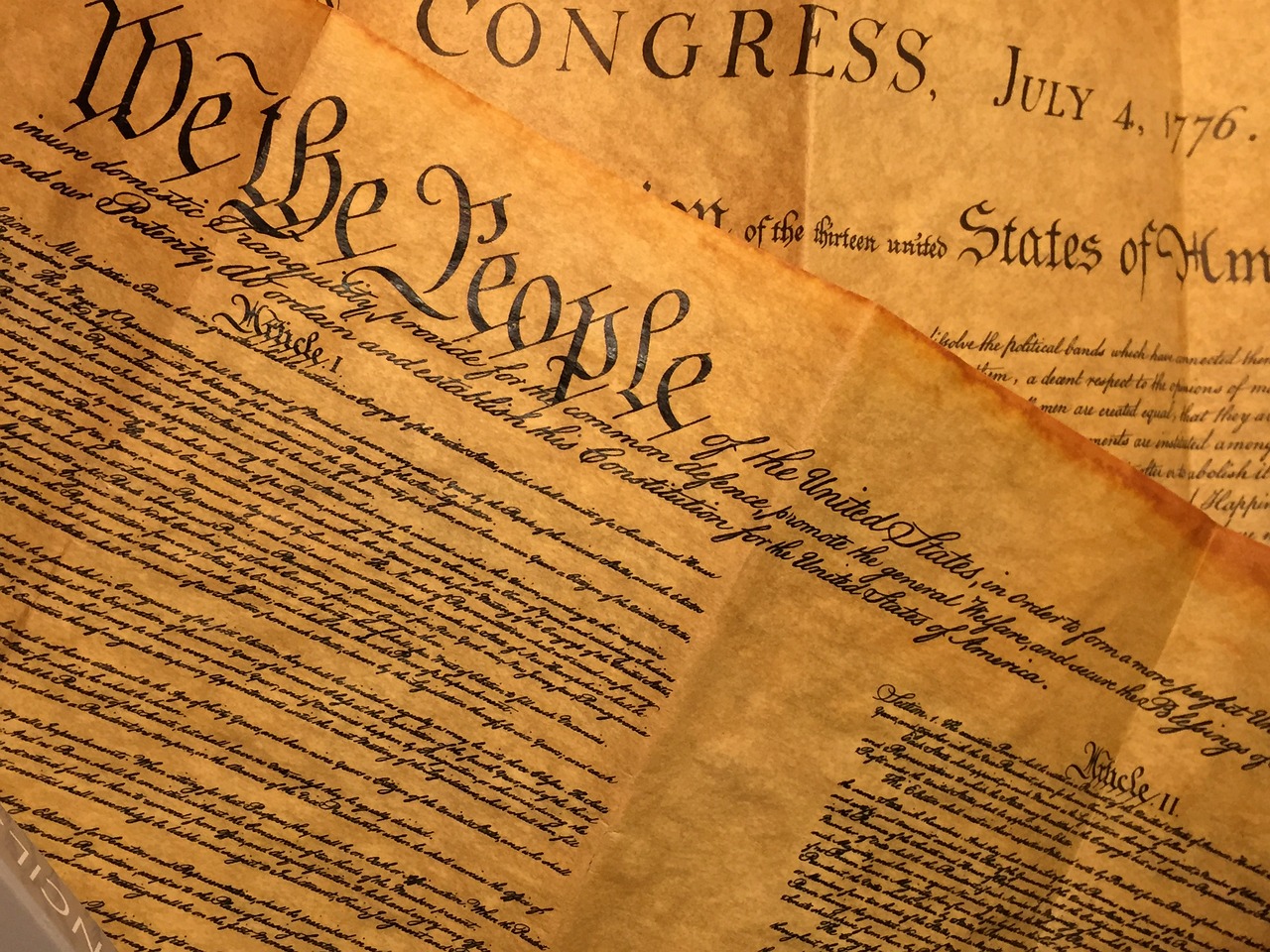
United States Constitution Pixabay Image by lynn0101
What can we learn from the founding documents?
We will look individually at some of the major players among the corps of founding fathers, but first, let us examine the documents themselves.
The United States Constitution
The text of the United States Constitution, as presented by the United States National Archives contains the following instances of each of these words:
- Bible 0
- God 0
- Jesus 0
- Christ 0
- Deity 0
- Creator 0
- Messiah 0
- Church 0
- Prayer 0
- Christian 0
- Baptism 0
- Communion 0
- Eucharist 0
- Priest 0
- Pastor 0
The United States Declaration of Independence
The text of the United States Declaration of Independence, as presented by the United States National Archives contains the following instances of each of these words:
- Bible 0
- God 1
- Jesus 0
- Christ 0
- Deity 0
- Creator 1
- Messiah 0
- Church 0
- Prayer 0
- Christian 0
- Baptism 0
- Communion 0
- Eucharist 0
- Priest 0
- Pastor 0
The one mention of the word “God” contained in the first paragraph:
The unanimous Declaration of the thirteen united States of America, When in the Course of human events, it becomes necessary for one people to dissolve the political bands which have connected them with another, and to assume among the powers of the earth, the separate and equal station to which the Laws of Nature and of Nature’s God entitle them, a decent respect to the opinions of mankind requires that they should declare the causes which impel them to the separation.
The single mention of the word “Creator” is found in the second paragraph:
We hold these truths to be self-evident, that all men are created equal, that they are endowed by their Creator with certain unalienable Rights, that among these are Life, Liberty and the pursuit of Happiness.
The paragraph continues:
That to secure these rights, Governments are instituted among Men, deriving their just powers from the consent of the governed, (emphasis added)
The United States Bill of Rights
- Bible 0
- God 0
- Jesus 0
- Christ 0
- Deity 0
- Creator 0
- Messiah 0
- Church 0
- Prayer 0
- Christian 0
- Baptism 0
- Communion 0
- Eucharist 0
- Priest 0
- Pastor 0
What do these founding documents show?
It is clear that the men who wrote and adopted those documents had a singular purpose:
That these United Colonies are, and of Right ought to be Free and Independent States; that they are Absolved from all Allegiance to the British Crown, and that all political connection between them and the State of Great Britain, is and ought to be totally dissolved;
There is absolutely no mention of Christianity, Jesus, Christ, the Messiah, the Savior, the Holy Bible or anything that could be reasonably construed to say otherwise. While most of the founders almost certainly believed in a deity, there was clearly no intention to include any aspect of any deity’s worship or even recognition by the new nation being founded.
In fact, the only mention of religion at all is contained in the third article and was eventually adopted as “The First Amendment.”
Article the third… Congress shall make no law respecting an establishment of religion, or prohibiting the free exercise thereof; or abridging the freedom of speech, or of the press; or the right of the people peaceably to assemble, and to petition the Government for a redress of grievances.
The documentary evidence is clear.
In spite of what people might say and believe, in spite of what politicians might say, in spite of what any news media might publish, it is crystal clear that there was no intention by the writers of the United States Declaration of Independence, the United States Constitution, or of its Bill of Rights to base any aspect of the governance of the United States on the Holy Bible, the Holy Quran or on any holy book.
Furthermore, it was never their intention to create a “Christian nation,” a concept developed out of whole cloth by fundamentalists who seem to be more concerned with controlling other people’s behavior than with any legitimate theological purpose.
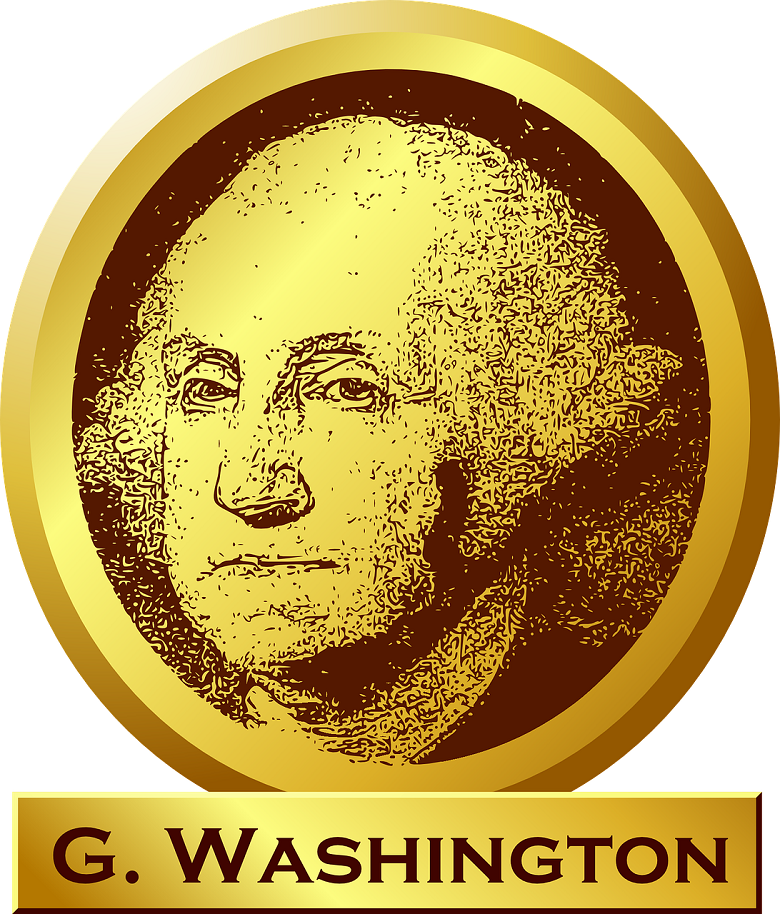
George Washington Pixabay Image by OpenClipartVectors
Were the Founding Fathers Christians?
We will examine the following “founding fathers” to determine what we can about the religious beliefs of these men.
- George Washington
- Thomas Jefferson
- Benjamin Franklin
- John Adams
- James Madison
George Washington
Washington, of course, was the commanding general of the Continental Army and was elected the first President of the United States. The official Mount Vernon website provides information concerning Washington’s religious beliefs and his beliefs about the freedom of citizens of the new nation to worship as they please.
When studying the religious beliefs of George Washington, it is difficult to make absolute, concrete conclusions. Depending on the source examined, Washington has been painted in differing lights ranging from a Deist to a believing Christian.
Overall, Washington’s religious life is an area of great debate and much in line with his contemporaries. His religious life is complex and should be approached as such, without trite labels and descriptions.
Washington was also tolerant of different religious beliefs, having attended services of multiple Christian denominations. He once publicly supported an army chaplain who was a Universalist (meaning that he held that Christ died for the sins of all, versus only the elect) despite the objections of other clergy.
There is one writing by Washington that clearly shows his complete tolerance for religious beliefs that were, by definition, non-Christian. There was concern among some Jewish citizens of the new country. In a letter to the Hebrew Congregation in Newport, Rhode Island, Washington wrote:
“For happily the government of the United States, which gives to bigotry no sanction, to persecution no assistance, requires only that they who live under its protection should demean themselves as good citizens…May the children of the stock of Abraham, who dwell in this land, continue to merit and enjoy the goodwill of the other inhabitants.”
That statement most certainly confirms that George Washington, no matter his own specific beliefs, was absolutely NOT one who saw the United States as a “Christian nation.”
Thomas Jefferson
Jefferson was the first Secretary of State and our third president. He also wrote the Declaration of Independence.
A PBS article gives details of Jefferson’s ideas about religion and its place in government. (Emphasis added)
Convinced that the state had no business coercing religious conformity, Jefferson made defense of liberty the hallmark of his career. In 1776, he wrote the Declaration of Independence. The following year, he introduced a Bill Concerning Religious Freedom to the Virginia Legislature. In 1787, he urged his friend and colleague James Madison to amend the Constitution to include a written guarantee of religious liberty.
Jefferson’s campaign to end state support of religion fueled doubts about his personal religious beliefs. These doubts, which had swirled around him for years, emerged as a critical issue in the bitter presidential campaign of 1800. His Federalist opponents vilified him as an atheist and libertine. Jefferson fumed at the harassment coming from what he referred to as an “irritable tribe of priests” and even compared his persecution at the hands of the New England clergy to the crucifixion of Christ.
Jefferson won the election, beating his friend and rival John Adams. On New Year’s Day 1802, he welcomed to the White House the dissident Baptist preacher John Leland. That same day, Jefferson replied to a letter sent by Baptists in Danbury, Conn., who chafed under the authority of the established Congregational Church. In his reply Jefferson invoked the famous metaphor of a “wall of separation” between church and state.
Influenced by the British Unitarian Joseph Priestley, Jefferson set his prodigious intellect and energy on the historical figure at the center of the Christian faith: Jesus of Nazareth. Jefferson became convinced that Jesus’ message had been obscured and corrupted by the apostle Paul, the Gospel writers and Protestant reformers. While president, Jefferson took a razor to the Bible, cutting out portions of the Gospels that involved miracles and retaining his parables and ethical teachings. The resulting volume, The Philosophy of Jesus of Nazareth, affirmed his conviction that Jesus was not divine, but “a Teacher of Common Sense,” primarily concerned with morality and ethical conduct.
It would be difficult, it seems, in any possible mental fantasy, to see Jefferson as one who wanted to found a “Christian nation.”
John Adams
John Adams was a religious man. PBS writes:
Raised in the Congregational Church, the established church in his home state of Massachusetts, John Adams later became a Unitarian. Unitarianism, a liberal strand of Christianity popular in New England, began in the liberal wing of the Congregational Church.
Unitarian theology does not include many of the essential features of the brand of Christianity proposed and held as sacred an inviolate by American Evangelicals today:
Unitarians charge that the Trinity, unlike unitarianism, fails to adhere to strict monotheism. Unitarians maintain that Jesus was a great man and a prophet of God, perhaps even a supernatural being, but not God himself. They believe Jesus did not claim to be God and that his teachings did not suggest the existence of a triune God.
Unitarian Christology can be divided according to whether or not Jesus is believed to have had a pre-human existence. Both forms maintain that God is one being and one person and that Jesus is the (or a) Son of God, but generally not God himself.
A Unitarian would not found a “Christian nation,” and certainly not one that prescribed a fundamentalist Christology.

13 star U.S. Flag Pixabay Image by Clker-Free-Vector-Images
James Madison
The site, Learn Religions tells us: (Emphasis added)
The fourth American president, James Madison, wasn’t only known as the “Father of the Constitution” but also as a defender of religious freedom, which his quotes on religion reveal.
Madison was baptized an Anglican. He studied under both a Presbyterian educator and the president of the College of New Jersey (now Princeton University), who embraced the Presbyterian faith and logic alike.
A delegate of the Virginia Convention of 1776, Madison convinced the Legislature to adopt the mandate that “all men are equally entitled to the free exercise of religion” in the colony’s constitution. The following year, Thomas Jefferson authored the Bill for Establishing Religious Freedom, of which Madison became an ardent supporter. He wrote and distributed (anonymously) “Memorial and Remonstrance Against Religious Assessments” to introduce others to the argument for the separation of church and state. Eleven years later, Jefferson’s bill finally passed.
Madison’s influence in the battle over church and state would grow when he was chosen to be the “architect of the Constitution” during the meeting of the founding fathers in Philadelphia in 1787. Like the Virginia Constitution, the U.S. Constitution called for the separation of church and state.
We may emphatically add James Madison to the list of Founding Fathers who were horrified about the idea of an entanglement of religion and governance.
Benjamin Franklin
The Washington Post wrote: (Emphasis added)
Franklin told us in his autobiography that he was a “thorough deist.”
Franklin adhered to a religion that we might call doctrineless, moralized Christianity. This kind of faith suggests that what we believe about God is not as important as living a life of love and significance. Franklin grew up in a devout Puritan family in colonial Boston, but by his teen years the bookish boy began to doubt key aspects of his parents’ Calvinist faith. Abandoning Christianity altogether, however, was not a realistic option for someone as immersed as Franklin in the Bible’s precepts and the habits of faith.
Although Franklin did at times toy with some radical anti-Christian beliefs, he settled on the conviction that Christianity was useful because of the way it fostered virtue. Franklin wearied of how colonial Americans incessantly fought about theological minutiae. But he still believed that Christianity represented a preeminent resource for benevolence and charity, qualities he considered essential to any worthwhile religion.
Franklin, John Adams and Thomas Jefferson all doubted some fundamental tenets of the Protestant faith. These could include salvation by God’s grace alone, the divinity of Jesus, or God’s Trinitarian nature.
It would be difficult to think of a Founding Father who believed less in the entanglement of government and religion. Franklin believed people should be and do good because it is right, not due to an external system of morality.
What is the final word?
It is easy to see that many of the founding fathers had strong religious beliefs. It is just as easy to see that their beliefs differed widely and were not reconcilable into a single theological construct.
We have seen a great deal of evidence from the mouths and pens of these men that they, in no sense and in no possible misunderstanding, were in favor of, nor supported, the formation of a “Christian nation” but welcomed all Christians and non-Christians to feel free to worship or not worship as they see fit.
I fully expect and, in fact, hope, that someone will challenge my position. If you do, or if you agree, please leave a comment and let me know what your thoughts are. I am a public student of Biblical scholarship and I want to learn as much as possible.
Politics and Religion
Previous Post
July 8, 2024
6 Kinds of Readers: How One Sees The Bible Is The Difference
Next Post
July 22, 2024 Seven Reasons Why People Stop Going To Church
Recent Comments
"It gives me great pride to share this column with my oldest son and research ..."
How Paul Turned a Dead Messiah ..."
"It seems that seeing clearly the image of Jesus in Revelation brings up a lot ..."
Bart Ehrman Decodes the Book of ..."
"Ehrman's book really helped me understand how the Bible holds incompatible notions of who Jesus ..."
Bart Ehrman Decodes the Book of ..."
"Thanks for reading and commenting.Do you mean me or Dr. Ehrman?"
Bart Ehrman Decodes the Book of ..."
Browse Our Archives
Select a Category Uncategorized
Select a Month May 2026 April 2026 March 2026 February 2026 January 2026 December 2025 November 2025 August 2025 July 2025 June 2025 May 2025 February 2025 January 2025 November 2024 October 2024 September 2024 August 2024 July 2024 June 2024 May 2024 April 2024 March 2024 February 2024 January 2024 December 2023 November 2023
TAKE THE
Religious Wisdom Quiz
Who was the oldest person recorded in Genesis?
Select your answer to see how you score.
Jared Noah Methuselah Adam
Related posts from They Didn't Teach Me That...
Family
How Paul Turned a Dead Messiah Into Christianity's...

Family
Revelation's Jesus Isn't the Lamb — He's the...
Family
One Jesus, Four Gospels: Why They Disagree on...
Family
Bart Ehrman Decodes the Book of Revelation: What...
TRENDING AT PATHEOS History and Religion

Emotion in Early Christianity by Andrew Crislip
Andrew Crislip’s Emotion in Early Christianity examines an often overlooked dimension of...

16 Spiritual Touchstones for a More Grounded Life
After decades of spiritual study, here are 16 principles I try...

Catholic Evangelization: Sharing Your Faith Every Day
Welcome back to the Graceful Awakening mini-series called, “From Faith to Mission.” ...

The Pillar of the Boatmen: the Ancient Monument...
The Pillar of the Boatmen is a Romano-Gaulish sculpture that dates from...

In one sense walking into Westminster Abbey is like walking down the...

'Super Scam Me' Exposes AI Jon Bon Jovi...
Leslie Pickett believed she was in a relationship with Jon Bon Jovi....
view all History and Religion blogs
What Are Your Thoughts?leave a comment
Ad-Free & Subscriber Log-In Subscription Support
- About Us
- 2026 Calendar
- Videos
- Podcasts
- Library of World Religions
- Faith In Media Tracker
- Advertise With Us
- Write for Us
- Privacy Policy
- Terms of Service
- Do Not Sell My Data
- Contact Us
- Radiant Digital
- Manage Newsletter Subscriptions
- Unsubscribe From Notifications
- Sitemap
Copyright 2008-2026, Patheos. All rights reserved.
Subscription Support Ad-Free & Subscriber Log-In
Follow Patheos