
BuddhistCatholicContemplativeEvangelicalGeneral ChristianHinduJewishLatter-day SaintMuslimNew VisionsProgressive Christian
Beliefs
- Buddhist
- Catholic
- Contemplative
- Evangelical
- General Christian
- Hindu
- Jewish
- Latter-day Saint
- More Voices
- Muslim
- New Visions
- Pagan
- Progressive Christian
Topics
- Religion News
- Food and Religion
- Sports and Religion
- Religious Art
- Religious Music and Entertainment
- Religious Events
- History and Religion
- Style and Religion
- Politics and Religion
- Women in Religion
- Recreation Outdoors and Religion
- Business Finance and Religion
- Careers Workplace and Religion
- Education and Religion
- Family Parenting and Religion
- Health Fitness and Religion
- Home and Religion
- Relationships and Religion
- Technology and Religion
- Travel and Religion
Columnists
- Buddhist Columnists
- Business Finance and Religion Columnists
- Careers Workplace and Religion Columnists
- Catholic Columnists
- Contemplative Columnists
- Education and Religion Columnists
- Evangelists Columnists
- Family Parenting and Religion Columnists
- General Christian Columnists
- Health Fitness and Religion Columnists
- Hindu Columnists
- History and Religion Columnists
- Home and Religion Columnists
- Jewish Columnists
- More Voices Columnists
- Latter Day Columnists
- Muslim Columnists
- New Visions Columnists
- Nonreligious Columnists
- Pagan Columnists
- Politics and Religion Columnists
- Progressive Columnists
- Recreation Outdoors and Religion Columnists
- Relationships and Religion Columnists
- Religion News Columnists
- Religious Art Columnists
- Religious Events Columnists
- Religious Music and Entertainment Columnists
- Sports and Religion Columnists
- Style and Religion Columnists
- Technology and Religion Columnists
- Travel and Religion Columnists
- Women in Religion Columnists
Resource Library
- 2026 Calendar
- Library of World Religions
- The 100 Most Holy Places on Earth
- Patheos Answers
- Podcasts
- Videos
- Faith Leaders Database
- Anglican Episcopalian
- Bahai
- Baptist
- Buddhism
- Christianity
- Confucianism
- Eastern Orthodoxy
- Hinduism
- Holiness and Pentecostal
- ISKCON
- Islam
- Judaism
- Lutheran
- Methodist
- The Church of Jesus Christ of Latter-day Saints
- New Age
- Paganism
- Presbytarian and Reformed
- Protestantism
- Religion Behind the Scenes
- Roman Catholic
- Scientology
- Shia Islam
- Sikhism
- Sufism
- Sunni Islam
- Taoism
- Zen
- See all religions
Research Tools
 Ad-Free & Subscriber Log-In Subscription Support
Ad-Free & Subscriber Log-In Subscription Support
Follow Patheos 

- Trending:
- Forgiveness
- |
- Marriage
- |
- Consciousness
- |
- Death Penalty
- |
- Election
- |
- Halloween

- Home
- Progressive Christian
- History and Religion
- Just How Many Johns Are There In The New Testament?
Just How Many Johns Are There In The New Testament?
Last updated on: March 22, 2024 at 7:27 pm by William T. Orr, Jr.
Just How Many Johns Are There In The New Testament? 2024-03-22T19:27:59-04:00 William T. Orr, Jr.
Patheos Explore the world's faith through different perspectives on religion and spirituality! Patheos has the views of the prevalent religions and spiritualities of the world.
You would think that in 2000 years, we could have figured out just how many people named John appear in the New Testament. You would think. But no, we still don’t know.
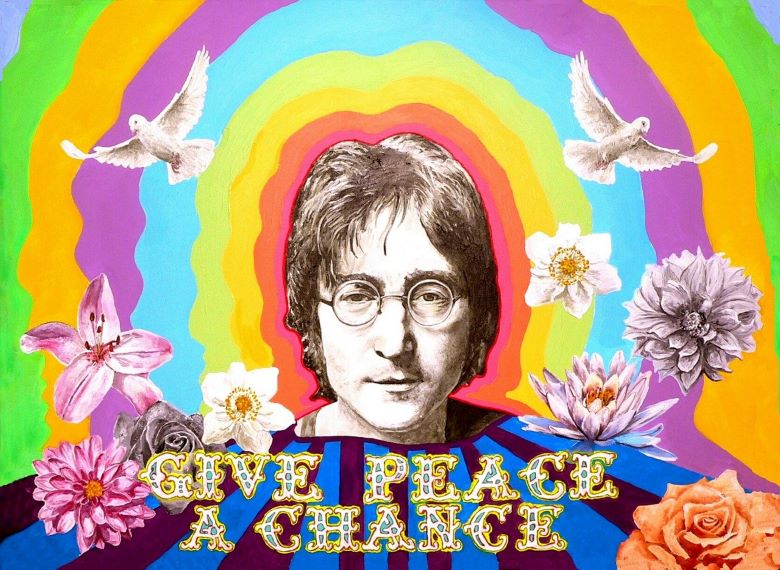
John Lennon Give Peace a Chance Pixabay Image by Stuart Hampton
The image above, of course, is John Lennon of the Beatles.
Clearly, he is not one of the Johns in the New Testament, but there is a connection, as we shall see.
First, however, we will explore the New Testament and make an effort to sort, or at least identify, some of the people named John in the books of the New Testament. A few of these are not particularly disputed by theologians and scholars but others remain quite the enigma.
We will begin simply and progress to the less explicable ones.
John the Baptist
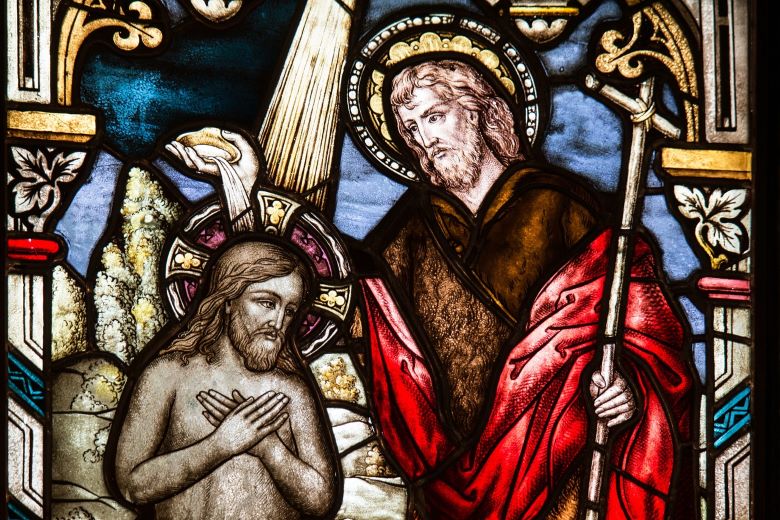
John the Baptist baptizing Jesus Pixabay Image by Thomas
Normally, the first John we would think of is the forerunner to Yeshua himself, John the Baptist. John the Baptist appears in all four canonical gospels. As the one who would come before the Messiah to “prepare the way,” John the Baptist plays a prominent role in the gospel stories.
John the Baptist lives in the wilderness, preaches of the coming of the savior, baptizes Yeshua in the river and finally is killed by Herod Antipas in about 30 CE.
Josephus writes that John the Baptist was extremely popular among the people and that large crowds came to hear him speak. The Oxford Companion to the Bible lists several places in the gospels (Mark 1:5, Matthew 3:5, Mark 11:32, Luke 7:29, Acts 13:24), where “all the people came out to see him.”
John’s story is well known and there is little to indicate that he is confused with any of the other Johns mentioned in the New Testament.
John the Apostle/John the Evangelist
It seems that nothing in the Bible remains clear for very long and this business of Johns is no exception.
We know from the gospels that Yeshua called at least one man named John to be one of his disciples. This John is the son of Zebedee and the brother of James.
There is little dispute that this John is a distinct character in the New Testament. The picture is less lucid when we see that this John is sometimes credited with the authorship of not only the Gospel of John but also the three Johannine epistles.
We turn first, to Wikipedia, to give a brief encapsulated version of the question:
John the Apostle is traditionally held to be the author of the Gospel of John, and many Christian denominations believe that he authored several other books of the New Testament (the three Johannine epistles and the Book of Revelation, together with the Gospel of John, are called the Johannine works), depending on whether he is distinguished from, or identified with, John the Evangelist, John the Elder, and John of Patmos. (Wikipedia: John the Apostle)
We see that some assumptions have been made regarding the authorship of five New Testament books, The Gospel According to John, the epistles 1, 2, and 3 John and the Book of Revelation (also known as The Revelation of John).
It is interesting to note that the Oxford Companion to the Bible, a respected work edited by Metzger and Coogan, contains a separate listing for John the Baptist and for the Gospel According to John but contains no separate listing for John the Apostle, who is merged into the authorship of the Gospel According to John.
Is John the Apostle the author of five books in the New Testament?
In order to answer this question, we need to examine each of the works in question.
The Gospel According to John
The fourth gospel in the New Testament is different from Matthew, Mark and Luke in structure, focus and writing style. The focus is more on theology and the purpose of Yeshua’s ministry and less on the activities and details of his travels and teachings. It is believed to have been written around 90-110 CE.
The authorship is anonymous. The author does not tell us who he is.
The Johannine Epistles
Many scholars believe the three Johannine epistles were a product of what has come to be known as the Johannine Community. Whether they are the work of one author is open to question. They have been associated with the authorship of the Gospel of John but thematic and grammatic differences have led scholars away from this conclusion.
The Johannine epistles have many similarities and differences. They seem to be written by the same author or group. The first is like a sermon. The second and third are clearly personal letters to members of the community. They discuss theological and practical matters.
The Johannine epistles are believed to have been written between 90-110 CE.
The authorship is anonymous. The author does not tell us who he is.
What can we conclude or surmise?
It is my belief that the John the Apostle, son of Zebedee and brother of James did not write either the Gospel According to John or the Johannine letters.
John, son of Zebedee, was called at the beginning of Yeshua’s ministry. That places his calling at about 26-30 CE. If he was 20 years old in 30 CE, he would have been 80-100 years old when the gospel and the epistles were likely written (90-110 CE). That is most unlikely in first century Judea.
John, son of Zebedee, was a fisherman in rural Galilee. He would have spoken Aramaic as did Yeshua. Ho might have known some Greek to enable him to do business but for a fisherman, probably illiterate in his own language, Aramaic, he was clearly not fluent in written Greek.
For these reasons, I have to conclude that John, Son of Zebedee and disciple of Yeshua cannot be the author of the Gospel of John or of the Johannine epistles, all of which were written anonymously.

Horses of the Apocalypse Pixabay Image by Jeronym Pelikovsky
The Book of Revelation
The Book of Revelation, also known as the Revelation of John, the Apocalypse of John or The Apocalypse was written by a figure known as John of Patmos (also called John the Revelator, John the Divine, John the Theologian).” The author reports that he was writing from the Greek island of Patmos, where he was likely exiled by Emperor Domitian.
The book contains a set of visions given by God to his prophet, John. Scholars today believe that, on linguistic grounds, the book “was not written by the author of the fourth gospel.”
Revelation is an apocalyptic text written in the form of a letter to seven churches in Asia Minor (today’s Turkiye). It contains visions of a future war between the forces of Good (YHWH) and the forces of Evil (Satan). There are frightening visions and warnings to mankind to begin having the right beliefs and doing the right things to ensure eternal life in the Kingdom of God.
Is this the author of the gospel?
The book was written in Greek in about 95 CE. “The majority view of modern Bible scholars is that the Book of Revelation was written by John of Patmos (neither John the Apostle, nor John the Evangelist.)”
We can see that the author was not the gospel author nor was he John, the disciple of Yeshua.
Scholars have not further identified this author. There has been a great deal of speculation, but we do not haven the facts to clearly identify this figure.
For these reasons, I believe that John of Patmos, whomever he might have been, was a unique figure and is not represented elsewhere in the New Testament.
There are a few other Johns in the New Testament.
To borrow a term from literature, they are, by comparison, minor characters.
John the Presbyter
This figure has been identified with John of Patmos, John the Apostle and with The Beloved Disciple, a character whom we will meet anon.
He does not appear in the Bible as a specific character but is only identified with Johns who do appear in the New Testament.
We know of him through the writings of second century church father Papias of Hierapolis.
I conclude that this figure, if he existed, was not one of the Johns in the new Testament.
John, the father of Simon Peter
This John is found in the Gospel of John, chapter 1, verse 42.
He is unique and found nowhere else in the Bible.
John, the son of Anas
This John is found only in the Book of Acts, chapter 4.
He is identified only as a member of a high priest’s family.
John Mark
John Mark (distinguished from the author of the Gospel of Mark) was a companion of Paul and Barnabas in their travels.
Later traditions identified him as the author of the gospel.
This character appears only in the Books of Acts and Colossians and is most unlikely to be the author of the gospel.
The Beloved Disciple (The Disciple whom Yeshua Loved)
We have come now to a character who has generated a great deal of discussion and controversy.
The term, “the disciple that Yeshua loved” or the “other disciple that Yeshua loved” appears six times in the Gospel of John (and in none of the other gospels).
John 21:24 states that the gospel, itself was based on the written testimony of this disciple.
Wikipedia provides a succinct summary of the mentions of this figure:
- It is this disciple who, while reclining beside Jesus at the Last Supper, asks Jesus who it is that will betray him, after being requested by Peter to do so.
- Later at the crucifixion, Jesus tells his mother, “Woman, here is your son”, and to the beloved disciple he says, “Here is your mother.”
- When Mary Magdalene discovers the empty tomb, she runs to tell the beloved disciple and Peter. The two men rush to the empty tomb and the beloved disciple is the first to reach it. However, Peter is the first to enter.
- In John 21,the last chapter of the Gospel of John, the beloved disciple is one of seven fishermen involved in the miraculous catch of 153 fish.
- Also in the book’s final chapter, after Jesus implies the manner in which Peter will die, Peter sees the beloved disciple following them and asks, “What about him?” Jesus answers, “If I want him to remain until I come, what is that to you? You follow Me.”
- Again in the Gospel’s last chapter, it states that the very book itself is based on the written testimony of the disciple whom Jesus loved. (Wikipedia: Beloved Disciple)
All of the references are found in the Gospel of John. He is spoken of in the third person so it is quite unlikely that he is the author of the book.
While he is not specifically identified in the text, if the “disciple whom Jesus loved” is named John and there is only one disciple named John that we know of, in spite of any interpretations to the contrary and in spite of any contradictions in the text, it is most likely that this disciple is, in fact, John, the son of Zebedee and the brother of James.
What about John Lennon?
I have included the reference to the clearly non-Biblical John from Liverpool in England in the 20th century because he makes clever use of a Biblical metaphor in one of his songs.
The Gospel of John opens with “In the beginning was the Word, and the Word was with God, and the Word was God.”
The author equates The Word directly with God.
In John Lennon’s song, The Word, he opens with “In the beginning it’s misunderstood. but now I’ve got it the Word is good.”
Lennon is, of course, known for “word” play. Here, he puts “good” in place of “God.” He was believed to have been an agnostic, if not fully an atheist. He is making fun, but he is also making a point.
“The Word” in Johannine theology is a most sacred concept. Lennon secularizes it.
OK, so how many Johns are in the New Testament?
As separately identifiable individuals, I believe we can find:
- John the Baptist
- John, the Son of Zebedee and Disciple to Yeshua
- John of Patmos, author of Revelation
- John, the father of Simon Peter
- John, the son of Anas
- John Mark, companion to Paul and Barnabas
People who might have been named John, subject to inference and interpretation:
- John the Evangelist, author of the anonymously written Gospel of John (highly speculative)
- John of the epistles, author of the anonymously written Johannine epistles
- John, the Disciple whom Yeshua loved
Given the information we have at our disposal today, these seem to be the best surmises we can make.
Perhaps future scholarship will shed further light.
Progressive Christian
General Christian
Religious Music and Entertainment

About William T. Orr, Jr.
William T. Orr, Jr. is a retired educator, most recently the principal of a high school named in the Top 10 in the nation by Newsweek magazine. Orr has a B.A. in English Language and Literature, a M.Ed. in Education Administration and Supervision, and an Ed.D. in Education leadership. He’s also completed Postdoctoral study at Yale Divinity School and Dallas Theological Seminary. You can read more about the author here.
Previous Post
March 14, 2024
Faith And Begorrah! St. Patrick For The Rational
Next Post
March 26, 2024 An Easter Story Like No Other
Recent Comments
"It gives me great pride to share this column with my oldest son and research ..."
How Paul Turned a Dead Messiah ..."
"It seems that seeing clearly the image of Jesus in Revelation brings up a lot ..."
Bart Ehrman Decodes the Book of ..."
"Ehrman's book really helped me understand how the Bible holds incompatible notions of who Jesus ..."
Bart Ehrman Decodes the Book of ..."
"Thanks for reading and commenting.Do you mean me or Dr. Ehrman?"
Bart Ehrman Decodes the Book of ..."
Browse Our Archives
Select a Category Uncategorized
Select a Month May 2026 April 2026 March 2026 February 2026 January 2026 December 2025 November 2025 August 2025 July 2025 June 2025 May 2025 February 2025 January 2025 November 2024 October 2024 September 2024 August 2024 July 2024 June 2024 May 2024 April 2024 March 2024 February 2024 January 2024 December 2023 November 2023
TAKE THE
Religious Wisdom Quiz
Who tried to lure Nehemiah into a trap to discredit him?
Select your answer to see how you score.
Sanballat and Tobiah Ezra and Eliashib Darius and Cyrus Haggai and Zerubbabel
Related posts from They Didn't Teach Me That...
Family
How Paul Turned a Dead Messiah Into Christianity's...

Family
Revelation's Jesus Isn't the Lamb — He's the...
Family
One Jesus, Four Gospels: Why They Disagree on...

Family
Bart Ehrman Decodes the Book of Revelation: What...
TRENDING AT PATHEOS History and Religion

Emotion in Early Christianity by Andrew Crislip
Andrew Crislip’s Emotion in Early Christianity examines an often overlooked dimension of...

16 Spiritual Touchstones for a More Grounded Life
After decades of spiritual study, here are 16 principles I try...

Catholic Evangelization: Sharing Your Faith Every Day
Welcome back to the Graceful Awakening mini-series called, “From Faith to Mission.” ...

The Pillar of the Boatmen: the Ancient Monument...
The Pillar of the Boatmen is a Romano-Gaulish sculpture that dates from...

In one sense walking into Westminster Abbey is like walking down the...

'Super Scam Me' Exposes AI Jon Bon Jovi...
Leslie Pickett believed she was in a relationship with Jon Bon Jovi....
view all History and Religion blogs
What Are Your Thoughts?leave a comment
Ad-Free & Subscriber Log-In Subscription Support
- About Us
- 2026 Calendar
- Videos
- Podcasts
- Library of World Religions
- Faith In Media Tracker
- Advertise With Us
- Write for Us
- Privacy Policy
- Terms of Service
- Do Not Sell My Data
- Contact Us
- Radiant Digital
- Manage Newsletter Subscriptions
- Unsubscribe From Notifications
- Sitemap
Copyright 2008-2026, Patheos. All rights reserved.
Subscription Support Ad-Free & Subscriber Log-In
Follow Patheos