
BuddhistCatholicContemplativeEvangelicalGeneral ChristianHinduJewishLatter-day SaintMuslimNew VisionsProgressive Christian
Beliefs
- Buddhist
- Catholic
- Contemplative
- Evangelical
- General Christian
- Hindu
- Jewish
- Latter-day Saint
- More Voices
- Muslim
- New Visions
- Pagan
- Progressive Christian
Topics
- Religion News
- Food and Religion
- Sports and Religion
- Religious Art
- Religious Music and Entertainment
- Religious Events
- History and Religion
- Style and Religion
- Politics and Religion
- Women in Religion
- Recreation Outdoors and Religion
- Business Finance and Religion
- Careers Workplace and Religion
- Education and Religion
- Family Parenting and Religion
- Health Fitness and Religion
- Home and Religion
- Relationships and Religion
- Technology and Religion
- Travel and Religion
Columnists
- Buddhist Columnists
- Business Finance and Religion Columnists
- Careers Workplace and Religion Columnists
- Catholic Columnists
- Contemplative Columnists
- Education and Religion Columnists
- Evangelists Columnists
- Family Parenting and Religion Columnists
- General Christian Columnists
- Health Fitness and Religion Columnists
- Hindu Columnists
- History and Religion Columnists
- Home and Religion Columnists
- Jewish Columnists
- More Voices Columnists
- Latter Day Columnists
- Muslim Columnists
- New Visions Columnists
- Nonreligious Columnists
- Pagan Columnists
- Politics and Religion Columnists
- Progressive Columnists
- Recreation Outdoors and Religion Columnists
- Relationships and Religion Columnists
- Religion News Columnists
- Religious Art Columnists
- Religious Events Columnists
- Religious Music and Entertainment Columnists
- Sports and Religion Columnists
- Style and Religion Columnists
- Technology and Religion Columnists
- Travel and Religion Columnists
- Women in Religion Columnists
Resource Library
- 2026 Calendar
- Library of World Religions
- The 100 Most Holy Places on Earth
- Patheos Answers
- Podcasts
- Videos
- Faith Leaders Database
- Anglican Episcopalian
- Bahai
- Baptist
- Buddhism
- Christianity
- Confucianism
- Eastern Orthodoxy
- Hinduism
- Holiness and Pentecostal
- ISKCON
- Islam
- Judaism
- Lutheran
- Methodist
- The Church of Jesus Christ of Latter-day Saints
- New Age
- Paganism
- Presbytarian and Reformed
- Protestantism
- Religion Behind the Scenes
- Roman Catholic
- Scientology
- Shia Islam
- Sikhism
- Sufism
- Sunni Islam
- Taoism
- Zen
- See all religions
Research Tools
 Ad-Free & Subscriber Log-In Subscription Support
Ad-Free & Subscriber Log-In Subscription Support
Follow Patheos 

- Trending:
- Forgiveness
- |
- Marriage
- |
- Consciousness
- |
- Death Penalty
- |
- Election
- |
- Halloween

- Home
- General Christian
- History and Religion
- Who Says Jesus Was Born of a Virgin?
Who Says Jesus Was Born of a Virgin?
Last updated on: December 12, 2023 at 5:24 pm by William T. Orr, Jr.
Who Says Jesus Was Born of a Virgin? 2023-12-12T17:24:06-05:00 William T. Orr, Jr.
Patheos Explore the world's faith through different perspectives on religion and spirituality! Patheos has the views of the prevalent religions and spiritualities of the world.
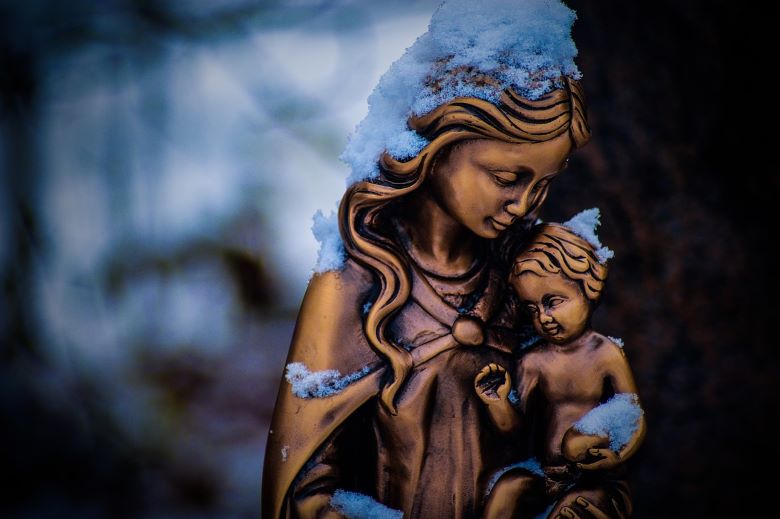
Pixabay image by Anuja Tilj
Everyone knows Jesus was born of a virgin. The Bible says so. Right?
Well…it might not be quite that simple. Let us see what the Bible actually says about that.
Two of the four canonical gospels assert that Jesus Christ, the Christian Messiah, was born of a virgin mother.
There is no further mention of the subject in the text of the Bible that has come down to us.
What does the Gospel of Matthew say?
In the Gospel of Matthew, chapter 1, verses 18-25, we read:
18 This is how the birth of Jesus the Messiah came about: His mother Mary was pledged to be married to Joseph, but before they came together, she was found to be pregnant through the Holy Spirit. 19 Because Joseph her husband was faithful to the law, and yet did not want to expose her to public disgrace, he had in mind to divorce her quietly.
20 But after he had considered this, an angel of the Lord appeared to him in a dream and said, “Joseph son of David, do not be afraid to take Mary home as your wife, because what is conceived in her is from the Holy Spirit. 21 She will give birth to a son, and you are to give him the name Jesus, because he will save his people from their sins.”
22 All this took place to fulfill what the Lord had said through the prophet: 23 “The virgin will conceive and give birth to a son, and they will call him Immanuel”[d] (which means “God with us”).
24 When Joseph woke up, he did what the angel of the Lord had commanded him and took Mary home as his wife. 25 But he did not consummate their marriage until she gave birth to a son. And he gave him the name Jesus.
For the author of the Gospel of Matthew, Jesus was born of a virgin “to fulfill what the Lord had said through the prophet.“
What does the Gospel of Luke say?
The author of the Gospel of Luke has told the story differently. In the Gospel of Luke, chapter 1, verses 26 through 38, we read:
26 In the sixth month of Elizabeth’s pregnancy, God sent the angel Gabriel to Nazareth, a town in Galilee, 27 to a virgin pledged to be married to a man named Joseph, a descendant of David. The virgin’s name was Mary. 28 The angel went to her and said, “Greetings, you who are highly favored! The Lord is with you.”
29 Mary was greatly troubled at his words and wondered what kind of greeting this might be. 30 But the angel said to her, “Do not be afraid, Mary; you have found favor with God. 31 You will conceive and give birth to a son, and you are to call him Jesus. 32 He will be great and will be called the Son of the Most High. The Lord God will give him the throne of his father David, 33 and he will reign over Jacob’s descendants forever; his kingdom will never end.”
34 “How will this be,” Mary asked the angel, “since I am a virgin?”
35 The angel answered, “The Holy Spirit will come on you, and the power of the Most High will overshadow you. So the holy one to be born will be called the Son of God. 36 Even Elizabeth your relative is going to have a child in her old age, and she who was said to be unable to conceive is in her sixth month. 37 For no word from God will ever fail.”
38 “I am the Lord’s servant,” Mary answered. “May your word to me be fulfilled.” Then the angel left her.
Why does Luke say Jesus was born of a virgin?
For the author of the Gospel of Luke, the reason that Jesus was to be born of a virgin was simply that his mother had found “favor with God” and also that “The Lord God will give him the throne of his father David,” and he will “reign over Jacob’s descendants forever; his kingdom will never end.“
Do Matthew and Luke agree?
It is interesting here to note that these two gospels which tell of Jesus’s virgin birth, tell the story quite differently from each other. It is of further interest to note that the Gospel of Mark, which scholars believe to have been a major source for both Matthew and Luke, makes no mention of a virgin birth for Jesus whatsoever.
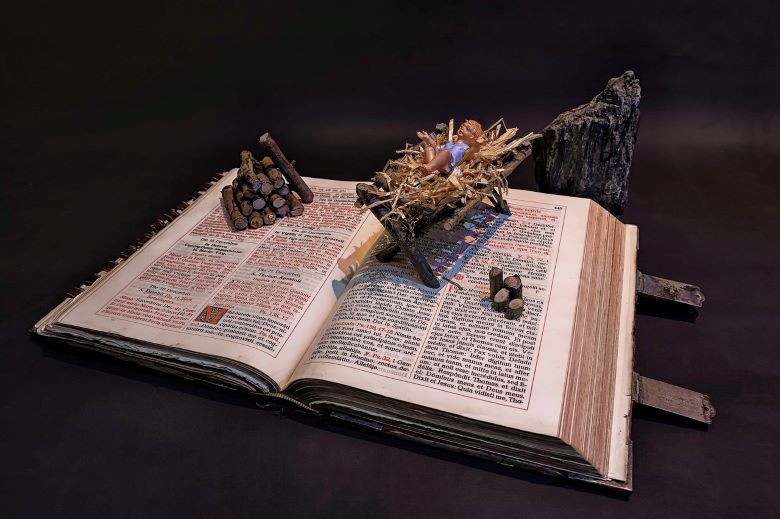
Pixabay image by Get-it-on-Picture
What do we make of this?
First of all, we need to learn which prophet foretold Jesus’s birth and where this prophecy can be found in the Bible.
In what will likely come as a shock to many who have heard the traditional Christmas birth story for a lifetime, a close study of what the Bible actually says will yield an unexpected result.
Where in the Bible is the prophecy located?
Nowhere in the Hebrew Bible nor in the New Testament is there a prophecy that states that a virgin named Mary will be impregnated by the Holy Spirit and will give birth to a baby boy named Jesus who will “be called the Son of God” and who will “sit on the throne of David” and will “reign over Jacob’s descendants forever; his kingdom will never end.“
The specific Biblical passage which has, for 2000 years, been assumed to be the prophecy in question is found in the book of Isaiah, chapter 7, verse 14.
In this passage, Ahaz, the king of Judah is being besieged by two foreign kings, Rezin, the king of Syria and Pekah, the king of Israel. Ahaz seeks the counsel of the prophet, Isaiah. The prophet reassures Ahaz that he need not worry, that a young woman who is pregnant will give birth to a son and that she will name him Emmanuel (Note the spelling. Emmanu-el contains the name “El,” a generic a name for ” a god.” ) Isaiah tells the king that before the boy is old enough to know right from wrong, the foreign kings will have ended their siege and will have returned to their homelands.
Two points present themselves which require explanation.
- The Hebrew word (almah) used in this passage of Isaiah has been translated by scholars to mean “a young woman of marriageable age.” It does not mean “a woman who has not has sex.” An almah might be a virgin but she also might not.
- The second point is that nowhere in the context of this passage nor in any other place in the Bible, other than the passage we have seen from the Gospel of Matthew, is there any reference to this passage nor any language tying this passage to a virgin birth for Jesus, the son of Mary.
It is important to re-iterate these points.
The entire meaning of Jesus’s virgin birth as reported in the gospels rests upon them.
Both of these points relate to the passage from the Book of Isaiah that has been adopted by the church to support the virgin birth.
- The Hebrew Bible prophecy in question refers to an “almah,” a Hebrew word meaning “young woman.” Scholars agree that the word almah does not mean “a woman who has not had sex.”
- The Gospel of Matthew refers to the virgin birth “to fulfill what the Lord had said through the prophet.” Importantly, there is no reference to any specific prophecy. The church, in the absence of a specific reference in Matthew’s gospel, has adopted a completely unrelated and irrelevant passage from Isaiah to support the idea of a virgin birth for the Messiah.
What else can we learn?

Pixabay image by Tumisu
It is also important to look at the other language surrounding these passages and in the Bible as a whole. In the account found in Matthew, Mary names her son “Jesus,” not “Emmanuel” as prophesied. Emmanuel means “God is with us.” “Jesus” means YHWH saves.”
While tradition and 2000 years of church teaching presuppose a belief in the virgin birth of the Messiah, Biblical support is quite weak.
Neither the Gospel of Mark nor the Gospel of John contain any narrative of Jesus’s birth. The Gospel of Mark was a source for both the Gospels of Matthew and Luke. Mark makes no mention of a virgin birth or any narrative of Jesus’s birth at all.
We do not know the source from where the Matthew and Luke authors heard the story of Jesus’s virgin birth. It is important that only two of the four canonical gospels mention the birth at all. Both of these include details about a virgin birth but the accounts are quite different.
What can we conclude from this?
A virgin birth for the leader of any religion would add an effect of the miraculous to the leader’s legend or myth. Many mythologies contain accounts of virgin births. According to Joseph Campbell, in his book Occidental Mythology, the story of a virgin birth for the Christian Messiah is far from unique.
According to the Bible, The Christian Messiah, Jesus, was born to a woman named Mary who was betrothed to a man maned Joseph. Mary named her baby “Jesus” (Joshua or Yeshua in Hebrew). Two of the four gospels (Matthew and Luke) tell of his birth. Both of these state that Mary was a virgin at the time of Jesus’s birth. The other two gospels make no such claim and, in fact, contain no birth narrative at all.
Was Jesus born of a virgin?
Clearly, a virgin birth for Jesus would only be possible due to a miracle and this is supported by the Biblical narrative. In the natural world, such a birth, without radical medical intervention, is impossible.
- The virgin birth for Jesus is not possible in a natural world.
- Only a miracle could account for a virgin birth.
- The Biblical support for a virgin birth, while not absent, is weak.
- There can be no definitive answer.
- It becomes a matter of faith alone.
General Christian
Catholic
Religious Events

About William T. Orr, Jr.
William T. Orr, Jr. is a retired educator, most recently the principal of a high school named in the Top 10 in the nation by Newsweek magazine. Orr has a B.A. in English Language and Literature, a M.Ed. in Education Administration and Supervision, and an Ed.D. in Education leadership. He’s also completed Postdoctoral study at Yale Divinity School and Dallas Theological Seminary. You can read more about the author here.
Previous Post
December 9, 2023
Are Christians Required to Believe in the Bible?
Next Post
December 21, 2023 What Do the Two Christmas Stories in the Bible Tell Us?
Recent Comments
"It gives me great pride to share this column with my oldest son and research ..."
How Paul Turned a Dead Messiah ..."
"It seems that seeing clearly the image of Jesus in Revelation brings up a lot ..."
Bart Ehrman Decodes the Book of ..."
"Ehrman's book really helped me understand how the Bible holds incompatible notions of who Jesus ..."
Bart Ehrman Decodes the Book of ..."
"Thanks for reading and commenting.Do you mean me or Dr. Ehrman?"
Bart Ehrman Decodes the Book of ..."
Browse Our Archives
Select a Category Uncategorized
Select a Month May 2026 April 2026 March 2026 February 2026 January 2026 December 2025 November 2025 August 2025 July 2025 June 2025 May 2025 February 2025 January 2025 November 2024 October 2024 September 2024 August 2024 July 2024 June 2024 May 2024 April 2024 March 2024 February 2024 January 2024 December 2023 November 2023
TAKE THE
Religious Wisdom Quiz
What does "Haggai" mean in Hebrew?
Select your answer to see how you score.
The Lord Saves The Rock Festive God's Messenger
Related posts from They Didn't Teach Me That...
Family
How Paul Turned a Dead Messiah Into Christianity's...

Family
Revelation's Jesus Isn't the Lamb — He's the...
Family
One Jesus, Four Gospels: Why They Disagree on...

Family
Bart Ehrman Decodes the Book of Revelation: What...
TRENDING AT PATHEOS History and Religion

Looking at the Largest Orthodox Cathedral on Earth
There is often a considerable amount of anger and, shall we...

The Problem with False Prophets
Miller’s Station UMC| 10/18/26| Anchor Verse: Jeremiah 23: 1, 9-23 I...

Emotion in Early Christianity by Andrew Crislip
Andrew Crislip’s Emotion in Early Christianity examines an often overlooked dimension of...

16 Spiritual Touchstones for a More Grounded Life
After decades of spiritual study, here are 16 principles I try...

Catholic Evangelization: Sharing Your Faith Every Day
Welcome back to the Graceful Awakening mini-series called, “From Faith to Mission.” ...

The Pillar of the Boatmen: the Ancient Monument...
The Pillar of the Boatmen is a Romano-Gaulish sculpture that dates from...
view all History and Religion blogs
What Are Your Thoughts?leave a comment
Ad-Free & Subscriber Log-In Subscription Support
- About Us
- 2026 Calendar
- Videos
- Podcasts
- Library of World Religions
- Faith In Media Tracker
- Advertise With Us
- Write for Us
- Privacy Policy
- Terms of Service
- Do Not Sell My Data
- Contact Us
- Radiant Digital
- Manage Newsletter Subscriptions
- Unsubscribe From Notifications
- Sitemap
Copyright 2008-2026, Patheos. All rights reserved.
Subscription Support Ad-Free & Subscriber Log-In
Follow Patheos