
BuddhistCatholicContemplativeEvangelicalGeneral ChristianHinduJewishLatter-day SaintMuslimNew VisionsProgressive Christian
Beliefs
- Buddhist
- Catholic
- Contemplative
- Evangelical
- General Christian
- Hindu
- Jewish
- Latter-day Saint
- More Voices
- Muslim
- New Visions
- Pagan
- Progressive Christian
Topics
- Religion News
- Food and Religion
- Sports and Religion
- Religious Art
- Religious Music and Entertainment
- Religious Events
- History and Religion
- Style and Religion
- Politics and Religion
- Women in Religion
- Recreation Outdoors and Religion
- Business Finance and Religion
- Careers Workplace and Religion
- Education and Religion
- Family Parenting and Religion
- Health Fitness and Religion
- Home and Religion
- Relationships and Religion
- Technology and Religion
- Travel and Religion
Columnists
- Buddhist Columnists
- Business Finance and Religion Columnists
- Careers Workplace and Religion Columnists
- Catholic Columnists
- Contemplative Columnists
- Education and Religion Columnists
- Evangelists Columnists
- Family Parenting and Religion Columnists
- General Christian Columnists
- Health Fitness and Religion Columnists
- Hindu Columnists
- History and Religion Columnists
- Home and Religion Columnists
- Jewish Columnists
- More Voices Columnists
- Latter Day Columnists
- Muslim Columnists
- New Visions Columnists
- Nonreligious Columnists
- Pagan Columnists
- Politics and Religion Columnists
- Progressive Columnists
- Recreation Outdoors and Religion Columnists
- Relationships and Religion Columnists
- Religion News Columnists
- Religious Art Columnists
- Religious Events Columnists
- Religious Music and Entertainment Columnists
- Sports and Religion Columnists
- Style and Religion Columnists
- Technology and Religion Columnists
- Travel and Religion Columnists
- Women in Religion Columnists
Resource Library
- 2026 Calendar
- Library of World Religions
- The 100 Most Holy Places on Earth
- Patheos Answers
- Podcasts
- Videos
- Faith Leaders Database
- Anglican Episcopalian
- Bahai
- Baptist
- Buddhism
- Christianity
- Confucianism
- Eastern Orthodoxy
- Hinduism
- Holiness and Pentecostal
- ISKCON
- Islam
- Judaism
- Lutheran
- Methodist
- The Church of Jesus Christ of Latter-day Saints
- New Age
- Paganism
- Presbytarian and Reformed
- Protestantism
- Religion Behind the Scenes
- Roman Catholic
- Scientology
- Shia Islam
- Sikhism
- Sufism
- Sunni Islam
- Taoism
- Zen
- See all religions
Research Tools
 Ad-Free & Subscriber Log-In Subscription Support
Ad-Free & Subscriber Log-In Subscription Support
Follow Patheos 

- Trending:
- Forgiveness
- |
- Marriage
- |
- Consciousness
- |
- Death Penalty
- |
- Election
- |
- Halloween

- Home
- General Christian
- History and Religion
- Are Christians Required to Believe in the Bible?
Are Christians Required to Believe in the Bible?
Last updated on: December 9, 2023 at 1:54 pm by William T. Orr, Jr.
Are Christians Required to Believe in the Bible? 2023-12-09T13:54:43-05:00 William T. Orr, Jr.
Patheos Explore the world's faith through different perspectives on religion and spirituality! Patheos has the views of the prevalent religions and spiritualities of the world.
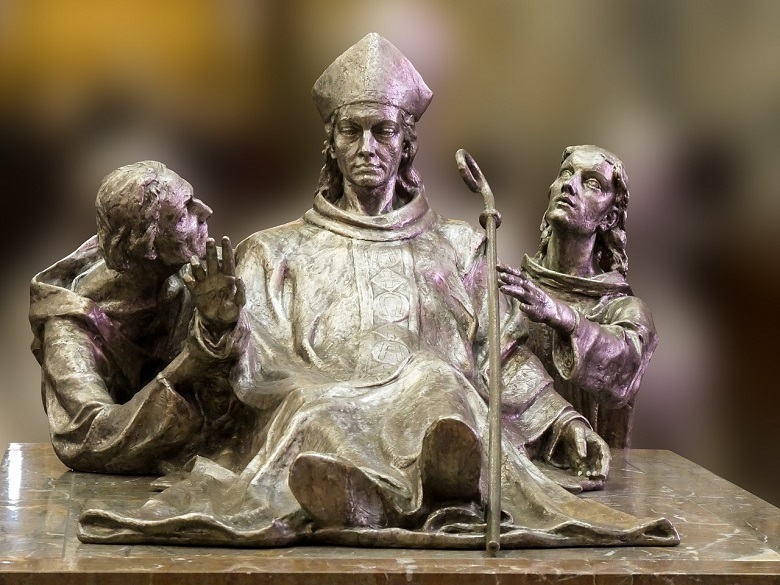
pixabay image by G.C.
Are Christians required to believe in the “Truth” of the Bible?
In the Apostles’ Creed or the Nicene Creed, do Christians profess a belief in the inerrancy of the Holy Bible?
Let us take a look and see.
What does the Apostles’ Creed actually say?
The Apostles’ Creed most likely originated in the fifth century CE as a version of the earlier Roman Creed. It is shorter than the Nicene Creed adopted in 381 and is, like the Nicene Creed, Trinitarian in nature.
Here is the text of the creed:
I believe in God, the Father almighty,
Creator of heaven and earth,
and in Jesus Christ, his only Son, our Lord,
who was conceived by the Holy Spirit,
born of the Virgin Mary,
suffered under Pontius Pilate,
was crucified, died and was buried;
he descended into hell;
on the third day he rose again from the dead;
he ascended into heaven,
and is seated at the right hand of God the Father almighty;
from there he will come to judge the living and the dead.
I believe in the Holy Spirit,
the holy catholic Church,
the communion of saints,
the forgiveness of sins,
the resurrection of the body,
and life everlasting.
Amen.
The beliefs to which the creed refers have to do with God, YHWH, his son, Yeshua, and the Church. It asserts a belief in God, that Yeshua (Jesus) is his son, that his mother was a virgin named Mary and that she was miraculously made pregnant by the Holy Spirit, the third of the three-part Trinitarian Godhead (Father, Son, and Holy Spirit.)
The Creed further states a belief in the death, descent, and ascent to Heaven of Yeshua, the Son. It asserts a belief that Yeshua is alive in Heaven and that he will be the final judge of man.
The creed also states a belief in the Holy Spirit, the Holy catholic (universal) church, the “communion of saints,” YHWH’s forgiveness of sins, the rebirth of the body after death and everlasting life.
Does the Apostles’ Creed require a belief in the Bible?
Nowhere in the text of the creed is there any statement of belief in the Bible, or in fact, any mention of the Bible or of scripture or the written word in general.
This concept, that Christian creeds require a belief in the inerrancy of the Bible, like so many other concepts in modern interpretations of the creed were added by priests and theologians in later times in order to make specific points of theology and dogma.
How does the Nicene Creed compare with the Apostles’ Creed?
The Nicene Creed, also called the Creed of Constantinople, “is the defining statement of belief of Nicene or mainstream Christianity.” The creed is seen as a profession of faith in many Christian churches, both in the Catholic and Protestant traditions.
Christians in many churches repeat the creed as a part of weekly worship.
The text of the Nicene Creed:
I believe in one God,
the Father almighty,
maker of heaven and earth, of all things visible and invisible.
I believe in one Lord Jesus Christ, the Only Begotten Son of God, born of the Father before all ages. God from God, Light from Light, true God from true God, begotten, not made, consubstantial with the Father; through him all things were made. For us men and for our salvation he came down from heaven, and by the Holy Spirit was incarnate of the Virgin Mary, and became man. For our sake he was crucified under Pontius Pilate, he suffered death and was buried, and rose again on the third day in accordance with the Scriptures. He ascended into heaven and is seated at the right hand of the Father. He will come again in glory to judge the living and the dead and his kingdom will have no end.
I believe in the Holy Spirit, the Lord, the giver of life, who proceeds from the Father and the Son, who with the Father and the Son is adored and glorified, who has spoken through the prophets.
I believe in one, holy, catholic and apostolic Church. I confess one Baptism for the forgiveness of sins and I look forward to the resurrection of the dead and the life of the world to come. Amen.
As we can see, it is considerably longer than the Apostles’ Creed, contains more detailed information, but professes almost exactly the same beliefs.

Pixabay Image by reenablack
What does the Nicene Creed actually say?
The creed asserts a belief in one God and that he is the creator of everything. It requires a belief in Jesus Christ, the “Only Begotten Son of God,” who “for us and our salvation, came down from heaven” (where he, by the reckoning of some theologians, was always in existence, even from creation) and was born into the world by a virgin mother and “became man.”
It asserts a belief in the death of Jesus Christ by crucifixion and the “Resurrection on the third day in accordance with the scriptures.”
The creed declares that Jesus Christ is alive in heaven, seated by the Father, and will become the judge for mankind eternally.
It proclaims a belief in the Holy Spirit (the third person of the Trinity), that the Holy Spirit is a part of the Godhead and that the Holy Spirit speaks through the prophets. The creed further states a belief in the “holy catholic and apostolic Church,” baptism “for the forgiveness of sins” and the prospect of eternal life.
Does the Nicene Creed require a belief in the Bible?
Like the Apostles’ Creed, the Nicene Creed, nowhere in its text, asserts or requires a belief in the Bible or any other scripture. In fact, the only mention of scripture is in the stated belief that Jesus Christ’s death and resurrection is foretold in scripture: “For our sake he was crucified under Pontius Pilate, he suffered death and was buried, and rose again on the third day in accordance with the Scriptures.” It does not state here or in any other place that Christians are required to believe in the Bible or to believe in any scripture. There is no such requirement in the creed and any such claims by preachers or theologians are simply false. The scripture mentioned is from the Hebrew Bible and is not in the Gospels or in the Epistles.
What can we conclude?

Pixabay image byTumisu
The Nicene Creed was written in the Fourth Century CE and the Apostles’ Creed in the Fifth Century.
Neither the Apostles’ Creed nor the Nicene Creed asserts or requires belief in any specific scripture including the Bible. It is curious that Church fathers have, for centuries, allowed, or more likely, caused their followers to believe that Christians are required to believe in the Bible as an unquestioned source of rules for our conduct.
I suspect that it would surprise some of them to learn that these creeds require NO SUCH BELIEF.
General Christian
Catholic
Politics and Religion

About William T. Orr, Jr.
William T. Orr, Jr. is a retired educator, most recently the principal of a high school named in the Top 10 in the nation by Newsweek magazine. Orr has a B.A. in English Language and Literature, a M.Ed. in Education Administration and Supervision, and an Ed.D. in Education leadership. He’s also completed Postdoctoral study at Yale Divinity School and Dallas Theological Seminary. You can read more about the author here.
Previous Post

December 2, 2023
Is it a Sin to Kill and Eat Octopuses?
Next Post
December 12, 2023 Who Says Jesus Was Born of a Virgin?
Recent Comments
"It gives me great pride to share this column with my oldest son and research ..."
How Paul Turned a Dead Messiah ..."
"It seems that seeing clearly the image of Jesus in Revelation brings up a lot ..."
Bart Ehrman Decodes the Book of ..."
"Ehrman's book really helped me understand how the Bible holds incompatible notions of who Jesus ..."
Bart Ehrman Decodes the Book of ..."
"Thanks for reading and commenting.Do you mean me or Dr. Ehrman?"
Bart Ehrman Decodes the Book of ..."
Browse Our Archives
Select a Category Uncategorized
Select a Month May 2026 April 2026 March 2026 February 2026 January 2026 December 2025 November 2025 August 2025 July 2025 June 2025 May 2025 February 2025 January 2025 November 2024 October 2024 September 2024 August 2024 July 2024 June 2024 May 2024 April 2024 March 2024 February 2024 January 2024 December 2023 November 2023
TAKE THE
Religious Wisdom Quiz
I fall like lightning from heaven. I will be bound in the Abyss for a thousand years. Who am I?
Select your answer to see how you score.
The false prophet The Red Horse and Rider A fallen angel Satan
Related posts from They Didn't Teach Me That...
Family
How Paul Turned a Dead Messiah Into Christianity's...

Family
Revelation's Jesus Isn't the Lamb — He's the...
Family
One Jesus, Four Gospels: Why They Disagree on...

Family
Bart Ehrman Decodes the Book of Revelation: What...
TRENDING AT PATHEOS History and Religion

Emotion in Early Christianity by Andrew Crislip
Andrew Crislip’s Emotion in Early Christianity examines an often overlooked dimension of...

16 Spiritual Touchstones for a More Grounded Life
After decades of spiritual study, here are 16 principles I try...

Catholic Evangelization: Sharing Your Faith Every Day
Welcome back to the Graceful Awakening mini-series called, “From Faith to Mission.” ...

The Pillar of the Boatmen: the Ancient Monument...
The Pillar of the Boatmen is a Romano-Gaulish sculpture that dates from...

In one sense walking into Westminster Abbey is like walking down the...

'Super Scam Me' Exposes AI Jon Bon Jovi...
Leslie Pickett believed she was in a relationship with Jon Bon Jovi....
view all History and Religion blogs
What Are Your Thoughts?leave a comment
Ad-Free & Subscriber Log-In Subscription Support
- About Us
- 2026 Calendar
- Videos
- Podcasts
- Library of World Religions
- Faith In Media Tracker
- Advertise With Us
- Write for Us
- Privacy Policy
- Terms of Service
- Do Not Sell My Data
- Contact Us
- Radiant Digital
- Manage Newsletter Subscriptions
- Unsubscribe From Notifications
- Sitemap
Copyright 2008-2026, Patheos. All rights reserved.
Subscription Support Ad-Free & Subscriber Log-In
Follow Patheos