
BuddhistCatholicContemplativeEvangelicalGeneral ChristianHinduJewishLatter-day SaintMuslimNew VisionsProgressive Christian
Beliefs
- Buddhist
- Catholic
- Contemplative
- Evangelical
- General Christian
- Hindu
- Jewish
- Latter-day Saint
- More Voices
- Muslim
- New Visions
- Pagan
- Progressive Christian
Topics
- Religion News
- Food and Religion
- Sports and Religion
- Religious Art
- Religious Music and Entertainment
- Religious Events
- History and Religion
- Style and Religion
- Politics and Religion
- Women in Religion
- Recreation Outdoors and Religion
- Business Finance and Religion
- Careers Workplace and Religion
- Education and Religion
- Family Parenting and Religion
- Health Fitness and Religion
- Home and Religion
- Relationships and Religion
- Technology and Religion
- Travel and Religion
Columnists
- Buddhist Columnists
- Business Finance and Religion Columnists
- Careers Workplace and Religion Columnists
- Catholic Columnists
- Contemplative Columnists
- Education and Religion Columnists
- Evangelists Columnists
- Family Parenting and Religion Columnists
- General Christian Columnists
- Health Fitness and Religion Columnists
- Hindu Columnists
- History and Religion Columnists
- Home and Religion Columnists
- Jewish Columnists
- More Voices Columnists
- Latter Day Columnists
- Muslim Columnists
- New Visions Columnists
- Nonreligious Columnists
- Pagan Columnists
- Politics and Religion Columnists
- Progressive Columnists
- Recreation Outdoors and Religion Columnists
- Relationships and Religion Columnists
- Religion News Columnists
- Religious Art Columnists
- Religious Events Columnists
- Religious Music and Entertainment Columnists
- Sports and Religion Columnists
- Style and Religion Columnists
- Technology and Religion Columnists
- Travel and Religion Columnists
- Women in Religion Columnists
Resource Library
- 2026 Calendar
- Library of World Religions
- The 100 Most Holy Places on Earth
- Patheos Answers
- Podcasts
- Videos
- Faith Leaders Database
- Anglican Episcopalian
- Bahai
- Baptist
- Buddhism
- Christianity
- Confucianism
- Eastern Orthodoxy
- Hinduism
- Holiness and Pentecostal
- ISKCON
- Islam
- Judaism
- Lutheran
- Methodist
- The Church of Jesus Christ of Latter-day Saints
- New Age
- Paganism
- Presbytarian and Reformed
- Protestantism
- Religion Behind the Scenes
- Roman Catholic
- Scientology
- Shia Islam
- Sikhism
- Sufism
- Sunni Islam
- Taoism
- Zen
- See all religions
Research Tools
 Ad-Free & Subscriber Log-In Subscription Support
Ad-Free & Subscriber Log-In Subscription Support
Follow Patheos 

- Trending:
- Forgiveness
- |
- Marriage
- |
- Consciousness
- |
- Death Penalty
- |
- Election
- |
- Halloween

- Home
- History and Religion
- Can You Spot a False Prophet?
Can You Spot a False Prophet?
Last updated on: December 9, 2023 at 12:27 pm by William T. Orr, Jr.
Can You Spot a False Prophet? 2023-12-09T12:27:57-05:00 William T. Orr, Jr.
Patheos Explore the world's faith through different perspectives on religion and spirituality! Patheos has the views of the prevalent religions and spiritualities of the world.

Pixabay Image by Brigitte Werner
How easy is it to spot false prophets in scripture and elsewhere?
The Bible, in The Torah, the Prophets, the Gospels and the Epistles, warns the faithful, whether Jews or Christians, that false teachers and false prophets who claim to know the mind of God, will appear from time to time and attempt to lead people away from the true faith.
The Open Bible website lists more than 50 examples from the Hebrew Bible and the New Testament. We will examine here a few of these which can be most useful to us today as we navigate our ever more complex world.
What is a Prophet?
We will digress here for a brief moment to examine our definition of the idea of a “prophet.” This word can have different meanings for different people so I will clarify what a prophet is for the purposes of this article. The simplest definition seems to be the one offered by the Miriam-Webster dictionary:
Prophet: one who utters divinely inspired revelations: such as
- often capitalized: the writer of one of the prophetic books of the Bible
- capitalized: one regarded by a group of followers as the final authoritative revealer of God’s will.
A prophet, then, is one who utters divinely inspired revelations. For the purposes of this article, a prophet can be anyone who has been inspired by God to make statements which reveal that inspiration. We will not qualify the nature or method of that inspiration but will leave that for later discussion.

Pixabay Image by Barbara Jackson
A prophet who meets this definition will have legitimately, in whatever manner, received a message from YHWH and will have transmitted that message to the people intended by YHWH.
Where Do We Find Prophets in the Bible?
In the Hebrew Bible, the Book of Deuteronomy contains eight such instances in which the Israelites are warned against false teachers or false prophets.
We will examine the instance which is likely most familiar: Deuteronomy, chapter 13, in which Moses admonishes the Israelites to reject any prophet or “dreamer of dreams” who produces “signs and wonders” and attributes them to any god other than YHWH. In fact, Moses instructs he Israelites to put these false prophets to death .
It is helpful to remember that in the centuries before the Assyrian conquests, the Babylonian conquest, the Persian conquest, the Greek conquest and the Roman conquest of the Israel and Judah, and also during these times, there were many cults of many gods vying for the attention of the people. Cults representing gods of Mesopotamia, the Levant, Phoenicia, and all the lands surrounding Israel, which was, itself, a trading crossroads for many empires and cultures, competed for the attention and devotion of the people of Israel. The Bible tells of rival gods who made their way into the Jerusalem Temple itself during the reign of Josiah.
Josiah destroyed the idols of gods including Asherah, seen by some cults in Israel and Judah as a goddess equal to YHWH and possibly his wife . It is important to understand that the Israelites did not become entirely monotheistic until the period of the Babylonian captivity and the period of their return to Jerusalem and even then, we see a great deal of disparity of beliefs among the people as the priests attempt to consolidate power in the Temple and eliminate rival gods. As we approach the Roman period, we will see a profound and seminal schism in Jewish theology.
After Deuteronomy, several of the prophetic books of the Hebrew Bible warn about false prophets as well.
Even the Prophets Warn of False Prophets
In the Book of Jeremiah, the prophet admonishes the people that YHWH warns of those who speak “visions from their own minds,” and not from the mind of YHWH.
In the Book of Ezekiel, YHWH gives a stern warning to his people that his “hand will be against the prophets who see false visions and who give lying divinations.” He states that these false prophets will not be allowed into Israel .
False Prophets in the New Testament
The Hebrew Bible contains many other warnings about false prophets but we turn now to the New Testament and the Gospel of Matthew, which contains perhaps the most well-known admonition. In what has been called the Sermon on the Mount, Yeshua, the Messiah in the Christian tradition, in his most often quoted sermon, famously preaches to a large gathering of people on a hill in northern Israel, covering a broad set of topics, including discipleship, parables, and moral teachings. In Chapter 7, we read that Yeshua uses two brilliant metaphors which have made it into our modern idiomatic usage. Yeshua compares a false prophet to a “wolf in sheep’s clothing,” and warns the people to recognize a “tree by its fruits,” meaning that sometimes a false prophet will come to us in disguise but that we can judge him by his actions, not his appearance.
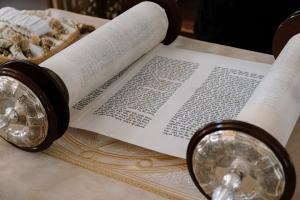
Pexels Photo by Enes Ersahin
Who is the Final Prophet in the Bible?
After Yeshua, we examine Saul of Tarsus, also known to the Christian faithful as Paul the Apostle. Paul refers to himself as an apostle but only he and the writer of the Book of Acts of the Apostles refer to him in that way. Paul warns his followers to be wary of “some who are troubling you and confusing your minds, wanting to distort the gospel of Christ.” Paul’s final statement here is quite strongly worded: “If anyone proclaims to you a gospel contrary to what you received, let that one be accursed (let him go to Hell!)
Paul, himself, is considered a prophet and, in fact, a saint in the version of Christianity that survived, thrived, and in many ways, ideologically speaking, took over the Western world. I make this point because Paul is one of the last of the people in the Bible who is considered a prophet, the last one being John of Patmos, the reported author of the Revelation of John, the last book in the agreed-upon New Testament.
It is Paul’s teachings which have defined Christian theology more than any other person with the exception of Yeshua himself, and as we will explore in later articles, in reality, Christian thought possibly owes more to the teachings of Paul than to the teachings of Yeshua. Paul’s letters and those attributed to him hold an honored and revered place in Christian faith and practice. In many Christian liturgies, during a Sunday service, a reading from one of Paul’s letters is given the same reverence as a reading from the Gospels.
So, What Do We Make of This Man Who Calls Himself a Prophet?
Is Paul’s teaching to be seen as just as important as the words of Yeshua?
Here are some thoughts:
- Paul was not chosen and called an Apostle by the living Yeshua.
- Paul never met Yeshua in the flesh. His divine inspiration came in the form of a vision of Yeshua after Yeshua’s ascent into heaven. He wrote that Yeshua commissioned him to preach the good news to the world.
- No one we know of contemporary with Paul, other than the Author of Luke and Acts, ever refers to Paul as a prophet.
- Paul’s Good News, that is, his beliefs and teachings about the means of salvation differ significantly from the beliefs and teachings of Yeshua himself. We will explore this in detail in later articles.
We see, throughout the Bible, warnings about false prophets. As we examine the writings of Paul, as we will explore in later articles, the theology he espouses departs in several ways from the theology or at least the teachings of Yeshua.
Taking these thoughts together, I believe we can pose a new and possibly contentious question, open to discussion: Can Paul, himself, in any sense, be seen as a false prophet?
Stay tuned.

About William T. Orr, Jr.
William T. Orr, Jr. is a retired educator, most recently the principal of a high school named in the Top 10 in the nation by Newsweek magazine. Orr has a B.A. in English Language and Literature, a M.Ed. in Education Administration and Supervision, and an Ed.D. in Education leadership. He’s also completed Postdoctoral study at Yale Divinity School and Dallas Theological Seminary. You can read more about the author here.
Previous Post

November 14, 2023
Did God Joke With the Ancient Israelites?
Next Post

November 30, 2023 Was Paul a False Prophet?
Recent Comments
"It gives me great pride to share this column with my oldest son and research ..."
How Paul Turned a Dead Messiah ..."
"It seems that seeing clearly the image of Jesus in Revelation brings up a lot ..."
Bart Ehrman Decodes the Book of ..."
"Ehrman's book really helped me understand how the Bible holds incompatible notions of who Jesus ..."
Bart Ehrman Decodes the Book of ..."
"Thanks for reading and commenting.Do you mean me or Dr. Ehrman?"
Bart Ehrman Decodes the Book of ..."
Browse Our Archives
Select a Category Uncategorized
Select a Month May 2026 April 2026 March 2026 February 2026 January 2026 December 2025 November 2025 August 2025 July 2025 June 2025 May 2025 February 2025 January 2025 November 2024 October 2024 September 2024 August 2024 July 2024 June 2024 May 2024 April 2024 March 2024 February 2024 January 2024 December 2023 November 2023
TAKE THE
Religious Wisdom Quiz
True or False: Isaiah prophesied that a virgin would conceive and bear a son called Jesus.
Select your answer to see how you score.
FALSE TRUE
Related posts from They Didn't Teach Me That...
Family
How Paul Turned a Dead Messiah Into Christianity's...

Family
Revelation's Jesus Isn't the Lamb — He's the...
Family
One Jesus, Four Gospels: Why They Disagree on...

Family
Bart Ehrman Decodes the Book of Revelation: What...
TRENDING AT PATHEOS History and Religion

Letters on Living the Faith by C.S. Lewis
Most of us met C.S. Lewis as a public intellectual. Mere Christianity....

When Halloween Unmasks Married Hearts
Written by Dr. David K. Ewen from Eternal Truth Bible College Behind...

Aristotle. He’s been called the father of logic, the father of the...

Methodist Central Hall and Westminster Abbey
Situated on the same square is Methodist Central Hall and Westminster Abbey. ...

57th Dove Awards Honor Dolly Parton, Crown New...
On gospel music’s biggest night, the 57th annual GMA Dove Awards honored...

The First Eucharistic Controversy: Christ’s Real Presence
For Catholics, the Eucharist is the source and summit of the Christian...
view all History and Religion blogs
What Are Your Thoughts?leave a comment
Ad-Free & Subscriber Log-In Subscription Support
- About Us
- 2026 Calendar
- Videos
- Podcasts
- Library of World Religions
- Faith In Media Tracker
- Advertise With Us
- Write for Us
- Privacy Policy
- Terms of Service
- Do Not Sell My Data
- Contact Us
- Radiant Digital
- Manage Newsletter Subscriptions
- Unsubscribe From Notifications
- Sitemap
Copyright 2008-2026, Patheos. All rights reserved.
Subscription Support Ad-Free & Subscriber Log-In
Follow Patheos