
BuddhistCatholicContemplativeEvangelicalGeneral ChristianHinduJewishLatter-day SaintMuslimNew VisionsProgressive Christian
Beliefs
- Buddhist
- Catholic
- Contemplative
- Evangelical
- General Christian
- Hindu
- Jewish
- Latter-day Saint
- More Voices
- Muslim
- New Visions
- Pagan
- Progressive Christian
Topics
- Religion News
- Food and Religion
- Sports and Religion
- Religious Art
- Religious Music and Entertainment
- Religious Events
- History and Religion
- Style and Religion
- Politics and Religion
- Women in Religion
- Recreation Outdoors and Religion
- Business Finance and Religion
- Careers Workplace and Religion
- Education and Religion
- Family Parenting and Religion
- Health Fitness and Religion
- Home and Religion
- Relationships and Religion
- Technology and Religion
- Travel and Religion
Columnists
- Buddhist Columnists
- Business Finance and Religion Columnists
- Careers Workplace and Religion Columnists
- Catholic Columnists
- Contemplative Columnists
- Education and Religion Columnists
- Evangelists Columnists
- Family Parenting and Religion Columnists
- General Christian Columnists
- Health Fitness and Religion Columnists
- Hindu Columnists
- History and Religion Columnists
- Home and Religion Columnists
- Jewish Columnists
- More Voices Columnists
- Latter Day Columnists
- Muslim Columnists
- New Visions Columnists
- Nonreligious Columnists
- Pagan Columnists
- Politics and Religion Columnists
- Progressive Columnists
- Recreation Outdoors and Religion Columnists
- Relationships and Religion Columnists
- Religion News Columnists
- Religious Art Columnists
- Religious Events Columnists
- Religious Music and Entertainment Columnists
- Sports and Religion Columnists
- Style and Religion Columnists
- Technology and Religion Columnists
- Travel and Religion Columnists
- Women in Religion Columnists
Resource Library
- 2026 Calendar
- Library of World Religions
- The 100 Most Holy Places on Earth
- Patheos Answers
- Podcasts
- Videos
- Faith Leaders Database
- Anglican Episcopalian
- Bahai
- Baptist
- Buddhism
- Christianity
- Confucianism
- Eastern Orthodoxy
- Hinduism
- Holiness and Pentecostal
- ISKCON
- Islam
- Judaism
- Lutheran
- Methodist
- The Church of Jesus Christ of Latter-day Saints
- New Age
- Paganism
- Presbytarian and Reformed
- Protestantism
- Religion Behind the Scenes
- Roman Catholic
- Scientology
- Shia Islam
- Sikhism
- Sufism
- Sunni Islam
- Taoism
- Zen
- See all religions
Research Tools
 Ad-Free & Subscriber Log-In Subscription Support
Ad-Free & Subscriber Log-In Subscription Support
Follow Patheos 

- Trending:
- Forgiveness
- |
- Marriage
- |
- Consciousness
- |
- Death Penalty
- |
- Election
- |
- Halloween

- Home
- General Christian
- History and Religion
- Do You Believe In Planet Earth?
Do You Believe In Planet Earth?
Last updated on: October 12, 2025 at 5:20 pm by Gil Rosado
Do You Believe In Planet Earth? 2025-10-12T17:20:24-04:00 Gil Rosado
Patheos Explore the world's faith through different perspectives on religion and spirituality! Patheos has the views of the prevalent religions and spiritualities of the world.

Do You Believe?
Living on Secular Earth
While believers acknowledge that Earth was created by God, it can sometimes be hard to maintain this belief when there is so much ungodliness in the world. Is it even possible to remain faithful in God when there is so much evil occurring on a global scale?
It depends.
Faithfulness requires a suspension of one’s secular perception and/or worldviews and the placing of trust in God. To that extent, one can indeed remain faithful under these or any circumstances.
However, this is not an easy “sell” to the general population these days as secularism pervades day to day life here on Planet Earth and no one really promotes religious principles and morality in external domains of life such as the workplace and school.
What people generally see these days is largely driven by the news and social media. These are the “secular channels” of communication. As such, “evil” is a frequent topic that is hard to avoid once we tune in to any such channels. Evil, by today’s standards, has become a way of life or at least, many of us have come to realize that evil is part of our lives.
Now, when I refer to evil, I am not solely talking about natural disasters, disease or famine. All of this does obviously exist, but I am referring to something more insidious. Something which continuously serves to undermine our faith…
Secularism – The “I” Factor
In a prior article entitled “The Bible Morality and Secularism”, I am actually saddened to see that I had foreshadowed life in 2025 to some extent. But it’s not too surprising. Secularism and secular government have neither a soul nor morality built into it.
When we consider the development of secular government most of its general characteristics come to mind. The separation of church and state are obviously at the forefront. But the one thing no one discusses is the absence of a moral compass in secular government.
On today’s news, we are bombarded daily by horrible acts of human carnage and human rights violations. There are global acts of war, famine, human trafficking, exploitation and terrorism with countries blaming each other for the blight.
The saddest part is that most of the atrocities occurring within our still fallen world are by human design.
As an example, we witness in 2025, the continued suffering in the Ukraine and Gaza and the result of men acting solely in the best interests of themselves, not of others. Whether garbed in the mask of a sadistic, crime-inspired dictator or a warped understanding of Islam, there is only one commonality in play. Such actions served only the purposes of vanity, the path away from God.
And even domestically, we see many acting solely in their own decadent, vain and failed or “fallen” understanding of God.
The past year especially, has exposed the failing of an assumption of morality within an amoral secular worldview. I say “amoral” because secularism doesn’t assume or offer conclusions on morality. It is morally “agnostic” by design. We have witnessed world leaders imposing forced starvation as a collateral damage of war. We have seen other self-serving vain individuals acting under the guise of “God and country” deny humanitarian aid to babies and others greatly in need.
Yet, most of the population of secular Earth and especially the USA continues to assume that morality is inherent or nascent in all humans with or without God and that US laws are governed by moral principles.
Ask the average American on the street for example, whether they believe the law contains a universal code of ethics. Ask them if the secular laws that they live and vote by contain God or moral principles of any kind within them.
The answer is actually “no”. Secularism and by association, secular law and government has solely two meanings “Not bound by religious principles” and “occurring once in an age or century”.
So, How Can We Remain Faithful Without God in the Law?
As stated within my prior article on this topic, the consequences of an amoral body of laws governing this or any country invariably leads man down a dark path of vanity, egocentrism and decay. Why? The only possible path for man in the absence of morality is to worship himself. When there is no universally accepted code of ethics or morality, Man will invariably look within to determine what is right vs wrong. The problem is that man is not necessarily inherently moral. History has shown us that men often fail to act with the best interests of others at the forefront.
What’s the Solution?
Given that we are again undergoing a recurring cycle of vain global turmoil and possibly the fall of one or more empires, it’s unlikely we will see any solution to improved morality within our lifetime, However, a solution to remaining faithful in this or any age within a secular model of planet Earth is to collectively work towards first acknowledging that a universal code of ethics must be determined not based on relativism but rather on universal truths about humanity and humane objectives. Once determined, such a universal code of ethics must then be inscribed and ingrained into every affected law under this and any other country’s borders.
Could such a code of ethics be done without God at the wheel? It depends. Morality, at its core, is God-founded so, whether or not in an official capacity, God would indeed be in the driver’s seat.
The title of this article is “Do you believe in Planet Earth?”. The answer should be “no” if you believe in God. Believers accept Earth but do not worship it as the Earth was a gift from God. However, the question regarding faith is really “Do you Believe On Planet Earth?”. And, I guess the answer from secular Earth would be, “Maybe someday everyone will believe”.
General Christian
Contemplative
Politics and Religion
About Gil Rosado
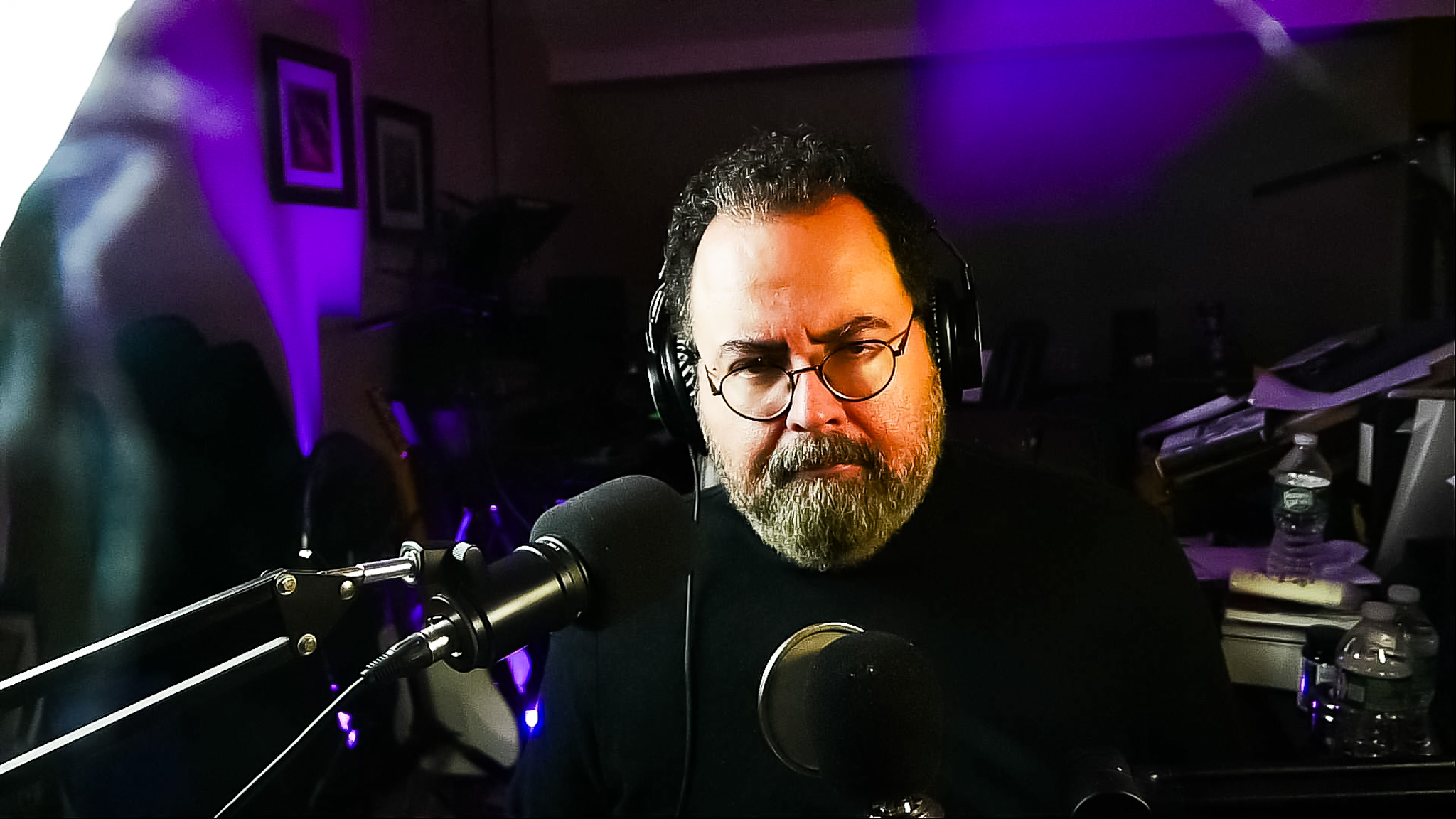
Gil Rosado, is a Writer, Musician, Composer & Polymath. His works include Visual Poems as well as traditional poems, philosophy, screenplays, stage plays, essays and fiction. Much of his eclectic works are informed and inspired by esoteric and overt religious themes. His Patheos.com articles are largely driven by his Christian beliefs and his knowledge of theology, philosophy and global religions. His book "The Names We Wear" is now available exclusively on Amazon.com You can read more about the author here.
Previous Post

October 5, 2025
What is Hell? Part II
Next Post
July 31, 2026 The God Particle Hidden in Art and Music
Browse Our Archives
Select a Category Uncategorized
Select a Month October 2026 July 2026 October 2025 September 2025 April 2024 March 2024 February 2024 January 2024 December 2023 November 2023 October 2023 September 2023
Follow Us!
TAKE THE
Religious Wisdom Quiz
Who preached the first Christian sermon on Pentecost in Acts?
Select your answer to see how you score.
Philip Paul Peter James
Related posts from The Word in Evidence and Reviews

Family
I Asked AI to Preach a Sermon. Here's...
The Word in Evidence and Reviews
Family
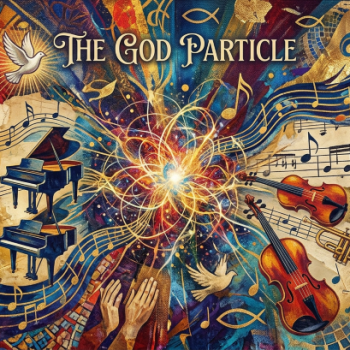
The God Particle Hidden in Art and Music
The Word in Evidence and Reviews

Family
The Word in Evidence and Reviews

Family
The Word in Evidence and Reviews
TRENDING AT PATHEOS History and Religion

The Problem with False Prophets
Miller’s Station UMC| 10/18/26| Anchor Verse: Jeremiah 23: 1, 9-23 I...

Emotion in Early Christianity by Andrew Crislip
Andrew Crislip’s Emotion in Early Christianity examines an often overlooked dimension of...

16 Spiritual Touchstones for a More Grounded Life
After decades of spiritual study, here are 16 principles I try...

Catholic Evangelization: Sharing Your Faith Every Day
Welcome back to the Graceful Awakening mini-series called, “From Faith to Mission.” ...

The Pillar of the Boatmen: the Ancient Monument...
The Pillar of the Boatmen is a Romano-Gaulish sculpture that dates from...

In one sense walking into Westminster Abbey is like walking down the...
view all History and Religion blogs
Ad-Free & Subscriber Log-In Subscription Support
- About Us
- 2026 Calendar
- Videos
- Podcasts
- Library of World Religions
- Faith In Media Tracker
- Advertise With Us
- Write for Us
- Privacy Policy
- Terms of Service
- Do Not Sell My Data
- Contact Us
- Radiant Digital
- Manage Newsletter Subscriptions
- Unsubscribe From Notifications
- Sitemap
Copyright 2008-2026, Patheos. All rights reserved.
Subscription Support Ad-Free & Subscriber Log-In
Follow Patheos