
BuddhistCatholicContemplativeEvangelicalGeneral ChristianHinduJewishLatter-day SaintMuslimNew VisionsProgressive Christian
Beliefs
- Buddhist
- Catholic
- Contemplative
- Evangelical
- General Christian
- Hindu
- Jewish
- Latter-day Saint
- More Voices
- Muslim
- New Visions
- Pagan
- Progressive Christian
Topics
- Religion News
- Food and Religion
- Sports and Religion
- Religious Art
- Religious Music and Entertainment
- Religious Events
- History and Religion
- Style and Religion
- Politics and Religion
- Women in Religion
- Recreation Outdoors and Religion
- Business Finance and Religion
- Careers Workplace and Religion
- Education and Religion
- Family Parenting and Religion
- Health Fitness and Religion
- Home and Religion
- Relationships and Religion
- Technology and Religion
- Travel and Religion
Columnists
- Buddhist Columnists
- Business Finance and Religion Columnists
- Careers Workplace and Religion Columnists
- Catholic Columnists
- Contemplative Columnists
- Education and Religion Columnists
- Evangelists Columnists
- Family Parenting and Religion Columnists
- General Christian Columnists
- Health Fitness and Religion Columnists
- Hindu Columnists
- History and Religion Columnists
- Home and Religion Columnists
- Jewish Columnists
- More Voices Columnists
- Latter Day Columnists
- Muslim Columnists
- New Visions Columnists
- Nonreligious Columnists
- Pagan Columnists
- Politics and Religion Columnists
- Progressive Columnists
- Recreation Outdoors and Religion Columnists
- Relationships and Religion Columnists
- Religion News Columnists
- Religious Art Columnists
- Religious Events Columnists
- Religious Music and Entertainment Columnists
- Sports and Religion Columnists
- Style and Religion Columnists
- Technology and Religion Columnists
- Travel and Religion Columnists
- Women in Religion Columnists
Resource Library
- 2026 Calendar
- Library of World Religions
- The 100 Most Holy Places on Earth
- Patheos Answers
- Podcasts
- Videos
- Faith Leaders Database
- Anglican Episcopalian
- Bahai
- Baptist
- Buddhism
- Christianity
- Confucianism
- Eastern Orthodoxy
- Hinduism
- Holiness and Pentecostal
- ISKCON
- Islam
- Judaism
- Lutheran
- Methodist
- The Church of Jesus Christ of Latter-day Saints
- New Age
- Paganism
- Presbytarian and Reformed
- Protestantism
- Religion Behind the Scenes
- Roman Catholic
- Scientology
- Shia Islam
- Sikhism
- Sufism
- Sunni Islam
- Taoism
- Zen
- See all religions
Research Tools
 Ad-Free & Subscriber Log-In Subscription Support
Ad-Free & Subscriber Log-In Subscription Support
Follow Patheos 

- Trending:
- Forgiveness
- |
- Marriage
- |
- Consciousness
- |
- Death Penalty
- |
- Election
- |
- Halloween

- Home
- General Christian
- History and Religion
- Do You Recognize God In Your Bookstore? (Part III)
Do You Recognize God In Your Bookstore? (Part III)
Last updated on: March 23, 2024 at 3:22 pm by Gil Rosado
Do You Recognize God In Your Bookstore? (Part III) 2024-03-23T15:22:53-04:00 Gil Rosado
Patheos Explore the world's faith through different perspectives on religion and spirituality! Patheos has the views of the prevalent religions and spiritualities of the world.

The Life of Pi
In this third installment within this series, I tackle one of the most important and engaging novels of the early 21st century. Yann Martel’s 2001 novel, “The Life of Pi” was an astounding, bestselling success. The book eventually seeded a 2012 major motion picture release which provided a surprisingly good adaptation of Martel’s wonderful novel.
There are 3 key themes to this novel.
The Story of God is not unique to a subset or category of people.
The main protagonist, Piscine (Pi) Molitor Patel, despite being raised under Hinduism, begins to explore the Abrahamic religions and decides that Christianity offers some particular points of interest. Pi begins questioning the nature of whether God in any religion would have attributes of the hero or hope and humility. More specifically, Pi becomes frustrated between his traditional views of the Hindu god incarnate Krishna who is all powerful vs the very different Christian trinity and thus, Jesus. Pi simply doesn’t understand at first, why any God would not adopt a more authoritarian, commanding attitude towards the lowly humans in order to effect change.
He states “I couldn’t imagine Lord Krishna consenting to be stripped naked, whipped, mocked and dragged through the streets and…crucified”1 (Martel #54). A little later, he further states when describing Jesus, “What kind of God is this? It is a God on a human scale” (Martel #55)
But Pi becomes obsessed with learning more about the Christian God and goes to church to request to become Christian only to be told that his quest to learn more about the nature of God has already made him a Christian.
Pi also explores Islam and then becomes more aligned with Quranic views. But then Pi’s character makes an all-important thematic pivot when he decides not to select one religion over another. After much family and neighbors bickering about the 3 major religions, Pi instead elects to adopt all of them and their paradigms because as he states:
“I just want to love God. All religions are true” and “if there is only one nation (kingdom) in the sky, shouldn’t all passports be valid for it” (Martel #74)
It is better to believe in God than to abstain from belief.
The magical quality of this brilliant story relates to Martel’s intelligently crafted, pluralistic religious message of “believing” in something rather than nothing at all. This resonant philosophical message appeals to many in today’s world of conflicts and ideological dissonance.
Pi even suggests that atheists have more conviction in their non-belief than agnostics. This antithetical premise actually strengthens the message of religious belief because “belief” any type of belief, by its default definition is drawing a conclusion based upon incomplete knowledge and thus, advocating for such beliefs.
Further along in the novel, brings us to more understanding of Martel’s or at least Pi’s religious beliefs, philosophy and worldviews.
The novel is really constructed as an allegory for life, what is needed for life and the important gift from God that is life itself. There are numerous metaphorical Biblical references throughout the book indicating that Martel may have intended his book as a quasi-apologetic fable.
The key to understanding Martel’s message throughout his fable is that “life” itself is a story since we bring ourselves into the mix to understand and explain it to others. In other words, life would not exist without humans since we’re the only beings capable of conveying its existence.
Strangely, although “The Life of Pi” is a story deeply steeped in religious themes, Martel’s very existential message that we, as humans, are essential for the story of life, offers an interesting counterpoint herein.
A Slight Plot Twist: God is just a better story, and it should be believed.
But then Martel segues a little in the other direction and does an 180 degree philosophical turn when, at the end of the book, he advocates that the story of God is simply a better story than another story that cannot be proven by human perception or by evidence.
Although this is a little weak in the apologetics department, Martel cleverly ended his magnificent novel by suggesting that since no one can conclude upon the existence or on the non-existence of God with a level of scientific certainty, isn’t it a better option to believe than not to believe? Isn’t the story of God a better moralistic and purposeful reason for living than any other in our known canon of knowledge?
End Note:
Martel’s other works have not nearly achieved the prominence of “The Life of Pi” and maybe that’s ok. When an author hits the proverbial “grand-slam” on the grandeur of this book, he doesn’t really need to go further.
His message has been duly noted and received. Nothing more is needed.
Work Cited
Martel, Yann. Life of Pi. Harcourt, 2001.
General Christian
Contemplative
About Gil Rosado
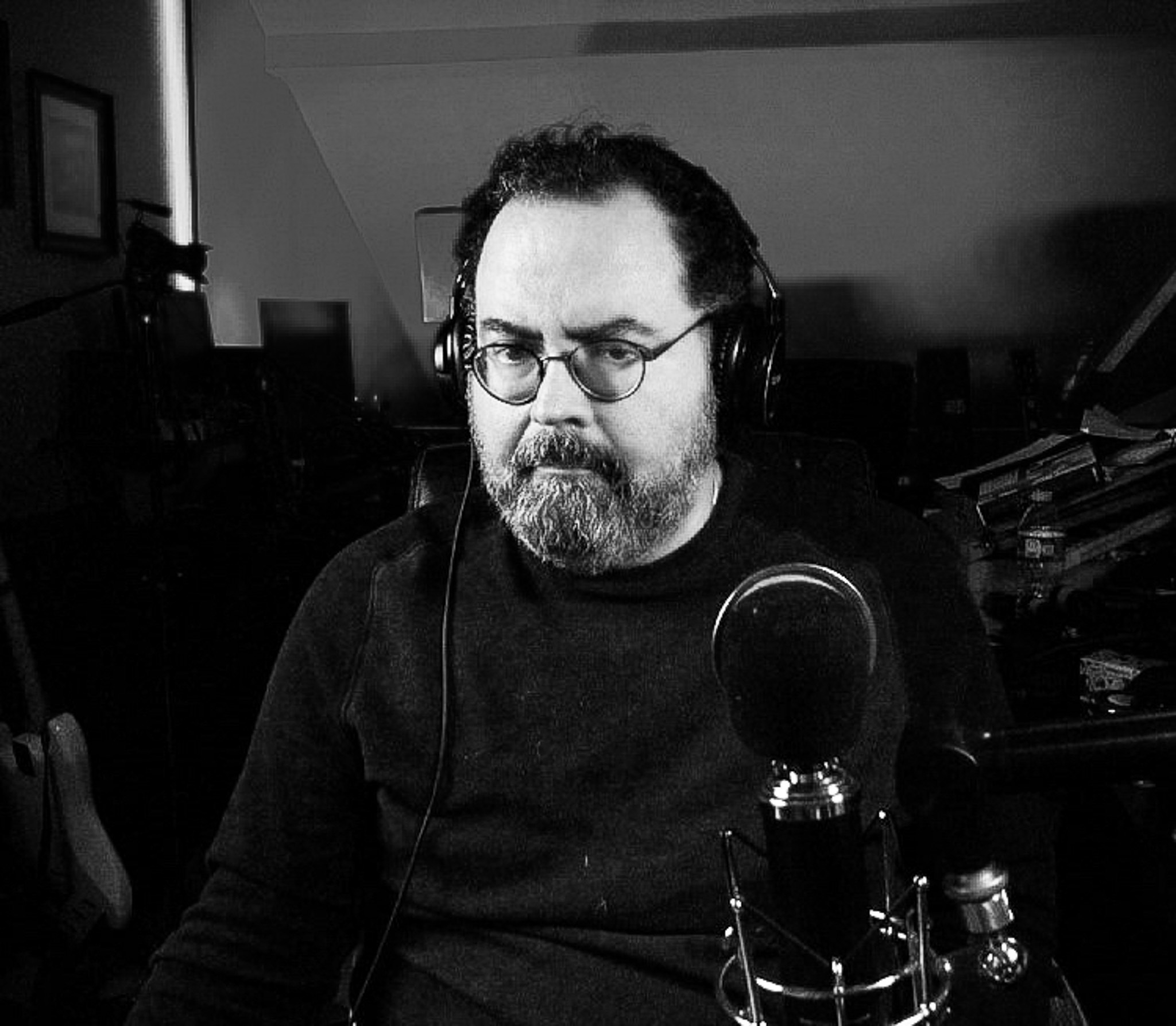
Gil Rosado, is a Writer, Musician, Composer & Polymath. His works include Visual Poems as well as traditional poems, philosophy, screenplays, stage plays, essays and fiction. Much of his eclectic works are informed and inspired by esoteric and overt religious themes. His Patheos.com articles are largely driven by his Christian beliefs and his knowledge of theology, philosophy and global religions. His new book "The Names We Wear" is now available exclusively on Amazon.com. You can read more about the author here.
Previous Post

March 10, 2024
Do You Recognize God In Your Bookstore? (Part II)
Next Post

April 6, 2024 Can You Find God In Your Bookstore (Part IV)
Browse Our Archives
Select a Category Uncategorized
Select a Month October 2026 July 2026 October 2025 September 2025 April 2024 March 2024 February 2024 January 2024 December 2023 November 2023 October 2023 September 2023
Follow Us!
TAKE THE
Religious Wisdom Quiz
According to 2 Peter, by what will the present heavens and earth be destroyed?
Select your answer to see how you score.
Earthquake and hail God's word Fire Water
Related posts from The Word in Evidence and Reviews
Family
I Asked AI to Preach a Sermon. Here's...
The Word in Evidence and Reviews
Family
The God Particle Hidden in Art and Music
The Word in Evidence and Reviews
Family
Do You Believe In Planet Earth?
The Word in Evidence and Reviews

Family
The Word in Evidence and Reviews
TRENDING AT PATHEOS History and Religion

Emotion in Early Christianity by Andrew Crislip
Andrew Crislip’s Emotion in Early Christianity examines an often overlooked dimension of...

16 Spiritual Touchstones for a More Grounded Life
After decades of spiritual study, here are 16 principles I try...

Catholic Evangelization: Sharing Your Faith Every Day
Welcome back to the Graceful Awakening mini-series called, “From Faith to Mission.” ...

The Pillar of the Boatmen: the Ancient Monument...
The Pillar of the Boatmen is a Romano-Gaulish sculpture that dates from...

In one sense walking into Westminster Abbey is like walking down the...

'Super Scam Me' Exposes AI Jon Bon Jovi...
Leslie Pickett believed she was in a relationship with Jon Bon Jovi....
view all History and Religion blogs
Ad-Free & Subscriber Log-In Subscription Support
- About Us
- 2026 Calendar
- Videos
- Podcasts
- Library of World Religions
- Faith In Media Tracker
- Advertise With Us
- Write for Us
- Privacy Policy
- Terms of Service
- Do Not Sell My Data
- Contact Us
- Radiant Digital
- Manage Newsletter Subscriptions
- Unsubscribe From Notifications
- Sitemap
Copyright 2008-2026, Patheos. All rights reserved.
Subscription Support Ad-Free & Subscriber Log-In
Follow Patheos