
BuddhistCatholicContemplativeEvangelicalGeneral ChristianHinduJewishLatter-day SaintMuslimNew VisionsProgressive Christian
Beliefs
- Buddhist
- Catholic
- Contemplative
- Evangelical
- General Christian
- Hindu
- Jewish
- Latter-day Saint
- More Voices
- Muslim
- New Visions
- Pagan
- Progressive Christian
Topics
- Religion News
- Food and Religion
- Sports and Religion
- Religious Art
- Religious Music and Entertainment
- Religious Events
- History and Religion
- Style and Religion
- Politics and Religion
- Women in Religion
- Recreation Outdoors and Religion
- Business Finance and Religion
- Careers Workplace and Religion
- Education and Religion
- Family Parenting and Religion
- Health Fitness and Religion
- Home and Religion
- Relationships and Religion
- Technology and Religion
- Travel and Religion
Columnists
- Buddhist Columnists
- Business Finance and Religion Columnists
- Careers Workplace and Religion Columnists
- Catholic Columnists
- Contemplative Columnists
- Education and Religion Columnists
- Evangelists Columnists
- Family Parenting and Religion Columnists
- General Christian Columnists
- Health Fitness and Religion Columnists
- Hindu Columnists
- History and Religion Columnists
- Home and Religion Columnists
- Jewish Columnists
- More Voices Columnists
- Latter Day Columnists
- Muslim Columnists
- New Visions Columnists
- Nonreligious Columnists
- Pagan Columnists
- Politics and Religion Columnists
- Progressive Columnists
- Recreation Outdoors and Religion Columnists
- Relationships and Religion Columnists
- Religion News Columnists
- Religious Art Columnists
- Religious Events Columnists
- Religious Music and Entertainment Columnists
- Sports and Religion Columnists
- Style and Religion Columnists
- Technology and Religion Columnists
- Travel and Religion Columnists
- Women in Religion Columnists
Resource Library
- 2026 Calendar
- Library of World Religions
- The 100 Most Holy Places on Earth
- Patheos Answers
- Podcasts
- Videos
- Faith Leaders Database
- Anglican Episcopalian
- Bahai
- Baptist
- Buddhism
- Christianity
- Confucianism
- Eastern Orthodoxy
- Hinduism
- Holiness and Pentecostal
- ISKCON
- Islam
- Judaism
- Lutheran
- Methodist
- The Church of Jesus Christ of Latter-day Saints
- New Age
- Paganism
- Presbytarian and Reformed
- Protestantism
- Religion Behind the Scenes
- Roman Catholic
- Scientology
- Shia Islam
- Sikhism
- Sufism
- Sunni Islam
- Taoism
- Zen
- See all religions
Research Tools
 Ad-Free & Subscriber Log-In Subscription Support
Ad-Free & Subscriber Log-In Subscription Support
Follow Patheos 

- Trending:
- Forgiveness
- |
- Marriage
- |
- Consciousness
- |
- Death Penalty
- |
- Election
- |
- Halloween

- Home
- General Christian
- History and Religion
- What is Faith?
What is Faith?
Last updated on: February 9, 2024 at 11:42 pm by Gil Rosado
What is Faith? 2024-02-09T23:42:08-05:00 Gil Rosado
Patheos Explore the world's faith through different perspectives on religion and spirituality! Patheos has the views of the prevalent religions and spiritualities of the world.
What is Faith?
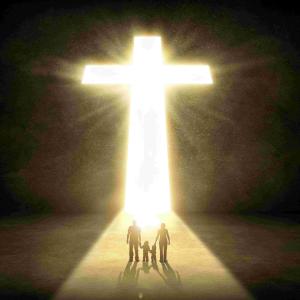
What is faith? In our current days, we hear the word “faith” tossed around in everything from God to man. Most often, the synonym for faith (trust) is used more often. How many of us are told to “trust the science”. Or, haven’t we all heard the famous U.S. Marine Corp battle cry/slogan “Semper Fidelis” which means “always faithful”. In our own USA, don’t we even label our currency with “In God We Trust”?
Some will argue that to have faith and trust are not the same or that one (trust) pertains to religious covenants while the other (trust) is not limited as such. However, there is really no discernable distinction between these synonyms. The technical definition of faith is to have complete confidence or trust in something or someone.
But, is it really possible in today’s age to completely have faith in anything within our technological revolution? Why should we even aspire to trust in anything with the abundance of information and data at the ready, just waiting at our fingertips?
But let’s take a step back and examine the inherent purpose of faith. After all, what is the benefit of trusting anything in the absence of imperfect information?
Let’s face it. In our current version of existence, in secular society, it’s pretty difficult to have faith in God. It is not “sold” to us in any venue or media outside of the church, synagogue or mosque. All we ever hear from the mass and social media is essentially the same message “We have to have faith in ourselves”.
The reason we are told to believe solely in ourselves has to do with 2 sociological trends in an inverse relationship. One the one hand is the secular philosophy that man is solely responsible for himself and for his actions. The other is a decline in religious worship. Depending upon where you live, these trends will be greater or less however, these only explain the declines in faith in the secular world.
It’s necessary to get back to our initial question on “what is faith?”. Faith is really a knowledge assumption or, more plainly put, it is a supplement to knowledge. Faith is thus part of the logic puzzle. It is part of how we all make decisions even today. Oh, we all like to think that we have sufficient and complete information when we make some of our “best guess” decisions don’t we?
Let’s just consider the relationship that faith plays within the construct of marriage. Getting married is often described as “taking a leap of faith” since both spouses make a decision to trust their combined futures and to spend the totality of their lives with each other despite the inevitable changes and circumstances that will affect their union.
And that’s just it. At the intersection or the crux of the mystery of faith is decision-making.
Faith is an acknowledgment that we don’t have the answers but we need to make assumptions and decisions based upon those assumptions in order to remain on the Earth.
Do you have faith in anything?
Many people do not admit to having faith. Perhaps some actually don’t. Some may have been raised without any sort of reason to have faith in anything. Some may have lost faith due to circumstances. What is important to note however is that all of us, at some point, in our darkest hour, will face something terrible that we cannot explain. What’s worse is that we will not be able to find an answer to the horrors that may stand before us.
Does Fear Cause Faith?
A lot of arm-chair preachers often talk of “fearing God” as the path to faith & glory. But is it really fear that is required?
Do we really need to be afraid of God in order to be faithful?
In a Judeo-Christian context, there are 13 instances where “fear God” is quoted within the Bible. However, there is a common misunderstanding of the terminology here in that “fear God” does not represent a phobia but rather a command to stand with God.
There is some room for contradictions here however which is the cause of the confusion. Let’s examine the following 2 Bible quotes on “fear”.
Psalm 111:10
The fear of the Lord is the beginning of wisdom; all those who practice it have a good understanding. His praise endures forever!
John 4:18
There is no fear in love, but perfect love casts out fear. For fear has to do with punishment, and whoever fears has not been perfected in love.
In the first quote from the Psalms, the “fear” represents allegiance or deference to the Lord whereas John’s quote shows the typical use of “fear” defined as apprehension. However, what is even more perplexing is that John states “whoever fears has not been perfected in love” which contradicts all the other verses advocating all believers to “fear God” aka “stand with God”.
Despite these biblical anomalies on “fear”, as I stated above, all of us will suffer some sort of desperate hour where we may come to a mountain of a decision.
It is at this hour that we can choose to trust in something greater than ourselves (God) and have faith or to choose to “believe solely in ourselves” and to lose our faith.
The Practice of Faith
Perhaps the last piece of the Faith puzzle is the practice of faith. Many of us inhabit a very secular existence with more emphasis on doing our jobs than with spiritually surviving. Maintaining a life with faith requires some regular acknowledgment that we are not solely responsible for everything that exists.
Ok, so maybe you don’t pray. You may not have this habit. Many people don’t. However, why not just take a look outside sometime and think. We didn’t create the Earth and we likely won’t see it’s passing.
And maybe your part of the Earth isn’t so green. Maybe it already seems like a den of lost hope.
But maybe you might see a bird in flight somewhere or maybe a newborn baby. Now, think for a moment.
Could you have created this design by yourself?
How much more “perfect information” do you really need?
General Christian
Contemplative
Education and Religion
About Gil Rosado
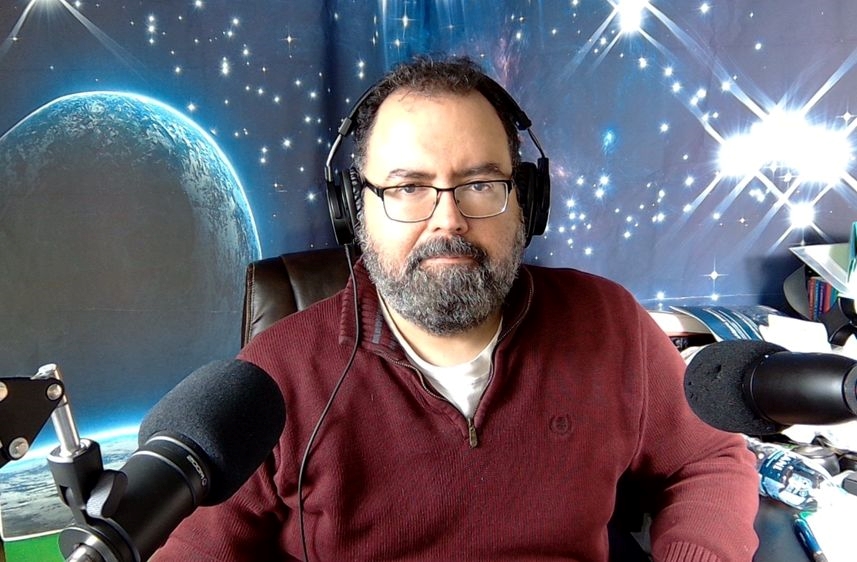
Gil Rosado, is a Writer, Musician, Composer & Polymath. His works include Visual Poems as well as traditional poems, philosophy, screenplays, stage plays, essays and fiction. Much of his eclectic works are informed and inspired by esoteric and overt religious themes. His Patheos.com articles are largely driven by his Christian beliefs and his knowledge of theology, philosophy and global religions. You can read more about the author here.
Previous Post

January 7, 2024
Idolatry - Don’t surround yourself with yourself
Next Post

January 21, 2024 Suffering vs Desire
Browse Our Archives
Select a Category Uncategorized
Select a Month October 2026 July 2026 October 2025 September 2025 April 2024 March 2024 February 2024 January 2024 December 2023 November 2023 October 2023 September 2023
Follow Us!
TAKE THE
Religious Wisdom Quiz
Which Roman centurion was the first Gentile baptized in Acts?
Select your answer to see how you score.
Julius Felix Cornelius Agrippa
Related posts from The Word in Evidence and Reviews
Family
I Asked AI to Preach a Sermon. Here's...
The Word in Evidence and Reviews
Family
The God Particle Hidden in Art and Music
The Word in Evidence and Reviews
Family
Do You Believe In Planet Earth?
The Word in Evidence and Reviews
Family
The Word in Evidence and Reviews
TRENDING AT PATHEOS History and Religion

The Problem with False Prophets
Miller’s Station UMC| 10/18/26| Anchor Verse: Jeremiah 23: 1, 9-23 I...

Emotion in Early Christianity by Andrew Crislip
Andrew Crislip’s Emotion in Early Christianity examines an often overlooked dimension of...

16 Spiritual Touchstones for a More Grounded Life
After decades of spiritual study, here are 16 principles I try...

Catholic Evangelization: Sharing Your Faith Every Day
Welcome back to the Graceful Awakening mini-series called, “From Faith to Mission.” ...

The Pillar of the Boatmen: the Ancient Monument...
The Pillar of the Boatmen is a Romano-Gaulish sculpture that dates from...

In one sense walking into Westminster Abbey is like walking down the...
view all History and Religion blogs
Ad-Free & Subscriber Log-In Subscription Support
- About Us
- 2026 Calendar
- Videos
- Podcasts
- Library of World Religions
- Faith In Media Tracker
- Advertise With Us
- Write for Us
- Privacy Policy
- Terms of Service
- Do Not Sell My Data
- Contact Us
- Radiant Digital
- Manage Newsletter Subscriptions
- Unsubscribe From Notifications
- Sitemap
Copyright 2008-2026, Patheos. All rights reserved.
Subscription Support Ad-Free & Subscriber Log-In
Follow Patheos