
BuddhistCatholicContemplativeEvangelicalGeneral ChristianHinduJewishLatter-day SaintMuslimNew VisionsProgressive Christian
Beliefs
- Buddhist
- Catholic
- Contemplative
- Evangelical
- General Christian
- Hindu
- Jewish
- Latter-day Saint
- More Voices
- Muslim
- New Visions
- Pagan
- Progressive Christian
Topics
- Religion News
- Food and Religion
- Sports and Religion
- Religious Art
- Religious Music and Entertainment
- Religious Events
- History and Religion
- Style and Religion
- Politics and Religion
- Women in Religion
- Recreation Outdoors and Religion
- Business Finance and Religion
- Careers Workplace and Religion
- Education and Religion
- Family Parenting and Religion
- Health Fitness and Religion
- Home and Religion
- Relationships and Religion
- Technology and Religion
- Travel and Religion
Columnists
- Buddhist Columnists
- Business Finance and Religion Columnists
- Careers Workplace and Religion Columnists
- Catholic Columnists
- Contemplative Columnists
- Education and Religion Columnists
- Evangelists Columnists
- Family Parenting and Religion Columnists
- General Christian Columnists
- Health Fitness and Religion Columnists
- Hindu Columnists
- History and Religion Columnists
- Home and Religion Columnists
- Jewish Columnists
- More Voices Columnists
- Latter Day Columnists
- Muslim Columnists
- New Visions Columnists
- Nonreligious Columnists
- Pagan Columnists
- Politics and Religion Columnists
- Progressive Columnists
- Recreation Outdoors and Religion Columnists
- Relationships and Religion Columnists
- Religion News Columnists
- Religious Art Columnists
- Religious Events Columnists
- Religious Music and Entertainment Columnists
- Sports and Religion Columnists
- Style and Religion Columnists
- Technology and Religion Columnists
- Travel and Religion Columnists
- Women in Religion Columnists
Resource Library
- 2026 Calendar
- Library of World Religions
- The 100 Most Holy Places on Earth
- Patheos Answers
- Podcasts
- Videos
- Faith Leaders Database
- Anglican Episcopalian
- Bahai
- Baptist
- Buddhism
- Christianity
- Confucianism
- Eastern Orthodoxy
- Hinduism
- Holiness and Pentecostal
- ISKCON
- Islam
- Judaism
- Lutheran
- Methodist
- The Church of Jesus Christ of Latter-day Saints
- New Age
- Paganism
- Presbytarian and Reformed
- Protestantism
- Religion Behind the Scenes
- Roman Catholic
- Scientology
- Shia Islam
- Sikhism
- Sufism
- Sunni Islam
- Taoism
- Zen
- See all religions
Research Tools
 Ad-Free & Subscriber Log-In Subscription Support
Ad-Free & Subscriber Log-In Subscription Support
Follow Patheos 

- Trending:
- Forgiveness
- |
- Marriage
- |
- Consciousness
- |
- Death Penalty
- |
- Election
- |
- Halloween

- Home
- General Christian
- History and Religion
- Remaining Faithful in a Postmodern World
Remaining Faithful in a Postmodern World
Last updated on: December 24, 2023 at 11:48 am by Gil Rosado
Remaining Faithful in a Postmodern World 2023-12-24T11:48:10-05:00 Gil Rosado
Patheos Explore the world's faith through different perspectives on religion and spirituality! Patheos has the views of the prevalent religions and spiritualities of the world.
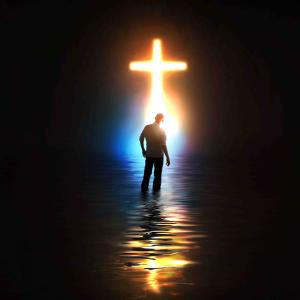
How to Remain Faithful
The post-modern world which has, especially in recent years, influenced 21st century pop culture in general, frequently challenges the viability of all religions and their foundational sacred texts. The post-modernist movement essentially adheres to the notion that there is no universal truth or reality and that the only reality or “truth” is what an individual constructs in their own head.
What began mostly as evolution from existentialist and modernist philosophical movement in the 20th century has since morphed into somewhat of a disastrous and digressive assault on the development of knowledge and especially on religious knowledge. In a prior article “Did We Create God?“, I have stated that where there is no universal truth, there can be no religion or God. If we become simultaneous creators and arbitrators of reality, we can’t really follow any religious paradigms. And that is exactly what advocates of post-modernity want. Post-modernity envisions a world where man is central to his/her own reality.
Where then, will this philosophical “end-game” play out in the coming years? Will all religions face eventual extinction at the hand of this sort of atheist counter-philosophy?
If we take a birds-eye view of what is really happening across the globe, we will see some shifts between religions as well as increases and declines therein. There are indeed changes of religious faith due to a variety of factors which are both man-made such as those which are philosophically based, migration, and socio-political/economic conditions as well as others which are founded in religious paradigms themselves.
It is indeed surprising but true that certain narratives within the sacred texts themselves, when not realizable or in evidence within modern day society, serve to undermine their belief. For example, in the case of all three Abrahamic religions, there is never ending “Messiah Problem”. Regardless of whether one is a Christian, Jew or Muslim, followers of today are either awaiting the first or the second coming of the Messiah. Followers of all three faiths do their best to remain faithful despite knowing that, at least within their current human state of being, they may never see the Messiah within their lifespans.
There is however an inherent problem with the concept of “waiting for the Messiah” or awaiting anything for many years. Despite all the religious teaching, despite all the rituality of worship, despite all the preaching and prayer to align oneself as a believer, blind faith, in the absence of witness to the Messiah, is a very difficult sell when most of us maintain our labor and toils under secular government within a pop culture.
And while strong arguments can be made to use our knowledge and perception of the orderly world and the broad, beautiful, balanced universe as absolute testament and evidence of God, eyewitness testimony of Him is needed to serve to align and promote deference to a god greater than ourselves to solidify our belief therein.
Gambling with End of Days Prophecy
As stated earlier, most of us will not experience the return of the Messiah in our human lifetime. We will not experience the fiery battle and judgment on Earth that is central to eschatological prophecy. Oh, we do see and hear many a populist modern-day prophet trying to connect the “end of time” dots between the Bible and actual modern day events. But as they try to gamble or book odds on specifically when the war between good and evil will commence and end, most of us are just trying to make sense of how to remain in faith in the meantime.
The Books of Wisdom
When I started to really delve into reading the Bible, I had many questions as I was approaching my study from a secular, empirical point of view. I found many contradictions, many inconsistencies and many anomalies within the sacred scriptures. I came to realize that despite these differences, there remained only three things I needed to understand in order to remain faithful.
What is Vanity and How Can I Navigate Away From It?
My first true reading of the Bible seemed like a lot of front loaded content commencing with the books of Genesis which seemed like the foundational history of creation. However, it was when I got to the Book of Ecclesiastes that everything else made sense. Perhaps the most important book within the Old Testament, the Book of Ecclesiastes really could’ve been written in this or any age to address what typically happens to us when we steer away from God and digress into vain things and purposes. The literal meaning of “vanity” is essentially to stray from the path of God. Ecclesiastes thus advocates a transcendence of wealth, and really anything of earthly desire into an understanding that other than God, all other objectives and attainments are just vanity.
This is not to say that noble endeavors are atheist but rather that such endeavors and goals must include God in the project in some way otherwise, they serve no purpose and eventually leave our souls dissatisfied and empty.
How to Live with Suffering and Pain?
In a prior article “Why Do People Reject Religion?“, I had talked about the question of suffering and how this question has caused many believers to lose faith. The Book of Job is again, one of the great books of the Old Testament that transcends time. It is nothing more than the story of a man’s great suffering, crying out to God in desperation, and then regaining what he had lost and solidifying his faith. If nothing else, every human should read this book as every human suffers some type of horror within their lifetime and they may learn how to cope and understand how to live faithfully in times of great suffering.
What is the Totality of the Message of the Bible?
If you’re like many churchgoers, you may have questioned the snippets of verses you’ve received over the years by priests and ministers or maybe even by your close associates or neighbors. It’s fine to quote and to discuss specific scriptures but it is more important to understand that the totality of the “message” of the bible is that we’re not simply following books of laws or limits but we have a purpose on this Earth and that this, our collective story, has a beginning, a middle and an end via the return of the Messiah. We are just not a point in time but yet we are not all created within the same time. We are however, created to remain faithful until this, our whole story is complete.
General Christian
Contemplative
Education and Religion
About Gil Rosado
Gil Rosado, is a Writer, Musician, Composer & Polymath. His works include Visual Poems as well as traditional poems, philosophy, screenplays, stage plays, essays and fiction. Much of his eclectic works are informed and inspired by esoteric and overt religious themes. His Patheos.com articles are largely driven by his Christian beliefs and his knowledge of theology, philosophy and global religions. You can read more about the author here.
Previous Post

December 10, 2023
Maybe You Can Be A Prophet
Next Post

December 24, 2023 Baby, It's Cold Outside
Recent Comments
Browse Our Archives
Select a Category Uncategorized
Select a Month October 2026 July 2026 October 2025 September 2025 April 2024 March 2024 February 2024 January 2024 December 2023 November 2023 October 2023 September 2023
Follow Us!
TAKE THE
Religious Wisdom Quiz
Who said, "As for me, I know that my redeemer lives"?
Select your answer to see how you score.
Moses Joseph Abraham Job
Related posts from The Word in Evidence and Reviews

Family
I Asked AI to Preach a Sermon. Here's...
The Word in Evidence and Reviews
Family
The God Particle Hidden in Art and Music
The Word in Evidence and Reviews
Family
Do You Believe In Planet Earth?
The Word in Evidence and Reviews

Family
The Word in Evidence and Reviews
TRENDING AT PATHEOS History and Religion

16 Spiritual Touchstones for a More Grounded Life
After decades of spiritual study, here are 16 principles I try...

Catholic Evangelization: Sharing Your Faith Every Day
Welcome back to the Graceful Awakening mini-series called, “From Faith to Mission.” ...

The Pillar of the Boatmen: the Ancient Monument...
The Pillar of the Boatmen is a Romano-Gaulish sculpture that dates from...

In one sense walking into Westminster Abbey is like walking down the...

'Super Scam Me' Exposes AI Jon Bon Jovi...
Leslie Pickett believed she was in a relationship with Jon Bon Jovi....

The Brazilian Remake of Kendricks' 'Flywheel' Opens in...
“Flywheel,” the story that launched the Kendrick Brothers’ filmmaking career is getting...
view all History and Religion blogs
Ad-Free & Subscriber Log-In Subscription Support
- About Us
- 2026 Calendar
- Videos
- Podcasts
- Library of World Religions
- Faith In Media Tracker
- Advertise With Us
- Write for Us
- Privacy Policy
- Terms of Service
- Do Not Sell My Data
- Contact Us
- Radiant Digital
- Manage Newsletter Subscriptions
- Unsubscribe From Notifications
- Sitemap
Copyright 2008-2026, Patheos. All rights reserved.
Subscription Support Ad-Free & Subscriber Log-In
Follow Patheos