
BuddhistCatholicContemplativeEvangelicalGeneral ChristianHinduJewishLatter-day SaintMuslimNew VisionsProgressive Christian
Beliefs
- Buddhist
- Catholic
- Contemplative
- Evangelical
- General Christian
- Hindu
- Jewish
- Latter-day Saint
- More Voices
- Muslim
- New Visions
- Pagan
- Progressive Christian
Topics
- Religion News
- Food and Religion
- Sports and Religion
- Religious Art
- Religious Music and Entertainment
- Religious Events
- History and Religion
- Style and Religion
- Politics and Religion
- Women in Religion
- Recreation Outdoors and Religion
- Business Finance and Religion
- Careers Workplace and Religion
- Education and Religion
- Family Parenting and Religion
- Health Fitness and Religion
- Home and Religion
- Relationships and Religion
- Technology and Religion
- Travel and Religion
Columnists
- Buddhist Columnists
- Business Finance and Religion Columnists
- Careers Workplace and Religion Columnists
- Catholic Columnists
- Contemplative Columnists
- Education and Religion Columnists
- Evangelists Columnists
- Family Parenting and Religion Columnists
- General Christian Columnists
- Health Fitness and Religion Columnists
- Hindu Columnists
- History and Religion Columnists
- Home and Religion Columnists
- Jewish Columnists
- More Voices Columnists
- Latter Day Columnists
- Muslim Columnists
- New Visions Columnists
- Nonreligious Columnists
- Pagan Columnists
- Politics and Religion Columnists
- Progressive Columnists
- Recreation Outdoors and Religion Columnists
- Relationships and Religion Columnists
- Religion News Columnists
- Religious Art Columnists
- Religious Events Columnists
- Religious Music and Entertainment Columnists
- Sports and Religion Columnists
- Style and Religion Columnists
- Technology and Religion Columnists
- Travel and Religion Columnists
- Women in Religion Columnists
Resource Library
- 2026 Calendar
- Library of World Religions
- The 100 Most Holy Places on Earth
- Patheos Answers
- Podcasts
- Videos
- Faith Leaders Database
- Anglican Episcopalian
- Bahai
- Baptist
- Buddhism
- Christianity
- Confucianism
- Eastern Orthodoxy
- Hinduism
- Holiness and Pentecostal
- ISKCON
- Islam
- Judaism
- Lutheran
- Methodist
- The Church of Jesus Christ of Latter-day Saints
- New Age
- Paganism
- Presbytarian and Reformed
- Protestantism
- Religion Behind the Scenes
- Roman Catholic
- Scientology
- Shia Islam
- Sikhism
- Sufism
- Sunni Islam
- Taoism
- Zen
- See all religions
Research Tools
 Ad-Free & Subscriber Log-In Subscription Support
Ad-Free & Subscriber Log-In Subscription Support
Follow Patheos 

- Trending:
- Forgiveness
- |
- Marriage
- |
- Consciousness
- |
- Death Penalty
- |
- Election
- |
- Halloween

- Home
- General Christian
- History and Religion
- Does the Catholic Mass Need an Upgrade?
Does the Catholic Mass Need an Upgrade?
Last updated on: November 11, 2023 at 4:22 pm by Gil Rosado
Does the Catholic Mass Need an Upgrade? 2023-11-11T16:22:47-05:00 Gil Rosado
Patheos Explore the world's faith through different perspectives on religion and spirituality! Patheos has the views of the prevalent religions and spiritualities of the world.
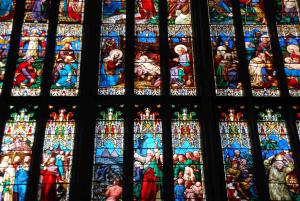
Does The Catholic Mass Need Changes?
There has been much in the way of recent talk of whether the Catholic church needs to undergo a Vatican III reform initiative. The proponents of a 3rd Vatican council on potential changes & reforms argue that such changes are needed to ensure that the church maintains its relevance and strength in the modern world. The Pope has, as of this writing, rejected any movement towards having a Vatican III since some of the reforms suggested during Vatican II in 1965 have yet to be implemented.
Regardless of the status of Vatican III, many Christians agree that some levels of changes are needed within the current rituals, purposes and objectives under the Catholic church domain.
In a prior article “Why Do People Reject Religion?“, I wrote that the Problem of Evil holds great responsibility for some of the decline in church attendance and Christian faith but there is indeed another culprit. The reconciliation of Christianity with one’s life may seem like a contradiction in terms. After all, the Bible is the manual for life, isn’t it? However, the problem relates to the synchronicity between Christian principles and the modern world. More plainly put, how should today’s people understand and reconcile living in today’s largely secular society while using Christianity as their social “GPS” navigator?
However, the problem with such reconciliation is not the Bible so much as it is its contemporary messengers and their over-emphasis on ritual over reconciliation.
This is especially true within the Catholic mass. Walk into any Catholic church on any Sunday and you’ll be greeted with the following hour-long agenda with rituals and readings that seldom vary from week to week.
(Reference: United States Bishops order of the Catholic Mass)
-
THE INTRODUCTORY RITES
- Entrance
- Greeting
- Penitential Act
- Glory to God
- Collect
-
LITURGY OF THE WORD
- First Reading
- Responsorial Psalm
- Second Reading (on Sundays and solemnities)
- Gospel Acclamation
- Gospel
- Homily
- Profession of Faith (on Sundays, solemnities, and special occasions)
- Universal Prayer, Nicene Creed or Apostles Creed
-
THE LITURGY OF THE EUCHARIST
- Presentation of the Gifts and Preparation of the Altar
- Prayer over the Offerings
- Eucharistic Prayer
- Preface
- Holy, Holy, Holy
- First half of prayer, including Consecration
- Mystery of Faith
- Second half of prayer, ending with Doxology
- The Lord’s Prayer
- Sign of Peace
- Lamb of God
- Communion
- Prayer after Communion
-
THE CONCLUDING RITES
- Announcements & Final Blessings
- Dismissal
The modern structure shown above has been in place since Vatican II. In its defense, the objective of the Catholic mass is to renew the covenant with God on at least a weekly basis. It leans heavily on “rituality” as it is more of an acknowledgement of faith and a promise to remain in Christian faith by prayer, by receiving the Eucharist (which represents the body of Christ).
The question here is whether such a weekly renewal of faith should be revamped to reduce the rituals and to place more emphasis on providing practical Christian-based guidance to people undergoing varied personal, social, health and economic challenges.
This brings into question the role that the Catholic church and really the role that any religious faith should play in the lives of everyday people struggling with the conflicts of the contemporary secular environment.
The Bible is ripe with rules for living and getting through the most difficult of times yet much of this content is only sparsely referred to within the priest’s homily at the mass. Many of the most important books of the Bible are even ignored altogether as much of the readings take small pieces of the 4 gospels and leave many churchgoers puzzled about why they really need to read the Bible in its entirety and reference its other content as well.
While many will argue that churchgoers interested in Bible study should find a church that teaches this during daily masses, weeknight masses or else on Sundays before the mass. They further defend the current format of the mass as more important for reaffirming faith and for maintaining reverence to God.
Thus, the Catholic mass, although heavily steeped with Biblical inspiration, is not really thought of as an enlightening activity where believers learn to reflect or actually learn Biblical principles. However, there are some problems with the mass format in practice and its failure to address the reasons for declines in attendance.
In the 21st century, people, believers or not, want and need answers. Ours is no longer a world of blind faith or “sheep-like” reverence to God. That may sound like an arrogant comment, and it probably is. However, it is no less true. We, all of us, believers or not, face secular and atheist challenges to God nearly on a daily basis.
Is God Under Attack?
To be clear, it is not really God that is being attacked but rather the practice of Christian worship that faces an existential threat from the stressors of the world in which we live. Along with the often-decadent toils and spoils of everyday secular living, our daily news is filled with horrors of modern crimes, corruption and wars on multiple shores. The same sins are being committed much like a cyclical rerun with no mention of Jesus or God anywhere in sight. No one calls us to go to worship. No one outside of the church calls upon us to pray.
The responsibility of faith, if we have any, lies within ourselves.
Thus, a Catholic mass solely of reverence is simply not working. Weekly, repetitious self-reminders of God and ritual is simply an incomplete path for both fully understanding one’s covenant and for accepting it. For if we read between the lines and search for the mission of the mass, we will realize that reverence and reaffirmation of our covenants means nothing if we do not live with the totality of God’s message.
Thus, an understanding of the Bible in this quasi-dystopian modern world is not only critical to boost church attendance but it is also key to maintaining the covenant and to live as responsible Christians.
The Problem of Biblical Distortion
All knowledge, including Christian knowledge is subject to error and loss of information. Not all Christians have the time to attend additional Bible studies during the week. This can and does cause Biblical distortion where the uninformed mistakenly repeat Bible content erroneously based on their incorrect interpretation.
The Bible itself warns against “distortion” in 2nd Peter 3:15-16 which states:
15 … Paul also wrote you with the wisdom that God gave him. 16 He writes the same way in all his letters, speaking in them of these matters. His letters contain some things that are hard to understand, which ignorant and unstable people distort, as they do the other Scriptures, to their own destruction.
What can the Catholic Church learn from other Christian denominations?
While a complete comparison between Catholicism and Other Christian denominations is beyond the scope of this article, it is worthy to note that when compared to other Sunday Protestant church services, the Catholic mass is the least “Bible-centric” service in that current format of the mass is designed to provide readings to church-goers from the Bible over a 3 year period and the totality of the 66 books is not usually covered completely via the mass or a consistent Bible reading services offered for adults.
While this article is not intended as a Calvinist or Lutheran moment, the purpose here is rather to point out some needed changes within the Catholic mass and ancillary services so that Catholics can receive a greater understanding of the covenant and of their faith.
General Christian
Catholic
Previous Post

November 4, 2023
Why Socialism Isn't In Sync with God
Next Post

November 18, 2023 Ancient Alien Theories, UFOs and God
Recent Comments
Browse Our Archives
Select a Category Uncategorized
Select a Month October 2026 July 2026 October 2025 September 2025 April 2024 March 2024 February 2024 January 2024 December 2023 November 2023 October 2023 September 2023
Follow Us!
TAKE THE
Religious Wisdom Quiz
Which Roman centurion was the first Gentile baptized in Acts?
Select your answer to see how you score.
Julius Felix Cornelius Agrippa
Related posts from The Word in Evidence and Reviews
Family
I Asked AI to Preach a Sermon. Here's...
The Word in Evidence and Reviews
Family
The God Particle Hidden in Art and Music
The Word in Evidence and Reviews

Family
Do You Believe In Planet Earth?
The Word in Evidence and Reviews
Family
The Word in Evidence and Reviews
TRENDING AT PATHEOS History and Religion

The Problem with False Prophets
Miller’s Station UMC| 10/18/26| Anchor Verse: Jeremiah 23: 1, 9-23 I...

Emotion in Early Christianity by Andrew Crislip
Andrew Crislip’s Emotion in Early Christianity examines an often overlooked dimension of...

16 Spiritual Touchstones for a More Grounded Life
After decades of spiritual study, here are 16 principles I try...

Catholic Evangelization: Sharing Your Faith Every Day
Welcome back to the Graceful Awakening mini-series called, “From Faith to Mission.” ...

The Pillar of the Boatmen: the Ancient Monument...
The Pillar of the Boatmen is a Romano-Gaulish sculpture that dates from...

In one sense walking into Westminster Abbey is like walking down the...
view all History and Religion blogs
Ad-Free & Subscriber Log-In Subscription Support
- About Us
- 2026 Calendar
- Videos
- Podcasts
- Library of World Religions
- Faith In Media Tracker
- Advertise With Us
- Write for Us
- Privacy Policy
- Terms of Service
- Do Not Sell My Data
- Contact Us
- Radiant Digital
- Manage Newsletter Subscriptions
- Unsubscribe From Notifications
- Sitemap
Copyright 2008-2026, Patheos. All rights reserved.
Subscription Support Ad-Free & Subscriber Log-In
Follow Patheos