
BuddhistCatholicContemplativeEvangelicalGeneral ChristianHinduJewishLatter-day SaintMuslimNew VisionsProgressive Christian
Beliefs
- Buddhist
- Catholic
- Contemplative
- Evangelical
- General Christian
- Hindu
- Jewish
- Latter-day Saint
- More Voices
- Muslim
- New Visions
- Pagan
- Progressive Christian
Topics
- Religion News
- Food and Religion
- Sports and Religion
- Religious Art
- Religious Music and Entertainment
- Religious Events
- History and Religion
- Style and Religion
- Politics and Religion
- Women in Religion
- Recreation Outdoors and Religion
- Business Finance and Religion
- Careers Workplace and Religion
- Education and Religion
- Family Parenting and Religion
- Health Fitness and Religion
- Home and Religion
- Relationships and Religion
- Technology and Religion
- Travel and Religion
Columnists
- Buddhist Columnists
- Business Finance and Religion Columnists
- Careers Workplace and Religion Columnists
- Catholic Columnists
- Contemplative Columnists
- Education and Religion Columnists
- Evangelists Columnists
- Family Parenting and Religion Columnists
- General Christian Columnists
- Health Fitness and Religion Columnists
- Hindu Columnists
- History and Religion Columnists
- Home and Religion Columnists
- Jewish Columnists
- More Voices Columnists
- Latter Day Columnists
- Muslim Columnists
- New Visions Columnists
- Nonreligious Columnists
- Pagan Columnists
- Politics and Religion Columnists
- Progressive Columnists
- Recreation Outdoors and Religion Columnists
- Relationships and Religion Columnists
- Religion News Columnists
- Religious Art Columnists
- Religious Events Columnists
- Religious Music and Entertainment Columnists
- Sports and Religion Columnists
- Style and Religion Columnists
- Technology and Religion Columnists
- Travel and Religion Columnists
- Women in Religion Columnists
Resource Library
- 2026 Calendar
- Library of World Religions
- The 100 Most Holy Places on Earth
- Patheos Answers
- Podcasts
- Videos
- Faith Leaders Database
- Anglican Episcopalian
- Bahai
- Baptist
- Buddhism
- Christianity
- Confucianism
- Eastern Orthodoxy
- Hinduism
- Holiness and Pentecostal
- ISKCON
- Islam
- Judaism
- Lutheran
- Methodist
- The Church of Jesus Christ of Latter-day Saints
- New Age
- Paganism
- Presbytarian and Reformed
- Protestantism
- Religion Behind the Scenes
- Roman Catholic
- Scientology
- Shia Islam
- Sikhism
- Sufism
- Sunni Islam
- Taoism
- Zen
- See all religions
Research Tools
 Ad-Free & Subscriber Log-In Subscription Support
Ad-Free & Subscriber Log-In Subscription Support
Follow Patheos 

- Trending:
- Forgiveness
- |
- Marriage
- |
- Consciousness
- |
- Death Penalty
- |
- Election
- |
- Halloween
 The Wondering Jew
- Home
- Jewish
- Family, Parenting and Religion
- Joseph’s Lesson: Being Present & Breaking the Cycle
Joseph’s Lesson: Being Present & Breaking the Cycle
Last updated on: December 19, 2024 at 11:49 pm by Rabbi David Feder
Joseph’s Lesson: Being Present & Breaking the Cycle 2024-12-19T23:49:22-05:00 Rabbi David Feder
Patheos Explore the world's faith through different perspectives on religion and spirituality! Patheos has the views of the prevalent religions and spiritualities of the world.

Breaking Bad Cycles: Family Dysfunction Across Generations
We all know a Joseph. Not a person named Joseph, I’m sure most of us know one of those. I mean someone like the biblical Joseph. I don’t mean the older, powerful, second-in-command of Egypt, Joseph. I mean the younger, spoiled, obnoxious, completely lacking in self-awareness and humility Joseph. The one whose very existence inspires thoughts and dreams of homicide or at least of a dark and disturbing fate.
We’ve had to suffer through at least one Joseph in school or work or sometimes even family. There’s even the Joseph in our neighborhood when we were growing up that we had to play with because even his dog couldn’t put up with him. And, admittedly, in some cases, the person
in question is more of a Josephine than a Joseph.
A Brother Named Joseph
The biblical Joseph was the next-to-youngest child born to Jacob. The first-born child of Jacob’s favorite wife, Rachel, was almost from birth favored over the children of Leah, Bilhah, and Zilpah. He was even preferred over his youngest full brother, Benjamin, whose birth led to their mother’s death.
The older brothers’ difficulties with Joseph came from several different sources. Their father obviously favored Joseph over them, gifting him with an ornamental tunic, or coat of many colors as it is more popularly known. Joseph was also coddled, helping the sons of Bilhah and Zilpah, rather than taking on full shepherding responsibilities. He was also a tattletale, delighting in bringing back bad reports to their father.
To make matters worse, Joseph shared his dreams. In one, sheaves of wheat belonging to his brothers bowed down to his own sheaf of wheat. After that dream received a somewhat chilly reception, rather than keeping matters to himself, he shared his next dream as well. In that one, the sun, moon, and eleven stars were bowing down to him.
One day, the spoiled child of privilege was sent out by Jacob to find his brothers and report back on them and the status of the flocks. Joseph heads to where he thinks his brothers are, near Shechem, but they’re not there. A man in the middle of nowhere finds him wandering in the fields and asks what he’s looking for. Joseph says he’s looking for his brothers and the man coincidentally overheard them saying they were heading toward Dothan.
As Joseph moves onto the right path, the brothers see “that dreamer” heading toward them and they conspire to kill him. Well, most of them do. Reuben says, let’s shed no blood ourselves; throw him into a pit and let nature take its course. So, they strip him of the pretty tunic and throw him into the pit. Reuben intends to go back later and free him, but during lunch, Judah sees a caravan of Ishmaelite traders and comes up with the idea that we can sell him to the Ishmaelites, be free of him, and make a profit. Reuben, who for some reason is working through lunch, comes back, sees the empty pit and thinks, what are we going to do now? Dipping the tunic in lamb’s blood, he concocts the story of Joseph being killed by a wild animal to offer an explanation to their father of Joseph’s fate. The remainder of Genesis, thirteen chapters, is devoted to the life of Joseph.
Biblical Dysfunction
One can understand the antipathy the brothers felt toward Joseph, even if they took matters too far. While they are completely responsible for their actions, a root cause of the problem is generational family dysfunction. Isaac and Ishmael quarreled (and their descendants still haven’t stopped). Sarah wanted the possibility of Ishmael’s succession quashed, leading to Abraham reluctantly expelling Ishmael. Jacob and Esau didn’t get along, with Rebekkah favoring Jacob, and Isaac, Esau. The enmity continued for centuries until eventually Esau’s descendant, Herod, ended up ruling over Jacob’s descendants. Once again, that didn’t work out very well for anyone. After several generations, dysfunction becomes the norm. Plotting, deceit, and secret plans are normalized. By the era of Jacob’s children, how else would you deal with a problem sibling other than death or exile?
Contemporary Applications
The failure to address real problems, generation after generation, is still with us. How often have we witnessed one generation learning the wrong lessons from the previous generation. We’ve seen cycles of violence, substance abuse, poverty, racism, and more because “that’s just how things have always been”.
Sometimes it takes a dramatic act to break the cycle. Joseph’s descent into Egypt and subsequent rise within Pharaoh’s court was able to give him a different way of looking at the world and at family. He made conscious decisions to test his brothers and see if they had changed. When they later stand up for Benjamin and refuse to abandon him, he realizes that they aren’t the same people who sold him into slavery and so reveals himself to them.
Sometimes change begins with a simple, completely ordinary act. If Joseph had not seen the unnamed stranger in the field or the stranger hadn’t overheard the brothers, Joseph might have returned home and who knows what might have happened next.
These seemingly random acts have the capacity to create tremendous change, but we have to be aware and willing to respond to them. When Jacob called on Joseph to send him to check on his brothers, Joseph’s response was “Hineni – Here I am.” Hineni is about more than just being physically present, it’s also about being spiritually and emotionally ready to act. It is Abraham’s response when God asks him to sacrifice Isaac and Moses’ at the burning bush.
Joseph was ready for change. I don’t think he could have even imagined the path he would take. But he responded to his father and responded to the stranger which led him down his own road. We still have opportunities and choices before us every day. Let us be ready to respond and break the cycles to “it’s always been that way.” Who knows, maybe our Joseph is there as the stimulus for change.
Family, Parenting and Religion
Previous Post
December 12, 2024
Jacob, Esau, and Lessons for the Holiday Season
Next Post

December 24, 2024 Chanukah: Minor Holiday or Source of Identity?
Recent Comments
"I verymuch enjoyed this article, thanks!"
Sukkot: Shelters of Vulnerability
Browse Our Archives
Select a Category Uncategorized
Select a Month December 2024 November 2024 October 2024 September 2024
TAKE THE
Religious Wisdom Quiz
What animal is mentioned in Proverbs as having little strength but great wisdom?
Select your answer to see how you score.
Lion Ant Ox Bear
Related posts from The Wondering Jew
Chanukah: Minor Holiday or Source of Identity?
Jacob, Esau, and Lessons for the Holiday Season
Confronting Fear: A Journey toward Adulting and Growth
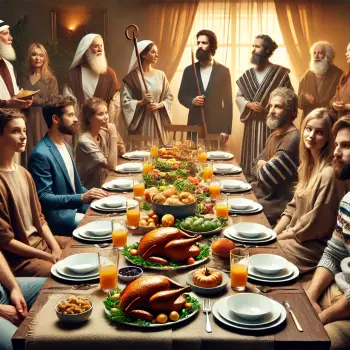
Thanksgiving: Family Dynamics Today and in Biblical Times
TRENDING AT PATHEOS Jewish

Building a Little Ark in a Frightening World
This past Shabbat, we read about Noah. I love this story. The...

Yom Kippur : Is There Always Room for...
Making Room for Forgiveness Every year as Yom Kippur approaches, I find...

This Rosh Hashanah: Can I Find New Meaning?
A Sunrise, a New Year, and a Question On our way to...

Killing Amalek: The Torah’s Most Misunderstood Commandment
Few passages of the Torah have provoked more confusion, polemic, and misuse...

I have never trusted a first draft. I don’t mean that...

Back to School, Back to Reality—and a New...
A New School Year Begins… Back to Reality A new school year...
view all Jewish blogs
Ad-Free & Subscriber Log-In Subscription Support
- About Us
- 2026 Calendar
- Videos
- Podcasts
- Library of World Religions
- Faith In Media Tracker
- Advertise With Us
- Write for Us
- Privacy Policy
- Terms of Service
- Do Not Sell My Data
- Contact Us
- Radiant Digital
- Manage Newsletter Subscriptions
- Unsubscribe From Notifications
- Sitemap
Copyright 2008-2026, Patheos. All rights reserved.
Subscription Support Ad-Free & Subscriber Log-In
Follow Patheos