
BuddhistCatholicContemplativeEvangelicalGeneral ChristianHinduJewishLatter-day SaintMuslimNew VisionsProgressive Christian
Beliefs
- Buddhist
- Catholic
- Contemplative
- Evangelical
- General Christian
- Hindu
- Jewish
- Latter-day Saint
- More Voices
- Muslim
- New Visions
- Pagan
- Progressive Christian
Topics
- Religion News
- Food and Religion
- Sports and Religion
- Religious Art
- Religious Music and Entertainment
- Religious Events
- History and Religion
- Style and Religion
- Politics and Religion
- Women in Religion
- Recreation Outdoors and Religion
- Business Finance and Religion
- Careers Workplace and Religion
- Education and Religion
- Family Parenting and Religion
- Health Fitness and Religion
- Home and Religion
- Relationships and Religion
- Technology and Religion
- Travel and Religion
Columnists
- Buddhist Columnists
- Business Finance and Religion Columnists
- Careers Workplace and Religion Columnists
- Catholic Columnists
- Contemplative Columnists
- Education and Religion Columnists
- Evangelists Columnists
- Family Parenting and Religion Columnists
- General Christian Columnists
- Health Fitness and Religion Columnists
- Hindu Columnists
- History and Religion Columnists
- Home and Religion Columnists
- Jewish Columnists
- More Voices Columnists
- Latter Day Columnists
- Muslim Columnists
- New Visions Columnists
- Nonreligious Columnists
- Pagan Columnists
- Politics and Religion Columnists
- Progressive Columnists
- Recreation Outdoors and Religion Columnists
- Relationships and Religion Columnists
- Religion News Columnists
- Religious Art Columnists
- Religious Events Columnists
- Religious Music and Entertainment Columnists
- Sports and Religion Columnists
- Style and Religion Columnists
- Technology and Religion Columnists
- Travel and Religion Columnists
- Women in Religion Columnists
Resource Library
- 2026 Calendar
- Library of World Religions
- The 100 Most Holy Places on Earth
- Patheos Answers
- Podcasts
- Videos
- Faith Leaders Database
- Anglican Episcopalian
- Bahai
- Baptist
- Buddhism
- Christianity
- Confucianism
- Eastern Orthodoxy
- Hinduism
- Holiness and Pentecostal
- ISKCON
- Islam
- Judaism
- Lutheran
- Methodist
- The Church of Jesus Christ of Latter-day Saints
- New Age
- Paganism
- Presbytarian and Reformed
- Protestantism
- Religion Behind the Scenes
- Roman Catholic
- Scientology
- Shia Islam
- Sikhism
- Sufism
- Sunni Islam
- Taoism
- Zen
- See all religions
Research Tools
 Ad-Free & Subscriber Log-In Subscription Support
Ad-Free & Subscriber Log-In Subscription Support
Follow Patheos 

- Trending:
- Forgiveness
- |
- Marriage
- |
- Consciousness
- |
- Death Penalty
- |
- Election
- |
- Halloween
 The Wondering Jew
- Home
- Jewish
- Chanukah: Minor Holiday or Source of Identity?
Chanukah: Minor Holiday or Source of Identity?
Last updated on: December 24, 2024 at 10:09 pm by Rabbi David Feder
Chanukah: Minor Holiday or Source of Identity? 2024-12-24T22:09:17-05:00 Rabbi David Feder
Patheos Explore the world's faith through different perspectives on religion and spirituality! Patheos has the views of the prevalent religions and spiritualities of the world.
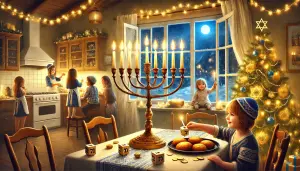
Contemporary Chanukah Celebration
“When is the Jewish Christmas this year?” How many times have all of us heard that question or some variant over the course of our lifetimes? Sometimes I begin to explain the differences between Christmas and Chanukah; other times I simply respond, “This year Chanukah begins on the night of December 25.” To the casual observer the observance of the two holidays seems similar. They’re both solstice celebrations that have been adapted to fit different historical circumstances: the birth of Jesus in one case and the rededication of the Temple by the Maccabees in the other. Both use light as a prominent symbol. And both have come to be seen as the fulfillment of the hopes and dreams of the retail sector of the economy.
Minor Holiday
Chanukah, though, is a minor holiday. No forms of work are forbidden on Chanukah. There is no tractate in the Talmud devoted to Chanukah, just a brief mention in Tractate Shabbat concerning appropriate wicks and oils and whether to light eight candles on the first night and decrease or one on the first night and increase. Also, Chanukah requires no lengthy preparation period. Cleaning and cooking for Pesach can take weeks. Putting up a Sukkah can take hours or even days depending on the skills or lack thereof of those assembling. Chanukah only requires that you find the chanukiah and the matches and buy a box of candles.
Finally, if Chanukah were truly important, Jewish composers would have devoted more time to “I’m dreaming of Chanukah, just like ones on the Vishtula”; or “Chestnuts roasting on an open flame, Tante Rivkah pinching on your cheek”; or “It’s the most wonderful time of the year, there’ll be parties for hosting, and dreidel winners boasting”. Instead we’re left with “I have a little dreidel” and “O Chanukah, O Chanukah”.
Chanukah’s Origin
Chanukah literally means dedication or rededication and refers to the rededication of the Temple during the time of the Hasmoneans. After an internal conflict between assimilationists who wanted to be closer to the Greek culture of the Seleucids and those who were traditionalists, the Seleucids were drawn into the conflict. War raged for many years and eventually a truce was reached giving the Judeans a degree of autonomy, while still being under the control of the Seleucid empire,
The observance of Chanukah was decreed in celebration of the rededication of the Temple, which had become desacralized by offerings to foreign gods. The dedication ceremony mirrored the original dedication of the Temple under Solomon during the festival of Sukkot, a period of 8 days. The first Chanukah was both a delayed observance of Sukkot and a festival of dedication. At the time, it seemed uncertain whether it had enough staying power for its observance to continue beyond the end of Hasmonean rule or beyond the destruction of the Temple.
But it did. Over the years different people and groups chose to emphasize various aspects of the holiday. For many, the story of the cruse of oil that lasted for 8 days became central to celebration. For others, an emphasis on Jewish sovereignty was most important. Still others took comfort in the victory of the few over the many. The story is broad enough to enable everyone to place their personal perspective on the celebration.
When Jews lived in insular Jewish communities, Chanukah remained a small holiday with some fun and entertainment for children and the opportunity for adults to raise their cholesterol levels to record heights seeing how many different fried foods they could consume over the course of 8 days. Integration of Jews into the mainstream of American society and proximity to Christmas pushed the minor holiday into much greater prominence.
Chanukah’s Importance Today
But is it still a minor holiday? I don’t mean that it looms larger in popular culture, but that it fulfills a role of real importance in Jewish life. I believe that it does.
During a season in which it is impossible to stroll through a mall or a store, turn on the radio, or scroll through a TV guide without hearing or seeing something related to Christmas, celebrating Chanukah becomes a point of Jewish pride and a salute to Jewish identity. Much like the origins of Chanukah, contemporary celebrations are an acknowledgement of Jewish particularism within a larger culture that emphasizes different practices and values. Most importantly it marks the persistence of Jewish identity.
The rise in anti-Semitism here and around the world and the painting of Israel as a pariah state make it easier and for some, more desirable to fade into the woodwork, disappear, and avoid dealing with the ugliness of conflict. Celebrating Chanukah is a reminder not only of our history and our persistence, but also that we are always passing that flame on to a new generation. May our celebration of the festival of lights this year be both meaningful and joyful.
Previous Post

December 19, 2024
Joseph's Lesson: Being Present & Breaking the Cycle
Recent Comments
"I verymuch enjoyed this article, thanks!"
Sukkot: Shelters of Vulnerability
Browse Our Archives
Select a Category Uncategorized
Select a Month December 2024 November 2024 October 2024 September 2024
TAKE THE
Religious Wisdom Quiz
What was the currency for the temple tax?
Select your answer to see how you score.
Mina Talent Shekel Denarius
Related posts from The Wondering Jew
Joseph's Lesson: Being Present & Breaking the Cycle
Jacob, Esau, and Lessons for the Holiday Season
Confronting Fear: A Journey toward Adulting and Growth
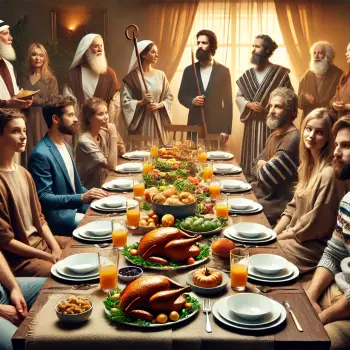
Thanksgiving: Family Dynamics Today and in Biblical Times
TRENDING AT PATHEOS Jewish

Building a Little Ark in a Frightening World
This past Shabbat, we read about Noah. I love this story. The...

Yom Kippur : Is There Always Room for...
Making Room for Forgiveness Every year as Yom Kippur approaches, I find...

This Rosh Hashanah: Can I Find New Meaning?
A Sunrise, a New Year, and a Question On our way to...

Killing Amalek: The Torah’s Most Misunderstood Commandment
Few passages of the Torah have provoked more confusion, polemic, and misuse...

I have never trusted a first draft. I don’t mean that...

Back to School, Back to Reality—and a New...
A New School Year Begins… Back to Reality A new school year...
view all Jewish blogs
Ad-Free & Subscriber Log-In Subscription Support
- About Us
- 2026 Calendar
- Videos
- Podcasts
- Library of World Religions
- Faith In Media Tracker
- Advertise With Us
- Write for Us
- Privacy Policy
- Terms of Service
- Do Not Sell My Data
- Contact Us
- Radiant Digital
- Manage Newsletter Subscriptions
- Unsubscribe From Notifications
- Sitemap
Copyright 2008-2026, Patheos. All rights reserved.
Subscription Support Ad-Free & Subscriber Log-In
Follow Patheos