
BuddhistCatholicContemplativeEvangelicalGeneral ChristianHinduJewishLatter-day SaintMuslimNew VisionsProgressive Christian
Beliefs
- Buddhist
- Catholic
- Contemplative
- Evangelical
- General Christian
- Hindu
- Jewish
- Latter-day Saint
- More Voices
- Muslim
- New Visions
- Pagan
- Progressive Christian
Topics
- Religion News
- Food and Religion
- Sports and Religion
- Religious Art
- Religious Music and Entertainment
- Religious Events
- History and Religion
- Style and Religion
- Politics and Religion
- Women in Religion
- Recreation Outdoors and Religion
- Business Finance and Religion
- Careers Workplace and Religion
- Education and Religion
- Family Parenting and Religion
- Health Fitness and Religion
- Home and Religion
- Relationships and Religion
- Technology and Religion
- Travel and Religion
Columnists
- Buddhist Columnists
- Business Finance and Religion Columnists
- Careers Workplace and Religion Columnists
- Catholic Columnists
- Contemplative Columnists
- Education and Religion Columnists
- Evangelists Columnists
- Family Parenting and Religion Columnists
- General Christian Columnists
- Health Fitness and Religion Columnists
- Hindu Columnists
- History and Religion Columnists
- Home and Religion Columnists
- Jewish Columnists
- More Voices Columnists
- Latter Day Columnists
- Muslim Columnists
- New Visions Columnists
- Nonreligious Columnists
- Pagan Columnists
- Politics and Religion Columnists
- Progressive Columnists
- Recreation Outdoors and Religion Columnists
- Relationships and Religion Columnists
- Religion News Columnists
- Religious Art Columnists
- Religious Events Columnists
- Religious Music and Entertainment Columnists
- Sports and Religion Columnists
- Style and Religion Columnists
- Technology and Religion Columnists
- Travel and Religion Columnists
- Women in Religion Columnists
Resource Library
- 2026 Calendar
- Library of World Religions
- The 100 Most Holy Places on Earth
- Patheos Answers
- Podcasts
- Videos
- Faith Leaders Database
- Anglican Episcopalian
- Bahai
- Baptist
- Buddhism
- Christianity
- Confucianism
- Eastern Orthodoxy
- Hinduism
- Holiness and Pentecostal
- ISKCON
- Islam
- Judaism
- Lutheran
- Methodist
- The Church of Jesus Christ of Latter-day Saints
- New Age
- Paganism
- Presbytarian and Reformed
- Protestantism
- Religion Behind the Scenes
- Roman Catholic
- Scientology
- Shia Islam
- Sikhism
- Sufism
- Sunni Islam
- Taoism
- Zen
- See all religions
Research Tools
 Ad-Free & Subscriber Log-In Subscription Support
Ad-Free & Subscriber Log-In Subscription Support
Follow Patheos 

- Trending:
- Forgiveness
- |
- Marriage
- |
- Consciousness
- |
- Death Penalty
- |
- Election
- |
- Halloween
 The Wondering Jew
- Home
- Jewish
- Noah: Trauma, Survival, and Finding Hope After Catastrophe
Noah: Trauma, Survival, and Finding Hope After Catastrophe
Last updated on: November 4, 2024 at 10:34 am by Rabbi David Feder
Noah: Trauma, Survival, and Finding Hope After Catastrophe 2024-11-04T10:34:40-05:00 Rabbi David Feder
Patheos Explore the world's faith through different perspectives on religion and spirituality! Patheos has the views of the prevalent religions and spiritualities of the world.
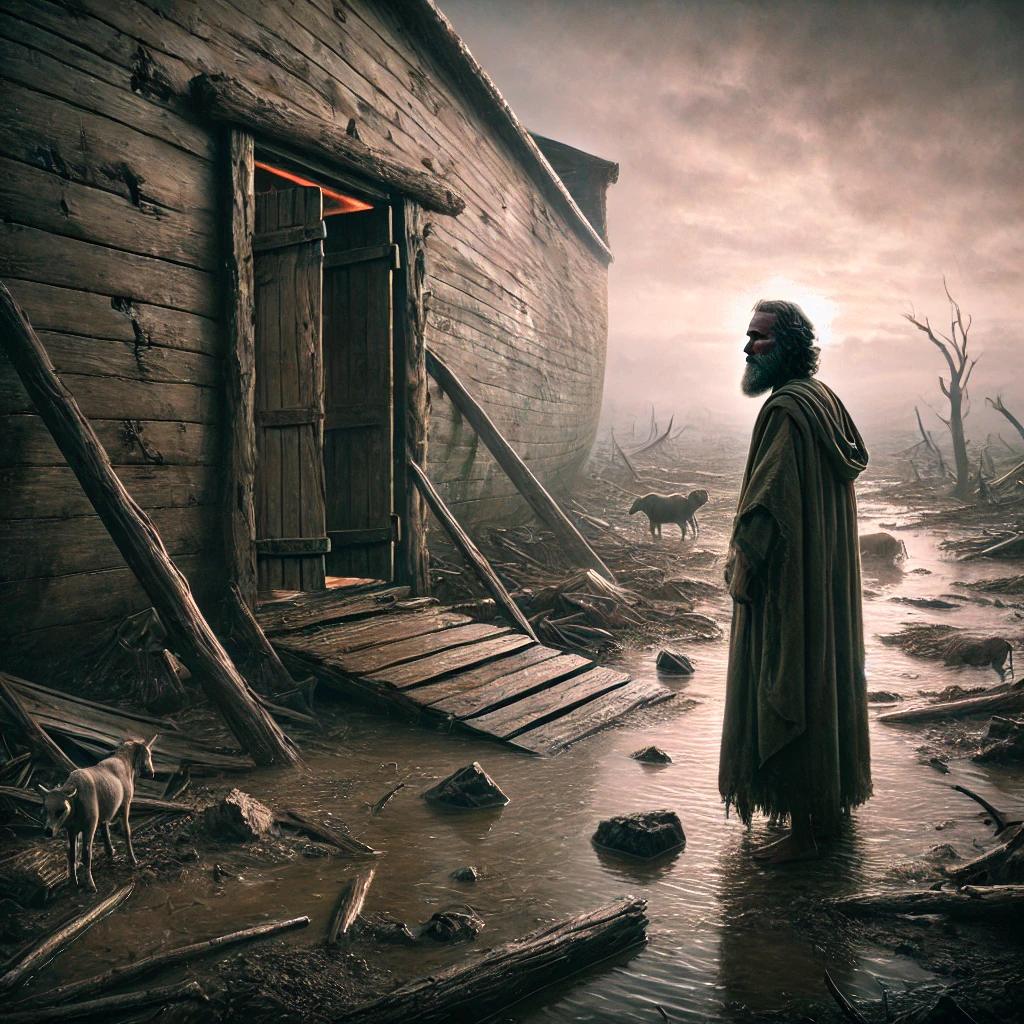
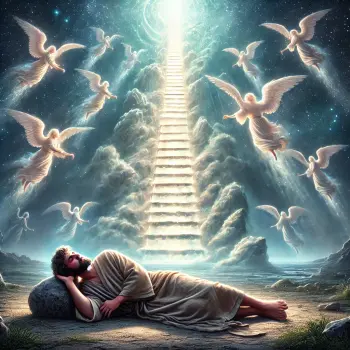
Noah, and the Trauma of Survival/ AI image created by Author
Noah is one of the most familiar characters in the Hebrew Bible. We all know his story; countless children’s books have been written about Noah’s ark. Noah’s story is not for children. Most of us don’t really know the full story of Noah. And Noah, more than most, is the Biblical character who best exemplifies life today for millions of people around the world. Noah is the first to endure cataclysmic trauma, survive, and then struggle to deal with its effects.
Noah is first introduced in chapter 5 of Genesis as the son of Lamech. With his birth, we see a little foreshadowing with the explanation of his name, “This one will provide us relief from our work and from the toil of our hands, out of the very soil which God placed under a curse.” He is the only person in that chapter for whom any explanation is offered for his name. Noah is destined to give comforter, but where will Noah find comfort?
This week’s portion, the eponymously named Parashat Noach, begins in Chapter 6, verse 9, with the following description of Noah: “This is the story (or these are the generations) of Noah: Noah was a righteous man; he was blameless in his age; Noah walked with God.”
Noah the Righteous
You would be hard-pressed to imagine a better resume. Noah is the best of the best in his era. Putting aside the questions of how good he would be in a different era and is it better to walk with or before God, Noah is the one chosen to restart humanity. God has despaired of human evil and wants to wipe the slate clean and begin again. Should Noah have protested and argued with God? Should he have asked people to repent and change their evil ways? Should he have tried to involve more people in creating the ark?
These are all questions that Noah likely asked later, but they really aren’t relevant to the actual events of the story. Under God’s instructions Noah builds an ark and gathers representatives of every animal and places them on board. Noah, his extended family, and the animals spent a year on the ark, riding out the flood and then waiting for dry land to appear. Noah continued to wait after he saw the earth drying until God actually told him to exit the ark.
Noah the Survivor
Can we imagine what must have been going through Noah’s mind? Everything he knew had been destroyed; everyone he knew outside his family, had died. He was exiting into a world that was familiar and foreign at the same time. Every sight, every action reminded him of who and what was no longer there.
After exiting the ark he offers up sacrifices and enters into a covenant with God. Following that, he plants vines, harvests the grapes, gets drunk, and has his uncovered nakedness witnessed by his son Ham ( a veiled reference to something sexual, but left vague). It is amazing that Noah was able to hold things together for as long as he did. Imagine the screams of neighbors facing certain death by drowning. Think about the stench of the animals after a year in the narrow confines of the ark. Picture what its like to be trapped with no privacy or chance for even a breath of fresh air surrounded 24 / 7 by family and animals. And finally imagine exiting the ark for a world that is a graveyard covered with corpses and the reek of decay.
Elie Wiesel refers to Noah as “the first survivor” and Noah bears the signs of trauma and exhibits the symptoms of PTSD, overwhelmed by the circumstances that life has dealt him. We reside in a world permeated by trauma. Look at the survivors of October 7 and what they saw and experienced. Think about those who were powerless to protect or save loved ones. Consider what it’s like to hear the constant blare of sirens announcing the approach of drones, missiles, or rockets. Just listening to the continuing rumbling of my own phone while I’m comfortable and safe in Kentucky keeps me on edge.
Noah the Archetype
Trauma doesn’t know boundaries. We can think of the suffering of Palestinian families whose neighborhoods are now rubble or villagers in Lebanon who tell a similar tale. We view families in Sudan, uprooted by civil war, fleeing famine and strife and can see the trauma in their eyes. Congolese have seen family and friends fall to the machete or kidnapped into militia service over the course of generations. And we could go on and on and on.
In our own neighborhoods, we bear witness to the daily death toll from gunfire and have a generation of children who accept this as “normal” or at least expected. We see families disintegrate and children neglected and forgotten as they bear the appellation “survivor” and the scars that come with it.
Noah is not the smiling shepherd, the pollyannish protector of the animals. He is a survivor. He began his journey being described as a righteous man, blameless in his age, walking with God. He might still be considered righteous and walking with God, but תמים (blameless), no.
I don’t mean to suggest that Noah is at fault, just that the word “ תם “ (tam) is layered and complex. Tam can be used to refer to an animal fit for sacrifice, that is without blemish. Tam refers to the Simple Child at the Passover seder. Tam also has the sense of being naïve. Finally, tam has the sense of being whole and complete. Noah is no longer any of these by the end of his experience. He is broken and rebuilt.
Many of us have experienced trauma first-hand or second-hand, especially over the past year. It’s important to acknowledge that it has affected us and impacted the ways in which we respond to others and to events. Hopefully Noah’s example will also remind us that people don’t just need us when coping with the immediate aftermath of trauma, but in the months and years after when unexpected stresses appear.
In the Talmud (Berachot 31b) we read, “Torah speaks in the language of human beings (Dibrah Torah bilshon b’nai adam). On the one hand it means that the Torah should be comprehensible, on the other it can be understood as saying that we are the language of Torah; our actions make it real. Just as God walked with Noah, it becomes our responsibility to walk with those who need our support.
Previous Post
October 31, 2024
Understanding Torah: Structure Informs Spiritual Meaning fe
Next Post

November 5, 2024 Voting: A Jewish Obligation?
Recent Comments
"I verymuch enjoyed this article, thanks!"
Sukkot: Shelters of Vulnerability
Browse Our Archives
Select a Category Uncategorized
Select a Month December 2024 November 2024 October 2024 September 2024
TAKE THE
Religious Wisdom Quiz
What color is traditionally worn by priests during the season of Advent?
Select your answer to see how you score.
White Red Purple Green
Related posts from The Wondering Jew
Chanukah: Minor Holiday or Source of Identity?

Joseph's Lesson: Being Present & Breaking the Cycle
Jacob, Esau, and Lessons for the Holiday Season
Confronting Fear: A Journey toward Adulting and Growth
TRENDING AT PATHEOS Jewish

Building a Little Ark in a Frightening World
This past Shabbat, we read about Noah. I love this story. The...

Yom Kippur : Is There Always Room for...
Making Room for Forgiveness Every year as Yom Kippur approaches, I find...

This Rosh Hashanah: Can I Find New Meaning?
A Sunrise, a New Year, and a Question On our way to...

Killing Amalek: The Torah’s Most Misunderstood Commandment
Few passages of the Torah have provoked more confusion, polemic, and misuse...

I have never trusted a first draft. I don’t mean that...

Back to School, Back to Reality—and a New...
A New School Year Begins… Back to Reality A new school year...
view all Jewish blogs
Ad-Free & Subscriber Log-In Subscription Support
- About Us
- 2026 Calendar
- Videos
- Podcasts
- Library of World Religions
- Faith In Media Tracker
- Advertise With Us
- Write for Us
- Privacy Policy
- Terms of Service
- Do Not Sell My Data
- Contact Us
- Radiant Digital
- Manage Newsletter Subscriptions
- Unsubscribe From Notifications
- Sitemap
Copyright 2008-2026, Patheos. All rights reserved.
Subscription Support Ad-Free & Subscriber Log-In
Follow Patheos