
BuddhistCatholicContemplativeEvangelicalGeneral ChristianHinduJewishLatter-day SaintMuslimNew VisionsProgressive Christian
Beliefs
- Buddhist
- Catholic
- Contemplative
- Evangelical
- General Christian
- Hindu
- Jewish
- Latter-day Saint
- More Voices
- Muslim
- New Visions
- Pagan
- Progressive Christian
Topics
- Religion News
- Food and Religion
- Sports and Religion
- Religious Art
- Religious Music and Entertainment
- Religious Events
- History and Religion
- Style and Religion
- Politics and Religion
- Women in Religion
- Recreation Outdoors and Religion
- Business Finance and Religion
- Careers Workplace and Religion
- Education and Religion
- Family Parenting and Religion
- Health Fitness and Religion
- Home and Religion
- Relationships and Religion
- Technology and Religion
- Travel and Religion
Columnists
- Buddhist Columnists
- Business Finance and Religion Columnists
- Careers Workplace and Religion Columnists
- Catholic Columnists
- Contemplative Columnists
- Education and Religion Columnists
- Evangelists Columnists
- Family Parenting and Religion Columnists
- General Christian Columnists
- Health Fitness and Religion Columnists
- Hindu Columnists
- History and Religion Columnists
- Home and Religion Columnists
- Jewish Columnists
- More Voices Columnists
- Latter Day Columnists
- Muslim Columnists
- New Visions Columnists
- Nonreligious Columnists
- Pagan Columnists
- Politics and Religion Columnists
- Progressive Columnists
- Recreation Outdoors and Religion Columnists
- Relationships and Religion Columnists
- Religion News Columnists
- Religious Art Columnists
- Religious Events Columnists
- Religious Music and Entertainment Columnists
- Sports and Religion Columnists
- Style and Religion Columnists
- Technology and Religion Columnists
- Travel and Religion Columnists
- Women in Religion Columnists
Resource Library
- 2026 Calendar
- Library of World Religions
- The 100 Most Holy Places on Earth
- Patheos Answers
- Podcasts
- Videos
- Faith Leaders Database
- Anglican Episcopalian
- Bahai
- Baptist
- Buddhism
- Christianity
- Confucianism
- Eastern Orthodoxy
- Hinduism
- Holiness and Pentecostal
- ISKCON
- Islam
- Judaism
- Lutheran
- Methodist
- The Church of Jesus Christ of Latter-day Saints
- New Age
- Paganism
- Presbytarian and Reformed
- Protestantism
- Religion Behind the Scenes
- Roman Catholic
- Scientology
- Shia Islam
- Sikhism
- Sufism
- Sunni Islam
- Taoism
- Zen
- See all religions
Research Tools
 Ad-Free & Subscriber Log-In Subscription Support
Ad-Free & Subscriber Log-In Subscription Support
Follow Patheos 

- Trending:
- Forgiveness
- |
- Marriage
- |
- Consciousness
- |
- Death Penalty
- |
- Election
- |
- Halloween
 The Wondering Jew
- Home
- Jewish
- Religious Events
- Sukkot: Shelters of Vulnerability
Sukkot: Shelters of Vulnerability
Last updated on: October 18, 2024 at 7:58 pm by Rabbi David Feder
Sukkot: Shelters of Vulnerability 2024-10-18T19:58:01-04:00 Rabbi David Feder
Patheos Explore the world's faith through different perspectives on religion and spirituality! Patheos has the views of the prevalent religions and spiritualities of the world.
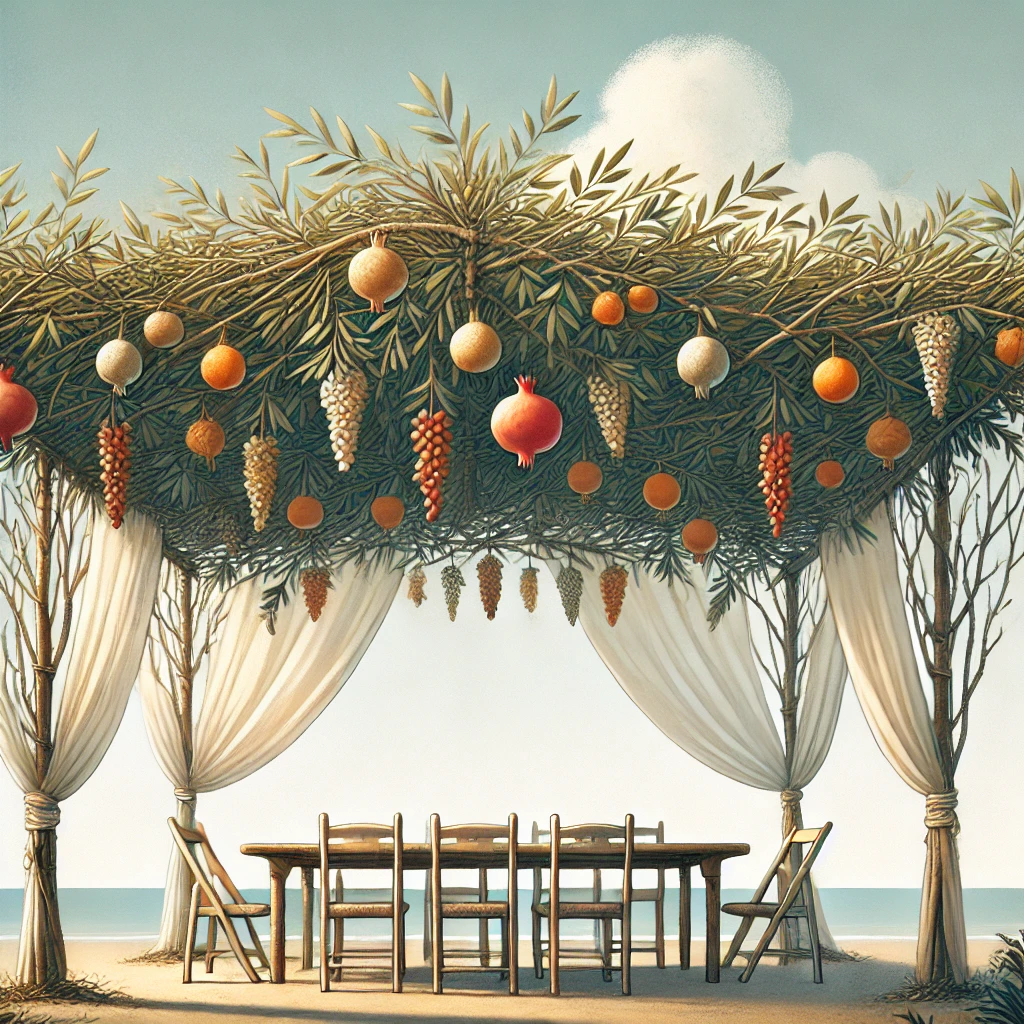
Image created by author in DallE.
As we prepare to celebrate Sukkot, we feel a connection to what seems to be the most basic, primal holiday of the Jewish calendar and yet, in many ways seems to be the most contemporary.
Sukkot at its core is the celebration of the fall harvest, the largest harvest of the year. Every agrarian culture has a major celebration surrounding the harvest, rejoicing that there will be enough food to get through the winter season. In that sense, as well as others, Sukkot is the most universal of Jewish holidays, tapping into roots shared by all of humanity.
Contradictions
What makes it feel contemporary are the contradictions inherent in Sukkot. While the other two pilgrimage festivals have themes that clearly address contemporary concerns, Sukkot’s lack of clarity is what makes it feel so well-suited as a symbol of our times. Let me explain. Passover, or Pesach, has the aspirational message of freedom enshrined in the story of the exodus from Egypt which speaks to every group or individual seeking liberation from oppressive conditions. Shavuot represents revelation on Mt. Sinai speaking to all those seeking insight and knowledge, especially appropriate to our generation of seekers. Sukkot represents 40 years of wandering in the wilderness.
Many would say this represents life prior to GPS; my wife might say it represents my life prior to marriage. The connection between the 40 years of wandering and Sukkot is the sukkah, the temporary hut that people “dwell” in during the weeklong festival. Dwelling consisting of eating meals in the sukkah and in more temperate climes even sleeping in the sukkah. In most of North America, building a sukkah virtually guarantees copious quantities of water falling from the skies, as well as temperatures suddenly plummeting.
Sukkot, the plural of sukkah, referring to booths themselves, are meant to be temporary. Three and a half walls quickly thrown together by amateurs who frequently don’t really know what they’re doing and roof consisting of small branches or corn stalks so that you can see the stars above. Add rain and wind and what could possibly go wrong?
Sukkah: Human hut or divine cloud?
The bigger problem conceptually is where the idea of he sukkah comes from. Many texts say the sukkah represents God’s sheltering presence, protecting the Israelites in the wilderness. It is the metaphor made real. But in Leviticus 23:42-43, where the command to live in booths or sukkot is found, God specifically says, “Because I made the Israelites live in sukkot when I brought them out of Egypt.”
One slight issue with that verse is that nowhere in Exodus, Leviticus, Numbers, or Deuteronomy, which discuss in detail the 40 years in the wilderness, is there a mention of living in sukkot, other than this verse. Now if you were looking for tents, you’d find hundreds of references, but sukkot, none. Perhaps this is akin to my mother telling me when I was younger to clean my room and I dutifully did so. We just had a disagreement on the definition of the word “clean” with me choosing a less restrictive meaning. Could tents then be sukkot? Or is it a nostalgic view of the Exodus experience?
In any case, the physical sukkot are flimsy and vulnerable, while God’s shelter is secure. Sukkot emphasizes the tension between vulnerability and security. Everyone desires security, materially, emotionally, spiritually. But the vast majority of those around the world experience vulnerability. Forty percent of the planet is already vulnerable to climate change, thirty five percent cannot afford a healthy diet, and millions live their daily lives in conflict zones. Clearly security is lacking for a significant segment of the world.
Does strength bring security?
Just as important, the things that often make us feel more secure are often the very things that lead to greater vulnerabilities. Our reliance on technology to make our daily lives easier and less complicated makes us even more vulnerable to its disruptions.
The Titanic was built to be unsinkable. Belief in its indestructibility led to too few lifeboats and being lax in dangerous conditions. As a result, 1,500 people died because too much trust was placed in machinery.
In 2007-8 we almost suffered a global financial meltdown because the experts were were certain that the market was big enough to handle almost any level of risk and that the financial firms were too big to fail. Their security and faith were misplaced and billions were impacted by shrinking economies and the loss of jobs.
Depending on technology for national security and deterrence not only opens up the possibility of hacking, but hubris often causes us to disregard or downplay more conventional systems of defense. Much like the Germans sweeping around the Maginot line, Hamas bringing down cameras, sensors, and barriers, thwarted Israel’s defensive measures. Overreliance on technology without the benefit of human analysis can lead to tragic results.
Sukkot serves as a reminder not only of life’s great bounty and the fragility of our lives and our planet, but of how that largesse in natural and human resources can lead our lives, like the sukkah, to tumble under unexpected winds and rain.
May this Sukkot bring us joy, plenty, and wisdom.
Religious Events
Previous Post
October 10, 2024
Being the Goat: Jews, Israel, and the World on Yom Kippur
Next Post
October 20, 2024 From Gloom to Joy: Embracing Celebration During Sukkot
Recent Comments
"I verymuch enjoyed this article, thanks!"
Sukkot: Shelters of Vulnerability
Browse Our Archives
Select a Category Uncategorized
Select a Month December 2024 November 2024 October 2024 September 2024
TAKE THE
Religious Wisdom Quiz
Where did Moses receive the Ten Commandments?
Select your answer to see how you score.
Mount Tabor Mount Sinai Mount Hermon Mount Carmel
Related posts from The Wondering Jew
Chanukah: Minor Holiday or Source of Identity?
Joseph's Lesson: Being Present & Breaking the Cycle
Jacob, Esau, and Lessons for the Holiday Season
Confronting Fear: A Journey toward Adulting and Growth
TRENDING AT PATHEOS Jewish

Building a Little Ark in a Frightening World
This past Shabbat, we read about Noah. I love this story. The...

Yom Kippur : Is There Always Room for...
Making Room for Forgiveness Every year as Yom Kippur approaches, I find...

This Rosh Hashanah: Can I Find New Meaning?
A Sunrise, a New Year, and a Question On our way to...

Killing Amalek: The Torah’s Most Misunderstood Commandment
Few passages of the Torah have provoked more confusion, polemic, and misuse...

I have never trusted a first draft. I don’t mean that...

Back to School, Back to Reality—and a New...
A New School Year Begins… Back to Reality A new school year...
view all Jewish blogs
Ad-Free & Subscriber Log-In Subscription Support
- About Us
- 2026 Calendar
- Videos
- Podcasts
- Library of World Religions
- Faith In Media Tracker
- Advertise With Us
- Write for Us
- Privacy Policy
- Terms of Service
- Do Not Sell My Data
- Contact Us
- Radiant Digital
- Manage Newsletter Subscriptions
- Unsubscribe From Notifications
- Sitemap
Copyright 2008-2026, Patheos. All rights reserved.
Subscription Support Ad-Free & Subscriber Log-In
Follow Patheos