
BuddhistCatholicContemplativeEvangelicalGeneral ChristianHinduJewishLatter-day SaintMuslimNew VisionsProgressive Christian
Beliefs
- Buddhist
- Catholic
- Contemplative
- Evangelical
- General Christian
- Hindu
- Jewish
- Latter-day Saint
- More Voices
- Muslim
- New Visions
- Pagan
- Progressive Christian
Topics
- Religion News
- Food and Religion
- Sports and Religion
- Religious Art
- Religious Music and Entertainment
- Religious Events
- History and Religion
- Style and Religion
- Politics and Religion
- Women in Religion
- Recreation Outdoors and Religion
- Business Finance and Religion
- Careers Workplace and Religion
- Education and Religion
- Family Parenting and Religion
- Health Fitness and Religion
- Home and Religion
- Relationships and Religion
- Technology and Religion
- Travel and Religion
Columnists
- Buddhist Columnists
- Business Finance and Religion Columnists
- Careers Workplace and Religion Columnists
- Catholic Columnists
- Contemplative Columnists
- Education and Religion Columnists
- Evangelists Columnists
- Family Parenting and Religion Columnists
- General Christian Columnists
- Health Fitness and Religion Columnists
- Hindu Columnists
- History and Religion Columnists
- Home and Religion Columnists
- Jewish Columnists
- More Voices Columnists
- Latter Day Columnists
- Muslim Columnists
- New Visions Columnists
- Nonreligious Columnists
- Pagan Columnists
- Politics and Religion Columnists
- Progressive Columnists
- Recreation Outdoors and Religion Columnists
- Relationships and Religion Columnists
- Religion News Columnists
- Religious Art Columnists
- Religious Events Columnists
- Religious Music and Entertainment Columnists
- Sports and Religion Columnists
- Style and Religion Columnists
- Technology and Religion Columnists
- Travel and Religion Columnists
- Women in Religion Columnists
Resource Library
- 2026 Calendar
- Library of World Religions
- The 100 Most Holy Places on Earth
- Patheos Answers
- Podcasts
- Videos
- Faith Leaders Database
- Anglican Episcopalian
- Bahai
- Baptist
- Buddhism
- Christianity
- Confucianism
- Eastern Orthodoxy
- Hinduism
- Holiness and Pentecostal
- ISKCON
- Islam
- Judaism
- Lutheran
- Methodist
- The Church of Jesus Christ of Latter-day Saints
- New Age
- Paganism
- Presbytarian and Reformed
- Protestantism
- Religion Behind the Scenes
- Roman Catholic
- Scientology
- Shia Islam
- Sikhism
- Sufism
- Sunni Islam
- Taoism
- Zen
- See all religions
Research Tools
 Ad-Free & Subscriber Log-In Subscription Support
Follow Patheos 

- Trending:
- Advent
- |
- Forgiveness
- |
- Thanksgiving
- |
- Election
- |
- Seasonal Holidays
- |
- Marriage
 The Witches Next Door
- Home
- Pagan
- Lammas , Lugnasad and Harvest Celebrations
Lammas , Lugnasad and Harvest Celebrations
Last updated on: August 10, 2017 at 7:19 pm by Gwion Raven
Lammas , Lugnasad and Harvest Celebrations 2017-08-10T19:19:56-08:00 Gwion Raven
Patheos Explore the world's faith through different perspectives on religion and spirituality! Patheos has the views of the prevalent religions and spiritualities of the world.
It’s that time of year again when my social media feeds start filling with “Happy Lammas” greetings. There are always a few “It’s Lugnasad – Happy Harvest” texts as well. Invariably, I also see a handful of “Wait! How do you pronounce that?” and “I don’t celebrate Lammas I only celebrate Lugnasad” posts as well. So just what is the deal with this holy day anyway?
Lammas
Was there a holiday called Lammas in ancient Pagan Britain? Probably not. Were there celebrations of the wheat or hay harvest around the end of July and August? Almost definitely. Wheat and grains have played a part in British agriculture for about 5ooo years now. Without the hay and wheat harvests and the subsequent fruit and livestock harvests, the long winters would be even more difficult to survive. In fact, if the wheat and hay harvests didn’t happen, there was a good chance that the folk in your village were going to die of starvation.
The word Lammas comes to us from the Anglo Saxon period and roughly translates to “Loaf Mass”. Makes sense. Wheat was often turned into bread and history shows us that bread made up a sizable part of the average person’s calories. Our ancestors were noshing on about a pound of bread per day. Of course, “Wheat” hasn’t always meant what it means today. Rye, barley and most other grains were simply called “wheat’ by folk back then. In the middle ages, barley and rye breads, which were lower in nutritional value and harder to digest, were the common “wheat” of the peasant class.
In today’s modern Pagan world, Lammas is celebrated as one of the eight stops on the Wheel of the Year. Lammas focuses on harvest themes even if the harvests haven’t really happened yet. Where I live, in Northern California, we are seeing first harvests of fruits and vegetables and the hay and alfalfa harvests are happening. That follows the intention and practices of my anglo-saxon ancestors, no matter what they may have called or not called this time of year.
It’s also a period where I can sit back and relax a little. I usually teach magical classes, attend and teach at witch camps and festivals from February through late July. My work in the field, so to speak, has been done and I’ve seen the harvests come in. So I can celebrate that too.

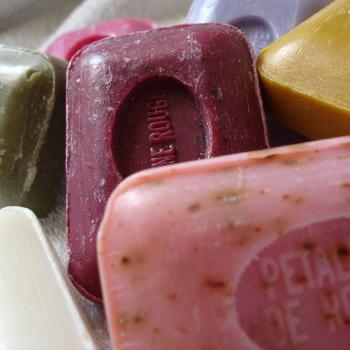
Lammas – Loaf Mass Image from Pixabay -No attribution required
Lugnasad
Just to keep things good and confusing, it’s also spelled Lughnasadh, Lughnasa Lùnastal, Lughnasadh, Lughnasa, and Lúnasa, just depending on whether you’re chatting with a Manx person, Old Irish speaker, modern Irish speaker, or an Irish reconstructionist from one of several different eras.
No matter how you spell it, there is a fair bit known about this holy day. Most of what we know comes to us from Irish writings, both historic and mythic. The short version is that Lugnasad comes from combining the name of the god Lugh and the word for a gathering, nasad.
Ancient Lugnasad customs involved feats of strength, games, horsemanship competitions and a fair amount of drinking and feasting. There are tales that the games relate to funeral rites for a goddess of the grain and an almost Promethean struggle to bring grain and agriculture to ancient Ireland between Lugh and Crom Dubh.
Apparently, Lugnasad celebrations are making a bit of a comeback in Ireland (type Lungasad celebrations into Google and you can find a few) and, like the ancient rites they are named after, feature games, crafts, local foods and artists.
Harvest Celebrations
Throughout the British Isles and Ireland, in particular, and much of the rest of the world too, there are harvest celebrations. In pre -Christian Britain there were horse fairs and trade fairs that brought tribes like the Iceni and Canti together. Not coincidentally, these fairs often happened after the “fighting season”, during the harvest season. The most famous Harvest festival that might have some ancient pagan roots is “Scarborough Fair”. Officially it dates back to the middle ages and was chartered in 1253 during the reign of King Henry III. This harvest festival went on for 45 days. Imagine the amount of ale that was consumed!
Although there’s no direct Pagan connection, we know that other harvest festivals had been going on for centuries, during Pagan times, so perhaps there’s a case to be made.
Funnily enough, the Church of England still has harvest festivals in September. I can remember going to church as a nipper and marveling at the wheat sheaves and fancy, plaited breads that decorated the nave and alters. Pagan roots? Maybe. Celebrating not dying of hunger? Probably.

Celebrating my own Lugnasad harvest – My photo stash
Something to celebrate no matter what you call it
Whether you celebrate this time of year as a modern Pagan or as a reconstructionist or as a gardener who has been toiling since March with your starters and is now enjoying your first tomatoes, I think there’s a lot to celebrate here. I can certainly look at what I’ve harvested and reflect on the work to be done between now and Samhain. Lammas/Lugnasa/Harvest-tide is a resting point. A time for reflection and a time to quaff drinks in the sunshine!
And that’s something I think we might just all get behind!
Happy whatever you call it and however you spell it!
Previous Post

July 24, 2017
The Rawness of Witchcraft
Next Post

August 7, 2017 Magic And Art: Meeting Between The Worlds
Browse Our Archives
Select a Category Ancestor Work Art and Magic Athena Autumn Equinox Being a Priestess Being A Witch Being Pagan Belatane Beltane candle magic Cauldron Cernunnos cerridwen Choosing a magical name Circle Casting Community Coronovirus Coven Curious about magic Daily Practice Deity Depression Earth Ecstatic Practices Elements of Magic Every Day Magic Fae Food Magic Goddess Grounding House Magick Imbolc Ritual Kitchen Witch Knot Magic Lammas Life Ritualized Mabon Magical Healing Magical Practice Magical Teachers Magickal Tools Making Altars Many Gods West Mountain Magic Nature Witch New Year's Tradition Omens Pagan Books Pagan Camps and Festivals Pagan Food Pagan Gods Pagan History Pagan Holidays Pagan Humor Pagan Humour Pagan leadership Pagan Marriage Pagan Music Pagan Parenting Pagan Relationships Pagan Rituals Pagan Rules Pagan Tattoos Pantheacon Peaceful Home Pearl Pentacle Personal Power Politics Ritual Cleansing Ritual Drumming Samhain Samhain Practices saturnalia Skyclad Spells Spiralheart Witch Camp Spirits of Place Spring Equinox spring magic Summer Solstice Tarot The Magick Of Food Time Magic Uncategorized Winter Solstice Witch History Witch Words WitchCamps Work Magic Year End Review Yule
Select a Month March 2021 February 2021 January 2021 December 2020 October 2020 September 2020 May 2020 April 2020 March 2020 February 2020 January 2020 December 2019 November 2019 October 2019 September 2019 August 2019 July 2019 June 2019 May 2019 April 2019 March 2019 February 2019 January 2019 December 2018 November 2018 October 2018 September 2018 August 2018 July 2018 June 2018 May 2018 April 2018 March 2018 February 2018 January 2018 December 2017 November 2017 October 2017 September 2017 August 2017 July 2017 June 2017 May 2017 April 2017 March 2017 February 2017 January 2017 December 2016 November 2016 October 2016 September 2016 August 2016 July 2016 June 2016 May 2016 April 2016 March 2016 February 2016 January 2016 December 2015 October 2015 September 2015 August 2015 July 2015 June 2015 May 2015 April 2015 March 2015 February 2015
Follow Us!
TAKE THE
Religious Wisdom Quiz
Elisha purified a pot of stew that had been poisoned with what?
Select your answer to see how you score.
Bad Cheese Wild Mushrooms Wild Gourds Arsenic
Related posts from The Witches Next Door

Discovering Your Spiritual Allies

The Perils of a Magickal Hangover
Moving Sacred Space from the Old Temple to...
TRENDING AT PATHEOS Pagan

To help with the upcoming holiday season, I'm introducing the Holiday Helper...

10 years of the Power Sigil & Moving...
Last week while reorganizing my studio space, I found the sketchbook that...

Why are younger seekers drawn to Paganism and...
One of the things I've noticed the most is that I'm far...

When we talk about Greek religion, we often begin with the dodekatheion—the...

I was recently chatting with someone on Instagram. She asked me what...

On July 23, I saw Christopher Nolan's The Odyssey which is Homer’s...
view all Pagan blogs
Ad-Free & Subscriber Log-In Subscription Support
- About Us
- 2026 Calendar
- Videos
- Podcasts
- Library of World Religions
- Faith In Media Tracker
- Advertise With Us
- Write for Us
- Privacy Policy
- Terms of Service
- Do Not Sell My Data
- Contact Us
- Radiant Digital
- Manage Newsletter Subscriptions
- Unsubscribe From Notifications
- Sitemap
Copyright 2008-2026, Patheos, part of the Radiant Digital network of media brands. All rights reserved.
Subscription Support Ad-Free & Subscriber Log-In
Follow Patheos