
BuddhistCatholicContemplativeEvangelicalGeneral ChristianHinduJewishLatter-day SaintMuslimNew VisionsProgressive Christian
Beliefs
- Buddhist
- Catholic
- Contemplative
- Evangelical
- General Christian
- Hindu
- Jewish
- Latter-day Saint
- More Voices
- Muslim
- New Visions
- Pagan
- Progressive Christian
Topics
- Religion News
- Food and Religion
- Sports and Religion
- Religious Art
- Religious Music and Entertainment
- Religious Events
- History and Religion
- Style and Religion
- Politics and Religion
- Women in Religion
- Recreation Outdoors and Religion
- Business Finance and Religion
- Careers Workplace and Religion
- Education and Religion
- Family Parenting and Religion
- Health Fitness and Religion
- Home and Religion
- Relationships and Religion
- Technology and Religion
- Travel and Religion
Columnists
- Buddhist Columnists
- Business Finance and Religion Columnists
- Careers Workplace and Religion Columnists
- Catholic Columnists
- Contemplative Columnists
- Education and Religion Columnists
- Evangelists Columnists
- Family Parenting and Religion Columnists
- General Christian Columnists
- Health Fitness and Religion Columnists
- Hindu Columnists
- History and Religion Columnists
- Home and Religion Columnists
- Jewish Columnists
- More Voices Columnists
- Latter Day Columnists
- Muslim Columnists
- New Visions Columnists
- Nonreligious Columnists
- Pagan Columnists
- Politics and Religion Columnists
- Progressive Columnists
- Recreation Outdoors and Religion Columnists
- Relationships and Religion Columnists
- Religion News Columnists
- Religious Art Columnists
- Religious Events Columnists
- Religious Music and Entertainment Columnists
- Sports and Religion Columnists
- Style and Religion Columnists
- Technology and Religion Columnists
- Travel and Religion Columnists
- Women in Religion Columnists
Resource Library
- 2026 Calendar
- Library of World Religions
- The 100 Most Holy Places on Earth
- Patheos Answers
- Podcasts
- Videos
- Faith Leaders Database
- Anglican Episcopalian
- Bahai
- Baptist
- Buddhism
- Christianity
- Confucianism
- Eastern Orthodoxy
- Hinduism
- Holiness and Pentecostal
- ISKCON
- Islam
- Judaism
- Lutheran
- Methodist
- The Church of Jesus Christ of Latter-day Saints
- New Age
- Paganism
- Presbytarian and Reformed
- Protestantism
- Religion Behind the Scenes
- Roman Catholic
- Scientology
- Shia Islam
- Sikhism
- Sufism
- Sunni Islam
- Taoism
- Zen
- See all religions
Research Tools
 Ad-Free & Subscriber Log-In Subscription Support
Ad-Free & Subscriber Log-In Subscription Support
Follow Patheos 

- Trending:
- Forgiveness
- |
- Marriage
- |
- Consciousness
- |
- Death Penalty
- |
- Election
- |
- Halloween
 The Way of the Wildflowers
- Home
- Catholic
- Remembering Those Who Went Before
Remembering Those Who Went Before
Last updated on: November 2, 2019 at 11:19 am by Tina Mayeux
Remembering Those Who Went Before 2019-11-02T11:19:23-05:00 Tina Mayeux
Patheos Explore the world's faith through different perspectives on religion and spirituality! Patheos has the views of the prevalent religions and spiritualities of the world.
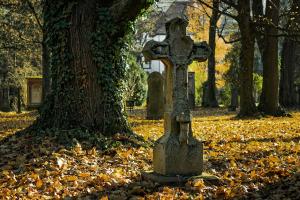
(This article is a repost from March, 2019) I drove by a run-down, grey cemetery today while running an errand. Sadly, many graves were in disrepair and seemingly forgotten, like so many of those who have gone before us. The dreary scene was in stark contrast to the bright and sunny spring day and would have been easy to ignore or miss. The thought occurred, “How often do we pass by a cemetery without a second thought, when we should turn off the radio and say a prayer for the hundreds of souls buried there?” I stopped and offered a quick prayer and resolved to remember to do so again next time I encountered a graveyard or memorial park.
Traditionally we don’t think much about Purgatory until fall rolls around and we enter the month of November, dedicated to the remembrance of the Holy Souls, but it is important to remember that friends and loved ones who have gone before us are in need of our prayers throughout the year. Plenary and partial indulgences can be obtained and applied to the Holy Souls not only on All Soul’s Day and from the 1st to the 8th of November, but also during any other time of the year as well. Eucharistic Adoration, the Way of the Cross, recitation of the Rosary, or devoutly reading Sacred Scripture are all devotions which can be exercised for the acquisition of an indulgence, which can be applied to yourself or the souls in Purgatory. As Catholics, we believe that when we die in God’s grace but not yet perfectly cleansed and purified from the stain of less serious sin, we undergo purification in Purgatory. The Catechism of the Catholic Church explains the doctrine as such: “The Church gives the name Purgatory to this final purification of the elect, which is entirely different from the punishment of the damned. The Church formulated her doctrine of faith on Purgatory especially at the Councils of Florence and Trent. The tradition of the Church, by reference to certain texts of Scripture, speaks of a cleansing fire. As for certain lesser faults, we must believe that, before the Final Judgment, there is a purifying fire.” -CCC #1031 Scripture speaks of Purgatory in the book of Maccabees, which is acknowledged by Catholics but has been removed from Protestant bibles. It is clear from this passage that shortly before the coming of Christ the Jews believed in praying and offering sacrifices for the dead. When Judas Maccabeus and his military discovered their fellow soldiers who had been killed in battle were carrying “sacred tokens of the idols of Jamnia, which the law forbids the Jews to wear” (2 Macc:12:40), they saw that the deceased men had sinned. As a result, they prayed and took up a collection as a sin offering. The passage continues: “In doing this he acted in a very excellent and noble way, inasmuch as he had the resurrection of the dead in view; for if he were not expecting the dead to rise again, it would have been useless and foolish to pray for them in death. But if he did this with a view to the splendid reward that awaits those who had gone to rest in godliness, it was a holy and pious thought. Thus he made atonement for the dead that they might be freed from this sin” (2 Macc. 12:43–45) Praying for the living and the dead is one of the spiritual works of mercy. We are to show kindness through our prayers and good works to those around us and to those who have gone before us. When we pray for our deceased loved ones, they can also offer us their assistance since we remain in unity with them even after they have died. We should nurture and maintain our friendship with both the saints in heaven and the souls suffering in Purgatory, as we are in communion with them in the Body of Christ. Eternal rest grant unto them, O Lord, and let perpetual light shine upon them.
Previous Post

October 7, 2019
The Spiritual Care Unit: Divine Mercy in Motion
Next Post
November 6, 2019 Signs, Sacrifices, and Whole-Burnt Offerings
Browse Our Archives
Select a Category adoration conversion Eucharist faith feast days food God healing health Jesus Mary mental health mercy nutrition nutrition, food, health, healing, wellness prayer Sacraments saints Scripture Uncategorized
Select a Month February 2020 January 2020 November 2019 October 2019 September 2019 August 2019 July 2019 June 2019 May 2019 April 2019 March 2019
Follow Us!
TAKE THE
Religious Wisdom Quiz
Who was the Roman governor that sentenced Jesus to be crucified?
Select your answer to see how you score.
Pontius Pilate Caesar Augustus Herod Felix
Related posts from The Way of the Wildflowers

Recharging Our Spiritual Batteries

Mustard Seeds, Miracles, and Marvel Comics
How To Pray When We Don't Feel Like...

The Mystical Union of St. Pio of Pietrelcina
TRENDING AT PATHEOS Catholic

Rejecting Doom: Christian Hope And Human Action
Christianity is a religion of hope. We are to have hope and...

It’s What Comes From Within Which Matters
One of the most difficult things for us to understand is why...

Why I Choose the Eucharist Over the Sermon
Choose the Eucharist, Not the Sermon What are we supposed to get...

5 Design Elements Found in Spiritually Rooted Homes
Putting Spirituality Into Home Decor Our homes are more than our living...

Credo: A Story of God Told with the...
About 10 years ago, I began to imagine a personal "Credo" that...

The Anatomy of Divine Revelation in Catholic Thought
The claim that God has made Himself known to human beings is...
view all Catholic blogs
Ad-Free & Subscriber Log-In Subscription Support
- About Us
- 2026 Calendar
- Videos
- Podcasts
- Library of World Religions
- Faith In Media Tracker
- Advertise With Us
- Write for Us
- Privacy Policy
- Terms of Service
- Do Not Sell My Data
- Contact Us
- Radiant Digital
- Manage Newsletter Subscriptions
- Unsubscribe From Notifications
- Sitemap
Copyright 2008-2026, Patheos. All rights reserved.
Subscription Support Ad-Free & Subscriber Log-In
Follow Patheos