
BuddhistCatholicContemplativeEvangelicalGeneral ChristianHinduJewishLatter-day SaintMuslimNew VisionsProgressive Christian
Beliefs
- Buddhist
- Catholic
- Contemplative
- Evangelical
- General Christian
- Hindu
- Jewish
- Latter-day Saint
- More Voices
- Muslim
- New Visions
- Pagan
- Progressive Christian
Topics
- Religion News
- Food and Religion
- Sports and Religion
- Religious Art
- Religious Music and Entertainment
- Religious Events
- History and Religion
- Style and Religion
- Politics and Religion
- Women in Religion
- Recreation Outdoors and Religion
- Business Finance and Religion
- Careers Workplace and Religion
- Education and Religion
- Family Parenting and Religion
- Health Fitness and Religion
- Home and Religion
- Relationships and Religion
- Technology and Religion
- Travel and Religion
Columnists
- Buddhist Columnists
- Business Finance and Religion Columnists
- Careers Workplace and Religion Columnists
- Catholic Columnists
- Contemplative Columnists
- Education and Religion Columnists
- Evangelists Columnists
- Family Parenting and Religion Columnists
- General Christian Columnists
- Health Fitness and Religion Columnists
- Hindu Columnists
- History and Religion Columnists
- Home and Religion Columnists
- Jewish Columnists
- More Voices Columnists
- Latter Day Columnists
- Muslim Columnists
- New Visions Columnists
- Nonreligious Columnists
- Pagan Columnists
- Politics and Religion Columnists
- Progressive Columnists
- Recreation Outdoors and Religion Columnists
- Relationships and Religion Columnists
- Religion News Columnists
- Religious Art Columnists
- Religious Events Columnists
- Religious Music and Entertainment Columnists
- Sports and Religion Columnists
- Style and Religion Columnists
- Technology and Religion Columnists
- Travel and Religion Columnists
- Women in Religion Columnists
Resource Library
- 2026 Calendar
- Library of World Religions
- The 100 Most Holy Places on Earth
- Patheos Answers
- Podcasts
- Videos
- Faith Leaders Database
- Anglican Episcopalian
- Bahai
- Baptist
- Buddhism
- Christianity
- Confucianism
- Eastern Orthodoxy
- Hinduism
- Holiness and Pentecostal
- ISKCON
- Islam
- Judaism
- Lutheran
- Methodist
- The Church of Jesus Christ of Latter-day Saints
- New Age
- Paganism
- Presbytarian and Reformed
- Protestantism
- Religion Behind the Scenes
- Roman Catholic
- Scientology
- Shia Islam
- Sikhism
- Sufism
- Sunni Islam
- Taoism
- Zen
- See all religions
Research Tools
 Ad-Free & Subscriber Log-In Subscription Support
Ad-Free & Subscriber Log-In Subscription Support
Follow Patheos 

- Trending:
- Forgiveness
- |
- Marriage
- |
- Consciousness
- |
- Death Penalty
- |
- Election
- |
- Halloween
 The Way of the Wildflowers
- Home
- Catholic
- How to be a Saint: Learning from the Masters
How to be a Saint: Learning from the Masters
Last updated on: August 10, 2019 at 9:41 pm by Tina Mayeux
How to be a Saint: Learning from the Masters 2019-08-10T21:41:33-05:00 Tina Mayeux
Patheos Explore the world's faith through different perspectives on religion and spirituality! Patheos has the views of the prevalent religions and spiritualities of the world.
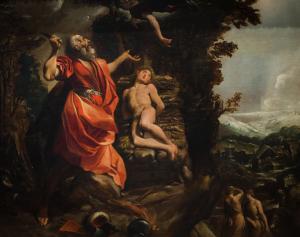
As a mother, I often think about the Old Testament story of Abraham’s sacrifice of Isaac with awe and amazement. God put Abraham to the test in an unthinkable way. Nowhere in the story does it say that Abraham questioned or complained about what God was asking him to do. God said to him, “Take your son Isaac, your only one, whom you love, and go to the land of Moriah. There offer him up as a burnt offering on one of the heights that I will point out to you. (Gen 22:2) In response, the scripture says Abraham simply rose the next morning, saddled his donkey, cut the wood for the burnt offering, and with Isaac and two servants set out for the place God had instructed him to offer the sacrifice. What faith and obedience! Abraham was faced with a choice: disobey God and save his son or be obedient to God’s command and give up his only son, the one upon whom the promise of Abraham’s many descendants rested. He chose obedience, and God intervened, telling him to spare his son.
Obedience is the Way
As Catholics, we encounter choices daily of whether to follow the teachings of the Church or to do our own will. Many times, the choices can be difficult and require sacrifice and self-denial. Thankfully, it is not likely that we will be tested as Abraham was; however, we do face smaller-scale choices which can affect our lives for better or worse. Obedience to the teachings of the Church can seem challenging, but there is a reason that we are asked to discipline ourselves and abide by her commandments and guidelines. The reason is that obedience leads to our ultimate happiness and fulfillment here on earth and with God in heaven. Abraham knew and trusted that God was good and that obedience to him was the only way, as difficult as the choice had to be for him. He exercised what is known as ‘heroic virtue’ in assenting to the request that he sacrifice his son.
What is Virtue?
Many of the saints have also demonstrated this heroic virtue in choices and sacrifices that they have made. According to the Catechism of the Catholic Church, “a virtue is an habitual and firm disposition to do the good. It allows the person not only to perform good acts, but to give the best of himself. The virtuous person tends toward the good with all his sensory and spiritual powers; he pursues the good and chooses it in concrete actions.” (CCC 1803) According to an article on heroic virtue by Bishop Robert Barron, virtue is primarily what makes a person a saint, not visions, locutions, or ecstasies. The Catholic Church lists four cardinal virtues: justice, temperance, prudence and fortitude and three theological virtues: faith, hope, and love, the greatest of these being love. A person who is found to have exemplified these virtues to a heroic degree is declared a saint.
Martyrdom is the Ultimate in Heroic Virtue
The martyrs especially have demonstrated heroic virtue by sacrificing their very lives for the sake of the Gospel. Their choices reflected that they were willing to give up everything for Jesus. St. Maximilian Kolbe offered his life for that of a married man with a family at Auschwitz. St. Gianna Beretta Molla chose to save the life of her unborn child instead of her own. Christian history is full of examples of those who gave their lives as martyrs.
Mary, Exemplar of Virtue
The Woman who embodied heroic virtue to a perfect degree was Mary. When visited by the Angel Gabriel at the Annunciation, Mary gave her fiat, or her ‘yes’ to God and chose the way of obedience. As a result, God blessed her as the Mother of the Savior and our Mother. The doctrine of the Immaculate Conception states that, “The most Blessed Virgin Mary was, from the first moment of her conception, by a singular grace and privilege of almighty God and by virtue of the merits of Jesus Christ, Savior of the human race, preserved immune from all stain of original sin.” [Pius IX, Ineffabilis Deus (1854)] St. Louis de Montfort spoke of the “ten principal virtues of Mary,” which are: “her Angelic Sweetness, Ardent Charity, Blind Obedience, Constant Mental Prayer, Divine Purity, Divine Wisdom, Heroic Patience, Lively Faith, Profound Humility, and Universal Mortification.” (True Devotion to Mary)
Starting Out Small
Probably not many of us have progressed to the point of heroic virtue like Mary and the saints in our spiritual lives. These outstanding virtues can seem difficult or even impossible to acquire. I struggle with staying patient when my children forget to brush their teeth! However, we can start with the small choices which make us stronger and build upon that strength. Making little sacrifices are good training for the more consequential ones. Even the saints had to begin somewhere! We can gain mastery over our sometimes out-of-control passions and emotions if we strive to conquer them incrementally rather than all at once. Over time we develop morally ethical habits of behavior.
Becoming a Spiritual Apprentice
In comments on Pope Francis and Virtue Ethics, Bishop Barron explains that we tend to grow in moral virtue mostly by habituation – by observing and imitating the spiritual masters and repeating these good actions over and over again. He remarks that Aristotle has said that the best way to learn the moral life is to “find the good man, watch him, and then imitate him.” For example, one does not learn to paint simply by reading the rule book of painting. Rather, he says, the ideal way to acquire the skill of painting is by acting as an apprentice to a master painter; by observing and imitating his art. Jesus is the like the expert painter who we follow as apprentices, and by serving him and being exposed to him we become saintly. Mary and the saints are also models for us to emulate. If we assume their holy habits, we become more like them and like God. Pope Francis has said also that “habituation in virtue actually leads to freedom,” even though according to the modern ideas of freedom some would say these two ideas seem contrary.
Called to be Saints
So, if we want to acquire the heroic virtue of the saints, and of Abraham on Mt. Moriah as he became willing to give up his only son, we should begin incrementally and observe and imitate the lives of, first of all, Jesus and Mary, and next, the saints. We are all called to sainthood and this goal is not out of our reach. We can start small, follow and observe those who have gone before us in the spiritual life, and learn from their wisdom and virtue. God is patient with us, he loves us and desires our sanctity. We should trust him to help form and mold us into the saints we were meant to be.
Image by Robert Cheaib from Pixabay
Previous Post

August 7, 2019
Living an Interior Life in an Instagram World
Next Post
August 22, 2019 What Does God Say About Worrying?
Browse Our Archives
Select a Category adoration conversion Eucharist faith feast days food God healing health Jesus Mary mental health mercy nutrition nutrition, food, health, healing, wellness prayer Sacraments saints Scripture Uncategorized
Select a Month February 2020 January 2020 November 2019 October 2019 September 2019 August 2019 July 2019 June 2019 May 2019 April 2019 March 2019
Follow Us!
TAKE THE
Religious Wisdom Quiz
How many books are in the major prophets section of the Old Testament?
Select your answer to see how you score.
7 5 4 3
Related posts from The Way of the Wildflowers

Growing a Healthy Marriage with Natural Family Planning

Recharging Our Spiritual Batteries
Signs, Sacrifices, and Whole-Burnt Offerings

Mustard Seeds, Miracles, and Marvel Comics
TRENDING AT PATHEOS Catholic

Rejecting Doom: Christian Hope And Human Action
Christianity is a religion of hope. We are to have hope and...

It’s What Comes From Within Which Matters
One of the most difficult things for us to understand is why...

Why I Choose the Eucharist Over the Sermon
Choose the Eucharist, Not the Sermon What are we supposed to get...

5 Design Elements Found in Spiritually Rooted Homes
Putting Spirituality Into Home Decor Our homes are more than our living...

Credo: A Story of God Told with the...
About 10 years ago, I began to imagine a personal "Credo" that...

The Anatomy of Divine Revelation in Catholic Thought
The claim that God has made Himself known to human beings is...
view all Catholic blogs
Ad-Free & Subscriber Log-In Subscription Support
- About Us
- 2026 Calendar
- Videos
- Podcasts
- Library of World Religions
- Faith In Media Tracker
- Advertise With Us
- Write for Us
- Privacy Policy
- Terms of Service
- Do Not Sell My Data
- Contact Us
- Radiant Digital
- Manage Newsletter Subscriptions
- Unsubscribe From Notifications
- Sitemap
Copyright 2008-2026, Patheos. All rights reserved.
Subscription Support Ad-Free & Subscriber Log-In
Follow Patheos