
BuddhistCatholicContemplativeEvangelicalGeneral ChristianHinduJewishLatter-day SaintMuslimNew VisionsProgressive Christian
Beliefs
- Buddhist
- Catholic
- Contemplative
- Evangelical
- General Christian
- Hindu
- Jewish
- Latter-day Saint
- More Voices
- Muslim
- New Visions
- Pagan
- Progressive Christian
Topics
- Religion News
- Food and Religion
- Sports and Religion
- Religious Art
- Religious Music and Entertainment
- Religious Events
- History and Religion
- Style and Religion
- Politics and Religion
- Women in Religion
- Recreation Outdoors and Religion
- Business Finance and Religion
- Careers Workplace and Religion
- Education and Religion
- Family Parenting and Religion
- Health Fitness and Religion
- Home and Religion
- Relationships and Religion
- Technology and Religion
- Travel and Religion
Columnists
- Buddhist Columnists
- Business Finance and Religion Columnists
- Careers Workplace and Religion Columnists
- Catholic Columnists
- Contemplative Columnists
- Education and Religion Columnists
- Evangelists Columnists
- Family Parenting and Religion Columnists
- General Christian Columnists
- Health Fitness and Religion Columnists
- Hindu Columnists
- History and Religion Columnists
- Home and Religion Columnists
- Jewish Columnists
- More Voices Columnists
- Latter Day Columnists
- Muslim Columnists
- New Visions Columnists
- Nonreligious Columnists
- Pagan Columnists
- Politics and Religion Columnists
- Progressive Columnists
- Recreation Outdoors and Religion Columnists
- Relationships and Religion Columnists
- Religion News Columnists
- Religious Art Columnists
- Religious Events Columnists
- Religious Music and Entertainment Columnists
- Sports and Religion Columnists
- Style and Religion Columnists
- Technology and Religion Columnists
- Travel and Religion Columnists
- Women in Religion Columnists
Resource Library
- 2026 Calendar
- Library of World Religions
- The 100 Most Holy Places on Earth
- Patheos Answers
- Podcasts
- Videos
- Faith Leaders Database
- Anglican Episcopalian
- Bahai
- Baptist
- Buddhism
- Christianity
- Confucianism
- Eastern Orthodoxy
- Hinduism
- Holiness and Pentecostal
- ISKCON
- Islam
- Judaism
- Lutheran
- Methodist
- The Church of Jesus Christ of Latter-day Saints
- New Age
- Paganism
- Presbytarian and Reformed
- Protestantism
- Religion Behind the Scenes
- Roman Catholic
- Scientology
- Shia Islam
- Sikhism
- Sufism
- Sunni Islam
- Taoism
- Zen
- See all religions
Research Tools
 Ad-Free & Subscriber Log-In Subscription Support
Ad-Free & Subscriber Log-In Subscription Support
Follow Patheos 

- Trending:
- Forgiveness
- |
- Marriage
- |
- Consciousness
- |
- Death Penalty
- |
- Election
- |
- Halloween
 The Way of the Wildflowers
- Home
- Catholic
- The Icon Peddler and the Good Fridays of our Lives
The Icon Peddler and the Good Fridays of our Lives
Last updated on: April 18, 2019 at 6:27 pm by Tina Mayeux
The Icon Peddler and the Good Fridays of our Lives 2019-04-18T18:27:38-05:00 Tina Mayeux
Patheos Explore the world's faith through different perspectives on religion and spirituality! Patheos has the views of the prevalent religions and spiritualities of the world.
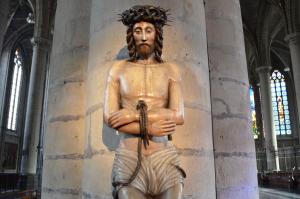
One night when I was in my 20s and living in an apartment with my sister, there was a knock on the door. A mysterious woman stood there, selling an assortment of religious prints. I gave her a few dollars for an image of Jesus in prayer in the Garden of Gethsemane. I believe it was providence. Little did I know that the image was a foreshadowing of one of the most devastatingly difficult times of my life. Like some cryptic messenger from a fairy tale, the woman had sold me an allusion to what was to come, as in the following decade I experienced crippling depression which upended my life and my career plans. Looking back, this period became my very own Agony in the Garden, driving me to my knees in conversion and in search of comfort and healing from God. In that sense, good did come of the suffering, but it didn’t diminish the agony. Since that strange woman appeared at my doorstep so long ago I have had a special devotion to and solidarity with Jesus in the Garden, mainly because his suffering was not physical, but mental, and this is the variety of pain and suffering which I have been allotted. The image of the anguished Jesus, slumped over a stone, gazing pleadingly at the Father guided me through that time, and continues to strengthen and fortify me in difficulties. From this dark period of my life, I have emerged stronger, happier, and wiser, and through this experience I have thankfully acquired an increased adeptness at handling the difficult times.
Good Friday and the Problem of Suffering
Because of Adam and Eve’s disobedience, suffering and death entered the world and continues today: “The harmony in which [Adam and Eve] had found themselves, thanks to original justice, is now destroyed: the control of the soul’s spiritual faculties over the body is shattered; the union of man and woman becomes subject to tensions, their relations henceforth marked by lust and domination. Harmony with creation is broken: visible creation has become alien and hostile to man. Because of man, creation is now subject ‘to its bondage to decay’… Death makes its entrance into human history.” (CCC #400)
On Good Friday, we meditate on Christ’s Passion and death and the pain and agony he endured for our sins. In this life, we, too, will endure our own share of crosses and hardships. Suffering is inescapable. The question is, how do we handle it? Even though we often fall painfully short from being Christlike in our worst moments, it is important to reflect on how Jesus handled his suffering. Jesus endured distressing pain and overwhelming anguish during his Passion and Crucifixion but he didn’t rebel, didn’t react in anger, and didn’t try to escape the suffering. He bore it patiently and prayerfully. Our fallen nature often prevents us from handling difficulties so gracefully, but we can examine Christ’s actions and attempt to imitate his manner of living.
How Did Jesus Suffer?
In Luke’s gospel, Jesus goes out to the Mount of Olives immediately after the Last Supper and withdraws to pray, as is his unfailing custom before all events of his life. There are moments in life, as this moment was for Jesus, when we are brought to our knees, when pain and devastation are so absolute that we can not stand anymore. It is in these moments: instances of death, disasters, and tragedy, that the best thing we can do is cling to the Cross of Christ in prayer and unite our suffering with his. We humble ourselves before God and admit our need, and he responds to us and comforts us. Often God does not take the suffering away: despite Jesus’ tortured petition in the garden, God still allowed his crucifixion. However, he promises to comfort and assist us in our difficulties. The gospels tell us that an angel was sent to attend to him, and he was strengthened for the trial ahead of him.
Jesus also turns to his closest friends for comfort. At the table of the Last Supper, he shares his last intimate meal with his apostles. He reveals to them, “I have eagerly desired to eat this Passover with you before I suffer.” (Lk. 22:15) As he prepares them for his impending death, he undoubtedly was consoled in spending these last moments in fellowship with his closest followers. His apostles are also present with him in the Garden of Gethsemane. Most importantly, Jesus’ Mother was present at the foot of the Cross, along with St. John, keeping vigil with him until he died. Just as Jesus had his closest followers with him in his darkest hour, we need our faithful friends and family to support and comfort us when we are suffering. Clearly, in addition to consulting friends, it is vital to seek out professional resources to help with issues such as depression and other mental health problems.
Another characteristic of Jesus in his anguish in his Agony, his torture and his Crucifixion is pardon of enemies. “Father, forgive them, they know not what they do.” (Lk. 23:34) Forgiveness of our enemies releases the weight of resentment and lessens the burden of suffering. Jesus faced the greatest of suffering, yet he did not lash out in pain or anger. He unequivocally forgave his torturers and executioners. Can we imitate his perfect love and forgive those who have harmed us or caused us suffering? Holding on to anger and unforgiveness intensifies our agony and adds to our burdens. When we release resentments and surrender grudges, our negativity is replaced with joy, and we will be happier, even when external circumstances cause us hardship.
Most importantly, Jesus humbly and calmly accepted his suffering as necessary; he didn’t resist it: “Father, if you are willing, take this cup away from me; still, not my will but yours be done.” (Lk 22:42) He knew his purpose was to complete his saving mission and he fulfilled it gracefully and lovingly. We can consider also the peace the saints experienced in suffering. Their endurance is not a myth or an impossibility. They labored faithfully and diligently under spiritual discipline to develop the fortitude to endure their trials. St. Therese remarked that “suffering is the very best gift he has to give us. He gives it only to his chosen friends.” St. Augustine reminds us of the redemptive value of suffering: “Trials and tribulations offer us a chance to make reparation for our past faults and sins. On such occasions the Lord comes to us like a physician to heal the wounds left by our sins. Tribulation is the divine medicine.”
If You Have a Headache, You Take an Aspirin
I am not suggesting we don’t take measures to lessen or eliminate the sufferings. Certainly we should seek out every earthly means to cure or lessen our difficulties. However, Jesus’ words and actions in the gospel provide us a perfect example of how to handle the suffering that we can not remove. If we believe he loves us, we should be confident that he takes an active interest in even the smallest details of our lives and that he, along with our Blessed Mother and the saints, intercedes with the Father and comes to our aid in our necessities. We should not underestimate the power of God’s divine action and assistance in our lives. Only consider the numerous accounts of Jesus’ healing intervention in the gospels for the blind, the lame, the sick. His healing power is still present today for those who have faith, even though he no longer walks the earth with his physical body.
I am not hoping for another icon peddler to darken my doorstep anytime soon, but if it should happen I know that I have been tried by fire and have acquired a healthier dose of fortitude to survive more effectively whatever comes. I have learned that an integral component of enduring hardship is prayer and reception of the sacraments. Forgiveness and reconciliation and the support that comes with cultivating genuine friendships are essential. Without these, we will not have the strength or the endurance to withstand suffering gracefully. Perhaps most importantly is trusting in the healing power of Christ and believing that he desires to support and assist us in our needs. On this most somber of days, let us unite our own sufferings with Christ on the Cross. Through imitating him and uniting our suffering with his, we can endure anything.
(Image credit: Pixabay)
Next Post

April 20, 2019 The Resurrection of Christ: See, I am Doing Something New!
Browse Our Archives
Select a Category adoration conversion Eucharist faith feast days food God healing health Jesus Mary mental health mercy nutrition nutrition, food, health, healing, wellness prayer Sacraments saints Scripture Uncategorized
Select a Month February 2020 January 2020 November 2019 October 2019 September 2019 August 2019 July 2019 June 2019 May 2019 April 2019 March 2019
Follow Us!
TAKE THE
Religious Wisdom Quiz
Which continent is experiencing the fastest growth in Christianity?
Select your answer to see how you score.
Africa Asia Europe Oceania
Related posts from The Way of the Wildflowers

Growing a Healthy Marriage with Natural Family Planning

Recharging Our Spiritual Batteries

Mustard Seeds, Miracles, and Marvel Comics
A Shower of Roses - Three Saints Inspired...
TRENDING AT PATHEOS Catholic

Rejecting Doom: Christian Hope And Human Action
Christianity is a religion of hope. We are to have hope and...

It’s What Comes From Within Which Matters
One of the most difficult things for us to understand is why...

Why I Choose the Eucharist Over the Sermon
Choose the Eucharist, Not the Sermon What are we supposed to get...

5 Design Elements Found in Spiritually Rooted Homes
Putting Spirituality Into Home Decor Our homes are more than our living...

Credo: A Story of God Told with the...
About 10 years ago, I began to imagine a personal "Credo" that...

The Anatomy of Divine Revelation in Catholic Thought
The claim that God has made Himself known to human beings is...
view all Catholic blogs
Ad-Free & Subscriber Log-In Subscription Support
- About Us
- 2026 Calendar
- Videos
- Podcasts
- Library of World Religions
- Faith In Media Tracker
- Advertise With Us
- Write for Us
- Privacy Policy
- Terms of Service
- Do Not Sell My Data
- Contact Us
- Radiant Digital
- Manage Newsletter Subscriptions
- Unsubscribe From Notifications
- Sitemap
Copyright 2008-2026, Patheos. All rights reserved.
Subscription Support Ad-Free & Subscriber Log-In
Follow Patheos