
BuddhistCatholicContemplativeEvangelicalGeneral ChristianHinduJewishLatter-day SaintMuslimNew VisionsProgressive Christian
Beliefs
- Buddhist
- Catholic
- Contemplative
- Evangelical
- General Christian
- Hindu
- Jewish
- Latter-day Saint
- More Voices
- Muslim
- New Visions
- Pagan
- Progressive Christian
Topics
- Religion News
- Food and Religion
- Sports and Religion
- Religious Art
- Religious Music and Entertainment
- Religious Events
- History and Religion
- Style and Religion
- Politics and Religion
- Women in Religion
- Recreation Outdoors and Religion
- Business Finance and Religion
- Careers Workplace and Religion
- Education and Religion
- Family Parenting and Religion
- Health Fitness and Religion
- Home and Religion
- Relationships and Religion
- Technology and Religion
- Travel and Religion
Columnists
- Buddhist Columnists
- Business Finance and Religion Columnists
- Careers Workplace and Religion Columnists
- Catholic Columnists
- Contemplative Columnists
- Education and Religion Columnists
- Evangelists Columnists
- Family Parenting and Religion Columnists
- General Christian Columnists
- Health Fitness and Religion Columnists
- Hindu Columnists
- History and Religion Columnists
- Home and Religion Columnists
- Jewish Columnists
- More Voices Columnists
- Latter Day Columnists
- Muslim Columnists
- New Visions Columnists
- Nonreligious Columnists
- Pagan Columnists
- Politics and Religion Columnists
- Progressive Columnists
- Recreation Outdoors and Religion Columnists
- Relationships and Religion Columnists
- Religion News Columnists
- Religious Art Columnists
- Religious Events Columnists
- Religious Music and Entertainment Columnists
- Sports and Religion Columnists
- Style and Religion Columnists
- Technology and Religion Columnists
- Travel and Religion Columnists
- Women in Religion Columnists
Resource Library
- 2026 Calendar
- Library of World Religions
- The 100 Most Holy Places on Earth
- Patheos Answers
- Podcasts
- Videos
- Faith Leaders Database
- Anglican Episcopalian
- Bahai
- Baptist
- Buddhism
- Christianity
- Confucianism
- Eastern Orthodoxy
- Hinduism
- Holiness and Pentecostal
- ISKCON
- Islam
- Judaism
- Lutheran
- Methodist
- The Church of Jesus Christ of Latter-day Saints
- New Age
- Paganism
- Presbytarian and Reformed
- Protestantism
- Religion Behind the Scenes
- Roman Catholic
- Scientology
- Shia Islam
- Sikhism
- Sufism
- Sunni Islam
- Taoism
- Zen
- See all religions
Research Tools
 Ad-Free & Subscriber Log-In Subscription Support
Ad-Free & Subscriber Log-In Subscription Support
Follow Patheos 

- Trending:
- Forgiveness
- |
- Marriage
- |
- Consciousness
- |
- Death Penalty
- |
- Election
- |
- Halloween
 The Way of the Wildflowers
- Home
- Catholic
- Mary Magdalene: Seeking Him Before Dawn
Mary Magdalene: Seeking Him Before Dawn
Last updated on: April 24, 2019 at 1:27 am by Tina Mayeux
Mary Magdalene: Seeking Him Before Dawn 2019-04-24T01:27:42-05:00 Tina Mayeux
Patheos Explore the world's faith through different perspectives on religion and spirituality! Patheos has the views of the prevalent religions and spiritualities of the world.
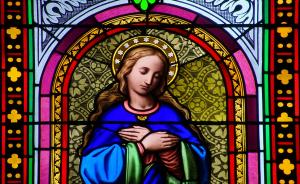
In the gospels of Easter Sunday and of the days following, we hear of Mary Magdalene’s discovery of the empty tomb and her role as messenger to the disciples. “On the first day of the week, Mary of Magdala came to the tomb early in the morning, while it was still dark, and saw the stone removed from the tomb. So she ran and went to Simon Peter and to the other disciples whom Jesus loved, and told them, ‘They have taken the Lord from the tomb, and we don’t know where they put him.‘” (Jn 20:1-2) Mary, in her zeal and devotion to Jesus, is seeking him before dawn, before any of the others, and discovers he is gone. Like the wise virgins who took their lamps and went out to meet the bridegroom, she is awake and alert, demonstrating solicitous faith, hope, and charity in her searching for her Lord before all the others. After the Crucifixion, she did not give in to defeat or despair, but her hope and love continued and stirred her to action.
As One Sent
Everyone loves to be the bearer of good and exciting news, and Jesus has tasked Mary Magdalene with the assignment of delivering the greatest news in history: that of his resurrection and victory over sin and death. He rewards her for her exemplary faith and dedication, her unparalleled love for him. Because she was the first to arrive at the empty tomb, she receives the honor of being the first to announce the good news. She is sent as a messenger and a witness to alert the disciples and summon them to Jesus. “Mary Magdalene and the other Mary went away quickly from the tomb, fearful yet overjoyed, and ran to announce the news to his disciples.” (Mt 28:8) In their great joy, the women didn’t walk, but ran to relay the news. Jesus then appears to the women and tells them not to be afraid, but to tell the disciples to go to Galilee where they will see him, and they embraced his feet and did him homage. In John’s account of the gospel, she does not recognize him until he pronounces her name, and he tells her not to hold on to him and sends her out to the disciples to inform them of his resurrection.
Hope Against All Hope
The women were given the privilege of seeing Jesus because they were looking for him. The disciples were not there yet, but the women were the ones to rise early and go to the tomb to anoint his body with spices. In John’s account of Mary’s discovery of the empty tomb, she keeps vigil outside of the tomb weeping. Her love and concern for Jesus are evident, and the angels ask her why she is distraught. She believes they have taken his body, but was she also hopeful that he really had risen from the dead? She remained present to him, even in the face of his death and burial. When we face difficulties and darkness, do we retreat into despair or do we continue to look for him with hope and trust? In light of the recent bombings in Sri Lanka and of other persecutions, war, and injustices and suffering in the world today, how can we continue to hope in the face of evil? We return, morning after morning, day after day, to the empty tomb and seek him out, the Risen Christ who heals the ills and divisions of the world. Christ, the Son of God, who died and is resurrected, is our only hope. Death and suffering only make sense when seen through the lens of sharing in His suffering and death and uniting our suffering with his. As St. Paul expresses: “Now I rejoice in my sufferings for your sake, and in my flesh I am filling up what is lacking in the afflictions of Christ on behalf of his body, which is the church.” (Col 1:24)
Faithful Until the End
Just as Mary Magdalene announced “I have seen the Lord” with her lips, she had announced it with her life and her actions since her conversion until then. She followed Jesus closely after, according to Luke’s gospel, seven demons had been cast out of her by Jesus. She had obviously lived a sinful life before, but her contact with Jesus had changed and converted her, and she had become one of his closest followers. She possessed the humility to repent and be converted and to begin to live a life of obedience and virtue in accordance with the teachings of Jesus. Not only did she change her life, but she surrendered it to serve him as a follower. She was faithful until the last, as the gospels tell us she was one of the few remaining there with Jesus at his darkest hour, his Crucifixion: “Standing by the cross of Jesus were his mother and his mother’s sister, Mary the wife of Clopas, and Mary of Magdala.” (Jn 19:25) Mary Magdalene is an example to us of the repentant disciple, of rising after the fall and believing in his mercy, of perseverance, of repentance, love, and conversion. Can we follow him to the Cross as she did and remain with him there, standing below it, suffering with him? Will we also “rise early” like she did during this Easter season and search for him daily in his risen glory?
(Image credit: Pixabay)
Previous Post

April 20, 2019
The Resurrection of Christ: See, I am Doing Something New!
Next Post
April 25, 2019 Unplanned and the Mercy of God
Browse Our Archives
Select a Category adoration conversion Eucharist faith feast days food God healing health Jesus Mary mental health mercy nutrition nutrition, food, health, healing, wellness prayer Sacraments saints Scripture Uncategorized
Select a Month February 2020 January 2020 November 2019 October 2019 September 2019 August 2019 July 2019 June 2019 May 2019 April 2019 March 2019
Follow Us!
TAKE THE
Religious Wisdom Quiz
What does "Beersheba" mean?
Select your answer to see how you score.
Valley of Water Well of the Oath Blessed Field House of the King
Related posts from The Way of the Wildflowers

Recharging Our Spiritual Batteries

Mustard Seeds, Miracles, and Marvel Comics
How To Pray When We Don't Feel Like...

The Mystical Union of St. Pio of Pietrelcina
TRENDING AT PATHEOS Catholic

Rejecting Doom: Christian Hope And Human Action
Christianity is a religion of hope. We are to have hope and...

It’s What Comes From Within Which Matters
One of the most difficult things for us to understand is why...

Why I Choose the Eucharist Over the Sermon
Choose the Eucharist, Not the Sermon What are we supposed to get...

5 Design Elements Found in Spiritually Rooted Homes
Putting Spirituality Into Home Decor Our homes are more than our living...

Credo: A Story of God Told with the...
About 10 years ago, I began to imagine a personal "Credo" that...

The Anatomy of Divine Revelation in Catholic Thought
The claim that God has made Himself known to human beings is...
view all Catholic blogs
Ad-Free & Subscriber Log-In Subscription Support
- About Us
- 2026 Calendar
- Videos
- Podcasts
- Library of World Religions
- Faith In Media Tracker
- Advertise With Us
- Write for Us
- Privacy Policy
- Terms of Service
- Do Not Sell My Data
- Contact Us
- Radiant Digital
- Manage Newsletter Subscriptions
- Unsubscribe From Notifications
- Sitemap
Copyright 2008-2026, Patheos. All rights reserved.
Subscription Support Ad-Free & Subscriber Log-In
Follow Patheos