
BuddhistCatholicContemplativeEvangelicalGeneral ChristianHinduJewishLatter-day SaintMuslimNew VisionsProgressive Christian
Beliefs
- Buddhist
- Catholic
- Contemplative
- Evangelical
- General Christian
- Hindu
- Jewish
- Latter-day Saint
- More Voices
- Muslim
- New Visions
- Pagan
- Progressive Christian
Topics
- Religion News
- Food and Religion
- Sports and Religion
- Religious Art
- Religious Music and Entertainment
- Religious Events
- History and Religion
- Style and Religion
- Politics and Religion
- Women in Religion
- Recreation Outdoors and Religion
- Business Finance and Religion
- Careers Workplace and Religion
- Education and Religion
- Family Parenting and Religion
- Health Fitness and Religion
- Home and Religion
- Relationships and Religion
- Technology and Religion
- Travel and Religion
Columnists
- Buddhist Columnists
- Business Finance and Religion Columnists
- Careers Workplace and Religion Columnists
- Catholic Columnists
- Contemplative Columnists
- Education and Religion Columnists
- Evangelists Columnists
- Family Parenting and Religion Columnists
- General Christian Columnists
- Health Fitness and Religion Columnists
- Hindu Columnists
- History and Religion Columnists
- Home and Religion Columnists
- Jewish Columnists
- More Voices Columnists
- Latter Day Columnists
- Muslim Columnists
- New Visions Columnists
- Nonreligious Columnists
- Pagan Columnists
- Politics and Religion Columnists
- Progressive Columnists
- Recreation Outdoors and Religion Columnists
- Relationships and Religion Columnists
- Religion News Columnists
- Religious Art Columnists
- Religious Events Columnists
- Religious Music and Entertainment Columnists
- Sports and Religion Columnists
- Style and Religion Columnists
- Technology and Religion Columnists
- Travel and Religion Columnists
- Women in Religion Columnists
Resource Library
- 2026 Calendar
- Library of World Religions
- The 100 Most Holy Places on Earth
- Patheos Answers
- Podcasts
- Videos
- Faith Leaders Database
- Anglican Episcopalian
- Bahai
- Baptist
- Buddhism
- Christianity
- Confucianism
- Eastern Orthodoxy
- Hinduism
- Holiness and Pentecostal
- ISKCON
- Islam
- Judaism
- Lutheran
- Methodist
- The Church of Jesus Christ of Latter-day Saints
- New Age
- Paganism
- Presbytarian and Reformed
- Protestantism
- Religion Behind the Scenes
- Roman Catholic
- Scientology
- Shia Islam
- Sikhism
- Sufism
- Sunni Islam
- Taoism
- Zen
- See all religions
Research Tools
 Ad-Free & Subscriber Log-In Subscription Support
Ad-Free & Subscriber Log-In Subscription Support
Follow Patheos 

- Trending:
- Forgiveness
- |
- Marriage
- |
- Consciousness
- |
- Death Penalty
- |
- Election
- |
- Halloween
 The Way of the Wildflowers
- Home
- Catholic
- The School of Carmel: Five Lessons for Family Life
The School of Carmel: Five Lessons for Family Life
Last updated on: March 12, 2019 at 3:14 am by Tina Mayeux
The School of Carmel: Five Lessons for Family Life 2019-03-12T03:14:46-05:00 Tina Mayeux
Patheos Explore the world's faith through different perspectives on religion and spirituality! Patheos has the views of the prevalent religions and spiritualities of the world.
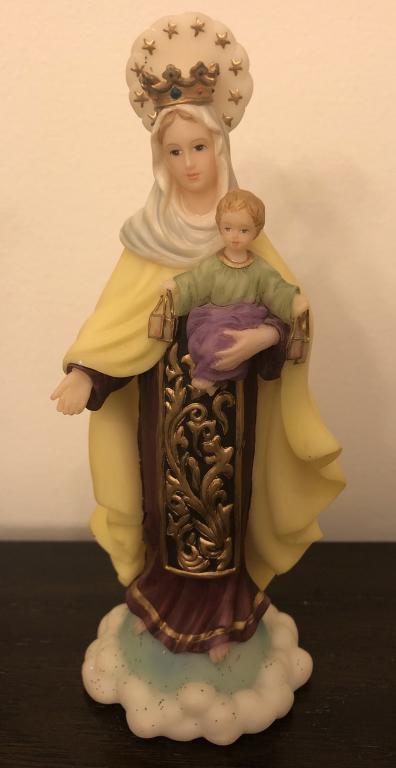
Today’s fast-paced society is not known for yielding a culture of peace, contentment, or joy, products which can often be found in abundance if you visit a convent or monastery. Experiencing a taste of the peace and beauty of cloistered religious life as a postulant in a Carmelite monastery, I have felt compelled to try and incorporate some of the lessons I learned there into our family life, with occasional bouts of success. Not being the most organized person, I’ve found that imitating the order and structure of a monastery on a very small scale has helped us to maintain a more prayerful spirit as we live, work, and play together. Of course, there are only certain ideas that can practically be used by the laity, but I’ve found that even small adjustments can help provide a more stable framework for family life. Here are a few of the ideas borrowed from Carmelite life which have (sometimes) proved fruitful for our family.
- Develop a routine of prayer for the family. Think of it as a spiritual framework around which an individual or family lives. Just as monks and nuns follow the rule of their particular order, lay people and families can incorporate a structure of prayer, such as reciting the daily Rosary, or even just a decade of the Rosary, together. Because of the unpredictability of life with children, it can not and should not be a rigid set of rules, but rather, a guideline for spiritual exercises to be carried out each day, week, month, and Church season. Other ideas include attending Mass, Confession, and prayer such as Morning Offering or the Chaplet of Divine Mercy. Celebrating the liturgical seasons and feast days with special prayers or novenas are other ideas.
- Live simply. As lay people, we are not bound by a vow of poverty as religious are. However, we are called to temper our attachments to wealth and pleasure. Speaking about the Tenth Commandment, which reminds us not to covet, the Catechism of the Catholic Church states: “Desire for true happiness frees man from his immoderate attachment to the goods of this world so that he can find his fulfillment in the vision and beauty of God.” -CCC 2548 We realize that to be truly free we cannot be a slave to any earthly thing, so we moderate our consumption of material goods. In a sense, we empty ourselves so that we can be filled with the things of God. For our family, living simply has also included efforts towards responsible stewardship of the gifts God has given. As Pope Francis has encouraged us to do, recycling, reusing, and caring for our earth are ways we can live simply and in harmony with creation.
- Practice a spirit of quiet. What?!? you may wonder! Our home is a far cry from a monastery, but times of quiet reading, playing classical music, and, of course, prayer, can help calm the children (and the parents!) and allow everyone to be more in tune with the Holy Spirit. This includes limiting social media and other modern forms of communication when necessary. During Lent and at other times I have temporarily eliminated Facebook from my life when I felt it began to take away my peace of mind and soul, and the result was that I became more productive at home, more free to devote quality time to my family, and was left with more time for prayer, which increased my peace. “In silence and quiet the devout soul advances in virtue and learns the hidden truths of Scripture.” – Imitation of Christ
- Trust in Divine Providence. The Carmelite Nuns do not have a steady income; they trust that their needs will be met by God through the generosity of others. We as lay people, of course, have to earn a living by the sweat of our brow to provide. However, we can imitate the nuns’ childlike faith and trust that Our Heavenly Father knows all of our needs – spiritual and temporal – and will meet them according to His Will. Religious women and men are truly witnessing to Jesus’ instruction in the passage from St. Matthew’s gospel, “But seek first the kingdom of God and his righteousness, and all these things will you be given you besides.” – Matt. 6:33
- Practice obedience and mutual respect for each human person. The idea of obedience does not enjoy popular approval in today’s society. However, it seems that a return to respect for authority, especially God’s authority as it is exercised through the Church, is an essential step to renewing our society and correcting its ills. In the spiritual life, we submit to the Magesterium, or teaching authority, of the Church. We seek advice and counsel from a wise spiritual director and trust that God will guide us through him. The concept of obedience in marriage is often misunderstood as a servile relationship of wives to their husbands. Married couples are actually called to mutual submission, as explained by Pope St. John Paul II in his Apostolic Letter “On the Dignity and Vocation of Women.” “The author of the Letter to the Ephesians… knows that this way of speaking…is to be understood and carried out in a new way: as a “mutual subjection out of reverence for Christ” (cf. Eph 5:21). This is especially true because the husband is called the “head” of the wife as Christ is the head of the Church; he is so in order to give “himself up for her” (Eph 5:25). This mutual love and respect can only strengthen the family, which, in turn, will strengthen society.
These are just a few examples of how we, as lay people, can grow in holiness by imitating the centuries-old traditions of the great monastic orders. We can begin by prayerfully discerning which steps to take and then making gradual changes to our lives which will bring us and our families closer to the Lord. What are some ideas you have for incorporating spiritual traditions into your family life?
Previous Post

March 12, 2019
Discovering Joy in Monotony
Next Post
March 12, 2019 Why I Go to Daily Mass
Browse Our Archives
Select a Category adoration conversion Eucharist faith feast days food God healing health Jesus Mary mental health mercy nutrition nutrition, food, health, healing, wellness prayer Sacraments saints Scripture Uncategorized
Select a Month February 2020 January 2020 November 2019 October 2019 September 2019 August 2019 July 2019 June 2019 May 2019 April 2019 March 2019
Follow Us!
TAKE THE
Religious Wisdom Quiz
Which king was killed at the Battle of Megiddo?
Select your answer to see how you score.
Josiah Amaziah Asa Jehoash
Related posts from The Way of the Wildflowers
Celebrating Our Lady of Mount Carmel

Being Salt and Light for the Kingdom

The Superbowl and the Silencing of the Prolife...
TRENDING AT PATHEOS Catholic

Rejecting Doom: Christian Hope And Human Action
Christianity is a religion of hope. We are to have hope and...

It’s What Comes From Within Which Matters
One of the most difficult things for us to understand is why...

Why I Choose the Eucharist Over the Sermon
Choose the Eucharist, Not the Sermon What are we supposed to get...

5 Design Elements Found in Spiritually Rooted Homes
Putting Spirituality Into Home Decor Our homes are more than our living...

Credo: A Story of God Told with the...
About 10 years ago, I began to imagine a personal "Credo" that...

The Anatomy of Divine Revelation in Catholic Thought
The claim that God has made Himself known to human beings is...
view all Catholic blogs
Ad-Free & Subscriber Log-In Subscription Support
- About Us
- 2026 Calendar
- Videos
- Podcasts
- Library of World Religions
- Faith In Media Tracker
- Advertise With Us
- Write for Us
- Privacy Policy
- Terms of Service
- Do Not Sell My Data
- Contact Us
- Radiant Digital
- Manage Newsletter Subscriptions
- Unsubscribe From Notifications
- Sitemap
Copyright 2008-2026, Patheos. All rights reserved.
Subscription Support Ad-Free & Subscriber Log-In
Follow Patheos