
BuddhistCatholicContemplativeEvangelicalGeneral ChristianHinduJewishLatter-day SaintMuslimNew VisionsProgressive Christian
Beliefs
- Buddhist
- Catholic
- Contemplative
- Evangelical
- General Christian
- Hindu
- Jewish
- Latter-day Saint
- More Voices
- Muslim
- New Visions
- Pagan
- Progressive Christian
Topics
- Religion News
- Food and Religion
- Sports and Religion
- Religious Art
- Religious Music and Entertainment
- Religious Events
- History and Religion
- Style and Religion
- Politics and Religion
- Women in Religion
- Recreation Outdoors and Religion
- Business Finance and Religion
- Careers Workplace and Religion
- Education and Religion
- Family Parenting and Religion
- Health Fitness and Religion
- Home and Religion
- Relationships and Religion
- Technology and Religion
- Travel and Religion
Columnists
- Buddhist Columnists
- Business Finance and Religion Columnists
- Careers Workplace and Religion Columnists
- Catholic Columnists
- Contemplative Columnists
- Education and Religion Columnists
- Evangelists Columnists
- Family Parenting and Religion Columnists
- General Christian Columnists
- Health Fitness and Religion Columnists
- Hindu Columnists
- History and Religion Columnists
- Home and Religion Columnists
- Jewish Columnists
- More Voices Columnists
- Latter Day Columnists
- Muslim Columnists
- New Visions Columnists
- Nonreligious Columnists
- Pagan Columnists
- Politics and Religion Columnists
- Progressive Columnists
- Recreation Outdoors and Religion Columnists
- Relationships and Religion Columnists
- Religion News Columnists
- Religious Art Columnists
- Religious Events Columnists
- Religious Music and Entertainment Columnists
- Sports and Religion Columnists
- Style and Religion Columnists
- Technology and Religion Columnists
- Travel and Religion Columnists
- Women in Religion Columnists
Resource Library
- 2026 Calendar
- Library of World Religions
- The 100 Most Holy Places on Earth
- Patheos Answers
- Podcasts
- Videos
- Faith Leaders Database
- Anglican Episcopalian
- Bahai
- Baptist
- Buddhism
- Christianity
- Confucianism
- Eastern Orthodoxy
- Hinduism
- Holiness and Pentecostal
- ISKCON
- Islam
- Judaism
- Lutheran
- Methodist
- The Church of Jesus Christ of Latter-day Saints
- New Age
- Paganism
- Presbytarian and Reformed
- Protestantism
- Religion Behind the Scenes
- Roman Catholic
- Scientology
- Shia Islam
- Sikhism
- Sufism
- Sunni Islam
- Taoism
- Zen
- See all religions
Research Tools
 Ad-Free & Subscriber Log-In Subscription Support
Ad-Free & Subscriber Log-In Subscription Support
Follow Patheos 

- Trending:
- Forgiveness
- |
- Marriage
- |
- Consciousness
- |
- Death Penalty
- |
- Election
- |
- Halloween
 The Wandering Witch
- Home
- Pagan
- How come no one talks about racism in the Salem Witch Trials?
How come no one talks about racism in the Salem Witch Trials?
Last updated on: May 8, 2018 at 9:06 am by Julia Penelope
How come no one talks about racism in the Salem Witch Trials? 2018-05-08T09:06:56-04:00 Julia Penelope
Patheos Explore the world's faith through different perspectives on religion and spirituality! Patheos has the views of the prevalent religions and spiritualities of the world.
The Salem Witch Trials are one of the most notorious events in the history of the New England Colonies. While many explanations, ranging from mundane to bizarre, have been suggested through the years; they still remain a fascinating historical enigma. One of the most misrepresented characters is perhaps that of George Burroughs, or as they called him in Salem- The Confederate of the Devil.
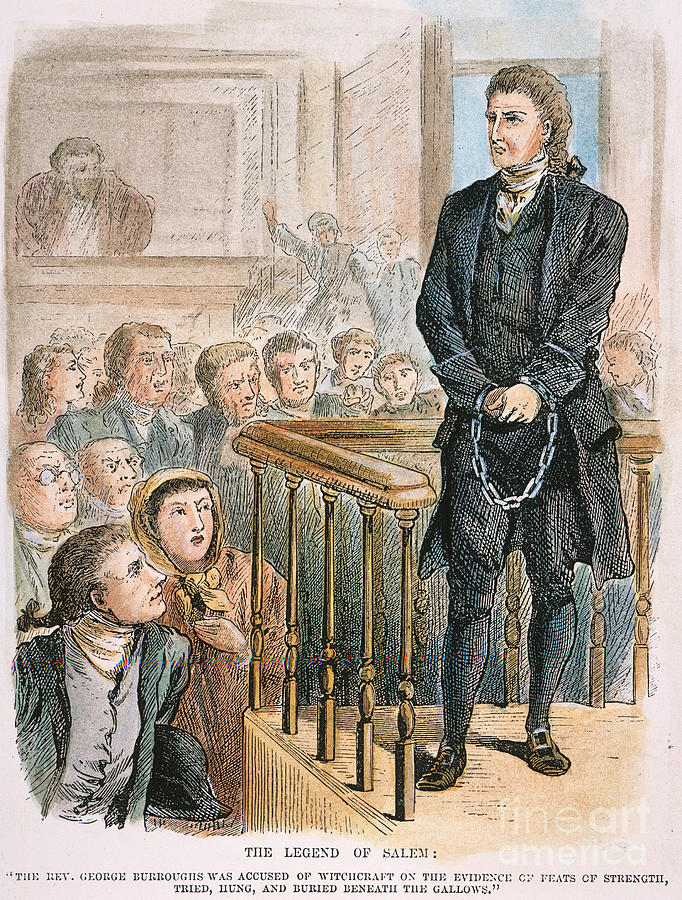
The story of the man who would hold the distinction as the only minister executed during the Salem Witch Trials, began in Suffolk, England where he was born in 1652. He emigrated to the Massachusetts Bay Colony as a young child with his mother. He graduated from Harvard University in 1670 with a degree in theology and shortly thereafter began a career as a reverend. In 1674, he moved to the outward frontier of the colony- Falmouth (Portland today), Maine.
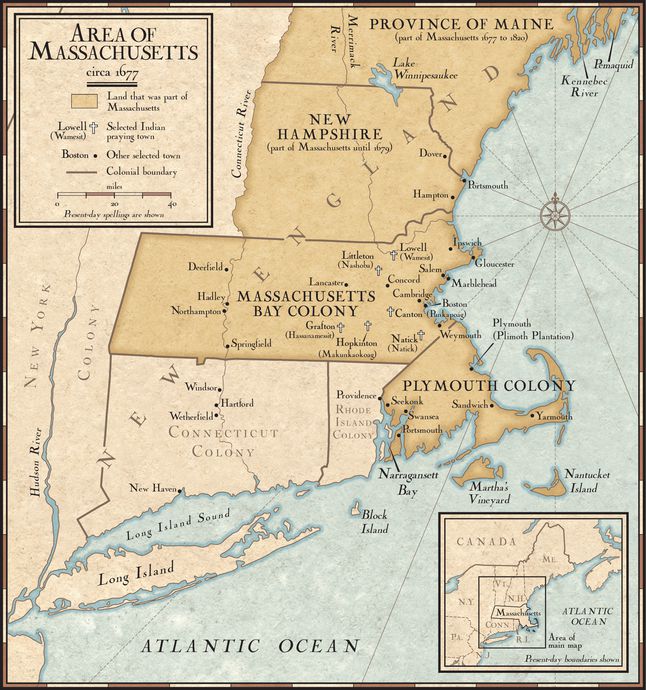
Falmouth(Portland), Maine is located south of the Kennebec River as shown in the map. This would have been thought of as the northernmost output of ‘civilization’ at this time.
Burroughs would spend the next 18 or so years moving between the Maine frontier and the Salem area of the Massachusetts Colony. During these tenuous years, there were two very deadly attacks by Native Americans on the Maine frontier (prompted by some egregious acts). Burroughs managed to live through both of them- a fact that would haunt him during the trials. It was said that he only survived because he was in ‘cohorts’ with the Native ‘Devil-worshipers’.
When he finally returned to the Salem area as a refugee from the frontier; he faced suspicion, accusation, and eventual death. One of the most important things to understand about the Puritans who lived in New England at this time is that they had very strong beliefs about the spiritual realm. The Devil, demons, witches and all forms of devilry were very real things and could and did affect the physical world they lived in.
The Puritans also considered organization, structure, and control as part of the natural, godly, order of things. This essentially meant that the Maine frontier would have been thought of as a terrifying, wild, and dangerous place. Because Burroughs had survived in this environment, he naturally fell under suspicion. And as explained earlier, he was suspected of being in cahoots with the Natives, who were thought of as a natural extension of the wild frontier and therefore evil ‘heathens’ and devil-worshipers.
To top this all off, George Burroughs had several physical traits that drew negative attention to him. Firstly, he had a very dark complexion as noted by several witnesses at his trial. George Calef said that Burroughs resembled the Natives due to his dark complexion and Abigale Williams publicly called him a ‘little black minister” (Gasser, 110). And secondly, he was known for his exceptional physical strength which some even described as supernatural.

George Burroughs, illustration published in The New England Magazine Volume 5, circa 1892
“He was accused by nine persons for extraordinary lifting, and such feats of strength as could not be done without a diabolical assistance.” – The Wonders of the Invisible Word by Cotton Mather
What becomes shockingly evident when analyzing the circumstances surrounding his trial and subsequent execution is that George Burroughs was a victim of discrimination based on his physical appearance. Two main reasons given as proof of his ‘witchcraft’ by the 30 witness who testified against him were his strength and the fact that he had ‘dark’ features (he also apparently was very strict with his wives and had toads in his house).
In the end, Burroughs was executed on August 19, 1692. The final victim of a mass hysteria that resulted in the death of 25 innocents. Burroughs was scapegoated as the ‘Confederate of the Devil’. He was said to have lured the innocent, god-fearing townsfolk of Salem and the surrounding area into making pacts with Satan and turning them into witches. In all probability, Burroughs was innocent of these things. The fact that he had escaped two attacks by Natives and had several less than desirable physical traits are what led to his death.
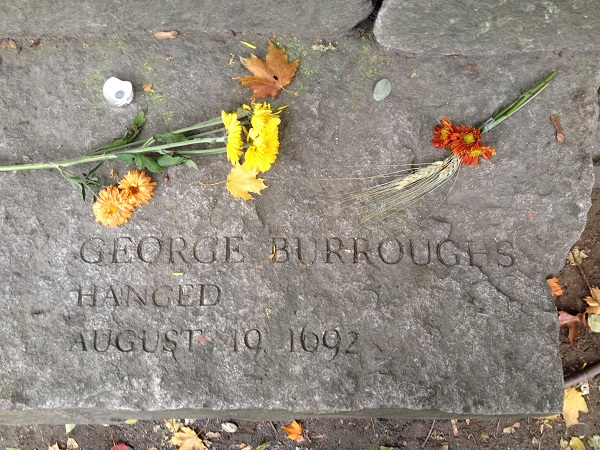
Monument to George Burroughs at the Salem Witch Trials Memorial in Salem, Massachusetts. (Photo is from historyofmassachusetts.org)
Works Cited:
Barry, William David. Maine: The Wilder Half of New England. Tilbury House Publishers; 2012
Gasser, Erika. Vexed with Devils: Manhood and Witchcraft in Old and New England; Early American Press; 2017.
Schiff, Stacey. The Witches: Salem 1692. Back Bay Books; 2016
Previous Post
December 12, 2017
Sankta Lucia: The Survival of a Nordic Sun Goddess
Next Post

January 11, 2018 Reclaiming the sacred sites of the Twin Cities
Browse Our Archives
Select a Category Archaeology France The Basics The Black Madonna the blog The Craft The History of Paganism Thoughts Travel Uncategorized United States witchcraft Witchcraft in Literature Witchery
Select a Month May 2020 February 2020 December 2019 November 2019 July 2019 May 2019 April 2019 March 2019 February 2019 January 2019 December 2018 November 2018 October 2018 August 2018 July 2018 June 2018 May 2018 April 2018 March 2018 February 2018 January 2018 December 2017 November 2017 October 2017 September 2017
Follow Us!
TAKE THE
Religious Wisdom Quiz
Who was Elijah's successor, receiving a double portion of his spirit?
Select your answer to see how you score.
Elisha Samuel Micaiah Obadiah
Related posts from The Wandering Witch

Swedish Candle Magic Spell Kits by Needfire Wellness...
Defying Museum Fatigue: 6 Tips to Keep You...
what is remembered lives: grappling with loss in...

Life Update: The Wandering Witch
TRENDING AT PATHEOS Pagan

When we talk about Greek religion, we often begin with the dodekatheion—the...

I was recently chatting with someone on Instagram. She asked me what...

While there are many people who share their results, the end of...

On July 23, I saw Christopher Nolan's The Odyssey which is Homer’s...

As I write this two big events have just finished up. One...

Restoring the Watershed of Divine Love
Perhaps cooperation is not something we manufacture through legislation, ideology, or moral...
view all Pagan blogs
Ad-Free & Subscriber Log-In Subscription Support
- About Us
- 2026 Calendar
- Videos
- Podcasts
- Library of World Religions
- Faith In Media Tracker
- Advertise With Us
- Write for Us
- Privacy Policy
- Terms of Service
- Do Not Sell My Data
- Contact Us
- Radiant Digital
- Manage Newsletter Subscriptions
- Unsubscribe From Notifications
- Sitemap
Copyright 2008-2026, Patheos. All rights reserved.
Subscription Support Ad-Free & Subscriber Log-In
Follow Patheos