
BuddhistCatholicContemplativeEvangelicalGeneral ChristianHinduJewishLatter-day SaintMuslimNew VisionsProgressive Christian
Beliefs
- Buddhist
- Catholic
- Contemplative
- Evangelical
- General Christian
- Hindu
- Jewish
- Latter-day Saint
- More Voices
- Muslim
- New Visions
- Pagan
- Progressive Christian
Topics
- Religion News
- Food and Religion
- Sports and Religion
- Religious Art
- Religious Music and Entertainment
- Religious Events
- History and Religion
- Style and Religion
- Politics and Religion
- Women in Religion
- Recreation Outdoors and Religion
- Business Finance and Religion
- Careers Workplace and Religion
- Education and Religion
- Family Parenting and Religion
- Health Fitness and Religion
- Home and Religion
- Relationships and Religion
- Technology and Religion
- Travel and Religion
Columnists
- Buddhist Columnists
- Business Finance and Religion Columnists
- Careers Workplace and Religion Columnists
- Catholic Columnists
- Contemplative Columnists
- Education and Religion Columnists
- Evangelists Columnists
- Family Parenting and Religion Columnists
- General Christian Columnists
- Health Fitness and Religion Columnists
- Hindu Columnists
- History and Religion Columnists
- Home and Religion Columnists
- Jewish Columnists
- More Voices Columnists
- Latter Day Columnists
- Muslim Columnists
- New Visions Columnists
- Nonreligious Columnists
- Pagan Columnists
- Politics and Religion Columnists
- Progressive Columnists
- Recreation Outdoors and Religion Columnists
- Relationships and Religion Columnists
- Religion News Columnists
- Religious Art Columnists
- Religious Events Columnists
- Religious Music and Entertainment Columnists
- Sports and Religion Columnists
- Style and Religion Columnists
- Technology and Religion Columnists
- Travel and Religion Columnists
- Women in Religion Columnists
Resource Library
- 2026 Calendar
- Library of World Religions
- The 100 Most Holy Places on Earth
- Patheos Answers
- Podcasts
- Videos
- Faith Leaders Database
- Anglican Episcopalian
- Bahai
- Baptist
- Buddhism
- Christianity
- Confucianism
- Eastern Orthodoxy
- Hinduism
- Holiness and Pentecostal
- ISKCON
- Islam
- Judaism
- Lutheran
- Methodist
- The Church of Jesus Christ of Latter-day Saints
- New Age
- Paganism
- Presbytarian and Reformed
- Protestantism
- Religion Behind the Scenes
- Roman Catholic
- Scientology
- Shia Islam
- Sikhism
- Sufism
- Sunni Islam
- Taoism
- Zen
- See all religions
Research Tools
 Ad-Free & Subscriber Log-In Subscription Support
Ad-Free & Subscriber Log-In Subscription Support
Follow Patheos 

- Trending:
- Forgiveness
- |
- Marriage
- |
- Consciousness
- |
- Death Penalty
- |
- Election
- |
- Halloween

- Home
- General Christian
- History and Religion
- The Quran: When Uthman Standardized the Text
The Quran: When Uthman Standardized the Text
Last updated on: July 19, 2026 at 11:50 am by Todd Weller
The Quran: When Uthman Standardized the Text 2026-07-19T11:50:45-05:00 Todd Weller
Patheos Explore the world's faith through different perspectives on religion and spirituality! Patheos has the views of the prevalent religions and spiritualities of the world.
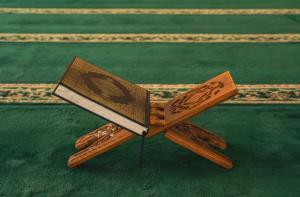
No Other Quran
In a recent debate with 20 Christian women Korra, a now popular female representative of Dawah, made a fascinating claim.
In a segment discussing the topic of preservation, Korra claimed that Muslims had a perfectly preserved Quran. Her reasoning revolved around Uthman standardizing the text, saying that because of this process, Muslims can be confident that the Quran they have in their hands is word-for-word from the Prophet.
There is a glaring problem, however: This is merely an assertion without evidence.
This is normal for Muslim Dawahgandists as they want to paint the best picture possible of their religion. Typically, they are not worried about lying in order to convice someone of their Islamic faith. This is evidenced from the many debates that anyone can find online.
For so long we’ve heard “There’s only 1 Quran that has been perfectly preserved for all time.” Some have even gone as far as saying that the Quran that was given by Muhammad is the EXACT one that is in the possession of Muslims today. (Woah)
As we discuss the issue of Quranic preservation, there are a few strands that we must piece together in order to see if the Quran was preserved dot for dot, letter for letter, as Muslim apologists so often claim.
By the way, you should watch the debate that was mentioned earlier that was conducted by The Bridge. You can find this debate at this LINK.
Who Should We Trust?
The first strand in our discussion is the issue of who standardized the text to begin with.
Muhammad, surprisingly, did not go his entire life without making friends. In fact, he often would recite the Quran to people and, according to a number of Hadith, the listeners would praise him for his knowledge and wisdom (of course, they’d probably be killed or have their family murdered if they challenged him later into his career, but this is a different story.).
As Muhammad would recite the Quran, it was necessary for the hearers to memorize it.
This is sometimes viewed as a strength within the Muslim community.
Often, you can go into a village and hear children reciting entire Surahs of the Quran, maybe even half of it. Of course, this doesn’t mean that they understand what they are reciting, but recitation is impressive in and of itself.
Eventually, Muhammad, in all of his reciting and friend-making, chose 4 people that he trusted with the recitation of the Quran. Note, the order of the listing is important. Let’s Take a look at the dream team.
According to Sahih al-Bukari 3758, as narrated by Masruq:
“`Abdullah (bin Mas`ud) was mentioned before `Abdullah bin `Amr. The latter said, “That is a man I continue to love because I heard Allah’s Messenger (ﷺ) saying, ‘ Learn the recitation of the Qur’an from (any of these) four persons: `Abdullah bin Masud, Salim the freed slave of Abu Hudhaifa, Ubai bin Ka`b, and Mu`adh bin Jabal.” I do not remember whether he mentioned Ubai first or Mu`adh.”
So who should we trust with the recitation of the Quran in order?
- Abdullah bin Masud
- Salim (the freed slave of Abu Hudhaifa)
- Ubai bin Ka’b
- Mu’adh bin Jabal.
Now while Masruq did not remember who he mentioned first between Ubai bin Ka’b and Mu’adh bin Jabal, it doesn’t matter. This detail would give priority to one over the other; a detail that automatically favors Abdullah bin Masud as being chief of the quartet.
Abdullah bin Masud makes a strong case for himself. Apparently he recited some 70 Surahs to Muhammad himself and was greatly praised for it. His mention of other companions of Muhammad being present strengthens his case since lying about this would be a grave afront.
In Shahih al-Bukari 2462, we read:
“‘Abdullah (b. Mas’ud) reported that he (said to his companions to conceal their copies of the Qur’an) and further said: He who conceals anything he shall have to bring that which he had concealed on the Day of judgment, and then said: After whose mode of recitation you command me to recite? I in fact recited before AIlah’s Messenger (sallAllaahu alayhi wa sallam) more than seventy chapters of the Qur’an and the Companions of Allaah’s Messenger (sallAllaahu alayhi wa sallam) know it that I have better understanding of the Book of Allaah (than they do), and if I were to know that someone had better understanding than I, I would have gone to him. Shaqiq said: I sat in the company of the Companions of Mubkmmad (sallAllaahu alayhi wa sallam) but I did not hear anyone having rejected that (that is, his recitation) or finding fault with it.”
Here’s what we learn:
- bin Mas’ud Told his companions to conceal their copies of the Qur’an. (More on this later)
- bin Mas’ud recited seventy chapters (surahs) of the Qur’an to Muhammad himself.
- The Companions of Muhammad respect his authority on the Quran
- Shaqiq heard no one object to Muhammad’s praise of him.
Based on the evidence, Ibn Masud seems like someone that I would trust if I wanted to faithfully preserve the Quran. If I were to, let’s say, standardize the text of the Quran, you would think that I would go to him for his advice and assistance. Right?
Is this what Islamic leadership did following the death of the prophet? Let’s find out together.
Quranic Standardization
Following the death of the Prophet, it turns out that the Oral tradition of learning and reciting the Quran was failing. The warlike Arabian tribes, now accepting the idea of being a big, happy Ummah, believed themselves to be unstoppable with their newfound theological unification.
And so, with this newfound Islamic family, the desert dwellers go on Jihad immediately. Only, there are a few problems. Many reciters of the Quran were fighting in wars of apostasy. This is because there was a belief that Allah would surely protect those who carried his Word in their hearts since he promised to protect his revelation.
This was not case.
At the Battle of al-Yamama, a countless number of those who supposedly memorized the Quran perished. This led to a problem:
The Quran could not adequately be preserved if they suffer any more battles.
A solution needed to be proposed.
And our hero, Caliph Abu Bakr As-Saddiq, decides that he is going to come to the rescue.
Let’s see what he does at length:
Sahih Al-Bukhari 4986 Pt. 1 [Parts are done by me]
Narrated Zaid bin Thabit:
“Abu Bakr As-Siddiq sent for me when the people of Yamama had been killed (i.e., a number of the Prophet’s Companions who fought against Musailima). (I went to him) and found `Umar bin Al- Khattab sitting with him. Abu Bakr then said (to me), “`Umar has come to me and said: “Casualties were heavy among the Qurra’ of the Qur’an (i.e. those who knew the Qur’an by heart) on the day of the Battle of Yamama, and I am afraid that more heavy casualties may take place among the Qurra’ on other battlefields, whereby a large part of the Qur’an may be lost. Therefore I suggest, you (Abu Bakr) order that the Qur’an be collected.” I said to `Umar, “How can you do something which Allah’s Messenger (ﷺ) did not do?” `Umar said, “By Allah, that is a good project.”
Key information from Part 1
I’ve already recounted the Battle of al-Yamama briefly. But we need to recognize that Abu Bakr as-Saddiq, First Caliph and cousin to Muhammad, did not want to undergo this project. Umar, perhaps, overstepped his bounds.
His main qualm is that this was not something that Muhammad had done nor was it something that he had commissioned while alive. Of course, however, he acquiesced.
I personally would find it strange if I found out that the people who put together the Quran were willing to not follow the Prophet’s example. This is especially so if I am supposed to follow this Prophet’s example to the T.
This leads us to Part 2 of Shaih Al-Bukhari 4986.
Sahih Al-Bukhari 4986 Pt. 2
`Umar kept on urging me to accept his proposal till Allah opened my chest for it and I began to realize the good in the idea which `Umar had realized.” Then Abu Bakr said (to me). ‘You are a wise young man and we do not have any suspicion about you, and you used to write the Divine Inspiration for Allah’s Messenger (ﷺ) . So you should search for (the fragmentary scripts of) the Qur’an and collect it in one book.” By Allah If they had ordered me to shift one of the mountains, it would not have been heavier for me than this ordering me to collect the Qur’an. Then I said to Abu Bakr, “How will you do something which Allah’s Messenger (ﷺ) did not do?” Abu Bakr replied, “By Allah, it is a good project.” Abu Bakr kept on urging me to accept his idea until Allah opened my chest for what He had opened the chests of Abu Bakr and `Umar.
Key information from Part 2
While Zaid, rightfully, questioned the order to standardize the Quran, he eventually gave way. Abu Bakr chose him because, apparently, he was one of the scribes of the Prophet. This should be a no brainer choice. Yet, keep in mind that Muhammad did not name Zaid as someone to learn the Quran from. Bakr wanted Zaid to collect the Quran into one piece of literature which was an incredibly huge task for Zaid at his own admission. Let’s look at the last part of this Hadith.
Sahih al-Bukhari 4986 Pt 3.
So I started looking for the Qur’an and collecting it from (what was written on) palm stalks, thin white stones and also from the men who knew it by heart, till I found the last Verse of Surat at-Tauba (Repentance) with Abi Khuzaima Al-Ansari, and I did not find it with anybody other than him. The Verse is: ‘Verily there has come unto you an Messenger (Muhammad) from amongst yourselves. It grieves him that you should receive any injury or difficulty..(till the end of Surat-Baraa’ (at-Tauba) (9:128-129). Then the complete manuscripts (copy) of the Qur’an remained with Abu Bakr till he died, then with `Umar till the end of his life, and then with Hafsa, the daughter of `Umar.’
Let’s Break this Last Part Down
Zaid began his search and something peculiar, at least in my mind, occured. He found an ayah, that was only known by Abi Khuzaima Al-Ansari. Here’s the question.
If this verse was only known by Abi, then who’s to say that others did not forget entire surahs.
In fact, we see that Muhammad himself forgot entire Surahs! See for yourself!
If the Prophet himself forgot Surahs, this calls into question the common claim that the Quran was preserved to the letter. Here’s why this is a problem. The Quran is supposedly eternal as it is a part and production of Allah’s speech.
This would mean that there must be a piece of Allah’s speech that is missing if it is being forgotten.
The odds of this are truly tremendous.
A Quick Note to Close Out
At the beginning of this article, I mentioned a list of names that was provided by the Prophet of people from whom one could trust with the Quran. The chief of this quartet was Abdullah Ibn Mas’ud. As you have noticed, Zain bin Thabit was not on the list given. In fact, if one examines the list of people who are said to have compiled the Quran, ONLY ONE of them are members of the list given by Muhammad. And no, it’s not Ibn Mas’ud. You can see for yourself HERE.
Now, following the deaths of Abu Bakr and Umar, the second Caliph, Uthman has his own concerns. There appear to be different recitations of the Quran! Shocker! He then sent a message to Hafsa to collect the manuscript of Abu Bakr to have it rewritten and standardized.
Mas’ud, receiving a simliar message, was not a fan of the idea. Thus, he ordered his companions to hide their copies so that they would not be standardized. This was a good idea, as once the Quran was standardized, all of the materials both fragmentary and whole were burned (Sahih Al-Bukhari 4987.) (This, as it turns out, included Abu Bakr’s rendition following the funeral of Hafsa. Ibn Abi Dawud reports this in his commentary on Sahih al-Bukhari.)
Some of the critques of Biblical transmission that are popular revolve around the number of variants in the manuscript tradition. Yet, its BECAUSE of these variants that we are able to trace the transmission of the text with 99% accuracy.
With the standarization of the text by Uthman, we are unable to accurately trace faithful transmission due to his strategy. Of course, in the manuscript tradition there are PLENTY of variants to choose from. But there SHOULD be so many more.
Closing Out
All-in-all, the chief recitors of the Quran as listed by Muhammad were not consulted about standardizing the text. What’s more, Mas’ud himself ordered the hiding of his rendition of the Quran as not have it tamepered with.
This should be concerning for Muslims.
If the chief recitor of the Quran is hiding his version from the standardization process, then what does that say about the authority that began the process to begin with.
What are your thoughts?
Is the Quran perfectly preserved?
How does Standardizing the Text of the Quran help or hurt its Testimony?
Leave your thoughts in the comments below! Make sure to stay respectful.
Continue to follow our content in the following ways…
Check out my last article as I tied the Muslim concept of Jihad to the London Rape Gangs: HERE
Make sure to subscribe to our Newsletter
You can follow us on X with our new brand “The Apologia Post,” -> HERE
You can follow us on TikTok with our new brand “The Apologia Post,” -> HERE
Muslim
History and Religion
Education and Religion
Previous Post

July 10, 2026
Jihad and the London Rape Gangs
Next Post
July 23, 2026 Muhammad's Youngest Bride: Challenging Muhammad's Character
Recent Comments
"1 and 2. Sunan an-Nasai 3378; Sunan an-Nasai 3379; Sahih al-Bukhari 3896; Sahih al-Bukhari 5133. ..."
Muhammad’s Youngest Bride: Challenging Muhammad’s Character
"Mr. Todd still tou are trying to proof a point with false and misleading information. ..."
Guest
Muhammad’s Youngest Bride: Challenging Muhammad’s Character
"Hello Tod,I read your comments and still yiu misleading the readers. In response to your ..."
Guest
Muhammad’s Youngest Bride: Challenging Muhammad’s Character
"Are you referring to Islam?"
Muhammad’s Youngest Bride: Challenging Muhammad’s Character
Browse Our Archives
Select a Category Christmas Cultural Issues Dealing With Doubt Islam The Bible The Church The Cross and It's Impact Theology Uncategorized Youth Ministry
Select a Month September 2026 August 2026 July 2026 June 2026 March 2025 February 2025 January 2025 December 2024 August 2024 July 2024 June 2024 May 2024 April 2024 March 2024 January 2024 December 2023 September 2023 July 2023 May 2023 February 2023 January 2023 December 2022 September 2022 August 2022 July 2022
TAKE THE
Religious Wisdom Quiz
What does "Sabbath" mean?
Select your answer to see how you score.
Feast Sacrifice Holy Rest
Related posts from The Thinking Theist

General Christian
Who is Most Miserable According to Muhammad's Wife?

General Christian
Should We Believe that Muhammad Split the Moon?

General Christian
How old was Aisha (really) when She Married...
General Christian
Muhammad's Youngest Bride: Challenging Muhammad's Character
TRENDING AT PATHEOS General Christian

A Biblical Vision of Success in Christian Life...
The Concern and Quest Recent trends and tendencies I note around me...

Indigenous Peoples’ Day and the Church
Indigenous' Peoples Day or Columbus Day? Depending on where you live...

When Spiritual Growth Looks Like Losing Ground
Four Passive Spiritual Disciplines: An Introduction When I was a college freshman,...

Faith and Finding Your Current Season
“To everything there is a season,” Ecclesiastes tells us, “and a time...

Did Jesus Fear God's Wrath in Gethsemane?
That Time Jesus Was Terrified Before we begin, let me say at...

A Generation Searching for God in All the...
Revival Begins With God’s People! Holidays Are Upon Us! Welcome to October!...
view all General Christian blogs
What Are Your Thoughts?leave a comment
Ad-Free & Subscriber Log-In Subscription Support
- About Us
- 2026 Calendar
- Videos
- Podcasts
- Library of World Religions
- Faith In Media Tracker
- Advertise With Us
- Write for Us
- Privacy Policy
- Terms of Service
- Do Not Sell My Data
- Contact Us
- Radiant Digital
- Manage Newsletter Subscriptions
- Unsubscribe From Notifications
- Sitemap
Copyright 2008-2026, Patheos. All rights reserved.
Subscription Support Ad-Free & Subscriber Log-In
Follow Patheos