
BuddhistCatholicContemplativeEvangelicalGeneral ChristianHinduJewishLatter-day SaintMuslimNew VisionsProgressive Christian
Beliefs
- Buddhist
- Catholic
- Contemplative
- Evangelical
- General Christian
- Hindu
- Jewish
- Latter-day Saint
- More Voices
- Muslim
- New Visions
- Pagan
- Progressive Christian
Topics
- Religion News
- Food and Religion
- Sports and Religion
- Religious Art
- Religious Music and Entertainment
- Religious Events
- History and Religion
- Style and Religion
- Politics and Religion
- Women in Religion
- Recreation Outdoors and Religion
- Business Finance and Religion
- Careers Workplace and Religion
- Education and Religion
- Family Parenting and Religion
- Health Fitness and Religion
- Home and Religion
- Relationships and Religion
- Technology and Religion
- Travel and Religion
Columnists
- Buddhist Columnists
- Business Finance and Religion Columnists
- Careers Workplace and Religion Columnists
- Catholic Columnists
- Contemplative Columnists
- Education and Religion Columnists
- Evangelists Columnists
- Family Parenting and Religion Columnists
- General Christian Columnists
- Health Fitness and Religion Columnists
- Hindu Columnists
- History and Religion Columnists
- Home and Religion Columnists
- Jewish Columnists
- More Voices Columnists
- Latter Day Columnists
- Muslim Columnists
- New Visions Columnists
- Nonreligious Columnists
- Pagan Columnists
- Politics and Religion Columnists
- Progressive Columnists
- Recreation Outdoors and Religion Columnists
- Relationships and Religion Columnists
- Religion News Columnists
- Religious Art Columnists
- Religious Events Columnists
- Religious Music and Entertainment Columnists
- Sports and Religion Columnists
- Style and Religion Columnists
- Technology and Religion Columnists
- Travel and Religion Columnists
- Women in Religion Columnists
Resource Library
- 2026 Calendar
- Library of World Religions
- The 100 Most Holy Places on Earth
- Patheos Answers
- Podcasts
- Videos
- Faith Leaders Database
- Anglican Episcopalian
- Bahai
- Baptist
- Buddhism
- Christianity
- Confucianism
- Eastern Orthodoxy
- Hinduism
- Holiness and Pentecostal
- ISKCON
- Islam
- Judaism
- Lutheran
- Methodist
- The Church of Jesus Christ of Latter-day Saints
- New Age
- Paganism
- Presbytarian and Reformed
- Protestantism
- Religion Behind the Scenes
- Roman Catholic
- Scientology
- Shia Islam
- Sikhism
- Sufism
- Sunni Islam
- Taoism
- Zen
- See all religions
Research Tools
 Ad-Free & Subscriber Log-In Subscription Support
Ad-Free & Subscriber Log-In Subscription Support
Follow Patheos 

- Trending:
- Forgiveness
- |
- Marriage
- |
- Consciousness
- |
- Death Penalty
- |
- Election
- |
- Halloween

- Home
- General Christian
- Home and Religion
- Don’t Touch the Ark: Lessons from Uzzah on Worship
Don’t Touch the Ark: Lessons from Uzzah on Worship
Last updated on: December 12, 2024 at 1:59 pm by Todd Weller
Don’t Touch the Ark: Lessons from Uzzah on Worship 2024-12-12T13:59:39-05:00 Todd Weller
Patheos Explore the world's faith through different perspectives on religion and spirituality! Patheos has the views of the prevalent religions and spiritualities of the world.
”
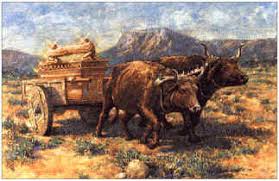
Worship.
It’s something that every Christian strives to do with their lives. In one of Paul’s exhortations to the Church, he writes to offer our bodies as a living sacrifice Holy and pleasing to God. We are to offer ourselves, every bit of ourselves, to the Lord. And yet, there is a way for us to do so that honors the Lord, and there is a way to attempt to worship that is not.
Have you ever thought about how serious it is to worship a Holy God? Have you considered the importance of getting it right if there were such a thing as “right worship”? Has the question, “What if I am worshipping the Lord wrong,” ever crossed your mind? What would the repercussions be?
I have some thoughts about worship that may be unpopular with some. And I think that’s ok. In both the Old and New Testaments, God prescribes for us how we, His covenant people, are to worship Him. This article’s aim is to briefly survey God’s commands about worship. For if God has a certain way that He desires to be worshipped, then why wouldn’t we listen?
Don’t Touch the Ark
Have you ever read the Old Testament, come across a narrative, and think, “Why on earth did this happen?” There is one story in particular that strikes me. This is the story of Uzzah.
Uzzah’s name is not mentioned often. In fact, the authors mention his name only 9 times: 4 times in 2 Samuel, 4 times in 2 Chronicles in the same incident, and once more in 2 Chronicles in a genealogy.
Talk about a reputation.
Here is a snapshot of Uzzah’s story:
- David defeats the Philistines pretty handedly
- David brings 30,000 men to Baalah in Judah to bring the ark back to Jerusalem
- They set the ark on a cart.
- Uzzah and Ahio were guiding the cart with the ark on it.
- The oxen pulling the cart began to stumble, causing the ark to move.
- Uzzah reached out and touched the ark to keep it from hitting the ground.
- Because Uzzah touched the ark, Yahweh struck him down and he died.
WHAT!? REALLY!?
Talk about a serious story. What on earth did Uzzah do that was so bad?
There are a couple of things to note about this story.
First, God Sets The Parameters for Who Touches the Ark
Many times we like to think that God accepts all forms of worship and that anything goes. Afterall, why wouldn’t we be able to honor God in any way as long as our heart is in the right place?
And yet, this seems to go against what we see in scripture.
For instance, in the case of Uzzah, God set up rules for who was to carry the ark and how not to carry it. Here’s what we know:
- First, the ark was not to be placed on a cart. According to the Law, the carriers of ark must carry it by the 2 poles on the sides. (Exodus 25:11-15)
- This law was broken as the ark was placed on a cart.
- Second, the Levites carry the ark. The Levites were descended from Levi. This includes Aaron and his sons. They were given authority over everything having to do with the ark, sacrifices, and the Holy of Holies. (Exodus 28:2, Numbers 18: 1-7).
- It appears that this law was broken as well. The descendants of Aaron are not present from what we can tell from the text. There also seems to be no biblical evidence that Uzzah was a Levite.
- Third, David was careless in letting this happen this way. He was well aware of the Law as he had served in the king’s court for some time before becoming king himself. His carelessness as a leader led others into disobedience. Bad leadership leads to catastrophe.
Subjectively, Uzzah’s heart may have been in the right place. I also wouldn’t want the ark to hit the ground. But disobedience to the Lord matters even if our heart is leading us to do so. Our intentions mean nothing if the actions that follow go against God’s Law.
Second, God Sets Parameters For Worship
How we relate to God matters. And I would venture to say that how we worship matters. This is not only evident in the writings of the Law but is also evident in the New Covenant in the writings of Paul and in the teaching of Jesus. Let’s start by taking a look at the Old Testament.
a. God Sets the Standard for Sacrifice
At the heart of the worship of Yahweh was sacrifice in the context of covenant. It was in the sacrificial system that Israel was to relate to God. Through sacrifice, Israel gave thanks to Yahweh, praised Yahweh, and asked for forgiveness from Yahweh when they broke their covenant promise. And guess what, God set the parameters for what was to be sacrificed, how it was to be sacrificed, and by whom.
In Leviticus 1-7, the reader sees regulations for burnt offerings, grain offerings, fellowship offerings, and sin/guilt offerings. What separates these codes from the rest of the ancient world is that Yahweh provides a way for all to come to the table, rich and poor, even foreigners who wish to follow Yahweh. For Yahweh to covenant with people in a personal way was not seen before in the Ancient Near East. All are able to fellowship with Yahweh. But Yahweh gives each person the parameters for which they are to sacrifice.
b. God Sets the Standard for Who is to Be Worshipped
Of course, much can be said about idolatry. It seems to be a no-brainer for anyone who’s read the Bible that God thinks of it in the harshest of terms (God often likened idol worship to prostitution and adultery). Yet, it must be said that God sets the standard for who is owed worship. Followers of Yahweh worship Him and Him alone. He shares no throne, no praises, and no authority. He alone is the sovereign king of the heavens and earth who covenants with His people.
The first two commands of the decalogue highlights this reality:
“You shall have no other gods before me. “You shall not make for yourself an image in the form of anything in heaven above or on the earth beneath or in the waters below.” … “not bow down to them or worship them; for I, the Lord your God, am a jealous God, punishing the children for the sin of the parents to the third and fourth generation of those who hate me, but showing love to a thousand generations of those who love me and keep my commandments.” – Exodus 20:3-6
One may notice that these commands say nothing of the non-existence of other deities. But as John Walton notices in His book Introducing the Conceptual World of the Hebrew Bible: Ancient Near Eastern Thought and the Old Testament, the first and second commandments do “not insist that the other gods are nonexistent but that they are powerless; it disenfranchises them. It does not simply say that they should not be worshiped; it leaves them with no status worthy of worship” (Page 120).
God shares not His throne nor the worship that we owe Him. Put nothing before the Lord in your hearts and minds.
c. God Sets the Standard for What Worship Looks Like In the New Testament
As we turn to the New Testament, there are a couple of common misconceptions that occur:
- We should unhitch our faith from the Old Testament
- There is incongruence between the authority of Paul and the authority of Jesus.
Don’t Unhitch
What we learn in the Old Testament is that God is Holy and has expectations for His followers. His covenant people are to act in a certain way and are to have their hearts in a certain posture towards Him. Followers of Jesus adhere to Old Testament commands so long as they have not been fulfilled by Jesus’ ministry on Earth. The laws pertaining to ceremony and the national separation of Israel have no bearing on followers of Jesus since His sacrifice on the cross fulfills these laws. The moral laws, and what we learn from how serious God takes worship stays as they are repeated in the New Testament.
Quick Notes on Paul
I’ve often seen people say, “Well. Jesus didn’t say that. Paul said that.” On one level. Sure. Paul is the one who physically puts pen to paper and who is making the commands. And yet, the Apostles were the ones who were to carry the teachings of Jesus forward. Here are some notes on Paul:
- First, When he was in school, Paul learned from Gamaliel, a Pharisee (Acts 22:3), so he knows the Scriptures and what to expect of the Messiah.
- Second, Paul met with Peter and James (Galatians 1: 18-19), two well-known leaders of the Church.
- Third, Paul made it to Jerusalem a 2nd time to confer with the leaders of the church and to be sure that his Gospel was true. (Galatians 2: 1-2)
- Fourth, Peter counts Paul’s letters as being alongside “the other scriptures.” (2 Peter 3: 14-16) This statement upholds Paul’s letters to a sacredness that only God’s words are held too. Paul’s words are held to the same level as the Law of Moses. His letters are authoritative.
- Fifth, Paul’s conversion is one of the most drastic changes. Paul persecutes Christians and oversees their execution at times. Then Paul changes rank and becomes a believer. Imagine the most heinous person you can think of becoming a follower of Jesus and seeing their life make a dramatic 180.
Third, God Sets the Standard for Order in the Congregation
We’ve all seen the videos of hyper-charismatic groups dancing and sprinting up and down the aisle during worship. We’ve seen, and maybe even heard well-meaning followers of Jesus “speaking in tongues” at their worship services loudly for all to hear. And if you’re like me, some of your favorite contemporary worship songs are from more charismatic groups.
Now, to put it bluntly, and it pains me to say this, there is something that happens in these songs that is genuinely concerning: The abuse of tongues. It seems to go directly against what Paul instructs the Church to do.
In other words. It seems to go directly against God’s word. In Paul’s 2nd letter to the Corinthians (1 Corinthians 14 to be clear), he writes of order in the church during worship. Some folks spoke in tongues without a translator (some were even making unintelligible noises and calling it tongues…), people prophecied over each other, visitors would leave and think that they were crazy. Women, we can infer from the text, using their new-found freedom in Christ, were speaking out in the Church and causing a disturbance. Thus Paul asked them to remain silent and learn quietly.
The Issue Overall
Basically, it was a well-intentioned mess. Here’s Paul’s point: The gifts of the Spirit and the freedoms in Christ are for the edification of the Body, the Church. They are not for personal gain, nor are they for building oneself as hyper spiritual. They are for the building of the Church.
Church leaders should make sure that the congregation worships in order. We do not worship stiffly. For instance, we can be joyful in our worship and ordered.
Concluding Thoughts
I pray that we begin to love God so much that it leads us to obedience. As Jesus said, “If you love me, you will keep my commands.” (John 14: 15)
I hope that God stirs us to honor the Lord with our hearts and minds. And worship Him in order and in the way in which He desires. Afterall, if we truly love the Lord, then we should wish to worship Him rightly.
What are your thoughts? Is there a right and/or wrong way to worship?
Leave a Comment Below!
Continue to follow our content in the following ways…
Make sure to subscribe to our Newsletter!
You can follow us on Facebook by clicking Here
Find us on X @TheistThinking
Check Out Our Last Article as we unpack anger and how it relates to the heart of God.
Evangelical
Home and Religion
Education and Religion
Previous Post
July 28, 2024
Anger and the Heart of God
Next Post

August 16, 2024 Jesus the Youth Pastor: A Poem
Recent Comments
"1 and 2. Sunan an-Nasai 3378; Sunan an-Nasai 3379; Sahih al-Bukhari 3896; Sahih al-Bukhari 5133. ..."
Muhammad’s Youngest Bride: Challenging Muhammad’s Character
"Mr. Todd still tou are trying to proof a point with false and misleading information. ..."
Guest
Muhammad’s Youngest Bride: Challenging Muhammad’s Character
"Hello Tod,I read your comments and still yiu misleading the readers. In response to your ..."
Guest
Muhammad’s Youngest Bride: Challenging Muhammad’s Character
"Are you referring to Islam?"
Muhammad’s Youngest Bride: Challenging Muhammad’s Character
Browse Our Archives
Select a Category Christmas Cultural Issues Dealing With Doubt Islam The Bible The Church The Cross and It's Impact Theology Uncategorized Youth Ministry
Select a Month September 2026 August 2026 July 2026 June 2026 March 2025 February 2025 January 2025 December 2024 August 2024 July 2024 June 2024 May 2024 April 2024 March 2024 January 2024 December 2023 September 2023 July 2023 May 2023 February 2023 January 2023 December 2022 September 2022 August 2022 July 2022
TAKE THE
Religious Wisdom Quiz
Who saw a vision of four beasts coming out of the sea?
Select your answer to see how you score.
Ezekiel Daniel Amos Joel
Related posts from The Thinking Theist
General Christian
What Does It Mean to Be Born Again?
General Christian

General Christian

General Christian
You Can't Legislate Morality: The Ultimate Political Lie
TRENDING AT PATHEOS General Christian

A Biblical Vision of Success in Christian Life...
The Concern and Quest Recent trends and tendencies I note around me...

Indigenous Peoples’ Day and the Church
Indigenous' Peoples Day or Columbus Day? Depending on where you live...

When Spiritual Growth Looks Like Losing Ground
Four Passive Spiritual Disciplines: An Introduction When I was a college freshman,...

Faith and Finding Your Current Season
“To everything there is a season,” Ecclesiastes tells us, “and a time...

Did Jesus Fear God's Wrath in Gethsemane?
That Time Jesus Was Terrified Before we begin, let me say at...

A Generation Searching for God in All the...
Revival Begins With God’s People! Holidays Are Upon Us! Welcome to October!...
view all General Christian blogs
What Are Your Thoughts?leave a comment
Ad-Free & Subscriber Log-In Subscription Support
- About Us
- 2026 Calendar
- Videos
- Podcasts
- Library of World Religions
- Faith In Media Tracker
- Advertise With Us
- Write for Us
- Privacy Policy
- Terms of Service
- Do Not Sell My Data
- Contact Us
- Radiant Digital
- Manage Newsletter Subscriptions
- Unsubscribe From Notifications
- Sitemap
Copyright 2008-2026, Patheos. All rights reserved.
Subscription Support Ad-Free & Subscriber Log-In
Follow Patheos