
BuddhistCatholicContemplativeEvangelicalGeneral ChristianHinduJewishLatter-day SaintMuslimNew VisionsProgressive Christian
Beliefs
- Buddhist
- Catholic
- Contemplative
- Evangelical
- General Christian
- Hindu
- Jewish
- Latter-day Saint
- More Voices
- Muslim
- New Visions
- Pagan
- Progressive Christian
Topics
- Religion News
- Food and Religion
- Sports and Religion
- Religious Art
- Religious Music and Entertainment
- Religious Events
- History and Religion
- Style and Religion
- Politics and Religion
- Women in Religion
- Recreation Outdoors and Religion
- Business Finance and Religion
- Careers Workplace and Religion
- Education and Religion
- Family Parenting and Religion
- Health Fitness and Religion
- Home and Religion
- Relationships and Religion
- Technology and Religion
- Travel and Religion
Columnists
- Buddhist Columnists
- Business Finance and Religion Columnists
- Careers Workplace and Religion Columnists
- Catholic Columnists
- Contemplative Columnists
- Education and Religion Columnists
- Evangelists Columnists
- Family Parenting and Religion Columnists
- General Christian Columnists
- Health Fitness and Religion Columnists
- Hindu Columnists
- History and Religion Columnists
- Home and Religion Columnists
- Jewish Columnists
- More Voices Columnists
- Latter Day Columnists
- Muslim Columnists
- New Visions Columnists
- Nonreligious Columnists
- Pagan Columnists
- Politics and Religion Columnists
- Progressive Columnists
- Recreation Outdoors and Religion Columnists
- Relationships and Religion Columnists
- Religion News Columnists
- Religious Art Columnists
- Religious Events Columnists
- Religious Music and Entertainment Columnists
- Sports and Religion Columnists
- Style and Religion Columnists
- Technology and Religion Columnists
- Travel and Religion Columnists
- Women in Religion Columnists
Resource Library
- 2026 Calendar
- Library of World Religions
- The 100 Most Holy Places on Earth
- Patheos Answers
- Podcasts
- Videos
- Faith Leaders Database
- Anglican Episcopalian
- Bahai
- Baptist
- Buddhism
- Christianity
- Confucianism
- Eastern Orthodoxy
- Hinduism
- Holiness and Pentecostal
- ISKCON
- Islam
- Judaism
- Lutheran
- Methodist
- The Church of Jesus Christ of Latter-day Saints
- New Age
- Paganism
- Presbytarian and Reformed
- Protestantism
- Religion Behind the Scenes
- Roman Catholic
- Scientology
- Shia Islam
- Sikhism
- Sufism
- Sunni Islam
- Taoism
- Zen
- See all religions
Research Tools
 Ad-Free & Subscriber Log-In Subscription Support
Ad-Free & Subscriber Log-In Subscription Support
Follow Patheos 

- Trending:
- Forgiveness
- |
- Marriage
- |
- Consciousness
- |
- Death Penalty
- |
- Election
- |
- Halloween

- Home
- General Christian
- Religious Art
- Trying To Make Heads of Tales in Kendrick Lamar’s “Prayer”
Trying To Make Heads of Tales in Kendrick Lamar’s “Prayer”
Last updated on: August 3, 2026 at 4:33 am by Alan Lechusza Aquallo
Trying To Make Heads of Tales in Kendrick Lamar’s “Prayer” 2026-08-03T04:33:02-07:00 Alan Lechusza Aquallo
Patheos Explore the world's faith through different perspectives on religion and spirituality! Patheos has the views of the prevalent religions and spiritualities of the world.
“I give thee charge in the sight of God, who quickeneth all things, and before Christ Jesus, who before Pontius Pilate witnessed a good confession” (1 Timothy 6:13 KJV).
When this article was released on July 20, 2026, by Hip Hop and More, one could almost feel the shock in the Hip Hop community.
New Kendrick Lamar Song ‘How To Pray’ With DJ Dahi & Amber Mark Previewed On Childish Gambino…
“For fans of Kendrick Lamar who have been waiting for a new sonic treat from the masterful emcee — there is a new song…”
Rapidly picked up by other Hip Hop news sources, this new release drew attention not only to this current work, but to an older presumed lost work by Kendrick Lamar.
Released on July 26, 2026, “Prayer” has its inception as far back as August 18, 2020. Part of a larger collection for Kendrick Lamar’s fifth studio recording, it’s the track “Prayer” that has become synonymous with the artistic work. The most recent releases of the work have shed new light on it.
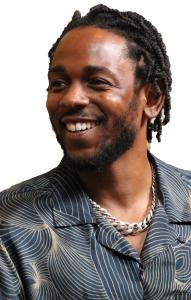
Photo | Kendrick Lamar | courtesy of Fuzhead, Wikimedia Creative Commons
Kendrick Lamar, Prayer, 2026.
Lyrics Edition
Reviews of the work have been reserved for the Hip Hop and Pop culture communities. The content provided about the work centers mainly on the lyrics and how these are deeply expressed thoughts from Kendrick Lamar stemming from a time when he was working through personal and professional struggles.
This glamorized, romantic view of the troubled artistic genius works against the narrative of “Prayer.” Yet, what is missing is a socio-religious, theomusicological analysis of the work. Absent any video, the still images for online reference underscore the urgency to analyze this work from a socio-religious, theomusicological perspective.
The three verses of the entire work illustrate Kendrick Lamar’s invested interest in sociologically deconstructing his position in line with two of his heroes, Michael Jackson and Dr. Martin Luther King Jr. This is the point where Pop culture and Hip Hop sources cease their attention to the work “Prayer.”
The consistent accolades provided for this work as genius appear to serve the generalization of the work. Online commentaries strive to shed a bit more attention, yet retain this narrative code of working through the lyrics, addressing how Kendrick Lamar assigns his position in line with his larger-than-life predecessors. The furthest any analysis has gone with “Prayer” gives attention to how Kendrick Lamar may see this work as an attempt to sidestep the romanticization of the disturbed cultural icon; all men fail at some point in their life, but do those faults discredit their important contributions?
Kendrick Lamar navigates two streams simultaneously: one of pop culture’s desire, and the other of personal fear. The result of this methodology by Kendrick Lamar is a complex surface reading of the work with an even more complicated in-depth reading. In true form, Kendrick Lamar maneuvers socio-political references while generating a critique of culture. The expansion of this methodology in “Prayer” unfolds in the brevity of the work; it’s only three verses, with each verse reserved for a particular inner subject.
Sociologically, Kendrick Lamar floats between actor and witness, subject and viewer, insider abjection-outsider object. Reviewers are sensitive to this point, but fall back on the history Kendrick Lamar troups rather than advancing to see how Kendrick Lamar arranges this sociolinguistic process. A challenging discipline, but worth the additional listening and attention to the work, in particular if one prescribes the work as being “genius” or one of Kendrick Lamar’s “most important works.”
Prayer: An Overview
“Therefore confess your sins to each other and pray for each other so that you may be healed. The prayer of a righteous person is powerful and effective” (James 5:16 NKJV).
ForForder, “Kendrick Lamar ‘The prayer’ NEW FULL LEAK [UNRELEASED],” July 26, 2026.
2B2T Community Channel/Infi, “Kendrick Lamar, ‘Pray,'” leak date, October 8, 2025; release date 2019/August 18, 2020.
The content provided by 2B2T Community Channel/Infi reveals the salient background of the work.
“On ‘Pray,’ Kendrick Lamar reflects over ‘the voices of art’ and personifies a song by Michael Jackson and a speech by Martin Luther King, Jr., respectively. In each of the first two verses, Lamar mentions two dates that relate to the lives of each man—The Jackson 5’s ‘ABC’ released on February 24, 1970, and MLK delivered his ‘I Have A Dream’ speech on August 28, 1963.
“Kendrick uses every verse to explore how the media is quick to dismiss an artist’s contributions to society due to their personal shortcomings—he specifically delves into Jackson’s pedophilia accusations and King’s marital infidelity. In the final verse, Kendrick establishes that artists bring meaning to the world regardless of their individual imperfections.
“[The work is mastered] by rockowo, which [adds] the Intro from [Verse]2, mixes the official Acapella from the studio session, mixes the [Verse]3 instrumentation, has the outro from [Verse]3, basically a big combination of every version we have! Tried to mix it as beautifully as possible; may take a stab again at it in the future, but I believe it’s got everything!’
“[The] OG Filename: Spotless. The song was recorded in 2019 in the same session as ‘Friends’ and originally was sold to okcool by SpirDark. It was leaked on August 18th, 2020, after being passed around by Alek under the name ‘Prayer.’ However, it was only ever titled ‘Pray’ and ‘Mr. Morale’; the name Mr. Morale was the main name used for the sessions. It was ultimately scrapped due to the song being leaked.
“Also mistakenly thought to be an original version of ‘The Heart Part 5.’ Lyrics for the song were present on Tidal for ‘Mr. Morale’ when the song was first released before being changed. Zaytop claimed that this was meant to show up on the album as the title track, but it was replaced with the version produced by Pharrell.
“The track is sampled by The Alchemist, while the piano, bass, drums, and additional vocals were done by Bēkon. This version of the song is possibly the most complete version of the song. Includes noticeably improved production and mixing. File name has no relation to the song; the producer just decided to use ‘Spotless’ as a temporary label during the production phase. Leaked in full on October 8th, 2025 after a successful group buy” (YouTube, December 3, 2025).
Commentaries
“If my people, who are called by my name, humble themselves and pray and seek my face and turn from their wicked ways, then I will hear from heaven, forgive their sin, and heal their land” (2 Chronicles 7:14 NKJV).
Iconic Vibes, “Kendrick Lamar’s MOST IMPORTANT Song: A Deep Dive,” July 16, 2024.
This video analysis discusses Kendrick Lamar’s progress from an unknown to being coined Hip Hop’s “savior.” The images in the video excerpts from other songs include body posture and colors, wrapped in a narrative that aligns a subtext with a biblical reading. The commentary discusses Kendrick Lamar’s life as beginning and ending at high moments in pop music and civil rights, which can be read as his personal, not religious, struggle, as the works suggest. What is recognized is how Kendrick Lamar subtly weaves surface scripture knowledge through his track “Prayer.” In doing so, Kendrick Lamar speaks to an audience base unfamiliar with biblical knowledge while not discriminating against these viewers. Those who review the work “Prayer” and are knowledgeable of scriptural doctrine will ascertain the subtleties that amplify the work.
Faulty Jules/Lost Music, “Kendrick Lamar’s Lost Masterpiece: Prayer,” November 30, 2022.
The work “Prayer” is built on layers, a scaffolding going up and down depending on the personal attraction and point of view to the work. Kendrick Lamar was apt to position himself later in the work as the artist, a tortured, boxed-in referential icon and image of pop culture idolatry.
One viewer may support the complexities of Kendrick Lamar’s work, placing their point of view as an ascension on the scaffolding the work provides. Another may see the subtle investment of biblical references as a detraction from the overall work, which has their contact point of view descending away from the work.
In both cases, the terrestrial plane remains constant. This is the arena, the physical, the liminal, the terrestrial, that Kendrick Lamar was working against as the theme of the work “Prayer.”
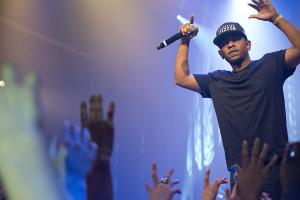
Photo | Kendrick Lamar, February 7, 2013 | courtesy of Merlijn Hoek, Wikimedia Creative Commons
Applying Theory to Create Theory: The Triple Consciousness In “Prayer”
W.E.B Du Bois ‘ theory of the Double Consciousness has long been a staple in critical theory, useful in sociological analysis, and less invested in socio-religious or theomusicological hermeneutics. The theoretical concept of Double Consciousness was developed by Du Bois in Souls of Black Folk (1903) and Dusk of Dawn (1940). The theory of Double Consciousness, as addressed by José Itzigsohn and Karida Brown (SOCIOLOGY AND THE THEORY OF DOUBLE CONSCIOUSNESS: W. E. B. Du Bois’s Phenomenology of Racialized Subjectivity, Cambridge University Press, September 4, 2015), “is a phenomenological description of self-formation under conditions of racialization.”
Du Bois himself writes,
“After the Egyptian and Indian, the Greek and Roman, the Teuton and Mongolian, the Negro is a sort of seventh son, born with a veil, and gifted with second-sight in this American world, —a world which yields him no true self-consciousness, but only lets him see himself through the revelation of the other world. It is a peculiar sensation, this double-consciousness, this sense of always looking at one’s self through the eyes of others, of measuring one’s soul by the tape of a world that looks on in amused contempt and pity. One ever feels his twoness, —an American, a Negro; two souls, two thoughts, two unreconciled strivings; two warring ideals in one dark body, whose dogged strength alone keeps it from being torn asunder” (The Souls of Black Folks, 1903, pg 3).
The Double Consciousness theory by Du Bois becomes useful to understand how theomusicological agency is employed socio-religiously in contemporary musical productions. In this case, the work “Prayer” by Kendrick Lamar follows the phenomenological relationship of the artist (Kendrick Lamar) with history (The Jackson 5’s first performance, Dr. Martin Luther King’s speech), echoing a double consciousness: Kendrick Lamar’s position as the artist, seeing his position in the trajectory of a polluted cultural history, and voicing his concern, a fear, of his current position and future legacy, through a subvocal prayer in an effort to reconcile both pop culture and Hip Hop’s assigned identity of Kendrick Lamar and his self-imposed fear of being misunderstood, subjugated, and exptrapolated for corporate economic and cultural gain.
Kendrick Lamar’s double consciousness stems from a racialized romanticization of the African American pop cultural icon and image, coupled with his fear of being quarantined by a polluted and sensationalized cultural history. Talking back to this inner fear, Kendrick Lamar activates the voice of a prayer, but not a singular prayer. The prayer is magnified to expand across pre-existing borders of pop culture, history, and the music industry. In effect, Kendrick Lamar situates his thesis prayer as a double-conscious narrative transparent in the lyrics of “Prayer.”
Dr. Timothy Keller’s concept of “Kingdom Consciousness,” is the personal revelation of one’s relationship to God’s Kingdom, where the individual ascertains their place in this Kingdom as an adopted child of God; an heir to the Kingdom by adoption, forgiveness, and sanctification by Christ. In the work “Prayer,” Kendrick Lamar strives to ascertain this Kingdom Consciousness.
In the struggle to credibly invest himself, Kendrick Lamar, and his personal relationship with God (i.e., “creator” as used in the work), Kendrick Lamar expands his singular consciousness by way of following Dr. Timothy Keller’s Kingdom Consciousness concept. This is directly apparent starting with the title of the work, “Prayer.” The prayer itself is the locus of the triple consciousness of the work, which is expressed theomusicologically in the totality of the micro-macro mechanics of the work.
A Triple Consciousness comes to light. Tying together W.E. B. DuBois’ “double consciousness” with the future knowledge of “Kingdom Consciousness,” the third consciousness is identified and expressed in prayer; the vehicle through which one communicates with God.
“Do not be anxious about anything, but in every situation, by prayer and petition, with thanksgiving, present your requests to God. And the peace of God, which transcends all understanding, will guard your hearts and your minds in Christ Jesus” (Philippians 4:6-7 NKJV).
“Rejoice always, pray continually, give thanks in all circumstances; for this is God’s will for you in Christ Jesus” (1 Thessalonians 5:16-18 NKJV).
If prayer is the tool for communication to and with God, Kendrick Lamar challenges audiences, and himself, to pray beyond the limitations of culture. Starting with a “double consciousness” (read: the work/theme, and the listener), “Prayer” instinctively seeks to know God’s kingdom consciously. This employs the third consciousness, which can only be recognized through prayer, not the surface-oriented prayer which the title of the work maintains, but a transpositional prayer style, one that transmits the binding of heart-mind done in secret, silence, and honestly gives thanks to God for everything in one’s life.
Kendrick Lamar searches for this triple consciousness, but he himself falls short of this search, succumbing to pop culture pressure yet waving a resistance to these pressures and icon identifications through a prayer of release, escape, and help to move beyond the pop cultural stereotyped responsibility of being a mouthpiece for pop culture, a representation of how pop culture is to be corporately and economically viewed globally. Just shy of confessing his own shortcomings, Kendrick Lamar prays not to fall into the open pit of pop culture icon identity responsibility.
Kendrick Lamar bisects pop culture through prayer, a secular prayer to break the cycle of pop cultural icon identity representation. Ironically, this honest, silent prayer Kendrick Lamar states in the last verse of the work “Prayer” is the exact location pop cultural analysts romantically note to sensationalize and hyper-objectify the work. Kendrick Lamar is working by his own means to reconcile the heart-mind binary through an open letter style of a silent prayer (read: a cry for help), that ironically is recognized by a pop culture narrative as an overtly humbling, tortured artist, romanticized, marginalized, misunderstood cultural genius, thus making “Prayer” a genius work of art. The comedy of errors is that the two never meet, but flirt without commitment to any one doctrine.
The Triple Consciousness Expressed: Lyric Analysis
The opening lines of the first verse exemplify the double consciousness by Kendrick Lamar.
“I was born on February 24th, 1970/”
“The day I was delivered, they said I would build a legacy/”
These first verses put Kendrick Lamar as a central actor in the work. This continues through the majority of the first verse, which is about Michael Jackson, his rise to fame, the complicated relationship with his father, and his own controversies. The last few lines later, this perspective is reversed.
“But the moment he died, more accusations arrived/
“I had to die too/”
The majority of the first verse leads the listener to believe that the perspective is that of the first person, Kendrick Lamar. The inconsistency with the embedded history is qualified as the “brilliance” of the work. Kendrick Lamar phenomenologically plays with history, perspective, and identity. By speaking from the first person, Kendrick Lamar is emphasizing the subtextual narrative of the work, the act of making a prayer. The close of the first verse, the prayer is twofold: 1. A prayer for the actual actor of the verse (i.e., Michael Jackson), and 2. A prayer for himself (i.e., Kendrick Lamar) in recognition of his necessity to abandon past idolatry, personal actions, and history similar to that of Michael Jackson, and a selfless willingness to make a good confession to surrender the actions and personal history for his own salvation.
Kendrick Lamar is making a personal prayer of reconciliation in two short lines. Biblically speaking, Kendrick Lamar has been threading a line of double consciousness with the end result of surrender and desired reconciliation and forgiveness.
“For if you live according to the flesh, you will die; but if by the Spirit you put to death the misdeeds of the body, you will live” (Romans 8:13 NKJV).
The second verse performs the same action, but with the primary viewpoint coming from Dr. Martin Luther King Jr. The second verse toggles between the insider (Dr. Martin Luther King Jr.) and outsider (general audience perspective/Kendrick Lamar) viewpoints. The shifting keeps the verse tight, agile, and capable of covering a large swath of history.
“I remember takin’ my first breath August 28th, 1963/”
“The whole nation had saved the day, I made it on TV/”
“My come out was a standing ova’, the crowd in disbelief/”
“How could a group of words be so great?/”
The opening lines are from the point of view of Dr. Martin Luther King Jr. A few lines lower, there is a complex switch of perspectives.
“The person responsible, my creator/”
“He never conformed or used hatred to form mass retaliation/”
“Watch him perform with conviction/”
Two options arise to understand the added perspective. “He” and “him” could be Kendrick Lamar retaining the inclusion of God, which would be consistent with Dr. Martin Luther King Jr.’s profession of being a religious leader. Another perspective could be the “He” and “him” being Kendrick Lamar himself. The coding is an example of how Kendrick Lamar plays with the double consciousness phenomenological application.
One clear area in the second verse where Kendrick Lamar includes his point of view follows,
“I gather his thoughts in abundance made to complete the mission/”
“His life became heroic, then tables turned/”
The subsequent lines of the second verse illustrate how flexible the double consciousness theory is in the authoring hands of Kendrick Lamar.
“My creator stripped from being a poet because he yearned/”
“Other women, infidelity stricken, I can’t say he was perfect/”
“It made me nervous, they tear him down and forget me/”
Again, “My creator” and “he” could be Kendrick Lamar’s point of view or that of Dr. Martin Luther King Jr. articulating his relationship with God. In this later perspective, “a poet” would, then, reference God’s creation, which has an interesting linguistic relationship in the third verse, the only one singularly focused on Kendrick Lamar, where “non-creators” is included as a qualifier of pop culture and Hip Hop’s economic industrial complex.
What draws this verse back to Kendrick Lamar’s point of view is the next two lines,
“I can’t say he was perfect/”
“It made me nervous, they tear him down and forget me/”
The pronouns fit the identity: “I” and “me” are Kendrick Lamar; “he” is clearly Dr. Martin Luther King Jr. This is the second time in the work where Kendrick Lamar outlines a prayer; in this case it’s the “and forget me” which is a double consciousness tool. To this point in the second verse, Kendrick Lamar erects a sense of cultural pride coming from his existential relationship with Dr. Martin Luther King Jr.
Once Kendrick Lamar acknowledges Dr. Martin Luther King Jr.’s personal life controversy, Kendrick Lamar mirrors his cultural pride with Dr. Martin Luther King Jr., noting that pop culture turned its gaze elsewhere, not to himself. The small prayer here points to fear, “It made me nervous.” Kendrick Lamar recognizes man’s limitations, even that of a civil rights and religious leader, which plants the seeds of fear. This simple point grows throughout the remainder of the work, in particular in the third verse, the only verse that speaks directly from Kendrick Lamar’s point of view.
Juxtaposing a double consciousness, the reminder of the second verse positions the pronoun “I” as the axis point between that of Dr. Martin Luther King Jr. and Kendrick Lamar
“I prayed that I survived in the midst of the controversy/”
“How many lives’ll fall on deaf ears if I’m not worthy?/” (Dr. Martin Luther King Jr.’s point of view)
“I won’t justify his personal problems, that’s not my job/” (Kendrick Lamar’s point of view)
“I was only born to make sure your children can play outside/” (Dr. Martin Luther King Jr.’s point of view)
“And I imagine the other demons he hid before he died/”
“If they came to surface, this dream probably won’t be alive/”
“Because of you/” (Kendrick Lamar’s point of view)
The “you” in this last line of the second verse turns the gaze, the double consciousness, toward the external viewer, the audience. This is the first time in the work where Kendrick Lamar introduces the gaze of the external viewer, the point of view explored throughout the third verse.
The opening lines of the third verse center around the point of view from Kendrick Lamar.
“I was born in paranoia, it’s poison for us/”
“We can’t create with joyous ambition, we’re out of luck/”
“The critics formed a new coalition and huddled up/”
“The non-creators are now elated and out of touch/”
“Why can’t you gladly appreciate the influence we give?/”
Using both “I” and “we” interchangeably, Kendrick Lamar expands his perspective to include a composite inner sphere view, that of the artist.
The next large portion of the third verse is from the external viewer’s point of view with a pivotal line.
“Stop starin’ at me disgusted, my substance made sure you’d lived/” (the pivotal line)
“You want the head of the messenger and the history from him/” (external viewer’s point of view)
“Which eventually takes away from the good you accustom/”
“Think of a life without the likes of imagination that’s prosperin’/”
“The bodies that you consider genius, you like to box ’em in/”
“The great debaters and thinkers, they gave you a voice/”
“Why can’t you prosecute the crimes and not the thoughts I employ?/”
“Because your better judgement will always look down on me/”
The next two lines bring a closer magnification into Kendrick Lamar’s talking back to the external point of view. The lines start with Kendrick Lamar’s point of view and end with a talking back to the external point of view.
“But if I recollect how we connect, you’ll account on me/”
“I got a theory that most of y’all won’t allow to see/”
The last three lines follow a similar script, first Kendrick Lamar’s point of view, then his talking back to the external point of view, closing with a curious tagline postscript.
“I can’t help we jump in these bodies and you called them a god/”
“Just know the Earth is just a rock without the voices of art/”
“Sincerely yours/”
The range of this poetic trio is the first time that God is mentioned. It’s important to note that depending on the track version under review, God is either a diminutive, “god,” or a proper term, “God.” This changes the meaning and emphasis of these last lines.
If God is mentioned as a diminutive, “god,” the emphasis is on idolatry; the artist is the idol for pop culture. If God is used as a proper term, “God,” then Kendrick Lamar moves the entire composite of the work “Prayer” into a confession based on framed around the eventual recognition of man’s finite existence and dependence on God.
The talking back tone, including God as a proper term, socio-religiously deconstructs pop culture’s sustained historical viewpoint to limit and pass judgment on those whom pop culture has selfishly elevated to the position of an idol. The last line, then, is Kendrick Lamar’s personal testimony, an honest confession coming from an a priori fear which is the central theme of the entire work “Prayer.”
The final two words, “Sincerely yours/”, replace what should be the “amen” at the end of a prayer. By using a colloquial salutation, Kendrick Lamar softens the fear-based prayer for the external point of view, the listening audience. Had Kendrick Lamar inserted the anticipated “amen” as the salutation to a work which eventually was titled “Prayer,” the meaning of the work falls as a house of cards; judgment, control, and a selfish perspective become the navigating perspective of the track. Using a common closure to the work, pop culture is less focused on the hyperbole of the work’s title “Prayer,” while engaging a fear-based, honest confessional prayer.
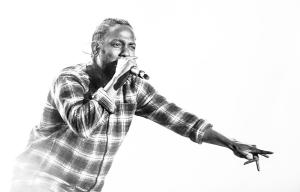
Photo | Kendrick Lamar, F.I.B., July 17, 2016 | courtesy of Batiste Safont, Wikimedia Creative Commons
Analyzing “Prayer” Theomusicologically
The low-hanging fruit is to read the work “Prayer” essentially as an intentional prayer. Though useful, the work “Prayer” is built on layers. Following the intent of the work, unpacking the work in varied theological layers can broaden the scope of the work “Prayer,” transposing the work from a stand-alone Hip Hop work with a challenging narrative to one that can serve sacred and secular audiences alike in reading their own personal relationship to prayer.
“But when you pray, go into your room, close the door and pray to your Father, who is unseen. Then your Father, who sees what is done in secret, will reward you” (Matthew 6:6 NJKV).
The opening scripture provided by the Institute for Creation Research speaks to the action of being a witness and giving a good confession.
“I give thee charge in the sight of God, who quickeneth all things, and before Christ Jesus, who before Pontius Pilate witnessed a good confession” (1 Timothy 6:13 KJV).
“Despite the great blessings awaiting all who make a courageous and good confession of saving faith in Christ, most people will refuse until it is too late. There is a time coming, however, when ‘every tongue [will] confess that Jesus Christ is Lord, to the glory of God the Father’” (Philippians 2:11) (Institute for Creation Research, July 31).
This is the action performed by Kendrick Lamar in “Prayer:” Kendrick Lamar positions himself as a witness, knowing that he is ultimately to be charged in the eyes of God by his actions, yet makes a good confession, a prayer, asking forgiveness for himself while giving forgiveness to those whom he admires (i.e., Michael Jackson and Dr. Martin Luther King Jr.), his audience base, and those who position him, Kendrick Lamar, at the center of pop culture/Hip Hop’s royalty.
The vernacular of the prayer in “Prayer” is that of forgiveness. Translated through American cultural icons and images, Kendrick Lamar projects his artistic trajectory to be aligned with fame and fortune that accompany a position of visual privilege, power, cultural capital, and social economy. It is this fear that prompts Kendrick Lamar to offer a prayer, one of forgiveness to his predecessors, pop culture, the en masse Hip Hop community, and more granularly, those in his own history and sphere of influence. The subtext to the work “Prayer” is the narrative overlooked; Kendrick Lamar gives voice to the third consciousness in the work, the prayer itself.
Overlooked in that general music journalists recognize this point as one of artistic humility, an emblem of Kendrick Lamar’s genius. Realistically and socio-religiously, Kendrick Lamar creates space for the third voice, the third consciousness, the prayer to speak, not for himself, but for itself as an agency of his forgiveness.
The subvocal, subtextual prayer in “Prayer” is the third consciousness, a reaching toward Kingdom Consciousness (Tim Keller), the forgiveness Kendrick Lamar instinctively or literally sees absent in his works that flow through Hip Hop’s canon. The misunderstanding of this agency by pop culture and the Hip Hop community gives more influence, importance, and energy to the opaque narrative of “Prayer.”
The elements that flesh out the skeleton of “Prayer” are not overwhelmingly magnificent or genre-breaking, yet reviewers and audiences alike contemporarily position this work on the mantle of Kendrick Lamar’s great oeuvre. Taken together, this misreading is the necessity Kendrick Lamar sees for his “Prayer”: Pop culture and the Hip Hop community’s assumption of a prolific work based on the sensational history of the work (i.e., not originally released, a leaked track, the different name changes, a new extended edition), and, perhaps more importantly, the name of the recording artist linked to the work, Kendrick Lamar.
Reading “Prayer” through the core elements of theomusicology, even further clarity emerges. Recall the core elements of theomusicology are personal testimony, evangelism, discipleship, biblical/scripture text, community, and activism. “Prayer” traverses each of these core elements in various methods.
The personal testimony is that of Kendrick Lamar, subtly and double consciously employed, yet present. Evangelism is the mechanic of the work to speak about forgiveness. Discipleship is the active position of Kendrick Lamar in pop culture and Hip Hop. In “Prayer,” Kendrick Lamar positions himself less as a provider of Hip Hop knowledge and skill, but more as a humiliated disciple desiring forgiveness while giving forgiveness; a righteous posture recognized throughout biblical history. The inclusion of biblical/scripture text is subtextually expressed. Aside from the title of the work, “Prayer,” the collective biblical/scripture knowledge of forgiveness, humility, witnessing, and good confession operate in varying degrees throughout the work. Community and activism are partners in how the work is introduced, reviewed, and shared in a feedback loop.
“Prayer” As A Conscious Triple Theomusicological Expression
The layers of theology and theomusicology gleaned from “Prayer” are more than an essentialized, general reading of a title track from a leaked work by a highly acclaimed Hip Hop artist, known for his deep artistic creations that complicate contemporary Hip Hop norms through dynamic discursive critical readings of socio-political culture, through the mechanics of Hip Hop and pop cultural signifiers mirroring present institutionalized racial, political, and socio-political limitations in a work that now includes socio-religious issues to the critical analysis without an apology.
Still, with all this, for those who chose to engage “Prayer” as a spectacular episodic Hip Hop moment and dismiss the nuance of the work, the third Kingdom Consciousness of “Prayer” is the prayer Kendrick Lamar quietly, as a good confessing witness, gives back.
To read more from Alan Lechusza Aquallo’s “The Sweatpant Sessions,” please consider subscribing for free and check out others on Patheos.
General Christian
Evangelical

About Alan Lechusza Aquallo
Dr. Alan Lechusza is a scholar whose name has become synonymous with critical thought and cultural discourse. He is a thinker and writer who explores popular culture with a critical eye. He holds a PhD and uses his deep, resource-rich understanding to question and redefine how we see art, power, and knowledge. His research covers various topics that aim to break down and rebuild our ideas about culture, artistry, and socio-political authority. Dr. Lechusza closely examines everyday cultural expressions in ways that challenge conventional thinking. His writings make people think and view culture in new ways. Dr. Alan Lechusza wants to create conversations to inspire change and challenge our understanding of how we experience the world. You can read more about the author here.
Previous Post

June 29, 2026
Hey, JD, Watch What You Say When You Talk About P Diddy
Next Post

July 6, 2026 Three Ways Christian News Talks, and Why It Matters
Browse Our Archives
Select a Category music criticism pop culture criticism Pop music criticism Uncategorized
Select a Month October 2026 September 2026 August 2026 July 2026 June 2026 May 2026 April 2026 March 2026 February 2026 January 2026 December 2025 November 2025 October 2025 September 2025 August 2025 July 2025 June 2025 May 2025 April 2025 March 2025 February 2025 December 2024 September 2024 June 2024 April 2024 March 2024 February 2024 January 2024 December 2023 November 2023
Follow Us!
TAKE THE
Religious Wisdom Quiz
What does "Apostle" mean in Greek?
Select your answer to see how you score.
Preacher Elder King One who is sent
Books by This Author Books by The Sweatpant Sessions
Related posts from The Sweatpant Sessions
Family
Christian Hip Hop and Secular Rap: Finding the...
Family
Why Punk and Hip Hop May Hear God...

Family
Emotional Ashes: Emo and Scripture Knowledge, Psalm 91
Family
Learning Devotion and Discipline: A Brief Analysis of...
TRENDING AT PATHEOS Religious Art

The Problem with False Prophets
Miller’s Station UMC| 10/18/26| Anchor Verse: Jeremiah 23: 1, 9-23 I...

Emotion in Early Christianity by Andrew Crislip
Andrew Crislip’s Emotion in Early Christianity examines an often overlooked dimension of...

16 Spiritual Touchstones for a More Grounded Life
After decades of spiritual study, here are 16 principles I try...

Catholic Evangelization: Sharing Your Faith Every Day
Welcome back to the Graceful Awakening mini-series called, “From Faith to Mission.” ...

The Pillar of the Boatmen: the Ancient Monument...
The Pillar of the Boatmen is a Romano-Gaulish sculpture that dates from...

In one sense walking into Westminster Abbey is like walking down the...
view all Religious Art blogs
Ad-Free & Subscriber Log-In Subscription Support
- About Us
- 2026 Calendar
- Videos
- Podcasts
- Library of World Religions
- Faith In Media Tracker
- Advertise With Us
- Write for Us
- Privacy Policy
- Terms of Service
- Do Not Sell My Data
- Contact Us
- Radiant Digital
- Manage Newsletter Subscriptions
- Unsubscribe From Notifications
- Sitemap
Copyright 2008-2026, Patheos. All rights reserved.
Subscription Support Ad-Free & Subscriber Log-In
Follow Patheos