
BuddhistCatholicContemplativeEvangelicalGeneral ChristianHinduJewishLatter-day SaintMuslimNew VisionsProgressive Christian
Beliefs
- Buddhist
- Catholic
- Contemplative
- Evangelical
- General Christian
- Hindu
- Jewish
- Latter-day Saint
- More Voices
- Muslim
- New Visions
- Pagan
- Progressive Christian
Topics
- Religion News
- Food and Religion
- Sports and Religion
- Religious Art
- Religious Music and Entertainment
- Religious Events
- History and Religion
- Style and Religion
- Politics and Religion
- Women in Religion
- Recreation Outdoors and Religion
- Business Finance and Religion
- Careers Workplace and Religion
- Education and Religion
- Family Parenting and Religion
- Health Fitness and Religion
- Home and Religion
- Relationships and Religion
- Technology and Religion
- Travel and Religion
Columnists
- Buddhist Columnists
- Business Finance and Religion Columnists
- Careers Workplace and Religion Columnists
- Catholic Columnists
- Contemplative Columnists
- Education and Religion Columnists
- Evangelists Columnists
- Family Parenting and Religion Columnists
- General Christian Columnists
- Health Fitness and Religion Columnists
- Hindu Columnists
- History and Religion Columnists
- Home and Religion Columnists
- Jewish Columnists
- More Voices Columnists
- Latter Day Columnists
- Muslim Columnists
- New Visions Columnists
- Nonreligious Columnists
- Pagan Columnists
- Politics and Religion Columnists
- Progressive Columnists
- Recreation Outdoors and Religion Columnists
- Relationships and Religion Columnists
- Religion News Columnists
- Religious Art Columnists
- Religious Events Columnists
- Religious Music and Entertainment Columnists
- Sports and Religion Columnists
- Style and Religion Columnists
- Technology and Religion Columnists
- Travel and Religion Columnists
- Women in Religion Columnists
Resource Library
- 2026 Calendar
- Library of World Religions
- The 100 Most Holy Places on Earth
- Patheos Answers
- Podcasts
- Videos
- Faith Leaders Database
- Anglican Episcopalian
- Bahai
- Baptist
- Buddhism
- Christianity
- Confucianism
- Eastern Orthodoxy
- Hinduism
- Holiness and Pentecostal
- ISKCON
- Islam
- Judaism
- Lutheran
- Methodist
- The Church of Jesus Christ of Latter-day Saints
- New Age
- Paganism
- Presbytarian and Reformed
- Protestantism
- Religion Behind the Scenes
- Roman Catholic
- Scientology
- Shia Islam
- Sikhism
- Sufism
- Sunni Islam
- Taoism
- Zen
- See all religions
Research Tools
 Ad-Free & Subscriber Log-In Subscription Support
Follow Patheos 

- Trending:
- Advent
- |
- Forgiveness
- |
- Thanksgiving
- |
- Election
- |
- Seasonal Holidays
- |
- Marriage

- Home
- General Christian
- Religious Art
- Are You Missing The Point? Commercializing Christian Hip Hop
Are You Missing The Point? Commercializing Christian Hip Hop
Last updated on: May 10, 2026 at 5:07 am by Alan Lechusza Aquallo
Are You Missing The Point? Commercializing Christian Hip Hop 2026-05-10T05:07:08-07:00 Alan Lechusza Aquallo
Patheos Explore the world's faith through different perspectives on religion and spirituality! Patheos has the views of the prevalent religions and spiritualities of the world.
“Do not follow other gods, the gods of the peoples around you” (Deuteronomy 6:14 NKJV).
Commercializing contemporary Christian Hip Hop
Recent articles from The Root, DLK Urban Gospel, and Hip Hop proclaim a clear, undisputed discursive trajectory for Christian Hip Hop, Gospel, and Gospel Rap. Titles such as “This New Wave of Black Artists is Fusing Christianity With Rap, R&B and AfroBeats” (The Root, February 11, 2026) and “The Future of Gospel EPs: Where Collaboration Is Headed Next” (DLK Urban Gospel and Hip Hop, April 8, 2026) tempt readers who are interested in the current movements in Christian Hip Hop. What these articles produce is a manufactured, self-referential, market-driven representation of Christian Hip Hop, Gospel, and Gospel Rap.
Even the subtitles codify this point: “From Lecrae to Limoblaze, these Christian artists are redefining gospel music and introducing a new generation to the genre one track at a time” (The Root, February 11, 2026). The artists included in each of these publications span the history of contemporary Christian Hip Hop with an emphasis given to the more charismatic, mega-church profile, prosperity gospel ideology, and vanity fair style of Christianity. Readers, then, are limited in the shared information, taking away a distorted, sociologically and philosophically deconstructed representation of Christian Hip Hop.
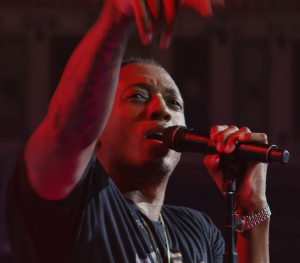
Lecrae | Screenshot from a freely licensed video | courtesy of Raymond McCrea Jones | Creative Commons
Placing economic value over biblical truth and using scripture references as trigger words/phrases to convey a false reference of Christianity defeats the importance of evangelism, discipleship, personal testimony, biblical-centered narrative, community support, and activism, or, in other words, the core elements of theomusicology. Publications framed as supporting faith-based discourse need to be critical of who they present, what the artists actually represent, how a published article will satisfy a faith-based audience, and to what degree they are willing to share core Christian values and beliefs. Operating outside of this objective relationship marginalizes faith-based literature, using, in this case, music and Christianity as a vehicle for market expression and economic gain.
The track “Lord and Savior” by Sam Rivera and Limoblaze points in the right direction. Used in the article published by The Root (February 11, 2026), this track begins to steer this capsizing musical ship in a direction noteworthy for interested faith-based audiences. The limitation remains the hypersensationalized image of Limoblaze and the near-comical landscape of the video.
“They lift it to their shoulders and carry it; they set it up in its place, and there it stands. It does not move from its place. Though one cries out to it, it cannot answer; it cannot save him from his troubles” (Isaiah 46:7 KJV).
Sam Rivera & Limoblaze – Lord & Savior (Official Music Video), April 12, 2024,
The 1997 recording “Stomp!” by Kirk Franklin and God’s Property, defined by The Root as “encouraged millennials everywhere,” is a useful track to inspire interest in Gospel music. However, Kirk Franklin is more of a preacher than a rapper in this work. This would have been a useful note to state in the article, rather than leaving a reader to assume Kirk Franklin is the origin of Gospel Rap and contemporary Gospel music. Yes, there is a strong undercurrent of Gospel culture in the track “Stomp!” But, no, this is not the seminal work, as contextualized, giving the apex of contemporary Gospel music to arrive in 1997. That would defeat the included points of Angela Jollivette, “who previously oversaw the Grammy Awards’ Gospel and Contemporary Christian Music categories” and is cited throughout the article by The Root.
Kirk Franklin, Stomp, June 19, 2011
The argument being made is that credible articulation, clarity, and Christian value need to be expressed, stated, defined, and used in articles that discuss Christian music, in this case, Christian Hip Hop, and not to confuse this genre with the element Gospel Rap. What is being published is a manufactured, scripturally devalued, consumer-prepared package of Christian Hip Hop. This movement gives a disillusioned reality to faith-based expressive culture and, for this purpose, Christian Hip Hop.

Photo | Prosper Germoh, Cameroon Gospel Musician | courtesy of Wikimedia Creative Commons
Giving Privilege and Authenticity
The online Christian Hip Hop/Gospel Rap journal DLK Urban Gospel published an article on April 13, 2026, that had a curious title, The Future of Christian Hip Hop: Where Faith, Culture, and Innovation Collide.
The article strives to articulate the future of Christian Hip Hop. However, the article misses the intent, confuses Christian Hip Hop with Gospel Rap, discredits theomusicology, and puts an emphasis on performer authenticity substantiated by public approval. The article emphasizes online exposure, which is valuable, but it overlooks how the core elements of theomusicology are necessary to be articulated. In doing so, the article turns to authenticity as the value, which is identified with audience approval, which the article equally states is not the overall intent for Christian Hip Hop, and, in a related article, is further contextualized in collaborations.
Given this argument, authenticity gives privilege, control, and authority to a particular artist, which, interestingly enough, DLK Urban Gospel and Hi Hop align with commercialized contemporary Christian artists. This further notes the misunderstanding and confused synonymous reading of Gospel Rap with Christian Hip Hop.
Gospel Rap is just that, rap, an element of Hip Hop culture, that is based on gospel, biblical text/lyrics, and is an element within Christian Hip Hop. Christian Hip Hop is an expression of Hip Hop culture, centering on Christianity, and includes the core elements of theomusicology (personal testimony, discipleship, evangelism, biblical text/lyrics, community, and activism). Confusing an area of Christian Hip Hop (read: Gospel Rap) with the larger archetypal genre (read: Christian Hip Hop) obfuscates how audiences, both faith-based and non-faith-based, will understand and come to engage the discourse.
In addition, what this misalignment does is place a biased commercialized emphasis on artists who marginally employ theomusicological elements in their work. Therefore, the weak productions by Lil Wayne (i.e., “His Name Is Jesus,” 2026) and the body of work produced by Lacre are granted privilege, control, and authority over the genre. This commercializes the genre, giving audiences little in the way of value, core Christian value, biblical truth, and community.
What takes place is a limitation of biblical knowledge, truncated scripture truth, and a marginalized, commercialized, pre-packaged Christian expression available online for the next download. This process sociologically, philosophically, and culturally deconstructs the agency of Christian Hip Hop. Publications, artists, online forums, and Christian music industry promoters who operate along this line put more emphasis and attention to the profile, visibility, and market sensibility of Christianity, using music, in this case, Christian Hip Hop, as their modality. The result is a trivialized, made-for-consumption, extracted, and tokenized form of Christian Hip Hop without sound biblical knowledge, intent, direction, or application.
Artists, Christian music industry promoters, and publications will argue against this analysis, but the evidence is sound and available. If this were not the case, artists such as Yung Lord Gospel (i.e., “God’s Power”) would not be ghettoizing Christian Hip Hop, including trigger words/phrases, and producing a mega-church, vanity fair Christian Hip Hop, charismatic, and economically-driven product rather than sound musical worship that seeks to share gospel truth, knowledge, and inspire community through artistic activism.
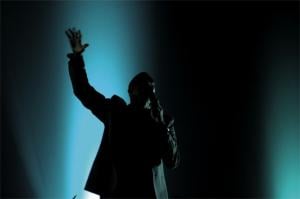
Photo | Gospel artist performing at US Army Jacob’s Theater on Fort Eustis, September 16, 2025 | courtesy of Lyna Tucker, Fort Eustis Wheel Photojournalist, Wikimedia Creative Commons
Potential Counterpoint
In contrast to the arguments put forth in articles from The Root, DLK Urban Gospel, and Hip Hop, several artists can be included. Da Young Disciples, Barrio But Born Again, Mikey So Christian, and Oddisee and Heno are a few examples.
Da Young Disciples is a collective giving attention to a youth-driven, contemporary Christian Hip Hop vernacular.
Da Young Disciples, Save Souls ft. KG Santiago Young, July 3, 2019
Barrio But Born Again is a critical Christian feminist Hip Hop representation. Interesting to note that the majority of pop Christian publications rely heavily on a male-centered musical expression. Therefore, it’s important to pinpoint that there is a strong contemporary critical Christian feminist Hip Hop voice active in the community, which focuses on the core elements of theomusicology.
Barrio but Born again, May 2, 2026
Mikey So Christian is a work contextualizing community and the power of the biblical image. Emphasizing discipleship and evangelism, this work employs a contemporary, faith-based, street-preacher style, as noted throughout highly impactful Christian Hip Hop.
Mikey So Christian, With the Gospel (Feat. YMHim & Lul DreDay) Official Music Video, January 15, 2026
Oddisee and Heno are a duo that, on the surface, should not be profiled. Their narrative is complex, layered with personal testimony, and engages a critical application of Christian Hip Hop with a dramatic musical undercurrent.
Oddisee & Heno, MIMS (Official Video), April 6, 2026
Don’t Miss The Point Or Believe The Hype
Manufacturing music for a faith-based community. Turning the lens away from the core elements of theomusicology (discipleship, personal testimony, biblical-centered text/lyrics, evangelism, community, and activism). The exchange is for a mass-market (read: global) audience, with industry-focused commodification, a packaged product designed to meet an audience’s standards and style, with limited interest or investment in sharing biblical truth. Faith becomes the product; the artists become the salespeople. Sensationlizing Hip Hop through a socio-religious lens can produce a counterfeit representation of contemporary Christian Hip Hop.
The litmus test is, and should remain, how an artist and their work align consistently with the founding elements of theomusicology. However, this is well outside the discourse of Christian Hip Hop. Writers, advertisers, audiences, the recording industry, and artists/groups are more interested in the economic return on investment (ROI) than in the biblically centered work audiences, at their core, desire to have presented.
“Everyone is senseless and without knowledge; every goldsmith is shamed by his idols. The images he makes are a fraud; they have no breath in them” (Jeremiah 10:14 NKJV).
To read more from Alan Lechusza Aquallo’s “The Sweatpant Sessions,” please consider subscribing for free and check out others on Patheos.
General Christian
Evangelical

About Alan Lechusza Aquallo
Dr. Alan Lechusza is a scholar whose name has become synonymous with critical thought and cultural discourse. He is a thinker and writer who explores the world of popular culture with a critical eye. He holds a PhD and utilizes his in-depth, resource-rich understanding to question and redefine how we perceive art, power, and knowledge. His research covers various topics that aim to break down and rebuild our ideas about culture, artistry, and socio-political authority. Dr. Lechusza closely examines everyday cultural expressions in a way that challenges usual thinking. His writings make people think and view culture in new ways. Dr. Alan Lechusza aims to foster conversations that inspire change and challenge our understanding of how we perceive the world. You can read more about the author here.
Previous Post

May 3, 2026
Book of Isaiah in Heavy Metal: Warrior Psalmist's Bold Take
Next Post

May 18, 2026 Pop conversion and Heavy theology: Expressing Christianity
Browse Our Archives
Select a Category music criticism pop culture criticism Pop music criticism Uncategorized
Select a Month November 2026 October 2026 September 2026 August 2026 July 2026 June 2026 May 2026 April 2026 March 2026 February 2026 January 2026 December 2025 November 2025 October 2025 September 2025 August 2025 July 2025 June 2025 May 2025 April 2025 March 2025 February 2025 December 2024 September 2024 June 2024 April 2024 March 2024 February 2024 January 2024 December 2023 November 2023
Follow Us!
TAKE THE
Religious Wisdom Quiz
What does "Moses" mean?
Select your answer to see how you score.
Born Amid Trouble Drawn Out (of water) Rescued Gifted
Books by This Author Books by The Sweatpant Sessions
Related posts from The Sweatpant Sessions
Family
Reading Talib Kweli’s “Get By” Alongside Scripture

Family
Looking Backward, Forward, and Up With Christian Hip...

Family
Yo Momma Is A Critical Socio-Religious Pop Cultural...

Family
Did He Really Say That? Critical Theomusicology in...
TRENDING AT PATHEOS Religious Art

The resilience of the Christian faith in the english speaking world of...

An Advent Calendar, and a Tree full of...
I've spent the weekend deeply invested in internet drama about a $150...

How to Have Financial Transparency in Marriage
Despite the fact that financial issues and money problems are the number...
The Healing Power of Forgiveness in Marriage
Learning how to give and accept apologies are essential ingredients of a...

The West's Christian Moral Inheritance: A Legacy Denied
Whether we like it or not, our environment matters, shaping us both...

How Does Tôḏâ Connect Florida & Thanksgiving?
The big news this weekend has been about the continued flooding on...
view all Religious Art blogs
Ad-Free & Subscriber Log-In Subscription Support
- About Us
- 2026 Calendar
- Videos
- Podcasts
- Library of World Religions
- Faith In Media Tracker
- Advertise With Us
- Write for Us
- Privacy Policy
- Terms of Service
- Do Not Sell My Data
- Contact Us
- Radiant Digital
- Manage Newsletter Subscriptions
- Unsubscribe From Notifications
- Sitemap
Copyright 2008-2026, Patheos. All rights reserved.
Subscription Support Ad-Free & Subscriber Log-In
Follow Patheos