
BuddhistCatholicContemplativeEvangelicalGeneral ChristianHinduJewishLatter-day SaintMuslimNew VisionsProgressive Christian
Beliefs
- Buddhist
- Catholic
- Contemplative
- Evangelical
- General Christian
- Hindu
- Jewish
- Latter-day Saint
- More Voices
- Muslim
- New Visions
- Pagan
- Progressive Christian
Topics
- Religion News
- Food and Religion
- Sports and Religion
- Religious Art
- Religious Music and Entertainment
- Religious Events
- History and Religion
- Style and Religion
- Politics and Religion
- Women in Religion
- Recreation Outdoors and Religion
- Business Finance and Religion
- Careers Workplace and Religion
- Education and Religion
- Family Parenting and Religion
- Health Fitness and Religion
- Home and Religion
- Relationships and Religion
- Technology and Religion
- Travel and Religion
Columnists
- Buddhist Columnists
- Business Finance and Religion Columnists
- Careers Workplace and Religion Columnists
- Catholic Columnists
- Contemplative Columnists
- Education and Religion Columnists
- Evangelists Columnists
- Family Parenting and Religion Columnists
- General Christian Columnists
- Health Fitness and Religion Columnists
- Hindu Columnists
- History and Religion Columnists
- Home and Religion Columnists
- Jewish Columnists
- More Voices Columnists
- Latter Day Columnists
- Muslim Columnists
- New Visions Columnists
- Nonreligious Columnists
- Pagan Columnists
- Politics and Religion Columnists
- Progressive Columnists
- Recreation Outdoors and Religion Columnists
- Relationships and Religion Columnists
- Religion News Columnists
- Religious Art Columnists
- Religious Events Columnists
- Religious Music and Entertainment Columnists
- Sports and Religion Columnists
- Style and Religion Columnists
- Technology and Religion Columnists
- Travel and Religion Columnists
- Women in Religion Columnists
Resource Library
- 2026 Calendar
- Library of World Religions
- The 100 Most Holy Places on Earth
- Patheos Answers
- Podcasts
- Videos
- Faith Leaders Database
- Anglican Episcopalian
- Bahai
- Baptist
- Buddhism
- Christianity
- Confucianism
- Eastern Orthodoxy
- Hinduism
- Holiness and Pentecostal
- ISKCON
- Islam
- Judaism
- Lutheran
- Methodist
- The Church of Jesus Christ of Latter-day Saints
- New Age
- Paganism
- Presbytarian and Reformed
- Protestantism
- Religion Behind the Scenes
- Roman Catholic
- Scientology
- Shia Islam
- Sikhism
- Sufism
- Sunni Islam
- Taoism
- Zen
- See all religions
Research Tools
 Ad-Free & Subscriber Log-In Subscription Support
Ad-Free & Subscriber Log-In Subscription Support
Follow Patheos 

- Trending:
- Forgiveness
- |
- Marriage
- |
- Consciousness
- |
- Death Penalty
- |
- Election
- |
- Halloween

- Home
- Religious Art
- Giving Thoughts To The Pontiff, Pope Francis
Giving Thoughts To The Pontiff, Pope Francis
Last updated on: April 22, 2025 at 3:20 am by Alan Lechusza Aquallo
Giving Thoughts To The Pontiff, Pope Francis 2025-04-22T03:20:29-07:00 Alan Lechusza Aquallo
Patheos Explore the world's faith through different perspectives on religion and spirituality! Patheos has the views of the prevalent religions and spiritualities of the world.
Those who read my regular work know my commitment to Christian/faith-based Hip Hop culture to support and promote positive agency and sound doctrine for change. In doing so, I work to provide rich content, write theomusicological discourse on the issue/topic, and provide thought-provoking Christian/faith-based analysis.
Today, the first news I caught, after hours of research earlier, requires setting that standard aside for the moment.
Learning of the recent passing of Pope Francis, Monday, April 21, is too strong an issue not to address. Setting aside other writing for the moment, this will be a personal take, insight, and reflection on the passing of His Holiness.
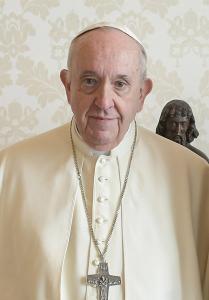
Il Presidente della Repubblica Sergio Mattarella incontra Papa Francesco | Portrait of Pope Francis (2021) | Creative Commons Wikimedia
Breaking News
I was surprised when I opened my mail to read the following post.
“Pope Francis, the trailblazing Catholic leader known for his human-rights advocacy and sharp political edge, died Monday, April 21, at the age of 88 after battling a long series of health complications stemming from a chronic lung disease, the Vatican announced.
“The pontiff had been hospitalized on Feb. 14 with bronchitis, contracted pneumonia four days later and was listed in “critical condition” by the Vatican on Saturday, Feb. 22. He never fully recovered” (The Hill, April 21).
Just the other day, I wrote a postscript on how Pope Francis avoided Vice President JD Vance on his recent trip to Italy. The Pope elected to send a notice by way of a courier to the vice president outlining his dissatisfaction with the way the American executive administration is handling human rights issues. That point was riveting to review. Knowing how global agencies feel about and relate to the questionable immigrant/migration and human rights issues from the US is one point. To have a religious leader articulate these may not seem irrelevant, but rather consistent.
The tipping point was the delivery. Although the Pope did meet briefly with the vice president, Pope Francis chose to present his developed thoughts through a different means. The pontiff was so moved by his reading of the US policies not to deliver the message in person, verbally, or in writing. Rather, electing to have them presented to the vice president by proxy strikes a strong point. The leading figure of the Catholic church would not allow himself to be subjected to politicization or media exploitation. The message was delivered with all due intent and purpose. A bold move that may have been missed.
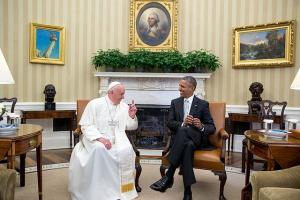
“Pope Francis died on Easter Monday at age 88, less than 24 hours after greeting Easter faithful in St. Peter’s Square at the Vatican.
“Francis, the first Latin American pontiff, pushed the Catholic Church to the left — satisfying Catholics seeking modernization but dismaying traditionalists, Axios’ Sareen Habeshian and Avery Lotz write.
“The Vatican said in a statement that Francis died on Monday morning at his residence in the Vatican’s Casa Santa Marta” (Axios, April 21).
Imagine the reality of the Pope delivering an Easter address hours before this news broke from the Vatican. The hundreds of Catholic and religious pilgrims who descended on the Vatican to hear the Pope speak on Easter Sunday were caught in the vortex of joy on the day, with sorrow in the hours to follow.
Walking Through Contemporary Time
Axios provides the following timeline of events.
“At 7:35 this morning [1:35 a.m. ET], the Bishop of Rome, Francis, returned to the home of the Father. His entire life was dedicated to the service of the Lord and of his Church,” said Cardinal Kevin Ferrell, the Vatican camerlengo, in the announcement.
“The leader of the world’s 1.4 billion Roman Catholics was released from the hospital on March 23 after being treated for double pneumonia. He had been admitted with bronchitis symptoms five weeks earlier” (Axios, April 21).
I recall following the health conditions of the Pope. Knowing how important the role of the Pope is to the Catholic church, any illness or potential harm to the health of the religious leader needs full attention. News reports during that five-week hospital stay for the Pope used his condition almost as bumper content between reports. Though this is not a stark point to recount, any reporting on a religious leader is good for the public at large. It’s the use of the news either as sensationalism or binding content that is the point being raised.
Missing the elevated importance of such reporting, secular news broadcasts may have their hands tied on what they can/cannot report with regards to a religious nature. Yet, the inclusion may have been framed with a bit more respect. Not a full commentary segment on the Pope’s day-to-day conditions needs to be provided, although some did take up the mantle of providing such a reporting schedule. The value for the broad non-religious viewers to be aware of this situation serves an important value to the cultural fabric.
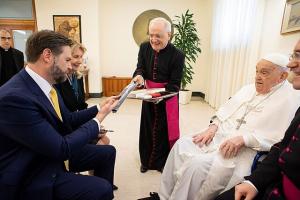
Photo | Vice President JD Vance with Pope Francis | Office of Vice President of the United States, 2025 | Creative Commons Wikimedia
Reading A Message To Learn A Lesson
Axios provides the following,
“The pope met briefly with Vice President Vance at the Vatican on Easter Sunday. Vance tweeted at 4:45 a.m. ET: “My heart goes out to the millions of Christians all over the world who loved him. I was happy to see him yesterday, though he was obviously very ill. But I’ll always remember him for the … homily he gave in the very early days of COVID. It was really quite beautiful. May God rest his soul.”
Part of me questions the sincerity of the tweet. Is the vice president offering a visible, public statement to dot the “i” and cross the “t” for the current administration? Is the tweet originating from a point of honesty? Does this tweet serve as a loudspeaker to the Catholic voters in the Republican voting base? On the other hand, is the tweet shared across news agencies to gain liberal Catholic voters?
The legitimacy of the tweet draws critical attention, in particular after the message and brief meeting between these two global leaders. Interesting to note how the vice president chooses to state his connection with the Pope, first noting himself, “I was happy to see him,” rather than putting the Pope’s offering to meet with him first and central. Even the recognition goes out to a majority base first: “My heart goes out to the millions of Christians all over the world who loved him.” The tweet nearly places the Pope in a third position of importance. The contact with such an important individual, religious or not, in a tertiary position minimizes the scope and gravity of the individual being spoken of. Will this be transparent to those who received the tweet? Or will the tweet on the surface qualify as noting a minimal importance of the religious leader?
Simple Origins, Large Calling
The Hill writes the following brief on Monday, April 21,
“Pope Francis, a reformer from Argentina who rattled the Catholic Church’s traditionalists and inspired progressives by reaching out to the poor and marginalized, died at age 88 early on Monday as the 266th pope. Now begins a centuries-old ritual — “sede vacante,” or the vacant seat — to elect a new pope. Francis, still weak after pneumonia and respiratory infections, made his last public appearance on Easter. He also met Vice President Vance at the Vatican” (The Hill, April 21).
Earlier on Easter Sunday, April 20, DW News writes,
Axios continues to provide background on the evolution of the Pope.
“Francis was elected in March 2013 and was tasked with cleaning up a scandal-ridden Vatican.
“In recent years, he expressed support for the LGBTQ community and for same-sex civil unions, which the church has traditionally marginalized.
“Francis pushed for years to improve the gender balance in the Roman Catholic Church, increasing the number of women working at the Vatican, including those in leadership positions.
Pope Francis came to his post calling for changes to the Catholic church. These changes were met with outspoken controversy. The intent was the recognition of and necessity to update policies in the church doctrine. Some viewed these changes as well needed, while others saw these as a violation to the standards of the Catholic church.
“The pope urged nations to welcome and safeguard immigrants, and called for action to combat climate change.
“He recently spoke against the Trump administration’s mass deportations, urging followers of his faith “not to give in to narratives that discriminate” against migrants and refugees.
“In an interview last year, he characterized climate change as “a road to death” denied by “foolish people.”
One element of Pope Francis’ legacy will be his willingness to engage socio-political issues. While past popes have engaged in socio-political issues, Pope Francis took it upon himself to keep a finger on the pulse of global issues outside of his religious duties. Speaking at high-profile events and authoring statements on his views were all too familiar with the pope. Some held this to his advantage, while critics viewed this as a mark against the church overall.
Axios gives some sketch background and looks ahead to the next days at the Vatican.
“Born Jorge Mario Bergoglio, he took the name Francis when he became pope. He was born in Buenos Aires, Argentina, making him the first pope from the Americas and the first from outside Europe since the 8th century.
“Francis was also the first pope to be a member of the Society of Jesus, the Jesuit order…[The next steps are for] [t]he College of Cardinals, composed of senior Vatican administrators and worldwide diocese leaders, will elect a new pope. They typically meet within 15 to 20 days after the pope’s death to choose his successor by secret ballot: (Axios, April 21).
The mark in church time Pope Francis made will be read for years to see how the Catholic church has advanced or challenged itself.
What The News Is Saying
Here’s a link on X from Vice President JD Vance about the passing of the Pope.
Here’s a link to a video from 2015 where President Obama meets with the Pope.
Morning Joe, MSNBC, submitted a short about the passing of the Pope on Monday, April 21. The link to the video is here.
Here is the election of Pope Francis to the position of His Holiness, 2013, in Rome at the Sistine Chapel. The link to the video is here.
Pope Francis was the first pope ever to speak to the joint session of Congress. In 2015, the “Pope of the Holy Seed” delivered his address. The link to the speech is available here.
Outspoken, bold, and able to speak in multiple languages to multiple audiences, Pope Francis used his platform as he saw fit in service.
Catching Up On Time
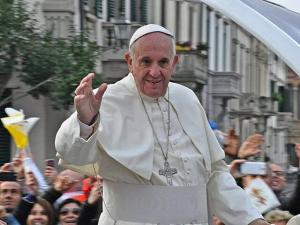
Photo | Pope Francis in Prato | courtesy of Zebra48bo | Creative Commons, Wikimedia
The New York Times writes,
Francis, the First Latin American Pope, Dies at 88
“After decades of conservative leadership, Francis tried to reset the course of the Roman Catholic Church, emphasizing inclusion and care for the marginalized over doctrinal purity” (The New York Times, April 21).
Axios gives a recent post early on Monday, April 21,
“Pope Francis dies on Easter Monday at 88The big picture: Francis was elected pope in 2013 and was widely seen as the most liberal leader in the Catholic Church’s history. He pushed the church left during his tenure, often to the dismay of traditionalist believers” (Axios, April 21).
“Francis believed that the church’s future depended on going to the margins to embrace the faithful in the modern world rather than offering a cloister away from it” (Jason Horowitz, The New York Times, April 21).
Pope Francis stood then and will in the annals of Catholic history as a force to be reckoned with. His frail figure held a mighty spirit which could have come from the pages of a bible story. An immigrant himself, Pope Francis never turned a blind eye to this issue. Serving one of the world’s largest religious organizations, Pope Francis left a legacy of inspiration and criticism. This binary stature yields the gravity of which the pontificate carried forward.
About Alan Lechusza Aquallo
Alan Lechusza, PhD defines his highly dynamic and creative works through a critical philosophy of pop culture aesthetics and expressions. Research topics and projects produced by Dr. Lechusza reside within the areas of critical theories that strive to dismantle, deconstruct, and redefine aesthetics, hermeneutics of socio-political power, and ideological epistemologies through dynamic dialectic interactions of pop culture and the lexicons of power. You can read more about the author here.
Previous Post

April 14, 2025
Deconstructing Lecrae: An Apologetic of Christian Hip Hop
Next Post
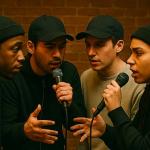
April 29, 2025 Rappin' Faith: The Christian Hip Hop Cypher Experience
Browse Our Archives
Select a Category music criticism pop culture criticism Pop music criticism Uncategorized
Select a Month October 2026 September 2026 August 2026 July 2026 June 2026 May 2026 April 2026 March 2026 February 2026 January 2026 December 2025 November 2025 October 2025 September 2025 August 2025 July 2025 June 2025 May 2025 April 2025 March 2025 February 2025 December 2024 September 2024 June 2024 April 2024 March 2024 February 2024 January 2024 December 2023 November 2023
Follow Us!
TAKE THE
Religious Wisdom Quiz
How many stones did David take to fight Goliath?
Select your answer to see how you score.
4 7 5 3
Books by This Author Books by The Sweatpant Sessions
Related posts from The Sweatpant Sessions
Family
Why Punk and Hip Hop May Hear God...
Family
Emotional Ashes: Emo and Scripture Knowledge, Psalm 91
Family
Wisdom Not Found: Christian Hip Hop Speaking Gospel...
Family
Christian Hip Hop and the Power of "But...
TRENDING AT PATHEOS Religious Art

Emotion in Early Christianity by Andrew Crislip
Andrew Crislip’s Emotion in Early Christianity examines an often overlooked dimension of...

16 Spiritual Touchstones for a More Grounded Life
After decades of spiritual study, here are 16 principles I try...

Catholic Evangelization: Sharing Your Faith Every Day
Welcome back to the Graceful Awakening mini-series called, “From Faith to Mission.” ...

The Pillar of the Boatmen: the Ancient Monument...
The Pillar of the Boatmen is a Romano-Gaulish sculpture that dates from...

In one sense walking into Westminster Abbey is like walking down the...

'Super Scam Me' Exposes AI Jon Bon Jovi...
Leslie Pickett believed she was in a relationship with Jon Bon Jovi....
view all Religious Art blogs
Ad-Free & Subscriber Log-In Subscription Support
- About Us
- 2026 Calendar
- Videos
- Podcasts
- Library of World Religions
- Faith In Media Tracker
- Advertise With Us
- Write for Us
- Privacy Policy
- Terms of Service
- Do Not Sell My Data
- Contact Us
- Radiant Digital
- Manage Newsletter Subscriptions
- Unsubscribe From Notifications
- Sitemap
Copyright 2008-2026, Patheos. All rights reserved.
Subscription Support Ad-Free & Subscriber Log-In
Follow Patheos