
BuddhistCatholicContemplativeEvangelicalGeneral ChristianHinduJewishLatter-day SaintMuslimNew VisionsProgressive Christian
Beliefs
- Buddhist
- Catholic
- Contemplative
- Evangelical
- General Christian
- Hindu
- Jewish
- Latter-day Saint
- More Voices
- Muslim
- New Visions
- Pagan
- Progressive Christian
Topics
- Religion News
- Food and Religion
- Sports and Religion
- Religious Art
- Religious Music and Entertainment
- Religious Events
- History and Religion
- Style and Religion
- Politics and Religion
- Women in Religion
- Recreation Outdoors and Religion
- Business Finance and Religion
- Careers Workplace and Religion
- Education and Religion
- Family Parenting and Religion
- Health Fitness and Religion
- Home and Religion
- Relationships and Religion
- Technology and Religion
- Travel and Religion
Columnists
- Buddhist Columnists
- Business Finance and Religion Columnists
- Careers Workplace and Religion Columnists
- Catholic Columnists
- Contemplative Columnists
- Education and Religion Columnists
- Evangelists Columnists
- Family Parenting and Religion Columnists
- General Christian Columnists
- Health Fitness and Religion Columnists
- Hindu Columnists
- History and Religion Columnists
- Home and Religion Columnists
- Jewish Columnists
- More Voices Columnists
- Latter Day Columnists
- Muslim Columnists
- New Visions Columnists
- Nonreligious Columnists
- Pagan Columnists
- Politics and Religion Columnists
- Progressive Columnists
- Recreation Outdoors and Religion Columnists
- Relationships and Religion Columnists
- Religion News Columnists
- Religious Art Columnists
- Religious Events Columnists
- Religious Music and Entertainment Columnists
- Sports and Religion Columnists
- Style and Religion Columnists
- Technology and Religion Columnists
- Travel and Religion Columnists
- Women in Religion Columnists
Resource Library
- 2026 Calendar
- Library of World Religions
- The 100 Most Holy Places on Earth
- Patheos Answers
- Podcasts
- Videos
- Faith Leaders Database
- Anglican Episcopalian
- Bahai
- Baptist
- Buddhism
- Christianity
- Confucianism
- Eastern Orthodoxy
- Hinduism
- Holiness and Pentecostal
- ISKCON
- Islam
- Judaism
- Lutheran
- Methodist
- The Church of Jesus Christ of Latter-day Saints
- New Age
- Paganism
- Presbytarian and Reformed
- Protestantism
- Religion Behind the Scenes
- Roman Catholic
- Scientology
- Shia Islam
- Sikhism
- Sufism
- Sunni Islam
- Taoism
- Zen
- See all religions
Research Tools
 Ad-Free & Subscriber Log-In Subscription Support
Ad-Free & Subscriber Log-In Subscription Support
Follow Patheos 

- Trending:
- Forgiveness
- |
- Marriage
- |
- Consciousness
- |
- Death Penalty
- |
- Election
- |
- Halloween

- Home
- History and Religion
- Going Home: Following My Ancestors Into Appalachia
Going Home: Following My Ancestors Into Appalachia
Last updated on: September 6, 2026 at 1:18 pm by Heather Blankenship
Going Home: Following My Ancestors Into Appalachia 2026-09-06T13:18:08-04:00 Heather Blankenship
Patheos Explore the world's faith through different perspectives on religion and spirituality! Patheos has the views of the prevalent religions and spiritualities of the world.
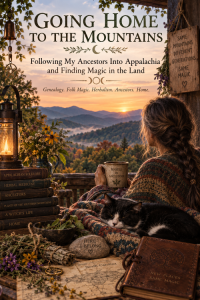
Soon, I am moving to the mountains of western North Carolina.
On paper, it is just a change of address. There will be loads of boxes to unpack, utilities to arrange, unfamiliar roads to learn, and all the ordinary inconveniences that accompany moving from one place to another.
But spiritually, it feels like something else entirely.
It feels like I am going home.
Not because I have lived there before. I haven’t. It feels like home because generations of my family lived in those mountains long before I was born. Their names appear in the records of western North Carolina. They married there, raised children there, buried their dead there, and watched generations come and go beneath the same Blue Ridge Mountains that I will soon see outside my own door.
And as a solitary practitioner of folk magic, I find myself wondering what the land might teach me when I finally stop reading about it and begin living upon it. I can feel the longing in my very soul for it.
My Ancestors Are Already There
Genealogy has always done something strange to my sense of place.
A town stops being merely a dot on a map when you discover that your fourth-great-grandmother gave birth there.
A creek becomes different when you learn that your ancestors lived beside it and played in it.
A mountain becomes different when you realize that generations of your family woke each morning beneath its shadow.
Western North Carolina is filled with those places for me.
One of the ancestors who fascinates me most is my third-great-grandmother, Harriett Carrigan Byrd. In an old family photograph, my grandmother left a wonderfully simple description of her:
“midwife, herbalist and doctor.”
Those few words have haunted me—in the best possible way—ever since.
I don’t know everything Harriett knew.
I don’t know which plants she gathered, which remedies she prepared, which births she attended, or what words she might have whispered while tending someone who was sick.
And I refuse to invent those things merely because I wish I knew them.
That distinction has become increasingly important to me. There is a tremendous temptation in modern witchcraft to transform interesting ancestors into witches. A midwife becomes a witch. An herbalist becomes a witch. A woman with unusual knowledge becomes a witch.
Harriett may never have called herself anything of the sort.
In fact, she might have been horrified by the suggestion.
But I don’t need her to have been a witch to learn from her.
She was a woman who knew something about healing people in the Appalachian mountains.
That is enough to make me want to know her. It’s even encouraged me to go back to school to become a midwife.
The Mountains Hold More Than My Family
I also want to be careful about what I mean when I talk about the “land of my ancestors.”
These mountains never belonged exclusively to families like mine.
The Appalachian South is a meeting place of cultures, migrations, conflicts and traditions. Cherokee people lived in these mountains long before European settlers arrived. African and African American people also profoundly shaped Southern Appalachian culture. European settlers brought their own healing practices, religious beliefs, charms, superstitions and agricultural traditions.
Over generations, traditions existed beside one another and sometimes influenced one another.
My own genealogy has recently made that history unexpectedly personal. Family stories had long insisted that we had Cherokee ancestry. I struggled to find documentary evidence for it—until I found an ancestor, Lorenzo McDowell Blankenship, recorded in Eastern Cherokee records. One of the documents I have found is identified as an 1884 Eastern Cherokee enrollment record.
A later 1908 Eastern Band census record records Lorenzo as having 1/32 Indian blood.
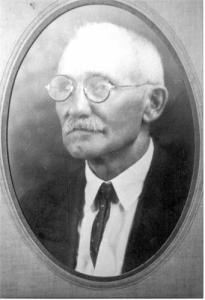
My second great-grandfather Lorenzo McDowell Blankenship
There is still an enormous amount I don’t know about that branch of my family.
And perhaps that is appropriate.
I am going to North Carolina not as someone claiming ownership over every tradition associated with Appalachia, but as someone who wants to learn.
There is a difference.
I Want to Know What Grows Outside My Door
Most of my spiritual practice has necessarily taken place indoors. Trapped in a concrete jungle, you don’t have much access to nature.
Books. Candles. Tarot cards. Herbs purchased from stores. Research conducted through glowing computer screens.
I love my books and have no intention of abandoning them. Anyone helping me move will quickly discover that the books have received diplomatic immunity from my attempts at decluttering.
But I want something more now.
I want to learn the plants around me.
I want to know which plants appear in spring and which disappear with the first frost.
I want to recognize the trees on sight.
I want to know where the creeks run after heavy rain.
I want to watch the moon rise over mountains instead of over parking lots.
I want to learn which birds announce themselves before dawn and which insects begin singing when summer evenings grow dark.
Not because I believe moving to Appalachia will magically download ancestral knowledge into my brain.
It won’t.
I have to learn.
And I love learning.
And perhaps that is part of the spiritual practice.
Becoming a Student of Place
I’ve become increasingly interested in the idea of place-based practice.
Modern Paganism can sometimes feel strangely portable. We can buy the same candles, crystals, herbs and altar decorations whether we live in Maine, Georgia, Arizona or Oregon.
There is nothing inherently wrong with that.
But folk traditions tend to be stubbornly local.
They develop because particular people live in particular environments and encounter particular problems.
What medicine grows here?
When should this crop be planted?
What does that bird call mean?
What weather follows that cloud?
What should you do when a baby won’t stop crying?
What protects a house?
What foretells a death?
What stories are told about that mountain?
Those questions fascinate me far more than memorizing another list of magical correspondences.
When I arrive in western North Carolina, I want to begin building my practice from the ground beneath my feet.
Literally.
Future me
I Want to Learn Appalachian Folklore Where It Lives
I have been researching Appalachian folk magic and folklore for years, but living in the region offers something books cannot.
There are local stories.
Family stories.
Cemetery inscriptions.
Old churches.
Historic communities.
Place names whose meanings disappear unless someone bothers to ask.
There are stories about ghosts and witches, omens and dreams, weather and death. There are old healing practices, planting signs, charms and beliefs about pregnancy and childbirth. Some are well documented. Others survive only as something someone’s grandmother used to say.
I want to collect those stories—not to turn every piece of folklore into a spell, but because remembering is itself valuable.
Sometimes folklore doesn’t need to be practiced.
Sometimes it simply needs someone to listen.
What My Solitary Practice May Become
I don’t expect to suddenly transform into some romanticized mountain witch wandering through misty forests with a basket of herbs.
Although, admittedly, the aesthetic appeal is considerable.
My actual life will still contain bills, work, laundry, grocery shopping and a tuxedo cat who considers unattended dirty clothing his personal real estate portfolio.
But I think my spiritual practice will change.
My altar may begin holding things I’ve gathered responsibly from the landscape.
My seasonal observances may become less about dates printed in Pagan books and more about what is actually happening outside.
The first frost.
The first spring flowers.
The return of particular birds.
The changing leaves.
The smell of rain moving through the mountains.
I want to learn traditional Appalachian plants and their historical uses while also learning what modern botany and medicine say about them.
I want to research the beliefs my ancestors might genuinely have encountered rather than projecting modern witchcraft backward onto them.
I want to visit the places where they lived.
And sometimes I simply want to sit quietly.
No spell.
No ritual.
No request.
Just listening.
I Don’t Want to Recreate the Past
There is another reason this move matters to me.
I don’t actually want to become my ancestors.
I wouldn’t survive a week.
I appreciate antibiotics, indoor plumbing, electricity, anesthesia and grocery stores far too much.
Nor do I believe everything old is automatically wise.
Historical folk medicine contained genuine botanical knowledge alongside ineffective remedies, superstition and practices that could be dangerous. Folklore can preserve beautiful cultural memory while also preserving fear and prejudice.
The past deserves neither contempt nor blind worship.
It deserves curiosity.
So my goal isn’t historical reenactment.
It is relationship.
I want to understand how people lived in those mountains, what frightened them, what comforted them, what they believed, what they planted, what they prayed over, and what knowledge women like Harriett carried from one household to another.
Then I want to decide thoughtfully what belongs in my own practice.
Perhaps This Is What Ancestral Work Means to Me
I’ve sometimes struggled with the phrase ancestor work.
It can sound terribly dramatic.
But perhaps ancestor work doesn’t always require elaborate rituals.
Maybe sometimes it means genealogy.
Maybe it means learning someone’s maiden name after history nearly erased it.
Maybe it means standing in an old cemetery and reading stones.
Maybe it means cooking something your grandmother cooked. (Especially her Kentucky cornbread. That is simply manna from heaven.)
Maybe it means researching an ancestor described simply as a “midwife, herbalist and doctor” and refusing to let those three words disappear.
Maybe it means discovering that a family story you had dismissed actually left traces in historical records.
And maybe it means returning to the mountains where those people lived—not because their blood gives you ownership of the land, but because knowing where they came from helps you understand where you came from.
I Am Going to the Mountains to Learn
That is ultimately what I want this next chapter of my life to be about.
Learning.
I want to learn the history beneath the romantic mythology of Appalachia.
I want to learn its folklore.
I want to learn its plants.
I want to learn its seasons.
I want to learn more about the Cherokee history intertwined with the region and approach it with respect rather than treating another people’s living traditions as a spiritual supply cabinet.
I want to learn about the European and African traditions that also shaped Appalachian folk culture.
I want to learn about granny women and midwives.
I want to learn what my own ancestors actually practiced—and become comfortable saying I don’t know when the records fall silent.
Most of all, I want my solitary practice to become rooted somewhere.
Soon I will pack my books, my altar, my ridiculously spoiled cat, and the rest of my life and head toward western North Carolina.
Somewhere among those mountains lived Harriett Carrigan Byrd.
Somewhere there are roads and streams my ancestors would recognize.
I don’t expect them to whisper secret spells to me through the trees.
But I do hope that living there will teach me something that genealogy databases and history books cannot.
So when I arrive, I think my first ritual will be extraordinarily simple.
I will walk outside.
I will look at the mountains.
And I will say:
I’m here.
Now teach me.
Previous Post
September 5, 2026
The Granny Women of Appalachia: Healers and Midwives
Next Post
September 10, 2026 Talking the Fire Out
Recent Comments
Browse Our Archives
Select a Category Uncategorized
Select a Month October 2026 September 2026 May 2025 March 2025 February 2025 November 2023 June 2023
TAKE THE
Religious Wisdom Quiz
What does "Gad" mean in Hebrew?
Select your answer to see how you score.
Warrior Fortune Joyful Chosen One
Related posts from The Spiritual History Geek
The Dead Man’s Hand: Appalachian Graveyard Magic
Angel Crowns: An Eerie Appalachian Death Tradition
Haint Blue: How a Color Protected Appalachian People
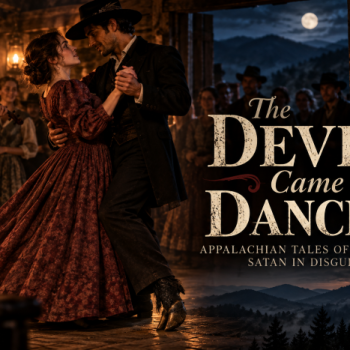
Appalachian Tales of Meeting Satan in Disguise
TRENDING AT PATHEOS History and Religion

The Dead Man’s Hand: Appalachian Graveyard Magic
When the Mountains Go Dark: Appalachian Folklore for Spooky Season Installment 3...

Angel Crowns: An Eerie Appalachian Death Tradition
When the Mountains Go Dark: Appalachian Folklore for Spooky Season Angel Crowns:...

Is 'Separation of Church and State' Really a...

There has long been a popular belief that Zen Buddhism is as...

Is Our Spirituality Communal or Individual?
Here, I take swings at sacred cows. I suspect that more sacred...

How Could Christianity be Different?
Christians can no longer plead ignorance. And Christians' reluctance to listen will...
view all History and Religion blogs
What Are Your Thoughts?leave a comment
Ad-Free & Subscriber Log-In Subscription Support
- About Us
- 2026 Calendar
- Videos
- Podcasts
- Library of World Religions
- Faith In Media Tracker
- Advertise With Us
- Write for Us
- Privacy Policy
- Terms of Service
- Do Not Sell My Data
- Contact Us
- Radiant Digital
- Manage Newsletter Subscriptions
- Unsubscribe From Notifications
- Sitemap
Copyright 2008-2026, Patheos. All rights reserved.
Subscription Support Ad-Free & Subscriber Log-In
Follow Patheos