
BuddhistCatholicContemplativeEvangelicalGeneral ChristianHinduJewishLatter-day SaintMuslimNew VisionsProgressive Christian
Beliefs
- Buddhist
- Catholic
- Contemplative
- Evangelical
- General Christian
- Hindu
- Jewish
- Latter-day Saint
- More Voices
- Muslim
- New Visions
- Pagan
- Progressive Christian
Topics
- Religion News
- Food and Religion
- Sports and Religion
- Religious Art
- Religious Music and Entertainment
- Religious Events
- History and Religion
- Style and Religion
- Politics and Religion
- Women in Religion
- Recreation Outdoors and Religion
- Business Finance and Religion
- Careers Workplace and Religion
- Education and Religion
- Family Parenting and Religion
- Health Fitness and Religion
- Home and Religion
- Relationships and Religion
- Technology and Religion
- Travel and Religion
Columnists
- Buddhist Columnists
- Business Finance and Religion Columnists
- Careers Workplace and Religion Columnists
- Catholic Columnists
- Contemplative Columnists
- Education and Religion Columnists
- Evangelists Columnists
- Family Parenting and Religion Columnists
- General Christian Columnists
- Health Fitness and Religion Columnists
- Hindu Columnists
- History and Religion Columnists
- Home and Religion Columnists
- Jewish Columnists
- More Voices Columnists
- Latter Day Columnists
- Muslim Columnists
- New Visions Columnists
- Nonreligious Columnists
- Pagan Columnists
- Politics and Religion Columnists
- Progressive Columnists
- Recreation Outdoors and Religion Columnists
- Relationships and Religion Columnists
- Religion News Columnists
- Religious Art Columnists
- Religious Events Columnists
- Religious Music and Entertainment Columnists
- Sports and Religion Columnists
- Style and Religion Columnists
- Technology and Religion Columnists
- Travel and Religion Columnists
- Women in Religion Columnists
Resource Library
- 2026 Calendar
- Library of World Religions
- The 100 Most Holy Places on Earth
- Patheos Answers
- Podcasts
- Videos
- Faith Leaders Database
- Anglican Episcopalian
- Bahai
- Baptist
- Buddhism
- Christianity
- Confucianism
- Eastern Orthodoxy
- Hinduism
- Holiness and Pentecostal
- ISKCON
- Islam
- Judaism
- Lutheran
- Methodist
- The Church of Jesus Christ of Latter-day Saints
- New Age
- Paganism
- Presbytarian and Reformed
- Protestantism
- Religion Behind the Scenes
- Roman Catholic
- Scientology
- Shia Islam
- Sikhism
- Sufism
- Sunni Islam
- Taoism
- Zen
- See all religions
Research Tools
 Ad-Free & Subscriber Log-In Subscription Support
Ad-Free & Subscriber Log-In Subscription Support
Follow Patheos 

- Trending:
- Forgiveness
- |
- Marriage
- |
- Consciousness
- |
- Death Penalty
- |
- Election
- |
- Halloween
 The Shoeless Banshee: Meanderings Beyond the Pale
- Home
- Catholic
- Introducing Veronica Roltgen: You’re Not A Good Or Bad Catholic, You’re Just Catholic
Introducing Veronica Roltgen: You’re Not A Good Or Bad Catholic, You’re Just Catholic
Last updated on: August 6, 2020 at 7:40 pm by Guest Contributor
Introducing Veronica Roltgen: You’re Not A Good Or Bad Catholic, You’re Just Catholic 2020-08-06T19:40:06+00:00 Guest Contributor
Patheos Explore the world's faith through different perspectives on religion and spirituality! Patheos has the views of the prevalent religions and spiritualities of the world.
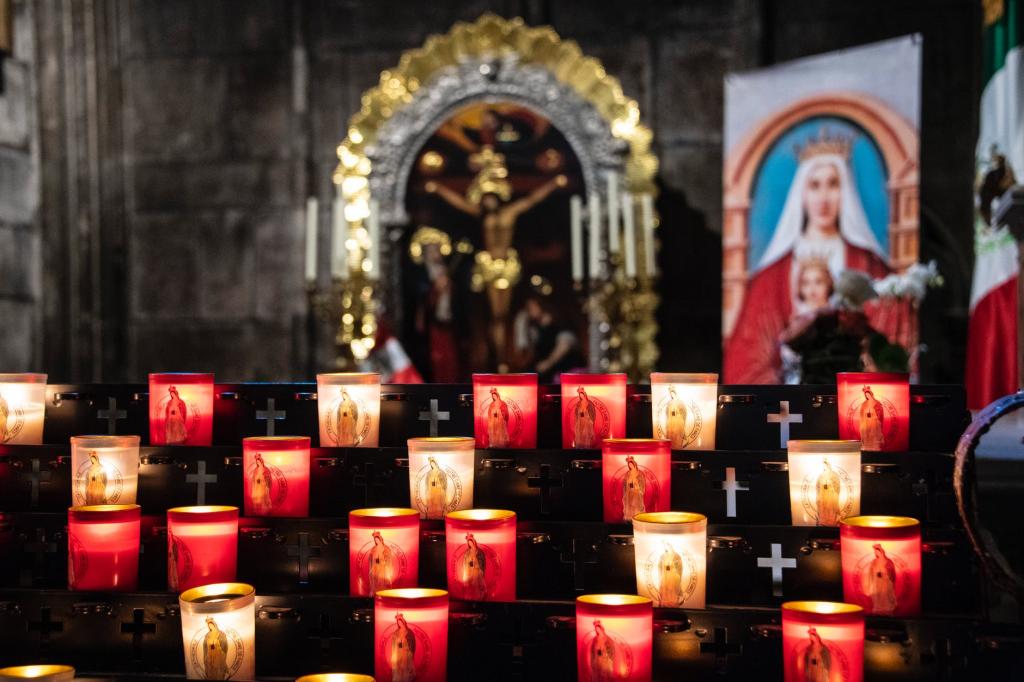
Source: David Dibert for pexels.com
Hi there!
I’m Veronica, the newest contributor to The Shoeless Banshee blog.
I’ve guest blogged several times and was recently invited to join the honored ranks of Jenn and Marie. I’m very humbled and hope that what I share is helpful to others, both fellow Catholics and all other brothers and sisters.
To begin, I wanted to share something that’s been on my mind for quite a while:
I think it’s very important to change the conversation regarding Catholics “status”— that is, whether you’re a “good, faithful” Catholic or a “bad, unfaithful” Catholic. Yes, there are standards for clergy, whether or not they’re in “good standing” with the Church, but this qualification is nonexistent for laypeople.
I remember when I was first introduced to this concept.
I was a geeky freshman at the Catholic high school, struggling with normal teenager things. However, I also struggled with my faith, being a rather uninformed cradle Catholic. I can recall a conversation I had with some of my classmates during lunch period. I forget how it came up exactly, but someone mentioned the term “cafeteria Catholic.”
Initially, I was confused and asked her to clarify. Since we were all sitting in the cafeteria, were we cafeteria Catholics too?
She explained that it referred to anyone who didn’t follow each and every one of the Church’s teachings and would pick and choose, like you would choose your lunch at the cafeteria. She also gave me some examples, mostly those who contracepted and supported abortion, with the reminder that these were“disobedient, “bad” Catholics. I remember turning this new information around in my head for a bit. It made sense to me, and I didn’t want to be bad. So, I resolved to never become a “cafeteria Catholic”. This idea was reinforced throughout my college experience at Franciscan University of Steubenville and later on when I was working for various parishes.
However, that idea THANKFULLY has been challenged, and I would like to address it again. I don’t believe that anyone gets to decide if you’re a “good Catholic” or a “bad Catholic” other than God. I think this is especially true during this time of quarantine when the sacraments aren’t as readily available.
No one gets to claim “I’m a good Catholic because I prayed the rosary, the divine mercy chaplet, all of the liturgy of the hours, daily mass, and go to confession every week” because this is such a weird time where doing that isn’t always possible…or perhaps you are able to do all that (outside of a convent), but then it just looks like you’re trying to prove something.
I think it’s vital that we remind people that we’re Catholic because we’re baptized Catholic. It’s not dependent on how often you go to Mass or how many rosaries you pray. It’s not dependent on how many soup kitchens you run or what ministries you do. It’s dependent on where your heart is with God.
And there’s no good way to measure that.
Look at Church history. We’re in good company with those who struggle, who fall, who seriously mess things up. So many saints didn’t even have communion until their death beds!
Consider as well that we all go through different seasons of life with our faith. When I was strictly “practicing” as in attending daily Latin Mass and praying the Liturgy of the Hours regularly, I wasn’t necessarily loving. I didn’t have any concern for the poor or the marginalized. I was incredibly judgmental and frankly mean.
As a former youth minister, I believe that you simply point kids, young adults, etc in the right direction. Here are resources; keep asking questions. By claiming that the Church and its leaders have all of the correct answers and never mess up, we’re being dishonest to the people of God.
The Church does give us some parameters (go to confession, receive communion once a year), but one’s conscience always takes precedence. If you’re not in a place where you can follow Church teaching according to your conscience, you don’t. Otherwise, you’re violating your conscience.
Receiving the sacraments out of guilt or a sense of duty is not love, and the sacraments are meant to transmit and communicate love.
Again, look at the lives of the saints. Even the apostles didn’t get it right all the time— the first example coming to mind is the denial of Jesus by St. Peter on Good Friday found in all four Gospels: Matthew 26:33-35, Mark 14:29-31, Luke 22:33-34, and John 13:36-38.
Another classic example is Doubting Thomas, of course, found only in John 20: 24-29. Also consider brothers James and John who wanted to be granted seats of honor in heaven alongside Jesus. Later, they wanted to call down fire from heaven upon a Samaritan town, and Jesus rebuked them (Luke 9:51-56). Not exactly “good, Christian behavior”, am I right?
But those are only the instances that are recorded in Scripture. What about all of the mistakes that the early Church surely made as it tried to figure out what on earth was going on?
When I sat down and wrote this intro, the Church was preparing to celebrate one of my favorite feasts: Pentecost! Although it’s not always recited, the sequence (“Veni, Sancte Spiritus”) is included in the missal for the Mass.
Come, Holy Spirit, come!
And from your celestial home
Shed a ray of light divine!
Come, Father of the poor!
Come, source of all our store!
Come, within our bosoms shine.
You, of comforters the best;
You, the soul’s most welcome guest;
Sweet refreshment here below;
In our labor, rest most sweet;
Grateful coolness in the heat;
Solace in the midst of woe.
O most blessed Light divine,
Shine within these hearts of yours,
And our inmost being fill!
Where you are not, we have naught,
Nothing good in deed or thought,
Nothing free from taint of ill.
Heal our wounds, our strength renew;
On our dryness pour your dew;
Wash the stains of guilt away:
Bend the stubborn heart and will;
Melt the frozen, warm the chill;
Guide the steps that go astray.
On the faithful, who adore
And confess you, evermore
In your sevenfold gift descend;
Give them virtue’s sure reward;
Give them your salvation, Lord;
Give them joys that never end.
Amen. Alleluia.
I love this particular prayer to the Holy Spirit and that it can be a beautiful meditation for this idea of “good Catholic” versus “bad Catholic”. In this prayer, we acknowledge that all of us need the help, the light, the love of the Holy Spirit. If we’re not struggling in our faith, our life, currently, we certainly all have at one time, or will in the future. This is because our faith should not be stagnant. Look at a common symbol of the Holy Spirit: fire. Whether it’s contained in a small candle or spreading furiously in a dumpster, fire moves, consumes, changes. It’s unpredictable and often scary. When we allow the Spirit to “[heal] our wounds, our strength renew/ on our dryness pour your dew/ wash the stains of guilt away/ bend the stubborn heart and will/ melt the frozen, warm the chill/ guide the steps that go astray’, we invite change, challenge, and new life into our hearts and our lives. This comes with doubt, fear, and even some anger, but this is often how the Spirit moves and forms us.
Come, Holy Spirit. Come and help us when we don’t feel good enough to be a member of the Body. Forgive us when we feel too confident in our piety.
Show us in your Holy fire how we may better love as You love.
Image Credit: David Dibert for pexels.com
About Veronica Roltgen
A budding writer in the Minnesotan north woods, Veronica Roltgen creates stories and poems when she isn’t chasing after her two children. She enjoys passionate discussions of feminism, Catholic theology, Tolkien nerdom, Spanish mysticism, Star Wars, and cheese. You can read more about the author here.
Previous Post

July 10, 2020
Broken Glass: When Domestic Violence Ends in Murder
Next Post

August 28, 2020 American Saints Who Were People of Color
Browse Our Archives
Select a Category Advent Art and Poetry Catholic Domestic Violence Easter Triduum Guest Contributions Humor Lent Meanderings from Mass Millennials leaving and staying Pop Culture Social Justic Uncategorized Unconventional Catholicism
Select a Month September 2020 August 2020 July 2020 June 2020 December 2019 November 2019 October 2019 July 2019 June 2019 May 2019 April 2019 March 2019 February 2019 January 2019 December 2018 November 2018 October 2018 September 2018 July 2018 June 2018 May 2018 April 2018 March 2018
Follow Us!
TAKE THE
Religious Wisdom Quiz
Who was Jude?
Select your answer to see how you score.
Brother of Jesus Brother of Peter The apostle who replaced Judas The first martyred apostle
Support this
Column


Related posts from The Shoeless Banshee: Meanderings Beyond the Pale
Asian and Oceanic Saints Who Were People of...
The Shoeless Banshee: Meanderings Beyond the Pale
African Saints Who Were People of Color
The Shoeless Banshee: Meanderings Beyond the Pale
Remembering My Sister I Never Met
The Shoeless Banshee: Meanderings Beyond the Pale
The Shoeless Banshee: Meanderings Beyond the Pale
TRENDING AT PATHEOS Catholic

Creation, Preservation, and Teleology in Catholic Theology
As I write this, it is very early Monday morning. Like millions...

The Parable Of The Sower And The Word...
One of Christ’s most famous parables is that of the sower who...

Rejecting Doom: Christian Hope And Human Action
Christianity is a religion of hope. We are to have hope and...

Why I Choose the Eucharist Over the Sermon
Choose the Eucharist, Not the Sermon What are we supposed to get...

5 Design Elements Found in Spiritually Rooted Homes
Putting Spirituality Into Home Decor Our homes are more than our living...

Credo: A Story of God Told with the...
About 10 years ago, I began to imagine a personal "Credo" that...
view all Catholic blogs
Ad-Free & Subscriber Log-In Subscription Support
- About Us
- 2026 Calendar
- Videos
- Podcasts
- Library of World Religions
- Faith In Media Tracker
- Advertise With Us
- Write for Us
- Privacy Policy
- Terms of Service
- Do Not Sell My Data
- Contact Us
- Radiant Digital
- Manage Newsletter Subscriptions
- Unsubscribe From Notifications
- Sitemap
Copyright 2008-2026, Patheos. All rights reserved.
Subscription Support Ad-Free & Subscriber Log-In
Follow Patheos