
BuddhistCatholicContemplativeEvangelicalGeneral ChristianHinduJewishLatter-day SaintMuslimNew VisionsProgressive Christian
Beliefs
- Buddhist
- Catholic
- Contemplative
- Evangelical
- General Christian
- Hindu
- Jewish
- Latter-day Saint
- More Voices
- Muslim
- New Visions
- Pagan
- Progressive Christian
Topics
- Religion News
- Food and Religion
- Sports and Religion
- Religious Art
- Religious Music and Entertainment
- Religious Events
- History and Religion
- Style and Religion
- Politics and Religion
- Women in Religion
- Recreation Outdoors and Religion
- Business Finance and Religion
- Careers Workplace and Religion
- Education and Religion
- Family Parenting and Religion
- Health Fitness and Religion
- Home and Religion
- Relationships and Religion
- Technology and Religion
- Travel and Religion
Columnists
- Buddhist Columnists
- Business Finance and Religion Columnists
- Careers Workplace and Religion Columnists
- Catholic Columnists
- Contemplative Columnists
- Education and Religion Columnists
- Evangelists Columnists
- Family Parenting and Religion Columnists
- General Christian Columnists
- Health Fitness and Religion Columnists
- Hindu Columnists
- History and Religion Columnists
- Home and Religion Columnists
- Jewish Columnists
- More Voices Columnists
- Latter Day Columnists
- Muslim Columnists
- New Visions Columnists
- Nonreligious Columnists
- Pagan Columnists
- Politics and Religion Columnists
- Progressive Columnists
- Recreation Outdoors and Religion Columnists
- Relationships and Religion Columnists
- Religion News Columnists
- Religious Art Columnists
- Religious Events Columnists
- Religious Music and Entertainment Columnists
- Sports and Religion Columnists
- Style and Religion Columnists
- Technology and Religion Columnists
- Travel and Religion Columnists
- Women in Religion Columnists
Resource Library
- 2026 Calendar
- Library of World Religions
- The 100 Most Holy Places on Earth
- Patheos Answers
- Podcasts
- Videos
- Faith Leaders Database
- Anglican Episcopalian
- Bahai
- Baptist
- Buddhism
- Christianity
- Confucianism
- Eastern Orthodoxy
- Hinduism
- Holiness and Pentecostal
- ISKCON
- Islam
- Judaism
- Lutheran
- Methodist
- The Church of Jesus Christ of Latter-day Saints
- New Age
- Paganism
- Presbytarian and Reformed
- Protestantism
- Religion Behind the Scenes
- Roman Catholic
- Scientology
- Shia Islam
- Sikhism
- Sufism
- Sunni Islam
- Taoism
- Zen
- See all religions
Research Tools
 Ad-Free & Subscriber Log-In Subscription Support
Ad-Free & Subscriber Log-In Subscription Support
Follow Patheos 

- Trending:
- Forgiveness
- |
- Marriage
- |
- Consciousness
- |
- Death Penalty
- |
- Election
- |
- Halloween

- Home
- Jewish
- History and Religion
- How the Italian Renaissance Began
How the Italian Renaissance Began
Last updated on: April 10, 2023 at 10:55 am by Barbara O'Brien
How the Italian Renaissance Began 2023-04-10T10:55:07-05:00 Barbara O'Brien
Patheos Explore the world's faith through different perspectives on religion and spirituality! Patheos has the views of the prevalent religions and spiritualities of the world.
The Italian Renaissance was one of the shining jewels of human history. The Renaissance itself began in Tuscany, especially in Florence, in the late 13th century, although the great age of Italian Renaissance art was the 14th through 16th centuries. And by then the Renaissance was spreading to other parts of Europe. This post will be a very basic, broad overview of the origins of the Italian Renaissance and the role of religion in those origins.
The Italian Renaissance brings to mind the glorious religious art of the period, including Leonardo da Vinci’s The Last Supper and Michelangelo’s exquisite Pietà and David, and of course the magnificent Sistine Chapel ceiling. The Catholic Church was a major patron of the arts of the Italian Renaissance. The Jews of Italy — for example, the great Renaissance composer Salamone Rossi — also made significant contributions to the Italian Renaissance that are still often overlooked.
Pre-Renaissance Italy and Trade With Other Cultures
Maritime commerce among Italy, the Byzantine Empire, Spain, Egypt, Tunisia, and other Muslim countries increased in the 12th century and brought Italians into contact with other cultures. The Muslims were especially eager to acquire timber and iron, which Italians were able to provide. Jewish traders were active participants in these enterprises. In fact, much of what historians today know about this maritime trade comes from records in Hebrew, stored in synagogues all around the Mediterranean.
The important point here is that trade brought Catholics, Jews, and Muslims together in joint business ventures. Arbitrations were often conducted in rabbinical or Shari’a courts. Contracts were often written in Hebrew and Arabic. In the 12th century, civilizations in north Africa and Moorish Spain had rich traditions of elegant art and architecture that must have been eye-opening to medieval Italians.
Pre-Renaissance Italy: Back to the Classics
The classic literature of pre-Christian Rome was not completely unknown in Italy during the Medieval period. Latin was, after all, the common language of Catholic Europe. But Cicero and Virgil were stored away in the attic, so to speak. They definitely took a back seat to early Christian writers such as Saint Augustine.
Dante Alighieri (c. 1265 – 1321) was a native of Florence. His masterpiece The Divine Comedy today is considered a bridge between the Middle Ages and the Renaissance. Written in vernacular Italian rather than Latin, The Divine Comedy is still considered one of the greatest literary works of the Italian language. Even so, Dante was very much influenced by the Latin works of ancient Rome, including Cicero, Ovid and Virgil
Francesco Petrarca of Tuscany, better known as Petrarch (1304-1374) was a prolific scholar and poet who developed a keen interest in the classic Latin literature. His re-discovery of Cicero’s letters is often cited as one of the sparks that ignited the Renaissance. Petrarch considered Cicero, Virgil, and Seneca his literary models. Through the influence of writers like Dante and Petrarch, Italians began taking their ancient Roman legacy more seriously. The art and architecture of ancient Rome would also influence the Italian Renaissance.
The Importance of Humanism
Revived interest in the classical world fueled a humanist movement that was central to the spirit of the Renaissance. The Medieval period was dominated by scholasticism, which arguably gets a bad rap for being overly dogmatic and legalistic. The humanism of the Renaissance placed more emphasis on studying humanity over theology. The Renaissance humanists were not opposed to religion but proposed that human beings needed more than religion. This humanism encouraged civic virtue and took an interest in bettering human communities. It supported critical inquiry over obedient submission to authority. And it elevated the work of writers and artists to lead and shape human civilization.
This humanist movement began in Tuscany, especially Florence, and spread from there. This led to a great flowering of the arts, as seen in the works of high Renaissance masters like Leonardo da Vinci and Michelangelo. It gave rise to a network of scholars linked by letters and books. It encouraged critical examination of texts and ideas. It gave birth to science, making the work of Copernicus and Galileo possible.
The Catholic Church had a complicated relationship with the Renaissance. The Church was a major patron of Renaissance art and architecture. The Renaissance impacted theology by changing the way people understood their relationship with God. The Church was less happy with Copernicus and Galileo, you might recall. And inevitably the Renaissance led to the Reformation and the breakup of the Church’s political power throughout Europe.
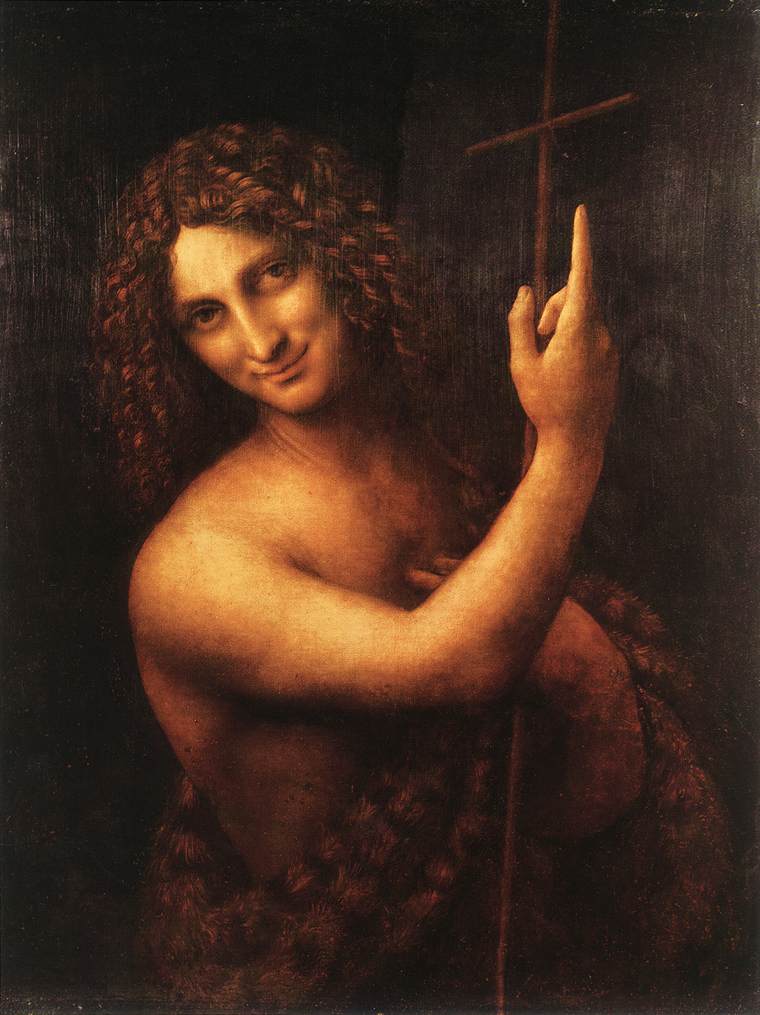
Saint John the Baptist by Leonardo da Vinci. painted sometime between 1513 and 1516. Source: Wikimedia Commons, public domain.
Jewish
Catholic
Previous Post
April 5, 2023
The Controversial History of Michelangelo's David
Next Post
April 13, 2023 How the Renaissance Popes Made Rome
Recent Comments
"Thank you for this grounded, deeply necessary perspective. Shifting our framework from moralistic binaries to ..."
What You May Not Know About ..."
"Nonviolence is the weapon of the mighty and the strong. Violence is the weapon of ..."
Thomas Aquinas on the Morality of ..."
"Regarding Barbara O'Brien's article "Is Empathy a Weakness?" My answer in song is an emphatic ..."
""A government, which to bigotry gives no sanction." How far our government has fallen from ..."
George Washington’s Letter to Touro Synagogue
Browse Our Archives
Select a Category Buddhism Christianity Daoism Hinduism Indigenous religions Islam Judaism Mysticism New Age Origins of religion Paganism Popes Popular Religious Movements Protestantism Psychology and religion Religion and current events Religion and folklore Religion and News Media Religion and politics Religious Art and Music Religious Freedom Religious mistakes Religious philosophy Religious scriptures Religious Violence science and religion Spiritualism Technology and religion The Catholic Church The Dalai Lama The Reformation Uncategorized
Select a Month September 2026 August 2026 July 2026 June 2026 April 2026 March 2026 February 2026 January 2026 December 2025 November 2025 October 2025 September 2025 August 2025 July 2025 June 2025 May 2025 April 2025 March 2025 February 2025 January 2025 December 2024 November 2024 October 2024 September 2024 August 2024 July 2024 June 2024 May 2024 April 2024 March 2024 February 2024 January 2024 December 2023 November 2023 October 2023 September 2023 August 2023 July 2023 June 2023 May 2023 April 2023 March 2023 February 2023 January 2023 December 2022 November 2022 October 2022 September 2022 August 2022
Follow Us!
TAKE THE
Religious Wisdom Quiz
I sent an army of singers before my army, and God set ambushes against our enemies. Who am I?
Select your answer to see how you score.
Hezekiah Asa Jehoshaphat David
Related posts from The Religious History Nerd

Barring Mamdani From 9/11 Lets the Enemy Win

The President and the Pope: An Unprecedented Rift
What Was the Avignon Papacy and Why Is...
Thomas Aquinas on the Morality of War
TRENDING AT PATHEOS History and Religion

The Dangers of Gradual Accommodation (Winking at Sin)
Recently, the “law of gradualness” resurfaced during the opening of a weeklong,...

The Iron Gates and the Lion of the...
Yesterday, I didn't finish my report about, well, yesterday. So I'll...

Dolly Parton’s Last Song Wins Dove Award with...
Bluegrass band The Grascals, speaking on the red carpet at the 57th...

The Image: On the Horror of Capitalism and...
The Image Then went the Pharisees, and took counsel how they might...

We are approaching the date of our new American national holiday: October...

Letters on Living the Faith by C.S. Lewis
Most of us met C.S. Lewis as a public intellectual. Mere Christianity....
view all History and Religion blogs
What Are Your Thoughts?leave a comment
Ad-Free & Subscriber Log-In Subscription Support
- About Us
- 2026 Calendar
- Videos
- Podcasts
- Library of World Religions
- Faith In Media Tracker
- Advertise With Us
- Write for Us
- Privacy Policy
- Terms of Service
- Do Not Sell My Data
- Contact Us
- Radiant Digital
- Manage Newsletter Subscriptions
- Unsubscribe From Notifications
- Sitemap
Copyright 2008-2026, Patheos. All rights reserved.
Subscription Support Ad-Free & Subscriber Log-In
Follow Patheos