
BuddhistCatholicContemplativeEvangelicalGeneral ChristianHinduJewishLatter-day SaintMuslimNew VisionsProgressive Christian
Beliefs
- Buddhist
- Catholic
- Contemplative
- Evangelical
- General Christian
- Hindu
- Jewish
- Latter-day Saint
- More Voices
- Muslim
- New Visions
- Pagan
- Progressive Christian
Topics
- Religion News
- Food and Religion
- Sports and Religion
- Religious Art
- Religious Music and Entertainment
- Religious Events
- History and Religion
- Style and Religion
- Politics and Religion
- Women in Religion
- Recreation Outdoors and Religion
- Business Finance and Religion
- Careers Workplace and Religion
- Education and Religion
- Family Parenting and Religion
- Health Fitness and Religion
- Home and Religion
- Relationships and Religion
- Technology and Religion
- Travel and Religion
Columnists
- Buddhist Columnists
- Business Finance and Religion Columnists
- Careers Workplace and Religion Columnists
- Catholic Columnists
- Contemplative Columnists
- Education and Religion Columnists
- Evangelists Columnists
- Family Parenting and Religion Columnists
- General Christian Columnists
- Health Fitness and Religion Columnists
- Hindu Columnists
- History and Religion Columnists
- Home and Religion Columnists
- Jewish Columnists
- More Voices Columnists
- Latter Day Columnists
- Muslim Columnists
- New Visions Columnists
- Nonreligious Columnists
- Pagan Columnists
- Politics and Religion Columnists
- Progressive Columnists
- Recreation Outdoors and Religion Columnists
- Relationships and Religion Columnists
- Religion News Columnists
- Religious Art Columnists
- Religious Events Columnists
- Religious Music and Entertainment Columnists
- Sports and Religion Columnists
- Style and Religion Columnists
- Technology and Religion Columnists
- Travel and Religion Columnists
- Women in Religion Columnists
Resource Library
- 2026 Calendar
- Library of World Religions
- The 100 Most Holy Places on Earth
- Patheos Answers
- Podcasts
- Videos
- Faith Leaders Database
- Anglican Episcopalian
- Bahai
- Baptist
- Buddhism
- Christianity
- Confucianism
- Eastern Orthodoxy
- Hinduism
- Holiness and Pentecostal
- ISKCON
- Islam
- Judaism
- Lutheran
- Methodist
- The Church of Jesus Christ of Latter-day Saints
- New Age
- Paganism
- Presbytarian and Reformed
- Protestantism
- Religion Behind the Scenes
- Roman Catholic
- Scientology
- Shia Islam
- Sikhism
- Sufism
- Sunni Islam
- Taoism
- Zen
- See all religions
Research Tools
 Ad-Free & Subscriber Log-In Subscription Support
Follow Patheos 

- Trending:
- Advent
- |
- Forgiveness
- |
- Thanksgiving
- |
- Election
- |
- Seasonal Holidays
- |
- Marriage

- Home
- Buddhism
- History and Religion
- Ikkō-ikki: Buddhism and the Japanese Peasant Revolts
Ikkō-ikki: Buddhism and the Japanese Peasant Revolts
Last updated on: January 16, 2023 at 9:54 am by Barbara O'Brien
Ikkō-ikki: Buddhism and the Japanese Peasant Revolts 2023-01-16T09:54:37-06:00 Barbara O'Brien
Patheos Explore the world's faith through different perspectives on religion and spirituality! Patheos has the views of the prevalent religions and spiritualities of the world.
Ikkō-ikki was a name given to peasants’ revolts in 15th and 16th century Japan. Most of the organizers and leaders of the revolt were Buddhist priests of the Jodo Shinshu school. The fighters, mostly farmers, merchants, and artisans, were revolting against the dominance of the samurai. For a time the revolts succeeded. Some parts of Japan in effect became independent states governed by councils of commoners, free of shogun and emperor. The ikkō-ikki revolts would eventually be brutally suppressed by the warlord Oda Nobunaga.
Ikkō-ikki and the Wars Among Warlords
First, some background. Japan was a military dictatorship for nearly seven centuries, beginning with the rise of the first shogun, Minamoto no Yoritomo, in 1192. Although Japan still had emperors, the real rulers of Japan were the shoguns, who were military dictators. They were in power until the last shogun, Tokugawa Yoshinobu, resigned in 1867. The shoguns were all samurai, which was a warrior/military hereditary caste at the top of the Japanese cultural, social, and political hierarchy. We in the West think of all samurai as fighters, but in truth anyone born into a samurai family was part of the samurai caste, including women, children, and non-combatants.
Beneath the shoguns on the power chart were the daimyo. Originally the daimyo were the heads of samurai clans and lords of inherited estates who became vassals to the shogun. Then a particularly brutal civil war called the Ōnin War (1467-1477) weakened the central government and the authority of the shogun. After that the daimyo were more like territorial warlords who maintained power through the ruthlessness of the samurai fighters who were loyal to them. The Onin War was just the beginning of a time called Sengoku, the “warring states period,” in which daimyo and their samurai armies fought each other for territory and power. The Sengoku didn’t end until after a new shogunate, the Tokugawa, took power in 1603 and established stronger central control. (For movie buffs, note that some of Akira Kurosawa’s classic samurai films, such as Seven Samurai, Ran, and Kagemusha, are set in the Sengoku period.)
During this volatile time, there were places in Japan where no one was much in control, except for bandits. There were other places where the daimyo were levying ruinous taxes to pay for their wars. Either way, the common people decided to organize to protect themselves, which is how the peasant revolts got started. They were inspired by the teachings of a particular school of Buddhism and a priest named Rennyo.
About Jodo Shinshu Buddhism
Jodo Shinshu is part of the Pure Land tradition of Buddhism. Pure Land Buddhism originated in 5th century China and branched into a number of schools. It is the most common form of Buddhism in East Asia today. “Pure Land” is a clunky translation of the Chinese jingtu, “purified ground,” and the purified ground is understood in many different ways. It may be thought of as a physical place, but not necessarily. Very basically and broadly, Pure Land Buddhists engage in devotional practices such as chanting and prostrations to Amitabha Buddha in order to be reborn in Sukhavati, the Western Paradise. This is a purified place where enlightenment is easily achieved. Again, this may be understood either literally or figuratively. Over the centuries the Pure Land schools of China attracted a large following among laypeople, who found them more accessible than forms of Buddhism centering on monasticism and requiring long hours of meditation.
Although Pure Land devotional practices reached Japan much earlier, the first Japanese Pure Land school was established by Hōnen (1133-1212) as Jodo Shu, “the Pure Land school,” in 1175. Hōnen was an egalitarian fellow who did not hesitate to teach and accept as followers people other schools of Buddhism at the time turned away, including prostitutes and fortune tellers. Hōnen also had many women students at a time when the policy of most of Japanese Buddhism was nyonen kinsei — “no women admitted.” Hōnen ran afoul of the Buddhist establishment and soon was exiled by the Emperor. Some of his chief disciples were sent into separate exiles; some were executed.
One of the exiled disciples was Shinran (1173-1263). (His name is often given as Shinran Shōnin; shōnin means “priest.”) When his exile began Shinran was 35 years old and had been a monk since he was 9. In exile, he was a layperson living among farmers and laborers. At some point he married and fathered several children, but he still taught Buddhism, usually in people’s homes. When the exile was lifted in 1211 he traveled from place to place and taught, again often in people’s homes. By then Shinran had developed some different approaches from his teacher Hōnen. The primary difference regarded the nembutsu, the chanting of Amitabha’s name. While Hōnen advocated many repetitions of the nembutsu, Shinran taught that once is enough if one’s faith is strong. After that, one chants the nembutsu in gratitude, he said. His followers began calling Shinran’s teachings Jodo Shinshu, “the true Pure Land school.” Often Jodo Shinshu is just called Shin for short.
Jodo Shinshu Before Ikkō-ikki
Jodo Shinshu would become a school of Buddhism led by ordained priests who were allowed to marry. This was at a time when Buddhist clergy throughout Asia were nearly all celibate monastics. Congregations were self-supporting through donations from members and did not rely on wealthy patrons, which also was unusual for the time. Jodo Shinshu stressed the equality of all people —men and women, peasant and noble—within Amitabha’s grace. This was a remarkably egalitarian perspective for feudal Japan. Some time after Shinran’s death some of his descendants established a home temple for the school at Honganji (Temple of the Original Vow), where Shinran was entombed, east of Kyoto. In 1332 Honganji was recognized by the government as the primary temple of Jodo Shinshu.
Now I need to bring up a little more background. Medieval Japan was something like the Wild West of Buddhism. Many of the long-established and wealthier Buddhist sects maintained private mercenary armies, ostensibly for defense, that would sometimes be set against rival Buddhist schools. (The mercenaries were called sōhei, “warrior monks,” and often they wore monk’s habits and more or less lived in their temples as monks when they weren’t fighting, but it’s my understanding they may not have been formally ordained.)
For centuries the most dominant school of Buddhism in Japan was Tendai. The home temple of Tendai was Enryakuji, a vast temple complex on Mount Hiei, northeast of Kyoto, that at its peak housed 20,000 monks. Both Honen and Shinran had originally been Tendai monks at Enryakuji, and Tendai had incorporated many Pure Land practices. For that reason Pure Land Buddhism was considered by the government to be a subsect of Tendai subject to Tendai authority. I don’t know that Hōnen and Shinran saw things that way, but that’s how it was. In any event, in 1456 something happened to disturb the Tendai establishment, and the mercenaries were sent to Honganji to burn it to the ground. Note that this was eleven years before the Onin War began.
Ikkō-ikki and Ikkō-shu
The abbot of Honganji at the time was another descendent of Shinran named Rennyo (1415-1499). After Honganji’s loss he established a new temple in Yoshizaki in Echizen Province (Fukui Prefecture) on the west coast of Japan’s main island, Honshu. He was out of reach of the Kyoto establishment. (By road today, Yoshizaki is nearly 300 miles, or 185 km, from, Kyoto.)
From there, Rennyo issued a number of epistles in which he wrote about the single mind (ikkō). “Those who, without any worry, simply entrust themselves exclusively (with no double-mindedness) to Amitabha Buddha and keep their thoughts from straying in other directions will all become buddhas, ten people out of ten,” he wrote. “It is easy to hold to this single mind [of faith].” He called Jodo Shinshu the Ikkō-shu, or “single-mind school.”
Like his predecessors, Rennyo taught an egalitarianism that was radical for Japan at the time. People from all layers of Japan’s hierarchical culture were welcomed to hear Rennyo’s teachings. Also like his predecessors, he held the radical idea that women were just as entitled to enter temples and receive teachings as men and were equally capable of realizing enlightenment. He even placed women in administrative positions. Through the widely circulated epistles Rennyo’s teachings and influence gained considerable attention.
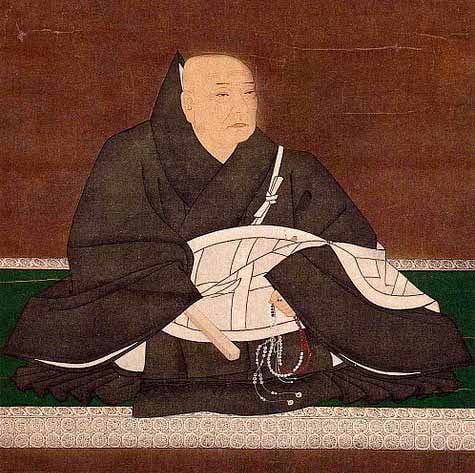
Portrait of Rennyo Shōnin by Kanō Masanobu (ca. 1432-1530). Source: Wikimedia Commons, public domain.
Ikkō-ikki as Fighters
As Japan became more unstable during the Sengaku, ordinary people organized to protect themselves. Inspired by Rennyo, they called this organization Ikkō-ikki, roughly “single-mind league.” Where there was little government presence, the Ikkō-ikki formed their own councils and made their own decisions. They also organized into militias, originally for defense. Note that in some sources on the Web I’ve seen the Ikkō-ikki militias referred to as “warrior monks,” but that’s far from true. These were mostly laypeople. And Jodo Shinshu clergy were not really monks. Jodo Shinshu clergy (although not Rennyo, a pacifist) took part, as well as some clergy of what we now call Shinto. A few sympathetic samurai joined Ikkō-ikki also. But this was mostly a self-organized militia of farmers and townspeople of modest means. They went into battle with banners displaying the words of the nembutsu.
Their first efforts at fighting against samurai was clumsy. But they got better. They often had a size advantage that enabled them to overwhelm samurai by sheer numbers. They also took advantage of newfangled firearm technology that had recently entered Japan from China. In 1486 Ikkō-ikki overthrew of the governor of Kaga Province, which borders Echizen Province, and took it over. Other major victories followed. Ikkō-ikki established significant fortresses at Ishiyama Honganji, outside Osaka, and at Nagashima on the Pacific coast. Ikkō-ikki’s reach had grown considerably, and it continued to grow after Rennyo died in 1499.
Oda Nobunaga and the End of Ikkō-ikki
A major setback occurred in 1564 when forces led by Tokugawa Ieyasu (1543-1616; at the time he was called Matsudaira Ieyasu) defeated a large force of Ikkō-ikki at the Battle of Azukizaka. Togugawa Ieyasu’s samurai were joined by sōhei from Jodo Shu temples to fight against Ikkō-ikki, demonstrating that the religious landscape of Japan was something of a snake pit at the time.
Then came Oda Nobunaga (1534-1582), a daimyo who was determined to unify Japan, preferably under his control. And he nearly succeeded. He decided the Ikkō-ikki uprising needed to be stopped, because it might get in his way. In 1570 Nobunaga declared war on Ikkō-ikki. His sieges of the fortress at Nagashima initially were failures. In 1574 his samurai were able to surround the fortress and set fire to it, killing the inhabitants, a huge loss for Ikkō-ikki.
Nobunaga besieged Ishiyama Honganji, Ikkō-ikki’s primary temple and stronghold, for ten years. The temple’s position on an island in Osaka made it nearly impregnable. Eventually the abbot chose to surrender in 1580 when all supplies were depleted. Nobunaga spared the lives of most defenders (I believe this was at the request of the Emperor) but burned the stronghold to the ground. Meanwhile Nobunaga’s samurai hunted down other pockets of peasant rebels and eliminated them, including their children. Mounted samurai chased rebels through the forests as if for sport.
Postscripts
Oda Nobunaga
Oda Nobunaga also destroyed the huge Tendai temple complex on Mount Hiei. At one point Sōhei from Enryakuji had joined Ikkō-ikki fighters in support of one of Nobunaga’s enemies, and Nobunaga decided to end Enyrakuji. In 1571 he sent 30,000 samurai to do the job. The force circled the base of the mountain and moved up, in a coordinated effort, attacking homes and temples and slaughtering monastics and laypeople, including children. It’s reported they left none alive. When the samurai reached Enryaku-ji, its hundreds of buildings were set on fire, and monks were cut down as they ran out. The temple was razed, and tens of thousands of dead bodies were left on the mountain.
Enyrakuji was rebuilt.
Nobunaga fell short of his quest to unite Japan under his rule. He came very close. In 1582 he was the most powerful warlord in Japan, and all of Japan seemed nearly in his reach. He was in a temple in Kyoto when one of his own generals sent samurai to attack him. Seeing that he and his attendants were about to be overwhelmed, Nobunaga committed ritual suicide. One of Nobunaga’s pages set the temple on fire so that there would be no body to put on display.
Tokugawa Ieyasu
Tokugawa Ieyasu would become shogun in 1603. He and his heirs put an end to the Sengoku and gained control of all of Japan. The Tokugawa shogunate lasted until 1867, when the last shogun resigned. The Tokugawa shogunate kept religious factions in Japan on a shorter leash than had been true before. The large temples were no longer allowed to fund their own mercenary armies. The Tokugawa shogunate also banned Christianity in 1614, and missionaries found in Japan after that were executed.
Jodo Shinshu Buddhism
As shogun, Tokugawa Ieyasu ordered Jodo Shinshu be split into two organizations, which became Higashi (eastern) Hongangji and Nishi (western) Hongangji. This division is still in place today. In fact, I have read there are ten distinct sects of Jodo Shinshu today. Jodo Shinshu is the most commonly practiced form of Buddhism in Japan today and also, I believe, among ethnic Japanese around the world.
Ishiyama Honganji
The temple fortress was not rebuilt. Instead, the beautiful Osaka Castle was built in its place.
The Judgment of History
In researching this article I kept running into comments from historians calling the Ikkō-ikki a “radical mob” and speaking of Rennyo’s Jodo Shinshu as some kind of cult. Of course, if they had won they might now be revered founders of a more egalitarian Japan.
In his book A Brief History of Japan: Samurai, Shogun and Zen: The Extraordinary Story of the Land of the Rising Sun (Tuttle, 2017), author Jonathan Clements wrote that Japanese history until recently has been “a tale told by the samurai, about the samurai,” and it has to be said that still seems to be mostly true. The Ikkō-ikki, Clements said, were understood then and now as “religious enclaves pushing a radical alternative. Born from peasant mobs, rejecting both the disdainful emperors and the predatory samurai alike, the ikkō-ikki were seen as dangerous experiments that had to be wiped out before the virus spread, fanatics loyal to a Buddhist patriarch who promised, or at least appeared to promise, an afterlife in paradise.”
But were they religious fanatics, or were they ordinary people trying to survive dangerous times? In an environment where the likes of Oda Nobunaga is “normal,” exactly what defines “radical”?
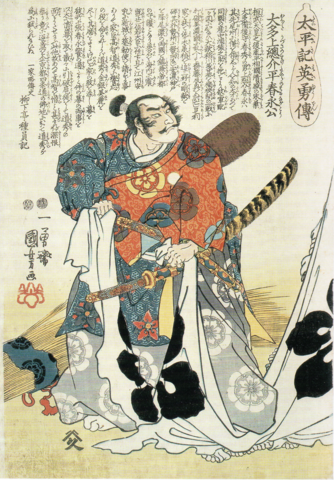
Oda Nobunaga. From the “Kuniyoshi’s Warriors” collection. Musha-e (武者絵). Made by Utagawa Kuniyoshi, 1830. Source: Wikimedia Commons, public domain.
Buddhism
Previous Post
January 11, 2023
Pope Celestine V, the Reluctant Pope
Next Post
January 20, 2023 Christianity and the Abolitionist Movement in the U.S.
Recent Comments
"Evil is indeed hard to pin down to any source other then what is reflected ..."
"Thank you for this grounded, deeply necessary perspective. Shifting our framework from moralistic binaries to ..."
What You May Not Know About ..."
"Nonviolence is the weapon of the mighty and the strong. Violence is the weapon of ..."
Thomas Aquinas on the Morality of ..."
"Regarding Barbara O'Brien's article "Is Empathy a Weakness?" My answer in song is an emphatic ..."
Browse Our Archives
Select a Category Buddhism Christianity Daoism Hinduism Indigenous religions Islam Jaina Judaism Mysticism New Age Origins of religion Paganism Popes Popular Religious Movements Protestantism Psychology and religion Religion and current events Religion and folklore Religion and News Media Religion and politics Religious Art and Music Religious Freedom Religious mistakes Religious philosophy Religious scriptures Religious Violence science and religion Spiritualism Technology and religion The Catholic Church The Dalai Lama The Reformation Uncategorized
Select a Month November 2026 October 2026 September 2026 August 2026 July 2026 June 2026 April 2026 March 2026 February 2026 January 2026 December 2025 November 2025 October 2025 September 2025 August 2025 July 2025 June 2025 May 2025 April 2025 March 2025 February 2025 January 2025 December 2024 November 2024 October 2024 September 2024 August 2024 July 2024 June 2024 May 2024 April 2024 March 2024 February 2024 January 2024 December 2023 November 2023 October 2023 September 2023 August 2023 July 2023 June 2023 May 2023 April 2023 March 2023 February 2023 January 2023 December 2022 November 2022 October 2022 September 2022 August 2022
Follow Us!
TAKE THE
Religious Wisdom Quiz
Which book of the Bible is known as the 'Book of Beginnings'?
Select your answer to see how you score.
Exodus Genesis Psalms Job
Related posts from The Religious History Nerd
Stop Putting Fake Quotes in the Buddha's Mouth
The Kalama Sutta: What the Buddha Didn't Say

I Watched the Towers Fall. Here's What You...

Sarvastivada: An Extinct Buddhist Sect That's Still With...
TRENDING AT PATHEOS History and Religion
Prioritizing Jesus This Advent
Miller’s Station UMC| 29 November 2026| Mathew 19:16-27 When we prioritize Jesus,...
A Subtle Indicator of Legalism
Legalism was invented by pastors who don’t want to be woken up...
The Two Advents of the Babe and the...
We just celebrated the great family holiday of Thanksgiving and after going...
What are your dreams trying to tell you?...
Dreams can seem crazy. You’re suddenly with a person you haven’t seen...
Advent Begins in the Waiting: Preparing for Jesus
The Christmas season seems to arrive earlier every year. Before Halloween decorations...

As was predicted many years ago, the Interpreter Foundation's website is...
view all History and Religion blogs
What Are Your Thoughts?leave a comment
Ad-Free & Subscriber Log-In Subscription Support
- About Us
- 2026 Calendar
- Videos
- Podcasts
- Library of World Religions
- Faith In Media Tracker
- Advertise With Us
- Write for Us
- Privacy Policy
- Terms of Service
- Do Not Sell My Data
- Contact Us
- Radiant Digital
- Manage Newsletter Subscriptions
- Unsubscribe From Notifications
- Sitemap
Copyright 2008-2026, Patheos, part of the Radiant Digital network of media brands. All rights reserved.
Subscription Support Ad-Free & Subscriber Log-In
Follow Patheos