
BuddhistCatholicContemplativeEvangelicalGeneral ChristianHinduJewishLatter-day SaintMuslimNew VisionsProgressive Christian
Beliefs
- Buddhist
- Catholic
- Contemplative
- Evangelical
- General Christian
- Hindu
- Jewish
- Latter-day Saint
- More Voices
- Muslim
- New Visions
- Pagan
- Progressive Christian
Topics
- Religion News
- Food and Religion
- Sports and Religion
- Religious Art
- Religious Music and Entertainment
- Religious Events
- History and Religion
- Style and Religion
- Politics and Religion
- Women in Religion
- Recreation Outdoors and Religion
- Business Finance and Religion
- Careers Workplace and Religion
- Education and Religion
- Family Parenting and Religion
- Health Fitness and Religion
- Home and Religion
- Relationships and Religion
- Technology and Religion
- Travel and Religion
Columnists
- Buddhist Columnists
- Business Finance and Religion Columnists
- Careers Workplace and Religion Columnists
- Catholic Columnists
- Contemplative Columnists
- Education and Religion Columnists
- Evangelists Columnists
- Family Parenting and Religion Columnists
- General Christian Columnists
- Health Fitness and Religion Columnists
- Hindu Columnists
- History and Religion Columnists
- Home and Religion Columnists
- Jewish Columnists
- More Voices Columnists
- Latter Day Columnists
- Muslim Columnists
- New Visions Columnists
- Nonreligious Columnists
- Pagan Columnists
- Politics and Religion Columnists
- Progressive Columnists
- Recreation Outdoors and Religion Columnists
- Relationships and Religion Columnists
- Religion News Columnists
- Religious Art Columnists
- Religious Events Columnists
- Religious Music and Entertainment Columnists
- Sports and Religion Columnists
- Style and Religion Columnists
- Technology and Religion Columnists
- Travel and Religion Columnists
- Women in Religion Columnists
Resource Library
- 2026 Calendar
- Library of World Religions
- The 100 Most Holy Places on Earth
- Patheos Answers
- Podcasts
- Videos
- Faith Leaders Database
- Anglican Episcopalian
- Bahai
- Baptist
- Buddhism
- Christianity
- Confucianism
- Eastern Orthodoxy
- Hinduism
- Holiness and Pentecostal
- ISKCON
- Islam
- Judaism
- Lutheran
- Methodist
- The Church of Jesus Christ of Latter-day Saints
- New Age
- Paganism
- Presbytarian and Reformed
- Protestantism
- Religion Behind the Scenes
- Roman Catholic
- Scientology
- Shia Islam
- Sikhism
- Sufism
- Sunni Islam
- Taoism
- Zen
- See all religions
Research Tools
 Ad-Free & Subscriber Log-In Subscription Support
Follow Patheos 

- Trending:
- Advent
- |
- Forgiveness
- |
- Thanksgiving
- |
- Election
- |
- Seasonal Holidays
- |
- Marriage

- Home
- Evangelical
- History and Religion
- When Evangelicals Were Liberal
When Evangelicals Were Liberal
Last updated on: January 18, 2023 at 12:57 pm by Barbara O'Brien
When Evangelicals Were Liberal 2023-01-18T12:57:09-06:00 Barbara O'Brien
Patheos Explore the world's faith through different perspectives on religion and spirituality! Patheos has the views of the prevalent religions and spiritualities of the world.
There were liberal evangelicals? What if I told you that evangelical Christians were the original social justice warriors? Seems unlikely, I know, but keep reading.
One of my favorite quotes is from a British novelist named L. P. Hartley — “The past is a foreign country; they do things differently there.” History is full of surprises. It is not just a version of the present with strange clothes and bad technology. Cultures and institutions can sometimes change very rapidly in just a few generations.
Consider, for example, evangelicalism. Evangelicalism has become a major force in conservative politics in the U.S. that is especially linked to support for Donald Trump. Indeed, the number of self-identified evangelicals grew during the Trump Administration, although not necessarily the number of evangelial church-goers. This trend caused conservative commentator David French to deride “the decades-long transformation of white Evangelicalism from a mainly religious movement into a Republican political cause.”
So it might surprise you to learn that even White evangelicalism was once associated with liberalism and progressivism. This wasn’t necessarily true of all of evangelicalism, but it was certainly true of a large part.
First, some historical background. Just who are evangelicals, anyway? Term “evangelical” was coined in the 16th century by Martin Luther — in German, Evangelische, from the Greek euangelion, “good news,” referring to the Gospel. Luther taught that salvation came from faith in the Gospel’s message rather than by obeying the laws of the Church. After Luther’s time the title “evangelical” was associated with a number of transdenominational movements within Protestant Christianity.
The Second Great Awakening
Many historians will tell you the current version of evanglicalism began in 18th century Europe with a Protestant movement that emphasized a personal experience of repentance and living according to Christ’s teachings. When this movement spread to America in the 1790s, it touched off a phenomenon called the Second Great Awakening. Huge, boisterous camp meetings and revivals spread across the land, attended by people seeking catharsis in Christ. The Awakening presented a form of Christianity that was optimistic and egalitarian. It also stressed individualism, especially the need to make a personal commitment to Christ. Merely attending church and listening to sermons wasn’t enough.
Evangelicalism seemed a breath of fresh air at the time, especially in contrast to the prevailing Calvinism, which emphasized the sinfulness and depravity of humankind. The evangelicals preached that people had it in them to be better people, and Christ would show them the way. And a portion of evangelicals took Christ’s teachings about caring for those who are poor and oppressed quite seriously.
Evangelicals and Social Reform
You’ve probably been told many times that in the antebellum U.S. South, Christian ministers supported slavery, which is a black mark on Christianity. And this is true, especially of ministers who served in their positions at the pleasure of plantation owners. But evangelicals elsewhere were leaders of the abolitionist movement.
For example, Baptists in northern states began organizing in opposition to slavery in 1840. This put them at odds with southern Baptists. Rancor came to a head when the main convention began rejecting slave owners for missionary positions, saying that slave owners could not be true followers of Jesus. This caused the southern group to break off and form the Southern Baptist Convention in 1845. Evangelicals in Britain also were behind the push to end British involvement in the slave trade in 1807 and ban slavery in most of the British Empire in 1833. This was very much in keeping with the evangelical movement’s promotion of justice, mercy, and humanity as expressions of the teachings of Christ.
Yes, it can be argued that 19th century evangelicals were the original social justice warriors.
American evangelicals also were the driving force behind the celebrated temperance movement. And they took up a number of other social causes, such as criminal justice and education reforms.
The Social Gospel
After the Civil War and the ending of slavery, evangelicals and other Protestants in the U.S. formed the Social Gospel movement, which was prominent from about 1879 to 1920. Social Gospel advocates felt called to spread the Kingdom of Heaven through social improvement as well as individual salvation. They worked to end child labor, to increase wages and shorten the workweek, and to improve living conditions for the poor.
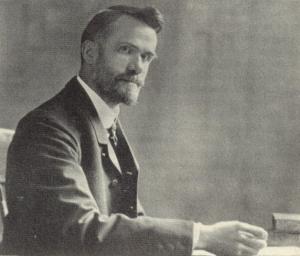
Walter Rauschenbusch (Public Domain image)
The Baptist minister Walter Rauschenbusch (1861–1918), one of the leaders of the Social Gospel, spoke for the movement when he said “The essential purpose of Christianity was to transform human society into the kingdom of God by regenerating all human relations and reconstituting them in accordance with the will of God.”
The Social Gospel gave rise to the original Progressive movement in the U.S., and many of their goals eventually would be realized through the New Deal reforms of Franklin Roosevelt.
At this point, you might be wondering how evangelicals went from the Social Gospel to Donald Trump in a mere century. Well, one, not all 19th and early 20th century evangelicals were committed to improving society. But it must also be remembered that, because of racial segregation, evangelicalism in the U.S. moved on two separate tracks — one Black, one White. The Black church more often continued to promote justice, mercy, and humanity as expressions of the teachings of Christ.
When the Rev. Dr. Martin Luther King. Jr., worked for racial equality, he was drawing on evangelical tradition. Likewise, when the Rev. William Barber organized the Moral Monday movement, he was drawing on evangelical tradition.
Evangelicalism Today
It must be said there really are White liberal evangelicals in the world today, also. I have met some. They seem to be keeping their heads down at the moment. But it hasn’t been that long since President Jimmy Carter, a known liberal, could also identify as an evangelical and nobody thought much of it. In 2000 President Carter left the Southern Baptist Convention, however.
Still, the story of how so much of White evangelicalism came to be so disconnected from its roots is one that needs to be told, and I hope to explore that in another post.
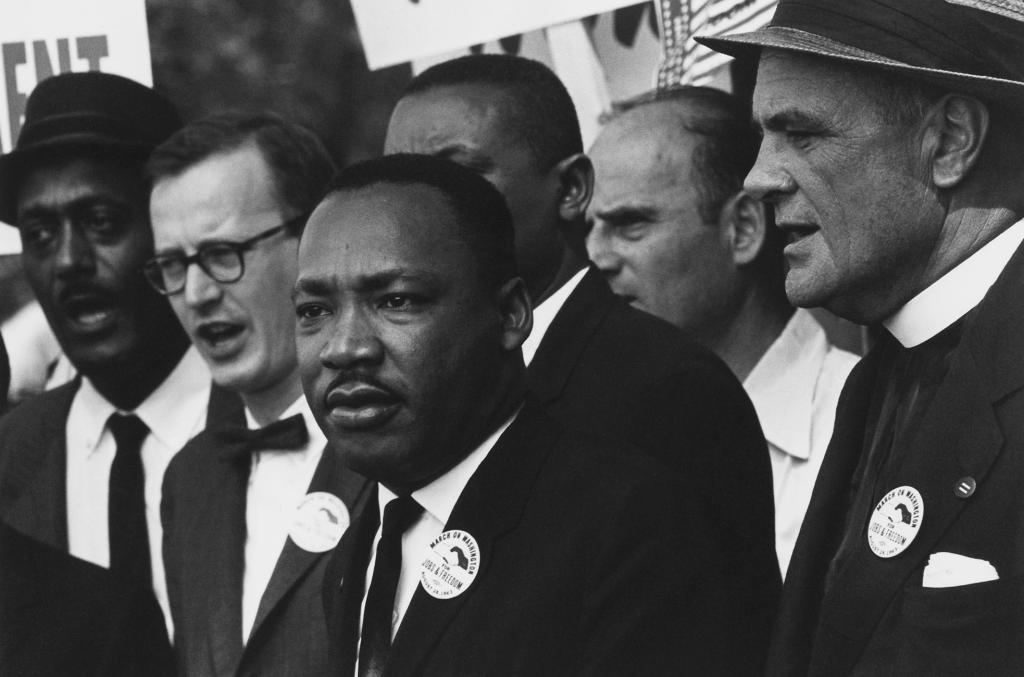
Dr. Martin Luther King, Jr., in Washington, DC, March 1963. Creative Commons CC0 1.0 Universal Public Domain Dedication
Evangelical
Previous Post

November 19, 2026
Stop Putting Fake Quotes in the Buddha's Mouth
Next Post

August 7, 2022 The Many Fake Quotes of Laozi
Browse Our Archives
Select a Category Buddhism Christianity Daoism Hinduism Indigenous religions Islam Jaina Judaism Mysticism New Age Origins of religion Paganism Popes Popular Religious Movements Protestantism Psychology and religion Religion and current events Religion and folklore Religion and News Media Religion and politics Religious Art and Music Religious Freedom Religious mistakes Religious philosophy Religious scriptures Religious Violence science and religion Spiritualism Technology and religion The Catholic Church The Dalai Lama The Reformation Uncategorized
Select a Month November 2026 October 2026 September 2026 August 2026 July 2026 June 2026 April 2026 March 2026 February 2026 January 2026 December 2025 November 2025 October 2025 September 2025 August 2025 July 2025 June 2025 May 2025 April 2025 March 2025 February 2025 January 2025 December 2024 November 2024 October 2024 September 2024 August 2024 July 2024 June 2024 May 2024 April 2024 March 2024 February 2024 January 2024 December 2023 November 2023 October 2023 September 2023 August 2023 July 2023 June 2023 May 2023 April 2023 March 2023 February 2023 January 2023 December 2022 November 2022 October 2022 September 2022 August 2022
Follow Us!
TAKE THE
Religious Wisdom Quiz
According to 3 John, who loves to be first and will not welcome the brothers?
Select your answer to see how you score.
Gaius Alexander Demetrius Diotrephes
Related posts from The Religious History Nerd
The President and the Pope: An Unprecedented Rift
What Was the Avignon Papacy and Why Is...
Thomas Aquinas on the Morality of War

TRENDING AT PATHEOS History and Religion

The Darkening of the Sun, Moon, and Stars
The darkening of the sun and moon and the falling of stars...

Gratitude as the Parent of All Virtues
Giving thanks stems from gratitude. Cicero said that gratitude is the parent...

Make Thanksgiving Bring Family Closer
Written by Dr. David K. Ewen from Eternal Truth Bible College Start...

Ghosts, Spirits, and Wizards in Post-Puritan New England
As it is Thanksgiving, I have a seasonal post concerned with New...

Here are two Thanksgiving columns that I originally wrote for the...

Book III, Chapter 3: Christ "Classic" (Matt. 9:9-34)
Book III, Chapter 3: Christ "Classic" (Matt. 9:9-34) In honor of tomorrow's...
view all History and Religion blogs
Ad-Free & Subscriber Log-In Subscription Support
- About Us
- 2026 Calendar
- Videos
- Podcasts
- Library of World Religions
- Faith In Media Tracker
- Advertise With Us
- Write for Us
- Privacy Policy
- Terms of Service
- Do Not Sell My Data
- Contact Us
- Radiant Digital
- Manage Newsletter Subscriptions
- Unsubscribe From Notifications
- Sitemap
Copyright 2008-2026, Patheos, part of the Radiant Digital network of media brands. All rights reserved.
Subscription Support Ad-Free & Subscriber Log-In
Follow Patheos